

Can Allicin Extract be used for fungal infections?
Fungal infections are a common health concern that can affect various parts of the body, from the skin to internal organs. Combatting these infections often involves the use of antifungal medications, which can range from topical creams to systemic drugs. In recent years, there has been growing interest in natural alternatives, and one such substance that has caught the attention of many is Allicin Extract. As a supplier of high - quality Allicin Extract, I am well - positioned to explore its potential in treating fungal infections.
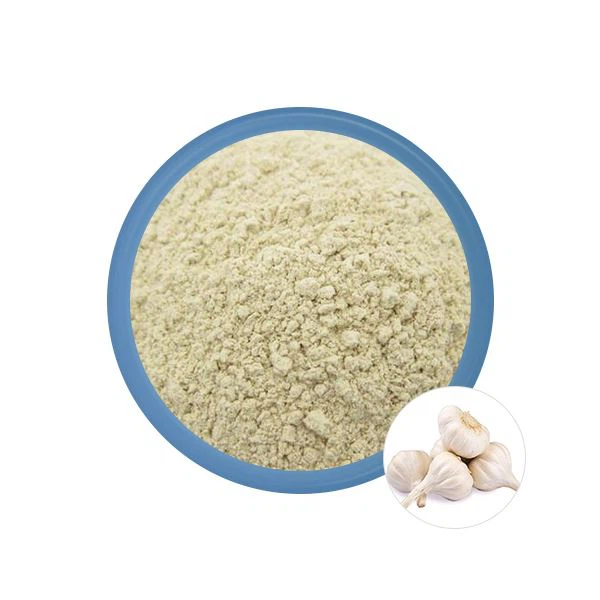
Allicin is a sulfur - containing compound found in garlic. When garlic is crushed or chopped, an enzyme called alliinase converts alliin, a precursor present in garlic, into allicin. This conversion is what gives garlic its characteristic pungent smell and many of its health - promoting properties. [1]
The antibacterial and antifungal activities of allicin have been the subject of numerous scientific studies. In the context of fungal infections, the mechanism of action of allicin extract is thought to be related to its ability to disrupt the cell membranes of fungi. Fungal cell membranes are essential for the survival of the fungus as they control the passage of nutrients and waste products in and out of the cell. Allicin has been shown to react with thiol groups in proteins and enzymes on the fungal cell membrane, leading to alterations in the membrane's structure and function. [2]
For example, in the case of Candida albicans, a common fungus that can cause infections such as oral thrush, vaginal yeast infections, and systemic infections in immunocompromised individuals, in vitro studies have demonstrated that allicin extract can inhibit its growth. Laboratory experiments have used different concentrations of allicin to test its inhibitory effect on the growth of C. albicans colonies. The results suggest that allicin can effectively reduce the viability of these fungal cells at appropriate concentrations. [3]
On the skin, fungal infections like athlete's foot (caused by dermatophytes) and ringworm can also potentially be treated with allicin extract. The property of allicin to disrupt the cell membrane of fungi makes it an attractive candidate for topical application. Some small - scale clinical trials have shown that creams or ointments containing allicin extract can have a positive impact on reducing the symptoms of these skin fungal infections, such as itching, redness, and scaling. The allicin in the extract can penetrate the outer layers of the skin and reach the site of the fungal infection, where it can exert its antifungal action. [4]
When considering the use of allicin extract for fungal infections, it is also important to look at its safety profile. Garlic has been used as a food and a traditional medicine for centuries, and in general, allicin extract is considered to be relatively safe. However, like any substance, it can cause side effects in some individuals. Topical application of allicin extract may cause skin irritation in some people, especially those with sensitive skin. Oral intake of high - dose allicin extract can lead to gastrointestinal discomfort, such as nausea, vomiting, and diarrhea. Therefore, it is crucial to use allicin extract under appropriate guidance and in the right concentrations.
In addition to its antifungal properties, allicin extract has other beneficial effects. It has antioxidant properties, which can help the body fight against oxidative stress caused by free radicals. Oxidative stress is associated with various diseases, including some types of cancer and neurodegenerative disorders. Allicin can also act as an anti - inflammatory agent, which can be beneficial in reducing the inflammation associated with fungal infections.
As a supplier of Allicin Extract, we ensure that our product is of the highest quality. Our extraction process is carefully optimized to preserve the active allicin compound. We source our garlic from reliable farms and use advanced techniques to extract allicin in its purest form. Our Allicin Extract can be used in different applications, not only in the treatment of fungal infections but also in the food and cosmetic industries.
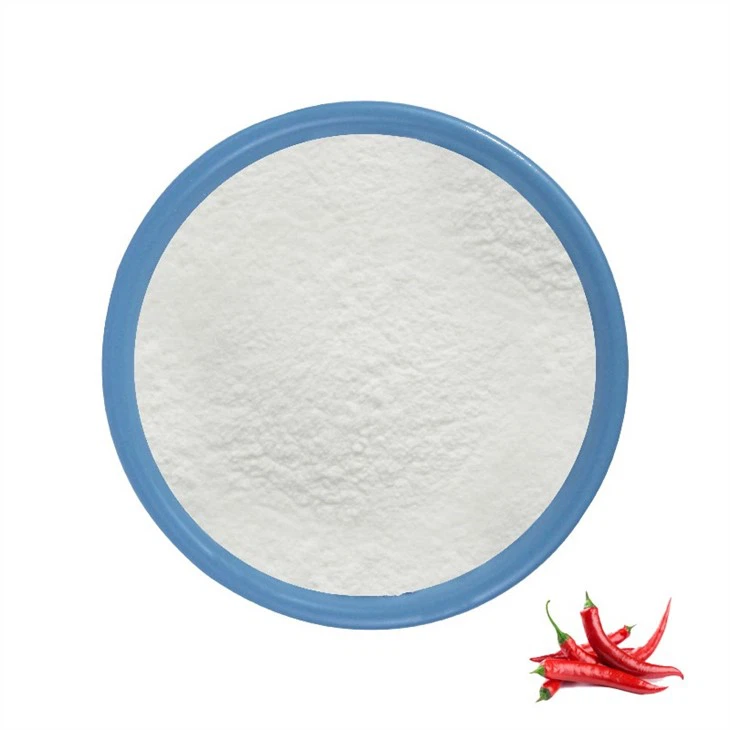
If you are interested in exploring other botanical products, we also offer Pure Capsaicin Powder and Matrine Liquid 10%. Pure Capsaicin Powder is derived from chili peppers and has antibacterial and analgesic properties. Matrine Liquid 10% is extracted from the Sophora flavescens plant and has a wide range of biological activities, including anti - inflammatory and anti - fungal effects.
If you are a researcher, a pharmaceutical company, or an individual interested in using Allicin Extract for fungal infections or other applications, we welcome you to contact us for more information and to discuss potential procurement. We can provide you with detailed product specifications, samples, and pricing information. Our team of experts is also available to answer any technical questions you may have regarding the use and application of allicin extract.
In conclusion, while more extensive clinical trials are needed to fully establish the efficacy of allicin extract in treating fungal infections, the existing scientific evidence shows promising results. Its natural origin and relatively good safety profile make it an attractive alternative or complementary option to traditional antifungal medications. As a reliable supplier of Allicin Extract, we are committed to providing high - quality products to support further research and development in this area.
References
[1] Block, E. (1985). The chemistry of garlic and onions. Scientific American, 252(3), 114 - 123.
[2] Ankri, S., & Mirelman, D. (1999). Antimicrobial properties of allicin from garlic. Microbes and infection, 1(13), 1257 - 1264.
[3] Cutler, J. M., Wilson, D. E., & Lawson, L. D. (2004). Antifungal properties of garlic and garlic - derived products against Candida albicans. Journal of alternative and complementary medicine, 10(1), 105 - 113.
[4] Ota, A., & Tanaka, H. (2002). Inhibitory effect of garlic - extract on growth of dermatophytes in vitro. The Journal of dermatology, 29(3), 139 - 143.


