Xi'an Hj Herb Biotechnology Co., Ltd. is one of the leading manufacturers and suppliers of synthetic capsaicin powder (nonivamide) in China. The company offers high quality customized products with reasonable price for customers around the world. Welcome to wholesale bulk synthetic capsaicin powder (nonivamide) in stock here from our factory. Contact us for free sample.
Product Overview
Synthetic Capsaicin Powder, identified on this product specification as Nonivamide, is a synthetic capsaicin analogue known for its characteristic pungent properties and interaction with sensory pathways.
It is a high-purity functional compound with potential research applications in animal nutrition, sensory physiology, and specialized feed formulation. Its properties make it an ingredient of interest for manufacturers investigating the role of pungent compounds in animal feeding systems.
For feed manufacturers and ingredient distributors, consistent active content, reliable analytical testing, impurity control, and formulation compatibility are important considerations when evaluating this ingredient.
HJ HERB Biotechnology supplies synthetic capsaicin powder in customized specifications for industrial and research requirements. Feed applications should be evaluated against applicable regulatory requirements before commercial use.
What Is Synthetic Capsaicin Powder?
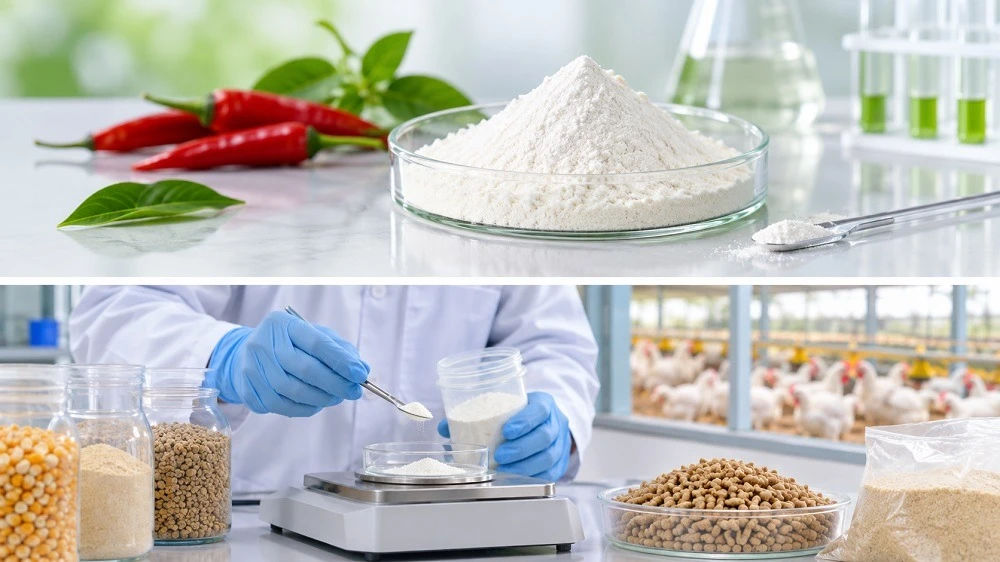
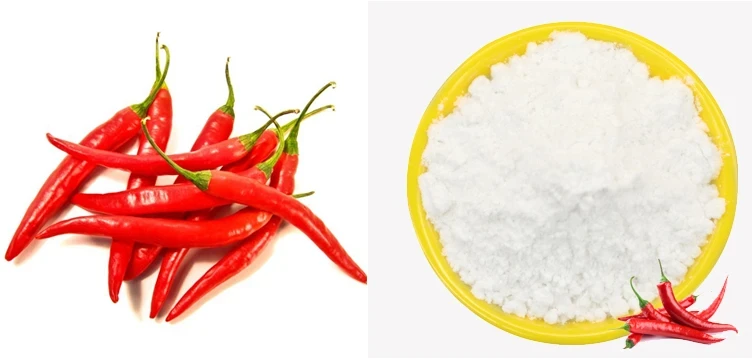
Nonivamide, also known as pelargonic acid vanillylamide, is a synthetic compound structurally related to capsaicin, the pungent substance naturally found in chili peppers.
Both compounds interact with sensory pathways associated with pungency, but they have different chemical identities.
Unlike natural capsaicin extracted from Capsicum fruits, Nonivamide is manufactured through chemical synthesis. Its production allows manufacturers to control purity and product specifications without depending on agricultural raw material availability.
For ingredient buyers, this distinction is important when comparing synthetic capsaicin analogues with natural Capsicum extracts.
Potential Areas of Interest in Animal Nutrition
1. Sensory and Feed Formulation Research
Pungent compounds interact with sensory receptors involved in detecting chemical stimuli. Researchers investigate these interactions to better understand how dietary ingredients influence animal feeding responses.
For feed manufacturers, Nonivamide may be considered an experimental compound when studying sensory responses and ingredient interactions.
However, its pungency should not be interpreted as evidence that it improves feed palatability or feed intake. Species-specific responses and suitable inclusion levels require scientific evaluation.
2. Research on Gastrointestinal Sensory Pathways
Capsaicin-related compounds are studied for their interactions with transient receptor potential vanilloid 1 (TRPV1), a receptor involved in detecting heat and chemical stimuli.
These pathways are relevant to gastrointestinal sensory physiology and have attracted research interest in animal nutrition.
However, findings involving capsaicin cannot automatically be applied to Nonivamide. Direct evidence is required before making claims about digestive health, nutrient absorption, or intestinal function.
3. Research into Feed Intake and Animal Responses
Feed intake is influenced by several factors, including feed composition, odor, taste, environmental conditions, and animal physiology.
Because pungent compounds can influence sensory responses, Nonivamide may be relevant to controlled research investigating dietary sensory stimulation.
Researchers should evaluate feed consumption, animal behavior, growth performance, and tolerance rather than assume a beneficial feeding response.
4. Ingredient Development and Formulation Research
For premix manufacturers and feed ingredient developers, synthetic compounds offer opportunities to investigate controlled ingredient specifications and formulation compatibility.
Important development considerations include:
- Active compound concentration
- Uniform distribution in premixes
- Compatibility with carrier materials
- Stability during storage
- Stability during feed processing
- Potential interactions with other feed ingredients
Commercial application requires appropriate safety and regulatory assessment.
Applications and Target Industries
Potential research and development areas include:
Poultry Nutrition Research
Evaluation of sensory responses, feed formulation characteristics, and dietary tolerance in poultry nutrition studies.
Swine Nutrition Research
Investigation of pungent compound interactions with sensory pathways and feeding behavior in controlled studies.
Aquaculture Research
Assessment of ingredient compatibility and sensory responses in experimental aquatic feed formulations.
Feed Premix and Ingredient Manufacturing
Evaluation of active compound uniformity, carrier compatibility, analytical consistency, and processing stability.
These are research and development areas, not claims of approved commercial use or established performance benefits.
Synthetic Capsaicin vs. Natural Capsaicin
|
Comparison |
Synthetic Capsaicin Analogue |
Natural Capsaicin |
|
Source |
Chemical synthesis |
Capsicum fruits |
|
Chemical identity |
Nonivamide |
Capsaicin |
|
CAS Number |
2444-46-4 |
404-86-4 |
|
Production |
Controlled chemical manufacturing |
Extraction and purification |
|
Specification |
Defined Nonivamide concentration |
Defined capsaicin or total capsaicinoid content |
|
Key consideration |
Chemical identity and purity |
Botanical source and active compound profile |
The two products should not be treated as interchangeable ingredients. Buyers should verify the active substance and CAS number before purchasing.
Quality Control and Manufacturing Standards
For industrial ingredient buyers, quality assurance is essential when sourcing synthetic capsaicin powder.
HJ HERB Biotechnology can provide batch-specific technical documentation for buyer evaluation, subject to product availability.
Recommended quality parameters include:
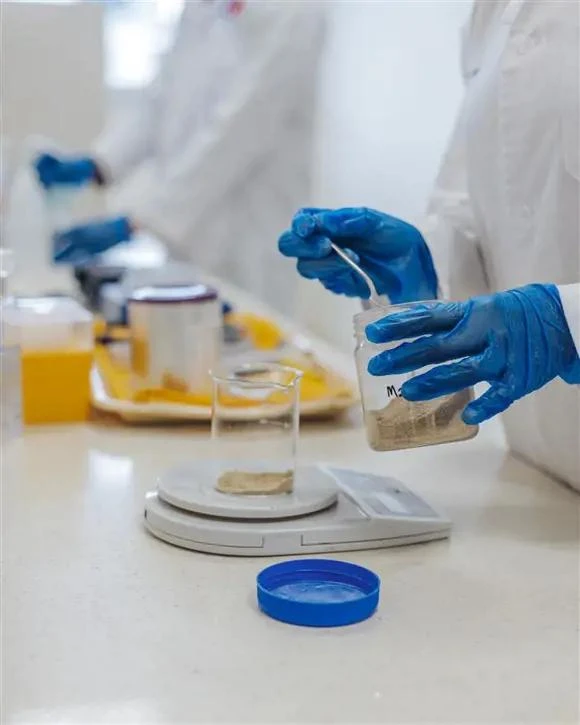
- Active Content: HPLC assay to verify Nonivamide concentration.
- Appearance: White to off-white powder.
- Moisture: Loss on drying or an appropriate moisture test.
- Residual Solvents: Testing based on the manufacturing process.
- Heavy Metals: Assessment of relevant elemental impurities.
- Microbiological Quality: Testing where required by the intended application.
- Batch Consistency: Comparison of analytical results across production lots.
A Certificate of Analysis (COA) should accompany the relevant batch. Testing methods, acceptance limits, and results should be clearly documented.
Packaging, Storage and Bulk Supply
Synthetic Capsaicin Powder can be supplied for bulk industrial purchasing and customized sourcing requirements.

Packaging Options
- Standard bulk packaging: 25 kg, subject to confirmation.
- Customized packaging according to buyer requirements.
- Protective inner packaging to reduce exposure to moisture and contamination.
Storage Recommendations
- Keep in a cool, dry and well-ventilated area.
- Protect from direct sunlight and moisture.
- Keep containers tightly sealed.
- Follow the storage conditions stated in the product SDS and technical documentation.
Supply Services
- Bulk wholesale supply
- Customized specifications
- Batch-specific COA
- Technical documentation
- Sample availability, subject to confirmation
- Export and international shipping support
Request a Synthetic Capsaicin Powder Quote or Sample
Looking for a reliable Synthetic Capsaicin Powder supplier? HJHERB Biotechnology supports feed manufacturers, distributors, and ingredient buyers with consistent specifications, bulk supply, and customized packaging.
Contact us today for product details, COA, samples, and competitive wholesale quotations.
Email: info@hjagrifeed.com
Website: https://www.hjagrifeed.com/
HJHERB Biotechnology – Your Partner in Botanical Feed Ingredients.
Hot Tags: Synthetic Capsaicin Powder, Nonivamide Powder Supplier, Synthetic Capsaicin Manufacturer, Nonivamide 95%, Nonivamide 98%, Synthetic Capsaicin Bulk, Animal Feed Ingredient Supplier, Synthetic Capsaicin Price, Wholesale Synthetic Capsaicin, Chamomile Powder, Citric Acid Powder, L ascorbic Acid Powder, Lutein Powder Bulk, Marigold Extract Powder, Seaweed Powder