


Tea Saponin Benefits for Animal Feed and Aquaculture
Tea saponin is a naturally occurring plant compound mainly obtained from the seeds and seed meal of Camellia species, particularly Camellia oleifera. It has attracted interest as a botanical ingredient because of its natural surface-active properties, including foaming, emulsifying, and dispersing abilities. Recent research has also examined its biological activities and potential applications in animal husbandry, agriculture, and aquaculture.
For feed and aquaculture manufacturers, Tea Saponin Powder can be an interesting natural ingredient for specialized formulations. However, its effects depend strongly on the source, purity, concentration, dosage, target species, and intended application.
What Is Tea Saponin?
Tea saponins are a group of naturally occurring glycosides found in Camellia seeds. Tea seed meal, which remains after oil extraction, is particularly rich in saponins and can serve as a raw material for their extraction. Research describes Camellia seed saponins as predominantly oleanane-type saponins with notable surface activity.
Because saponins can interact with water and other substances at interfaces, they are useful in applications requiring natural foaming, emulsification, and surface-active properties. These characteristics have contributed to interest in Tea Saponin for animal feed, aquaculture, agriculture, and industrial formulations.

Tea Saponin Benefits for Animal Feed
1. Natural Functional Feed Ingredient
Tea Saponin can be considered a botanical functional ingredient in animal nutrition. Research on saponins has investigated their effects on digestion, rumen fermentation, microbial populations, and nutrient utilization.
For example, research involving tea seed saponin supplementation in cattle investigated changes in methane production, rumen fermentation characteristics, and rumen microbial profiles, demonstrating the scientific interest in tea-derived saponins as feed-related ingredients.
2. Supports Feed Formulation
The surface-active properties of tea saponins can provide functional value in certain feed formulations. Their ability to interact with water and oil phases makes them potentially useful when developing formulations containing ingredients with different physical properties.
However, the desired effect depends on the specific formulation and the concentration of saponin used.
3. Potential Effects on Rumen Fermentation
Saponins have been studied extensively in ruminant nutrition because of their interaction with rumen microorganisms. Tea seed saponin has specifically been evaluated in cattle for its effects on rumen fermentation and methane production.
This area remains application- and dose-dependent, so commercial feed manufacturers should evaluate the appropriate inclusion level for the target species rather than assuming that higher concentrations provide greater benefits.
4. Plant-Based Alternative for Specialized Formulations
Tea Saponin is derived from a renewable botanical source. Recent reviews describe tea saponins as having a range of biological properties and potential applications across animal husbandry and other industries.
This makes Tea Saponin attractive to manufacturers developing products that emphasize plant-derived or naturally sourced ingredients.

Tea Saponin Benefits for Aquaculture
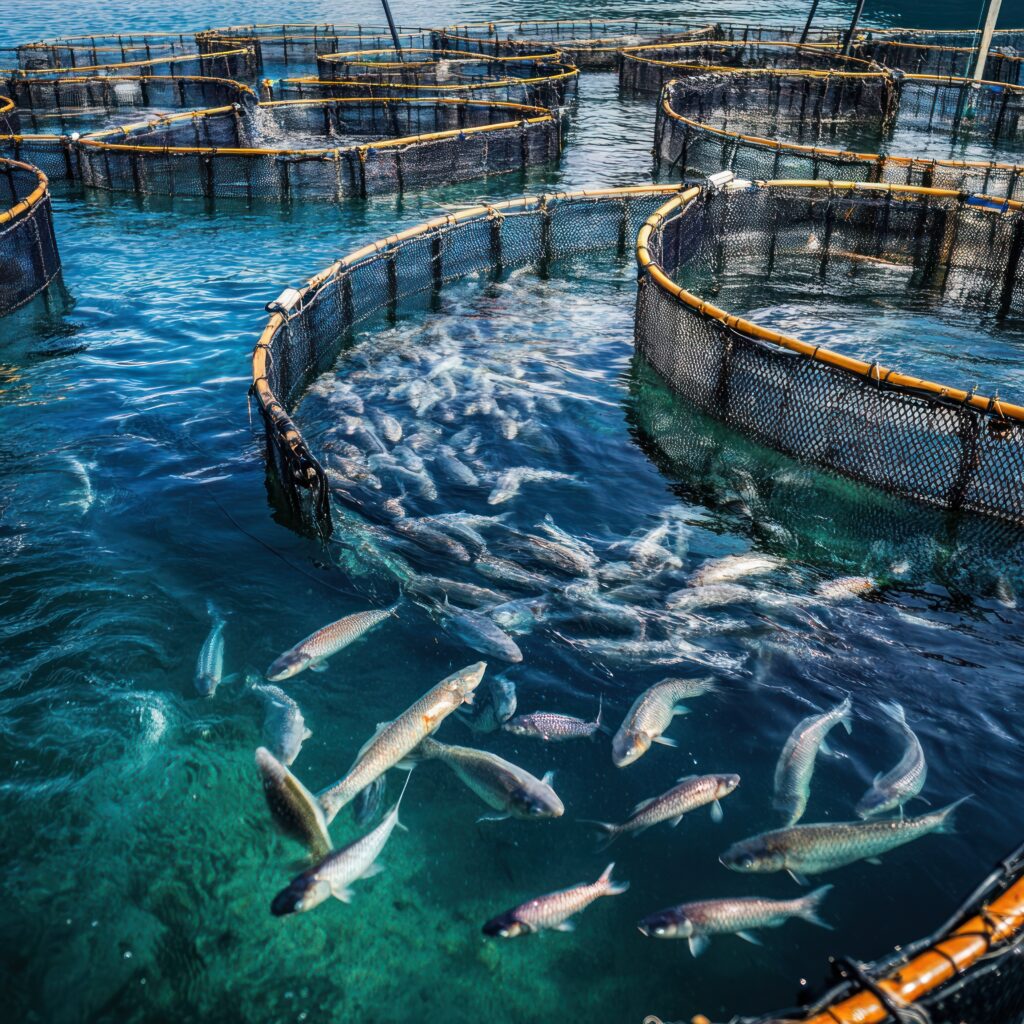
Tea Saponin has a particularly well-established traditional application in aquaculture pond management.
1. Aquaculture Pond Management
Tea seed cake and tea seed-derived saponins have traditionally been used in shrimp ponds for managing unwanted fish. The FAO describes saponin-containing tea seed cake as a traditional treatment for removing fish from shrimp ponds because fish are more sensitive to saponin under the described application conditions.
This application illustrates why Tea Saponin is an important ingredient for certain aquaculture-management products.
2. Useful Surface-Active Properties
Tea saponins have strong surface activity and can produce persistent foam in aqueous systems. Their foaming, emulsifying, and dispersing properties contribute to their usefulness in different agricultural and aquatic formulations.
3. Applications in Shrimp Farming
Tea seed-derived saponins have been used in shrimp-farming systems, particularly in pond-management applications. The appropriate product, concentration, and application method should be selected according to the culture system and target organisms.
Because saponins can affect aquatic organisms at sufficiently high concentrations, careful dosage control is essential. The FAO documentation, for example, describes tea seed cake use for unwanted fish removal at specific pond concentrations.
4. Potential for Sustainable Aquaculture Products
Tea seed meal is a by-product of the tea-oil industry. Recovering valuable saponins from this material can increase the utilization value of an agricultural by-product and support more efficient resource use. Recent research highlights the potential for higher-value utilization of Camellia oleifera seed meal and its saponins.
Tea Saponin Powder vs. Tea Seed Meal
Although they are closely related, Tea Saponin Powder and Tea Seed Meal are not the same product.
Tea Seed Meal is the solid material remaining after oil extraction from tea seeds. It naturally contains saponins along with other components.
Tea Saponin Powder is produced by extracting and processing saponins from tea-derived raw materials. It can therefore offer a more defined saponin specification for applications where a particular concentration is required.
Recent research identifies tea seed meal as an important source of tea saponins and discusses extraction, purification, analysis, and application technologies for obtaining higher-value saponin products.

Important Considerations When Using Tea Saponin in Feed
Tea saponin should not automatically be treated as a conventional nutritional ingredient at any dosage. The concentration and application method are important.
Research published in 2026 on Camellia oleifera meal highlights that excessive saponin levels can limit the direct use of untreated Camellia meal as a feed ingredient. Appropriate processing and detoxification can substantially reduce saponin levels and improve the suitability of the resulting meal as a feed material.
Therefore, manufacturers should consider:
- Saponin concentration
- Product purity
- Source of raw material
- Target animal species
- Intended application
- Inclusion or application rate
- Feed or aquaculture regulations
- Batch-to-batch consistency
- Certificate of Analysis (COA)

Why Choose Bulk Tea Saponin Powder?
For feed and aquaculture manufacturers, bulk Tea Saponin Powder can provide a convenient source of concentrated botanical saponins for formulation and production.
When selecting a Tea Saponin supplier, buyers should evaluate:
- Consistent saponin content
- Reliable raw material sourcing
- Stable bulk supply
- Quality-control procedures
- COA and product specifications
- Suitable packaging
- Technical documentation
- OEM and private-label options
The required specification should be matched to the intended application rather than selecting a product solely based on price.
Conclusion
Tea Saponin is a versatile plant-derived ingredient with applications across animal feed, aquaculture, agriculture, and industrial formulations. Its natural surface-active properties make it particularly valuable for specialized formulations, while research continues to investigate its effects on animal nutrition, rumen fermentation, microbial activity, and aquatic production.
In aquaculture, tea seed-derived saponins have a long history of use in pond management, including applications for unwanted fish control in shrimp ponds.
For commercial use, however, Tea Saponin should be selected and applied according to its specific concentration, formulation, target species, and intended purpose. A reliable Tea Saponin Powder supplier can provide consistent specifications and quality documentation to support safer and more predictable product development.
References
Zhang, J., et al. (2025). Advances in Camellia oleifera seed meal saponins: Extraction, analysis, bioactivity, and application. Food Chemistry, 492, 145277.
ScienceDirect article
Guo, N., Tong, T., Ren, N., Tu, Y., & Li, B. (2018). Saponins from seeds of Genus Camellia: Phytochemistry and bioactivity. Phytochemistry, 149, 42–55.
ScienceDirect article
Ramírez-Restrepo, C. A., et al. (2016). Methane production, fermentation characteristics, and microbial profiles in the rumen of tropical cattle fed tea seed saponin supplementation. Animal Feed Science and Technology, 216, 58–67.
ScienceDirect article
Food and Agriculture Organization of the United Nations (FAO). Problems in Shrimp Culture in the South China Sea Region – Saponin use in shrimp ponds.
FAO reference
Cui, Y., et al. (2026). Transforming Camellia oleifera meal into feedstuff: Enhancing value through detoxification and fermentation. Bioresource Technology, 441, 133578.
ScienceDirect article


