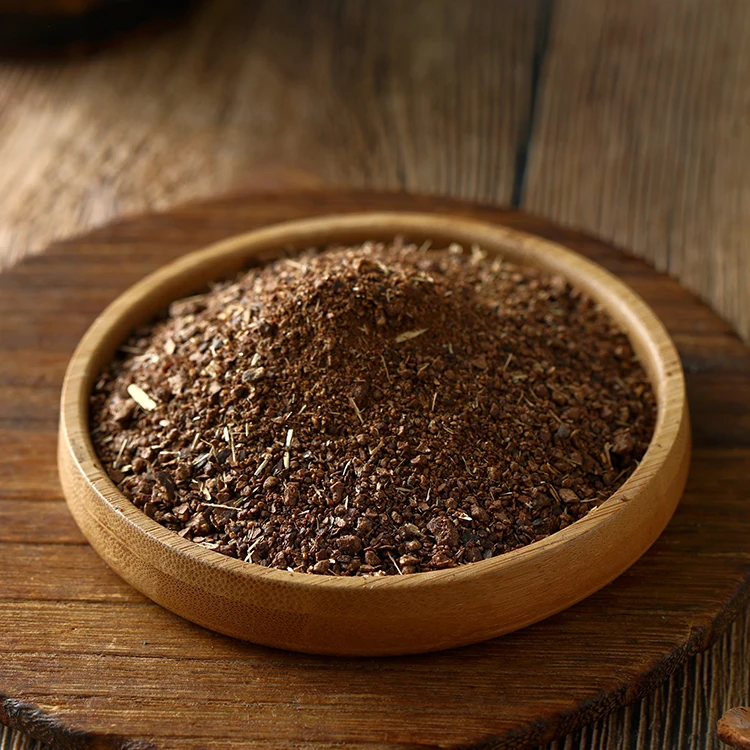
Tea Seed Meal Powder is a plant-based agricultural material produced from the seeds of Camellia oleifera, commonly known as the oil tea plant. It is the solid residue left after oil extraction and is also known as tea seed cake, camellia seed meal, or tea seed meal.
Because it contains organic matter, residual nutrients, proteins, and naturally occurring compounds such as tea saponins, Tea Seed Meal Powder has attracted attention as a material for organic fertilizer formulations, soil improvement, composting, and other agricultural applications. Recent research has also highlighted the potential for higher-value utilization of Camellia oleifera seed meal and its saponin-rich fractions.
For fertilizer manufacturers, agricultural input suppliers, and growers interested in plant-derived materials, Tea Seed Meal Powder provides a practical way to utilize an oil-processing by-product while adding organic material to agricultural systems.
What Is Tea Seed Meal Powder?
Tea Seed Meal Powder is obtained after oil is extracted from Camellia oleifera seeds. The remaining solid material is processed into meal or powder according to the intended agricultural application.
The composition can vary depending on the variety of Camellia oleifera, oil extraction method, processing conditions, and degree of refinement. Typical components can include:
- Organic matter
- Residual protein
- Plant-derived carbohydrates and fiber
- Nitrogen and other nutrients
- Minerals
- Naturally occurring tea saponins
- Other minor bioactive compounds
Research on Camellia oleifera seed cake has demonstrated that the material contains substantial organic carbon and measurable nitrogen, phosphorus, and potassium, although the exact values depend on the raw material and processing method.
For this reason, Tea Seed Meal Powder should generally be considered a plant-derived fertilizer material or soil amendment, rather than automatically treating it as a complete replacement for a balanced NPK fertilizer.
Why Use Tea Seed Meal Powder for Fertilizer?
The agricultural value of Tea Seed Meal Powder comes from its combination of organic material, residual nutrients, and naturally occurring compounds.
When properly processed and incorporated into fertilizer or composting systems, it can provide several potential benefits.
1. Plant-Based Source of Organic Matter
One of the main advantages of Tea Seed Meal Powder is its organic origin.
Organic matter plays an important role in agricultural soils by contributing to soil structure, moisture management, and biological activity. Adding plant-derived organic materials can therefore form part of broader soil management strategies.
Tea Seed Meal Powder can be incorporated into organic fertilizer blends or used as a feedstock for composting, depending on its specification and intended use.
2. Provides Plant-Derived Nutrients
Tea Seed Meal contains residual nutrients from the original seed material.
Research on Camellia oleifera seed cake has identified nitrogen, phosphorus, potassium, and organic carbon in the material.
However, nutrient levels can vary significantly between products. Fertilizer manufacturers should therefore evaluate the actual nitrogen, phosphorus, potassium, organic matter, moisture, and other specifications of each batch instead of assuming a fixed nutrient profile.
3. Useful Material for Composting
Tea Seed Meal Powder can be incorporated into composting systems as an organic raw material.
This application is particularly important because untreated Camellia oleifera seed cake contains naturally occurring saponins and tannins. Controlled composting allows microorganisms and heat to break down these compounds while stabilizing the organic material.
A study published in PLOS ONE found that tannin and saponin concentrations in Camellia oleifera shell and seed-cake compost decreased during the composting process. After composting, the resulting material had substantially lower levels of these compounds and showed characteristics associated with mature compost.
This makes composting an important processing route when the objective is to produce a stabilized organic fertilizer material.
Tea Saponins in Tea Seed Meal
Tea saponins are one of the most notable naturally occurring compounds associated with Camellia oleifera seed meal.
Tea saponins are triterpenoid saponins with surface-active properties. A review published in RSC Advances describes tea saponins as natural non-ionic surfactants and discusses their agricultural and soil-remediation applications.
The presence of tea saponins gives Tea Seed Meal Powder characteristics that distinguish it from many conventional plant-based fertilizer materials.
However, the concentration of saponins is important.
Raw or insufficiently processed Tea Seed Meal should not automatically be treated in the same way as fully composted material. Saponins can have biological activity, and their effects depend on concentration, plant species, soil conditions, and application method.
For fertilizer manufacturers, measuring saponin content can therefore be an important quality-control parameter.
Tea Seed Meal Powder for Soil Improvement
Tea Seed Meal Powder can be used as part of soil-management programs where plant-derived organic material is desired.
Potential applications include:
- Organic fertilizer formulations
- Soil amendment products
- Composting materials
- Plant-derived fertilizer blends
- Agricultural soil conditioning programs
- Crop production systems
- Soil biological management programs
The organic fraction can contribute carbon-containing material to the soil, while the residual nutrients provide additional value.
However, soil improvement is influenced by many factors, including soil texture, pH, organic matter, nutrient status, moisture, microbial activity, and crop requirements. Tea Seed Meal Powder should therefore be incorporated into a broader soil fertility strategy rather than considered a universal soil solution.

Tea Seed Meal Powder for Organic Fertilizer
Tea Seed Meal Powder can be used as an ingredient in plant-based or organic fertilizer formulations.
Depending on local regulations and product specifications, manufacturers may combine it with other organic raw materials to create fertilizer products with a broader nutrient profile.
Possible formulation partners can include:
- Plant-based meals
- Compost
- Humic materials
- Mineral fertilizer sources
- Organic nutrient materials
- Microbial fertilizer ingredients
- Other agricultural by-products
The objective is to create a more balanced fertilizer product according to the target crop and soil conditions.
Because Tea Seed Meal is not necessarily a complete NPK fertilizer, blending it with complementary nutrient sources may be appropriate when a specific nitrogen, phosphorus, or potassium ratio is required.

Tea Seed Meal Powder for Compost Production
Composting is one of the most practical agricultural uses for Tea Seed Meal and related Camellia oleifera residues.
During composting, microorganisms break down organic materials and transform them into a more stable product.
Research has shown that composting Camellia oleifera shell and seed cake can reduce tannin and saponin concentrations. In one study, saponin degradation increased progressively during the composting period, while the resulting compost showed improved maturity characteristics.
Another study reported that incorporating Camellia oleifera seed cake into the composting process promoted compost maturity and fertilizer quality, while also increasing the organic matter and total nutrient content of the final compost as seed-cake proportion increased within the experimental treatments.
This supports the use of Tea Seed Meal Powder as a valuable organic raw material in controlled composting systems.
Agricultural Uses of Tea Seed Meal Powder
1. Organic Fertilizer
Tea Seed Meal Powder can serve as an organic raw material in fertilizer formulations. Its organic matter and residual nutrients make it suitable for blending with other fertilizer ingredients.
2. Soil Amendment
The material can be incorporated into soil-management programs where additional plant-derived organic matter is desired.
3. Composting
Tea Seed Meal Powder can be used as a composting feedstock, where biological decomposition reduces certain naturally occurring compounds and stabilizes the material.
4. Crop Production
Processed Tea Seed Meal products can be incorporated into crop-production systems according to soil conditions, crop requirements, and applicable fertilizer regulations.
5. Agricultural By-Product Recycling
Using Tea Seed Meal as a fertilizer or composting ingredient creates a pathway for recovering value from the residue of Camellia oleifera oil production.
This supports a circular approach in which an agricultural processing by-product is converted into a useful agricultural input.

Tea Seed Meal Powder vs. Compost
It is important to distinguish between raw Tea Seed Meal Powder and composted Tea Seed Meal.
Raw Tea Seed Meal retains more of its original components, including tea saponins and tannins. Composted material has undergone microbial decomposition and stabilization, which can substantially reduce these compounds.
Research has demonstrated substantial degradation of both tannins and saponins during controlled composting of Camellia oleifera seed cake and shell.
Therefore, these two materials should not be treated as interchangeable.
For a fertilizer manufacturer, the choice depends on the desired product:
Raw Tea Seed Meal Powder:
Useful as a plant-derived organic raw material with naturally occurring saponins and residual nutrients.
Composted Tea Seed Meal:
More suitable when the objective is a stabilized organic fertilizer or compost product with reduced levels of certain bioactive compounds.
Important Quality Parameters
When purchasing bulk Tea Seed Meal Powder for fertilizer production, quality should be evaluated according to the intended application.
Important parameters can include:
- Organic matter
- Total nitrogen
- Available phosphorus
- Potassium
- Moisture
- Tea saponin content
- Particle size
- pH
- Ash content
- Heavy metals
- Microbiological quality
- Foreign matter
- Batch consistency
For composting applications, additional parameters such as carbon-to-nitrogen ratio, moisture, maturity, and germination index can be important.
A consistent powder specification makes it easier for fertilizer manufacturers to formulate products and maintain batch-to-batch performance.
Does Tea Seed Meal Replace NPK Fertilizer?
Tea Seed Meal Powder should not automatically be considered a complete NPK fertilizer.
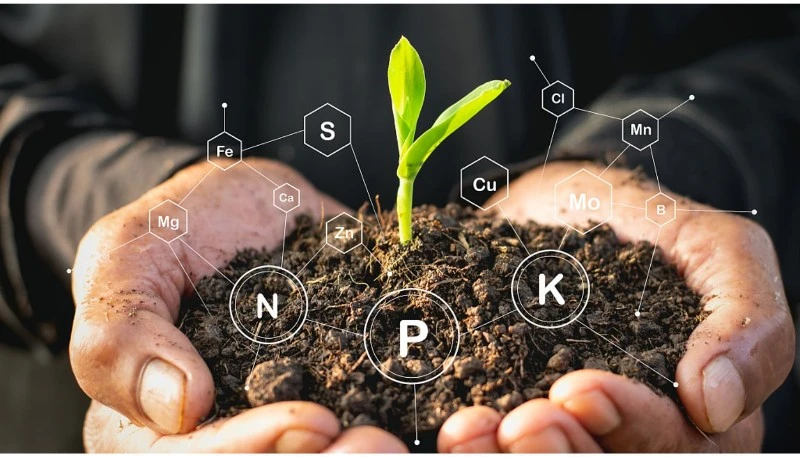
Although it contains nitrogen, phosphorus, potassium, and organic matter, the concentrations may not provide the precise nutrient balance required by a particular crop.
Instead, Tea Seed Meal is often better viewed as a plant-derived organic fertilizer ingredient or complementary soil amendment.
A fertilizer formulation can combine Tea Seed Meal with other nutrient sources when a specific NPK profile is required.
The appropriate application depends on soil testing, crop nutrient demand, product composition, and local fertilizer regulations.

Application Considerations
There is no universal Tea Seed Meal Powder application rate suitable for every crop or soil.
Application should consider:
- Crop species
- Soil nutrient status
- Soil organic matter
- Product nutrient analysis
- Saponin concentration
- Whether the material is raw or composted
- Application method
- Soil moisture
- Local agricultural regulations
Raw materials containing substantial saponin should be used carefully because tea saponins are biologically active compounds. Composting can reduce saponin and tannin levels substantially and can produce a more stabilized material.
For commercial agricultural products, manufacturers should establish application recommendations through appropriate crop and soil testing rather than applying a single dosage across all conditions.
How to Choose Tea Seed Meal Powder for Fertilizer
For bulk fertilizer manufacturers and agricultural distributors, several factors should be considered before purchasing.
Check the Raw Material Source
Confirm that the product originates from Camellia oleifera seeds and determine the oil-extraction and subsequent processing method.
Check the Specification
Ask for a current specification sheet showing organic matter, moisture, nutrient values, saponin content, particle size, and other relevant parameters.
Evaluate the Intended Application
Raw Tea Seed Meal, processed meal, and composted material can have different characteristics. Select the material according to the intended fertilizer or soil application.
Request Quality Documentation
For commercial applications, suppliers should be able to provide documentation such as:
- COA
- Technical specification
- SDS/MSDS where applicable
- Heavy-metal testing
- Microbiological testing
- Batch information
-
Evaluate Batch Consistency
Consistent particle size, moisture, active compounds, and nutrient content are important for fertilizer manufacturers producing standardized products.
Conclusion
Tea Seed Meal Powder is a useful plant-derived material for fertilizer manufacturing, soil amendment, composting, and agricultural by-product recycling. Produced from Camellia oleifera seeds after oil extraction, it contains organic matter, residual nutrients, and naturally occurring tea saponins.
Its agricultural value comes from more than its nutrient content. Tea Seed Meal can serve as an organic raw material for fertilizer blends and composting systems, while its tea saponin content gives it additional characteristics that distinguish it from conventional plant meals. Research shows that controlled composting can substantially reduce tannins and saponins while producing a more stabilized and mature fertilizer material.
For fertilizer manufacturers, Tea Seed Meal Powder should be selected according to its organic matter, nutrient profile, saponin content, moisture, particle size, purity, and intended agricultural application. Rather than treating it as a universal replacement for NPK fertilizer, it is best positioned as a plant-derived organic fertilizer ingredient or complementary soil amendment.
As demand for sustainable agricultural inputs continues to grow, Tea Seed Meal Powder offers a practical way to convert an oil-processing by-product into a useful resource for modern agriculture.
References
Zhang, J., Ying, Y., Li, X., & Yao, X. (2020). "Changes in tannin and saponin components during co-composting of Camellia oleifera Abel shell and seed cake." PLOS ONE, 15(3), e0230602.
Zhang, J., Ying, Y., Yao, X., Huang, W., & Tao, X. (2020). "Degradations of tannin and saponin and changes in nutrition during co-composting of shell and seed cake of Camellia oleifera Abel." BioResources, 15(2), 2721–2734.
Yu, X.-L., & He, Y. (2018). "Tea saponins: effective natural surfactants beneficial for soil remediation, from preparation to application." RSC Advances, 8, 24312–24321.
Zhang, J., et al. (2025). "Advances in Camellia oleifera seed meal Saponins: Extraction, analysis, bioactivity, and application." Food Chemistry, 492, 145277.
FAQ
Q1: What is Tea Seed Meal Powder?
A1: Tea Seed Meal Powder is a plant-based agricultural material produced from the seeds of Camellia oleifera after oil extraction. It is also known as tea seed cake, camellia seed meal, or tea seed meal. It contains organic matter, residual nutrients, protein, plant-derived carbohydrates, minerals, and naturally occurring tea saponins.
Q2: Why is Tea Seed Meal Powder used for fertilizer?
A2: Tea Seed Meal Powder can provide plant-derived organic matter and residual nutrients. It can be used as an ingredient in organic fertilizer formulations, soil amendments, composting systems, and other agricultural products.
Q3: What nutrients are found in Tea Seed Meal Powder?
A3: Tea Seed Meal can contain nitrogen, phosphorus, potassium, organic carbon, minerals, and residual protein. However, nutrient levels vary according to the Camellia oleifera variety, oil-extraction process, processing conditions, and product specification.
Q4: Is Tea Seed Meal Powder a complete NPK fertilizer?
A4: No. Tea Seed Meal Powder should not automatically be considered a complete NPK fertilizer. Although it contains nitrogen, phosphorus, and potassium, the nutrient concentrations may not provide the specific balance required by a crop. It is generally better considered a plant-derived organic fertilizer ingredient or complementary soil amendment.
Q5: Can Tea Seed Meal Powder improve soil?
A5: Tea Seed Meal Powder can be incorporated into soil-management programs where plant-derived organic matter is desired. Its organic fraction can contribute carbon-containing material, while its residual nutrients provide additional value.
Q6: What are the agricultural applications of Tea Seed Meal Powder?
A6: Common applications include organic fertilizer formulations, soil amendments, composting materials, plant-based fertilizer blends, agricultural soil conditioning, crop production systems, and agricultural by-product recycling.
Q7: Can Tea Seed Meal Powder be used for organic fertilizer?
A7: Yes. Tea Seed Meal Powder can serve as an organic raw material in fertilizer formulations. Depending on local regulations and product specifications, it can be blended with compost, plant-based meals, humic materials, mineral fertilizer sources, microbial fertilizer ingredients, and other agricultural materials.
Q8: Can Tea Seed Meal Powder be used for composting?
A8: Yes. Tea Seed Meal Powder can be used as an organic feedstock for controlled composting. During composting, microorganisms break down organic materials and can reduce naturally occurring tannins and saponins while helping stabilize the final material.
Q9: What are tea saponins in Tea Seed Meal?
A9: Tea saponins are naturally occurring triterpenoid saponins found in Camellia oleifera seed meal. They have surface-active properties and are one of the characteristic compounds that distinguish Tea Seed Meal from many conventional plant-based fertilizer materials.
Q10: Why is tea saponin content important?
A10: Tea saponin concentration is an important quality parameter because saponins are biologically active compounds. Their effects can depend on concentration, plant species, soil conditions, and application method. For fertilizer manufacturing, measuring saponin content can therefore support quality control.