In the world of animal nutrition, the search for sustainable, high-quality feed ingredients is ongoing. One compound that has gained significant attention is astaxanthin-a naturally occurring carotenoid responsible for the vibrant red, orange, and pink hues seen in salmon, shrimp, and flamingos. But its value goes far beyond aesthetics; astaxanthin is a powerhouse of benefits for animal health and production.
Astaxanthin is a natural, powerful carotenoid that supports animal health, enhances productivity, and aligns with sustainable feed practices. Its antioxidant properties make it a valuable addition to aquaculture, livestock, and poultry nutrition, paving the way for healthier animals and eco-friendly food production. Incorporating astaxanthin into feed programs is a step toward a brighter, more sustainable future in agriculture.
What is Astaxanthin?
Astaxanthin (ATX) is currently considered the second most important carotenoid in terms of global market value, a red-orange fat-soluble diketocarotenoid. Astaxanthin is a valuable pigment known for its outstanding antioxidant activity and for its many biological. It is widely used in various industries including feed, food, pharmaceutical activities, nutritional and cosmetics. For many years, it has been used as a feed additive in aquaculture and poultry farming to increase the color of the meat of farm-raised aquatic animals and the eggs of poultry.
With its significant impact on animal health and nutrition, the use of astaxanthin as a supplement in animal feed has also been extended to livestock. Synthetic astaxanthin is by far the main form of astaxanthin used in animal feed. However, with the recent interest in natural astaxanthin, the exploration and exploitation of microbial sources of ATX has received great attention. Among the microbial sources exploited is astaxanthin bacteria (the least developed and least used). Therefore, this review considers bacterial astaxanthin and its use as a supplement in animal feed.

Active Compound Profile
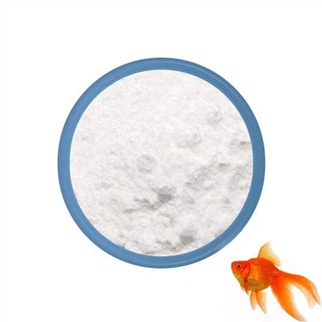
For fish nutritionists and veterinary formulation chemists, HJ HERB provides astaxanthin solutions standardized for maximum stability against the harsh pressures of commercial feed manufacturing.
| Active Compound / Form | Industrial Benefit | Primary Target Application |
| Natural/Stabilized Astaxanthin | Unmatched radical scavenging activity; preserves cellular integrity and improves tissue deposition. | Salmonid & Shrimp Feeds, Premium Layer Rations |
| Micro-Encapsulated Powder | Protects the active carotenoid from oxidation, ensuring high retention through extrusion cooking. | Extruded Aquafeed Pellets, Premixes |
| Bioavailable Carotenoid Matrix | Crosses the intestinal barrier efficiently, targeting muscle tissue (salmonids) and exoskeleton (crustaceans). | Commercial Aquaculture Nutrition |
Astaxanthin in Aquaculture
In aquaculture, astaxanthin is indispensable. Its primary use is in salmon and trout farming, where it not only enhances the characteristic pink coloration of the fish but also contributes to their health and growth. Here's why astaxanthin is crucial in aquafeeds:
- Coloration: Consumers expect the appealing pink or red hue in farmed salmon and trout, which is naturally achieved through dietary astaxanthin.
- Immune Support: Astaxanthin helps strengthen the immune system of fish, making them more resistant to diseases.
- Growth and Reproduction: Studies show that astaxanthin improves growth rates and enhances reproductive performance in aquatic species.
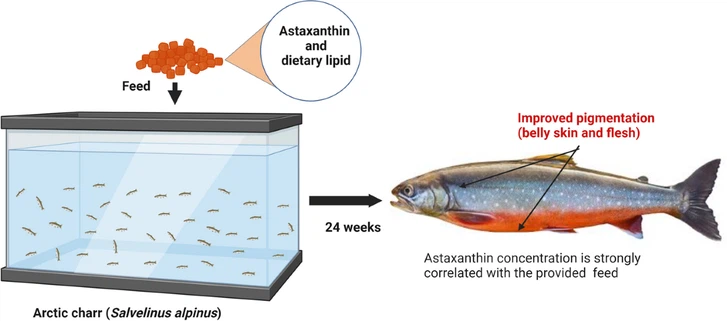
Application of Astaxanthin in Animal Feed and Aquaculture Nutrition
Bacterial astaxanthin as an animal feed supplement
For many years, carotenoids have been included in animal diets to support growth as well as product quality (6). They have been used successfully in poultry and aquaculture (the two main markets for carotenoid feed additives) to modify the color of egg yolks, fish meat and crustaceans. Following the general trend of carotenoids in the feed industry, more than 90% of astaxanthin used as feed additives is chemically synthesized. Given that animal feed is at the top of the food chain, growing public concern, especially about synthetic chemical additives, has led to strict legal regulation of carotenoids used in feed.
Astaxanthin bacteria in poultry
Chickens have become one of the most domesticated animals, raised for meat and eggs (4). Egg yolks and well-pigmented poultry meat have long been associated with good health. In many countries, the bright yellow or orange-yellow color of egg yolks as well as the meat and skin of broiler chickens is considered by consumers to be a sign of freshness and healthiness and has therefore become a quality indicator .
Feeding laying hens P. marcussi biomass containing astaxanthin, in freeze-dried form or live cells, resulted in significantly increased egg production. Additionally, significant increases in egg quality parameters including overall egg weight, yolk weight and yolk color were observed.
Bacterial astaxanthin in aquaculture
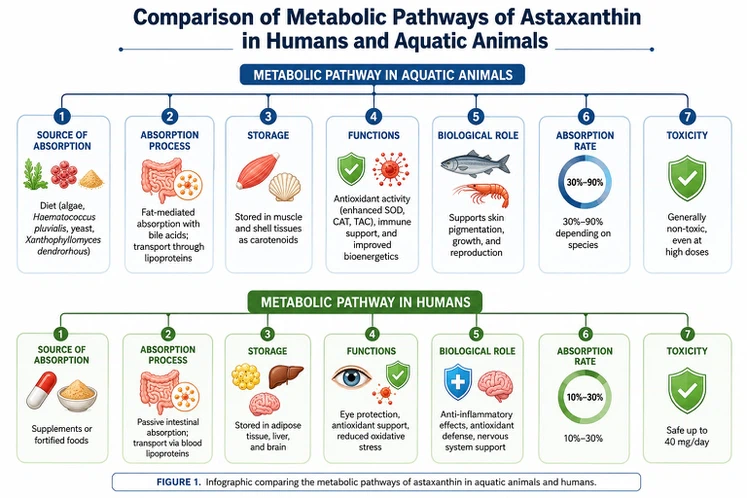
Astaxanthin is one of the most abundant marine carotenoids. Most marine and freshwater fish as well as other aquatic organisms, such as crustaceans, have their bright pink-red color thanks to astaxanthin In nature, carotenoids (e.g. astaxanthin) in crustaceans come mainly from algae while in fish, from plankton or other fish that have crustaceans in their digestive tract. The color of fish flesh or the exoskeleton of crustaceans is an important quality parameter that influences customer choice and ultimately the market value of fish and crustaceans . It has been shown that astaxanthin significantly increases the deposition of other carotenoids in the meat and skin of aquatic animals.
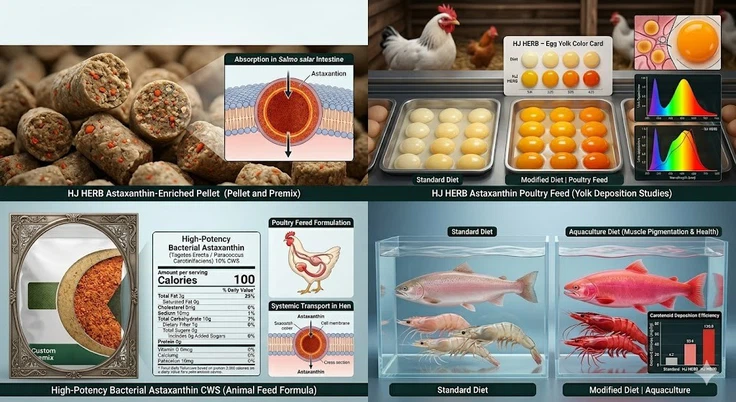
Astaxanthin in Aquatic Feed: Key Benefits
Astaxanthin is a powerful natural carotenoid and antioxidant, widely used as a premium additive in aquatic feed for fish, shrimp, crab and other aquatic species. It delivers pigmentation, growth promotion, stress resistance and health improvement effects.
1. Natural Pigmentation (Core Function)
- Enhances body color: Deepens the bright red/orange hue of shrimp, salmon, trout, tilapia and ornamental fish, improving commercial appearance and market value.
- Uniform color distribution: Avoids uneven pigmentation caused by synthetic colorants; maintains stable color during farming, transportation and freezing.
- Improves shell color of crabs and lobsters, elevating product grade.
2. Strong Antioxidant Capacity
- Neutralizes free radicals, effectively alleviates oxidative damage to cells.
- Protects cell membranes, muscle tissue and eggs from lipid peroxidation; reduces meat deterioration during storage.
- Far higher antioxidant activity than vitamin E, lutein and beta-carotene.
3. Boost Growth & Feed Utilization
- Promotes appetite and nutrient absorption, increases weight gain rate.
- Optimizes feed conversion ratio (FCR), cuts feeding costs.
- Improves muscle firmness and meat texture, enhancing edible quality of aquatic products.
4. Enhance Immunity & Disease Resistance
- Activates immune cells, strengthens the body's defense against bacteria and viruses.
- Reduces incidence of common aquatic diseases, lowers mortality rate.
- Improves survival rate during larval breeding, seedling transportation and stocking.
5. Anti-Stress Performance
- Relieves adverse stress from high density, water temperature fluctuation, water quality change and long-distance transport.
- Reduces stress-induced anorexia, slow growth and abnormal death.
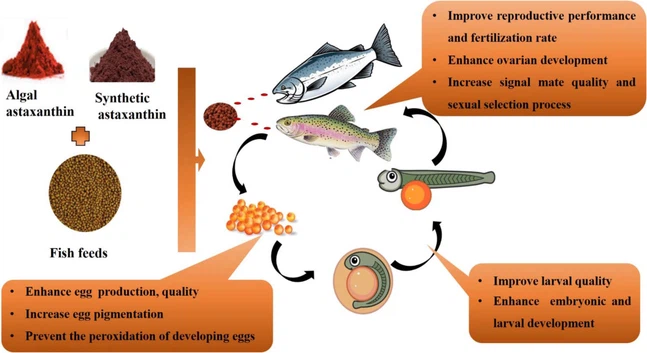
6. Reproductive Performance Improvement
- Increases egg fertility, hatching rate and larval vitality for broodstock.
- Improves egg quality and larval survival rate, supporting sustainable aquaculture.
Comparing Algae-Derived Astaxanthin with Bacterial and Synthetic Options
While naturally sourced astaxanthin from microalgae is celebrated for its sustainability and superior antioxidant potency, alternative sources such as synthetic and genetically modified organism (GMO)-derived astaxanthin are also available in the market. Synthetic astaxanthin, produced through chemical synthesis, is generally less expensive to manufacture but often lacks the same bioactivity and health benefits as its natural counterpart. On the other hand, GMO-derived astaxanthin, created by genetically engineering microorganisms, aims to improve production efficiency but raises concerns about consumer acceptance and ecological impact. In contrast, microalgae not only offer astaxanthin but also naturally contain other valuable carotenoids, such as beta-carotene, lutein, and canthaxanthin, which enhance its antioxidant profile and expand its potential health benefits. Ultimately, the choice between these sources depends on priorities such as efficacy, sustainability, cost, and market perception, with natural astaxanthin standing out as the preferred choice for premium animal feed formulations.
Aquaculture Research
Ingredient Advantage: Stable and Reliable Quality Assurance
We prioritize consistent ingredient quality:
· Standardized production processes ensure batch-to-batch consistency
· Rigorous quality control systems safeguard raw material integrity
· Tailored product specifications for diverse aquaculture requirements
Conclusion
Astaxanthin is more than just a pigment-it's a vital component in animal nutrition that supports health, productivity, and sustainability. From aquaculture to poultry farming, its versatile benefits make it an essential addition to modern feed formulations. As we continue to explore innovative solutions for global food production, astaxanthin stands out as a natural ingredient with immense potential.
Whether you're in the aquaculture industry or farming on land, incorporating astaxanthin into feed programs could lead to healthier animals, higher-quality products, and a more sustainable future. If you haven't already, it's time to consider the power of this remarkable carotenoid in animal nutrition.
At HJ Agrifeed, we provide a comprehensive portfolio of premium astaxanthin products designed to support a wide range of animal feed applications, including aquaculture and livestock nutrition. Our experienced team also offers professional technical guidance to help seamlessly incorporate our astaxanthin solutions into your feed formulations.
Service Support
We offer the following professional services:
1. Technical Support
- · Formulation design guidance
- · Application solution optimization
- · Effectiveness evaluation and analysis
2. Business Cooperation
- · Sample trial requests
- · Product customization services
- · Market information sharing
By partnering with us, you can enhance animal health, improve product quality, and promote more sustainable farming practices. Whether in aquaculture or terrestrial livestock production, integrating astaxanthin into feed programs can contribute to stronger animal performance, superior pigmentation, enhanced antioxidant support, and overall better nutritional outcomes.
Discover the potential of this powerful natural carotenoid and take your animal nutrition programs toward a healthier, more sustainable future with HJ Agrifeed. Contact us here: Email: info@hjagrifeed.com