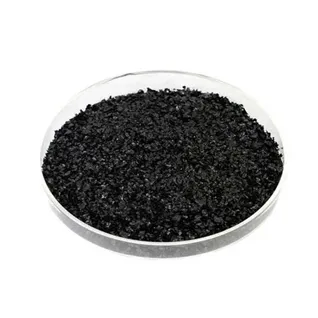
With green farming and organic farming gaining momentum, organic fertilizers are becoming increasingly popular for their non-destructive nature in enriching the soil while not damaging the environment. Tea seed meal fertilizer powder is one such environmentally-friendly solution that is a byproduct of oil extraction from Camellia oleifera seeds. It is proving to be a highly effective, multi-purpose input for gardens, farms, and greenhouses.
Nutrient-dense in organic matter, nitrogen, and saponins, tea seed meal (camellia seed meal or tea seed cake) provides an unique blend of fertilizing, pest management, and soil conditioning qualities. In this post, let's learn about its composition, advantages, usage practices, and safety related to utilizing tea seed meal as a natural fertilizer powder.

What Is Tea Seed Meal Fertilizer Powder
Tea seed meal is the powder residue on oil extraction of Camellia sinensis or Camellia oleifera seeds, which are tea tree relatives. Powdering after that, it is an ideal organic soil conditioner to fertilization.
Chief components in tea seed meal are:
- Organic nitrogen 10–15%
- Natural saponins (5–15%) with insecticidal and fungicidal activities
- Potassium and phosphorus in moderate quantity
- Amino acids and plant proteins
- Trace minerals such as calcium and magnesium
Because of its high organic matter and special saponin composition, tea seed meal fertilizes and is also a natural pesticide.
Advantages of Tea Seed Meal Fertilizer Powder
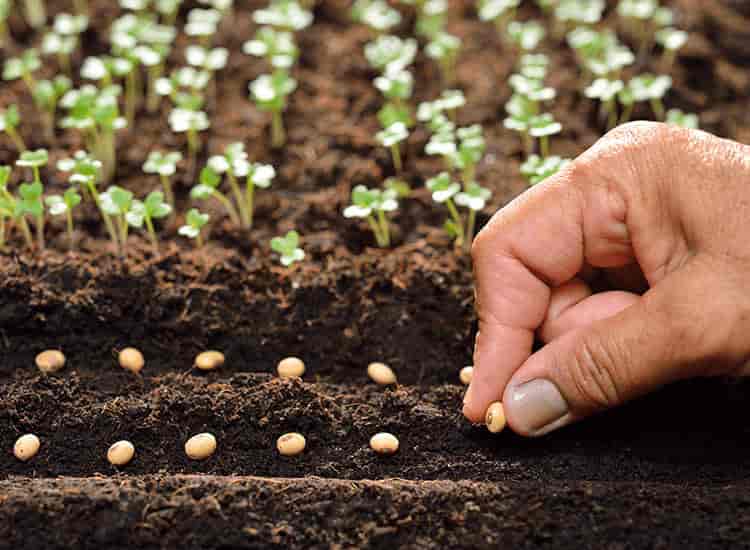
1. Organic Nitrogen for Healthy Soil
Tea seed meal powder has high, slow-release levels of organic nitrogen, which:
- Ensures healthy vegetative growth
- Enhances chlorophyll content
- Supports microbial life in the soil
Relative to synthetic nitrogen fertilizers, tea seed meal is offering a gradual, steady release of nutrients that minimize the potential for nitrogen burn and leaching.
2. Enhances Soil Structure and Microbial Activity
Due to its rich organic matter content, tea seed meal:
- Promotes soil aeration and water retention
- Fosters development of beneficial soil microorganisms
- Enhances recovery of crusted or degraded soils
It possesses a well-balanced soil biota, hence suitable for long-term soil health and fertility.
3. Natural Pest and Nematode Suppressant
One of the most distinctive attributes of tea seed meal is its saponin content, which:
- Repels or kills nematodes living in the soil such as root-knot nematodes, mole crickets, and soil grubs
- Suppresses fungal and certain pathogenic microorganisms
- Repels snails and slugs when applied as a surface dressing
Saponins are organic surfactant compounds that interfere with cell membranes of insects, but not toxic to humans and most crops if applied in the correct way.
4. Organic Farming Friendly
Tea seed meal powder is:
- Biodegradable
- Chemical-free
- Compatible with certified organic farming
Since it is multi-purpose, it minimizes the quantity of synthetic fertilizers and chemical pesticides, hence making it a favorite among permaculture, biodynamic, and natural farm systems.
Uses of Tea Seed Meal Fertilizer Powder
General Guidelines
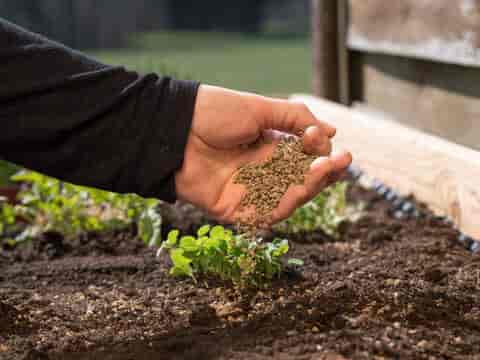
- Form: Pelletized or powdered
- Application rate: 0.5–2 kg/square meter, depending on the soil condition and crop
- Frequency: Every 60–30 days or as necessary during growing season
For Vegetable Gardens
- Apply tea seed meal at soil preparation time.
- Mix with topsoil or planting beds 1–2 weeks before sowing.
- Do not place directly in contact with new roots to avoid saponin sensitivity.
For Flower Beds and Ornamentals
- Enhances intensity of foliage and flowering colors.
- Manages soil pests in close proximity to delicate roots.
- May be used as side dressing or soil conditioner.
For Rice and Paddy Fields
Traditionally, tea seed meal has been used in flooded rice paddies in Asia to:
- Kill pests like unwanted snails, crabs, and other aquatic pests
- Fertilize the soil at transplanting or before transplanting
- Help improve water quality by eliminating surface algae and decomposed materials
- Application: 100–150 kg per acre, broadcast uniformly and worked into waterlogged land.
For Lawns and Pot Plants
- Use as a top dressing or blend with potting mixes
- Use thinly to prevent over exposure of susceptible container plants to saponins
- Controls fungus gnats and soil insects

Precautions and Best Management Practices
Tea seed meal is nontoxic and safe but appropriate use must be followed in order not to cause phytotoxicity or plant stress.
Do:
- Use in well-draining soils
- Let 3–7 days pass before planting seeds directly into treated medium
- Use while wearing a face mask or gloves to prevent inhaling fine particles
Don't:
- Apply directly to new roots or germinating seeds
- Use in high quantities, especially in poorly draining areas
- Use the day before heavy rain, which may cause runoff and wastage
Let the saponins break down naturally in the soil over a few days before planting for maximum safety and efficacy.
Environmental and Economic Benefits
Tea seed meal is not only effective-it's green and sustainable:
- A byproduct of tea oil processing, promoting zero-waste agriculture
- Repels application of chemical pesticides and fertilizers
- Increases carbon sequestration in soil organic matter
- Is pollinator- and beneficial insect-friendly
Since it brings several benefits within a single product, tea seed meal is also economical for farmers on small and large scales.
Conclusion
Tea seed meal fertilizer powder is a natural, effective solution for farmers to nourish soil, control pests, and grow healthier plants chemically free. Homeowners of gardens, organically farming, or needing greater environmentally friendly alternatives in rice paddies or vegetable gardens all thrive from tea seed meal's ideal balance of nutrition, safety, and sustainability.
Applied properly, it has the power to transform plant growth, soil health, and environmental results-making it one of nature's largest unwritten farming secrets.
References
Zhang, H. et al. (2015). Study on the effect of tea seed meal saponins on soil nematodes and plant growth. Journal of Agricultural Resources and Environment, 32(4), 378–384.
FAO (2023). Organic Fertilizers and Soil Amendments for Sustainable Agriculture.
Lin, Y. & Liu, W. (2018). Application of Camellia seed meal as a multifunctional fertilizer in paddy fields. Asian Journal of Plant Sciences, 17(2), 85–91.
Natural Resources Conservation Service (NRCS). (2022). Soil Health Guide for Organic Growers.