


Antioxidants are vital substances that help protect living beings from oxidative stress, a state of disbalance between free radicals and antioxidants within an organism. Astaxanthin is one of the most active carotenoids. It is a pigment that derives its origin from several species of algae and shellfish. This blog talks about the role of astaxanthin in safeguarding fish from oxidative stress, its relevance for aquaculture, and its relevance in the health of ecosystems.
What is Astaxanthin
Astaxanthin is a naturally occurring carotenoid, which imparts a rich red color to various organisms, such as microalgae, shrimp, krill, and fish, like salmon. It's primarily derived from the microalga Haematococcus pluvialis with antioxidant properties and surpasses other known antioxidants such as beta-carotene and lutein in antioxidant potential. It has a special configuration of molecules in space, by which it can effectively scavenge ROS, a very important mode of action against oxidative damage to cells.
Oxidative Stress in Fish
There is always some form of oxidative stress that threatens fish in any aquatic environment owing to factors like environmental stressors, pollution, and pathogens.
The Nature of Oxidative Stress in Aquatic Environments
It occurs when ROS is present more than its requirement by the cell that results from a high metabolic state, environmental disturbance such as temperature shift, or other chemical agents that include heavy metal and pesticides exposure. This results in extreme impact on fish
- Cellular Damage: ROS can damage lipids, proteins, and DNA and lead to malfunctioning cellular functions.
- Weakened Immunity: Oxidative stress at a high level may weaken the immunity or immune response of fish and make them more prone to diseases.
- Growth and Mortality Rates: Oxidative stress prolonged in time can further reduce growth rates and increase mortality, which make the challenges of aquaculture challenging.

Mechanisms of Action: How Astaxanthin Can Protect Fish from Oxidative Damage
1. Scavenging Reactive Oxygen Species:
Astaxanthin can neutralize many free radicals by reducing oxidative damage. Its structure is poised to quench singlet oxygen as well as scavenge superoxide radicals, thereby lowering levels of ROS inside cells.
2. Protecting Cellular Membranes from Lipid Peroxidation:
Because it is lipid-soluble, astaxanthin can insert into cellular membranes. This positioning prevents oxidative damage of membrane lipids from occurring, maintaining cellular integrity and functionality.
3. Boosting Endogenous Antioxidant Enzymes:
Astaxanthin is a direct scavenger of ROS but also enhances the expression of antioxidant enzymes such as superoxide dismutase (SOD) and catalase (CAT). This provides a multi-level approach to countering oxidative stress in the body.
4. Enhancing Fish Immunity:
Scientific studies have shown that supplementing astaxanthin increases the immune system of fish and thus makes them more resistant to diseases and infections. A robust immune system is essential for healthy fish, particularly in overpopulated aquaculture systems.
Astaxanthin in Aquaculture: Enhancing Fish Health and Growth with Antioxidant Power
The inclusion of astaxanthin in fish feeds has become common in aquaculture, offering a range of benefits:
1. Incorporation of Astaxanthin into Fish Diets for Maximal Growth
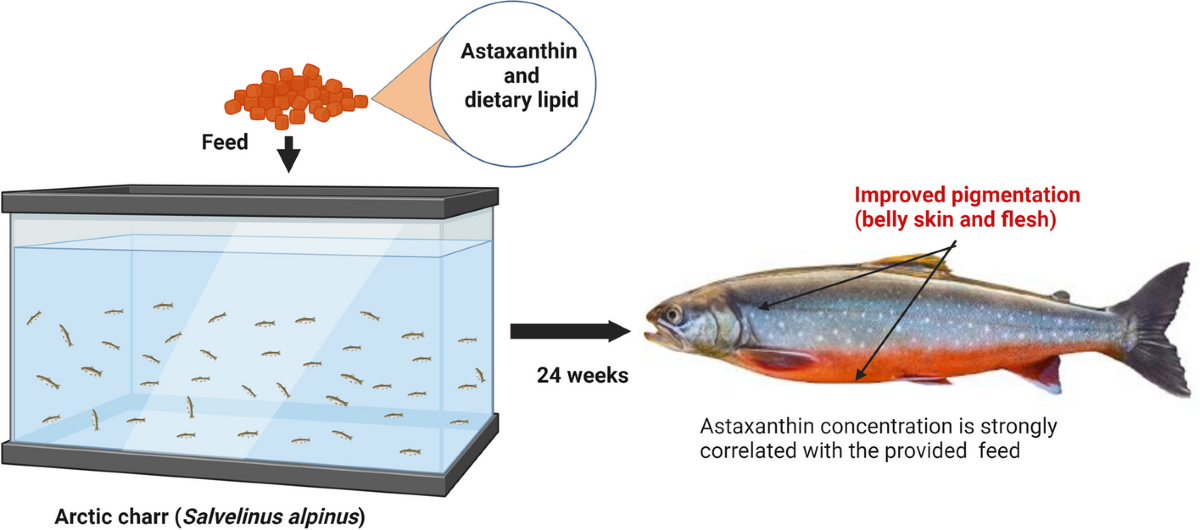
Astaxanthin significantly increases growth rate and feed conversion efficiency in a wide range of fish species, such as salmon and trout. Moreover, it improves pigmentation, which serves an important function towards the commercial appeal, especially in seafood enterprises.
2. Stress Mitigation Techniques with the Use of Astaxanthin
Astaxanthin-enriched diets make the fish better adapt to environmental stressors. The most critical times include transport, handling, and water quality changes when the fish is most susceptible to oxidative damage.
3. Improving Survival and Production Rates:
Experiments have shown that fish fed on astaxanthin-enriched feed display enhanced survival capability during stressful periods, such as disease outbreaks or changes in the aquatic environment. This feature is critical in sustainable aquaculture practices; it reduces the mortality rate while promoting yield.
4. Impact of Astaxanthin on Environmental Health
Astaxanthin's benefits extend beyond individual fish health to the broader aquatic ecosystem. The use of astaxanthin-producing microalgae can support bioremediation efforts to combat pollution in aquatic environments. By enhancing the health of fish populations, astaxanthin contributes to biodiversity and resilience in marine ecosystems.
- Future Prospects: Investigating Astaxanthin's Potential for Sustainable Aquaculture and Ecosystem Health
- While current research highlights the benefits of astaxanthin, further studies are essential to explore:
- Synergistic Effects: Elucidation of the interaction of astaxanthin with other natural compounds and antioxidants could further optimize fish health.
- Optimization of Dose: Determination of optimal levels of astaxanthin for various species of fish and environmental conditions would maximize the benefits of this carotenoid in aquaculture.
- Long-term Effects: Long-term effects of astaxanthin on growth, reproduction, and ecosystem health must be investigated to inform responsible aquaculture practices.
Conclusion
Astaxanthin is an effective antioxidant that may provide protection to fish in the form of oxidative stress resistance, improving health, growth, and survival. Its use within aquaculture not only benefits sustainable fish production but also the healthy development of aquatic ecosystems as well. With further research into the actual benefit range of this compound, astaxanthin proves to be a valuable resource in furthering fish health as well as environmental sustainability.


