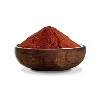
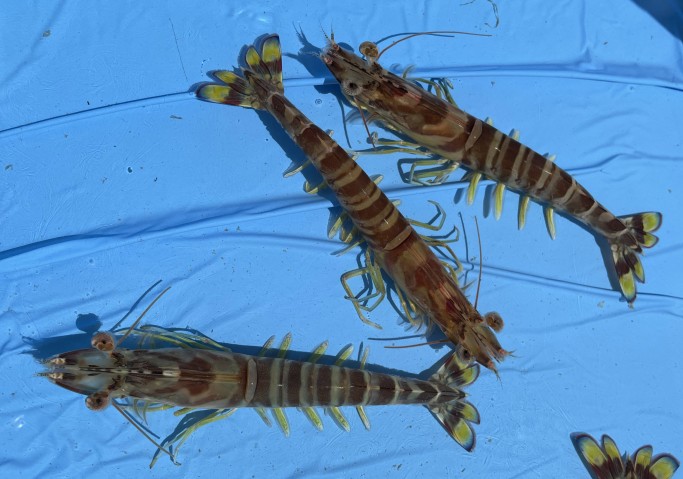
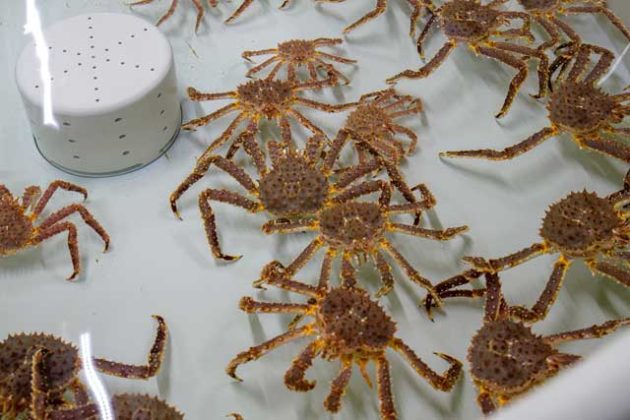
Crustacean aquaculture (prawns, shrimp, crabs, lobsters) is a burgeoning industry that must deliver not only high growth and survival but also product quality to meet consumer demands. Two attributes necessarily linked to market value are vibrant pigmentation and health. Enter astaxanthin - a natural red–orange carotenoid with functions as a pigment and a powerful antioxidant. Supplied as a feed-grade powder (usually algae- or yeast-produced), astaxanthin is now extensively used in crustacean diets to improve shell and flesh color, increase immunity, increase stress tolerance, and benefit reproductive performance.
The subsequent long-form article discusses how astaxanthin acts in crustaceans, summarizes evidence for pigmentation and immune effect, offers practical guidance on use and dosing, and touches upon safety, sustainability, and commercial issues for manufacturers.

What is astaxanthin? A short primer
Astaxanthin is a xanthophyll carotenoid that is naturally produced by microalgae (specifically Haematococcus pluvialis), some yeasts (Phaffia/Phaffia rhodozyma / Xanthophyllomyces), and concentrated up the food chain in krill, shrimp, and wild salmon. Astaxanthin does not convert to vitamin A like pro-vitamin A carotenoids (e.g., β-carotene) but instead serves largely as an antioxidant and pigment. In aquafeeds it is typically supplied as a powder concentrate or oil extract, either from natural material (the preferred option in terms of bioactivity) or by way of synthetic chemistry.

Why pigmentation matters in crustaceans
Pigmentation is a quality attribute of relevance:
- Consumer image: Red/orange color of Responder in cooked shrimp or strong shell color of crabs and lobsters signals freshness and quality to customers.
- Market premium: Pigmented animals at premium price on retail and export markets.
- Diet & health indicator: Color also gives information on nutritional status and overall condition.
As crustaceans cannot synthesize carotenoids de novo, dietary supply of astaxanthin is required for the achievement and maintenance of desirable pigmentation.
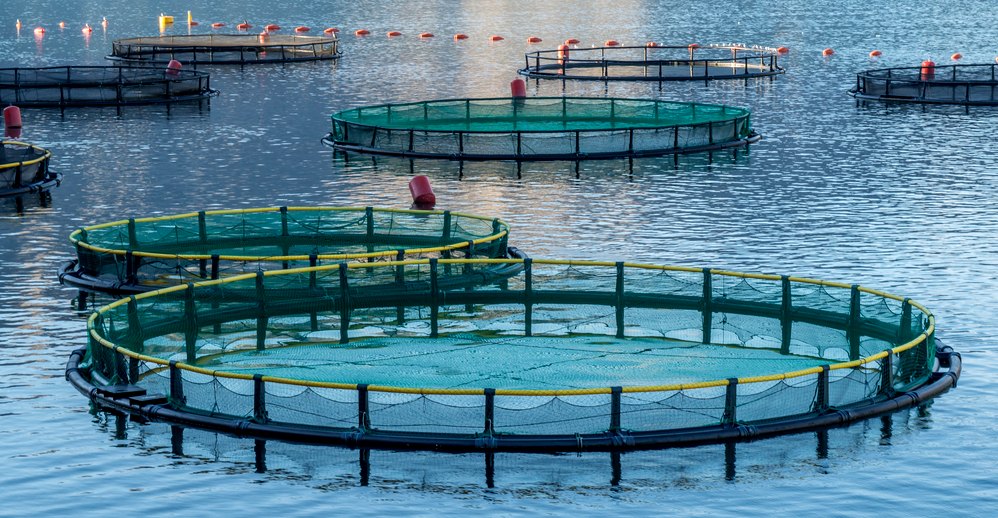
How color is produced by astaxanthin and where it is stored
Dietary astaxanthin is absorbed in the gut, lipoprotein-transported and protein-bound in tissues and the exoskeleton. It is stored in:
- Exoskeleton (shell) - impacting apparent shell color.
- Muscle tissue (meat) - contributing pink/red coloration when cooked.
- Eggs and larvae - key to broodstock quality and larval fitness.
The chemical form (free, esterified, or protein-bound), source, and feed matrix impact absorption and deposition efficiency.

Immunity and antioxidant protection - the other half of the story
Astaxanthin's biological significance extends far beyond its role in pigmentation. It is an effective antioxidant that quenches free radicals and singlet oxygen, protecting cell membranes and organelles from oxidative damage. Astaxanthin in crustaceans:
- Enhances activity of antioxidant enzymes such as superoxide dismutase (SOD) and catalase.
- Reduces lipid peroxidation (malondialdehyde, MDA) in tissue.
- Increases hemocyte counts and phagocytosis (key components of crustacean innate immunity).
- Aids the animal to endure environmental stressors (handling, changes in salinity/temperature, hypoxia, crowding) by limiting oxidative damage.
Because crustaceans possess innate immunity, antioxidant capacity is most critical in defending against pathogens (bacterial Vibrio spp., viruses, fungal infection) and minimizing mortality.

Evidence: What research shows
Pigmentation
- Chien & Shiau (2005) and other studies validated that astaxanthin-supplemented diets have a substantial effect on pigmentation in cultured shrimp, producing more intense shell and muscle color compared to unsupplemented controls.
Growth & stress tolerance
- Niu et al. (2009) reported that postlarval Litopenaeus vannamei fed on astaxanthin had higher growth, survival and tolerance to stress compared to controls.
Immune response
- Pan et al. (2011) reported high hemocyte counts and elevated antioxidant enzyme activity in astaxanthin-fed shrimp - indicators of improved innate immune function.
Reproductive performance
- Enhanced broodstock performance (hatch rate, egg quality, larval survival) was documented by Meunpol et al. (2005) and others with astaxanthin-supplemented diets for broods.
Reviews
- Summary reviews by Guerin et al. (2003) and Wade et al. (2017) reflect the diverse functions of astaxanthin in aquaculture-reproduction, immunity, pigmentation, etc.
Practical application: dosing, form, and feed processing
Typical inclusion rates
Recommended dosages vary by species, stage of life, and production goal. General ranges utilized in experiments and on-farm use:
- Postlarvae/juveniles: 25–75 mg astaxanthin/kg feed (or less depending on source potency).
- Grow-out shrimp/crabs for color & health: 50–150 mg/kg feed.
- Broodstock/hatchery feed: higher rates (e.g., 100–200 mg/kg) are routine to drive egg carotenoid concentration and larval viability.
Note: Many producers list astaxanthin in mg total astaxanthin per kg feed. Always quantify product potency (e.g., % astaxanthin by weight) and adjust accordingly.
Source matters
- Microalgal (Haematococcus pluvialis) astaxanthin - natural, most often formulated as esters; high activity and bioavailability; best choice.
- Yeast-derived astaxanthin - worthwhile alternative.
- Synthetic astaxanthin - less expensive, used widely in certain feeds, but generally less optimal for antioxidant activity and "natural" claim.
Formulation & stability
- Astaxanthin is light and oxygen-sensitive. Microencapsulate or use oil carriers to improve stability in feed manufacturing (extrusion, pelleting) and storage.
- Include antioxidants (e.g., vitamin E) in feed to stabilize astaxanthin and synergize antioxidant function.
- Because astaxanthin is fat-soluble, provide adequate dietary lipids to allow for absorption.
Timing: strategic supplementation windows
- Broodstock: Pre-conditioning of broodstock with astaxanthin (weeks to months) increases egg carotenoids, hatch success and larval health.
- Nursery/early juvenile: Early supplementation keeps survival and initial growth.
- Grow-out: Phased or continuous supplementation will preserve pigmentation and tolerance to stress; levels are sometimes increased prior to harvest to promote terminal color.

Synergies with other nutrients
Astaxanthin is usually most beneficial in combination with:
- Omega-3 fatty acids (EPA/DHA): stabilize membranes and overall health.
- Vitamin E & selenium: synergistically protect lipids and proteins from peroxidation.
- Adequate protein & amino acids: for growth and immune function.
Safety and regulatory concerns
Astaxanthin is very well proven safe at use levels in aquaculture.
No food-safety concern to the consumer does residues present; astaxanthin is a dietary antioxidant in human supplement form itself.
Always adhere to local feed additive regulations - inclusion levels permitted and labeling are geographically variable.

Economic & market benefits
Improved market prices for well-colored crustaceans.
- Reduced mortalities and better FCRs can be justified by supplementation expense.
- Improved hatchery performance (via broodstock feeding) reduces seed expense and improves production reliability.
- Natural bio-labeling (when using algae-sourced astaxanthin) can open premium markets and price-paying consumer niches.
- Growers need to offset product cost (naturally sourced astaxanthin is more expensive than synthetic) with advantages of survival, growth, pigmentation premium and reduced disease losses.

Sustainability and sourcing
Microalgae production (photobioreactors or open ponds) is sustainable if done responsibly.
Responsible production algal astaxanthin is appropriate for natural-product claims and may be compatible with eco-certifications.

Practical checklist for farmers & feed formulators
- Define objective - pigmentation, immune support, broodstock performance, or combined objectives.
- Choose source - desired natural algal astaxanthin for antioxidant activity; synthetic if on very tight budget.
- Assure potency & stability - analyze % astaxanthin, esterification, carrier type, and storage life.
- Maximize inclusion rate on the basis of species & stage; begin with published trial levels and pilot batches.
- Maintain during processing - use microencapsulation or lipid carriers; keep exposure to heat/oxygen minimized.
- Supplement diet with vitamin E, omega-3s and balanced protein.
- Check results - pigmentation (visual & instrumental), survival, FCR, and health parameters (hemocyte numbers, SOD, MDA).
Adjust timing & dose based on outcome and economics.

Limitations and considerations
- Pigmentation reaction is species, basal diet and individual gene-sequence-dependent.
- Supra-supplementation results in diminishing returns on colour and may be uneconomic.
- Storage and processing losses can reduce effective dose if astaxanthin is not protected.
Conclusion
Astaxanthin powder is a two-for-one ingredient that meets two of the most important commercial demands in crustacean aquaculture: attractive, marketable coloration and enhanced health by way of antioxidant and immune protection. Properly sourced, produced, and dosed, astaxanthin boosts survival, growth, stress resistance, reproductive function and product quality - an investment worthy for progressive crustacean producers.
As the production of astaxanthin from natural sources on a large scale becomes more economical and recipes are optimized (stability, encapsulation), it will increasingly become an even more essential component of high-quality, sustainable crustacean production systems.
References
Chien, Y. H., & Shiau, W. C. (2005). The effects of dietary supplementation of algae and synthetic astaxanthin on the pigmentation, survival, growth, and reproduction of kuruma prawn (Marsupenaeus japonicus). Journal of Shellfish Research, 24(2), 529–536.
Guerin, M., Huntley, M. E., & Olaizola, M. (2003). Haematococcus astaxanthin: applications for human health and nutrition. Trends in Biotechnology, 21(5), 210–216.
Meunpol, O., Meejing, P., & Piyatiratitivorakul, S. (2005). Maturation diet based on astaxanthin supplementation in shrimp broodstock (Penaeus monodon). Aquaculture Research, 36(13), 1216–1225.
Niu, J., Tian, L. X., Liu, Y. J., Yang, H. J., Ye, C. X., Gao, W., & Mai, K. S. (2009). Effect of dietary astaxanthin on growth, survival, and stress tolerance of shrimp (Litopenaeus vannamei). Aquaculture, 287(3–4), 404–408.
Pan, C. H., Chien, Y. H., & Hunter, B. (2011). The antioxidant defense system of shrimp is enhanced by dietary astaxanthin. Aquaculture, 315(3–4), 264–268.
Wade, N. M., Gabaudan, J., & Glencross, B. D. (2017). A review of carotenoid utilization and function in crustacean aquaculture. Reviews in Aquaculture, 9(2), 141–156.
Zhang, J., Sun, Z., Sun, P., Chen, T., & Chen, F. (2014). Microalgal astaxanthin: research and industrial applications. Biotechnology Advances, 32(8), 1731–1743.