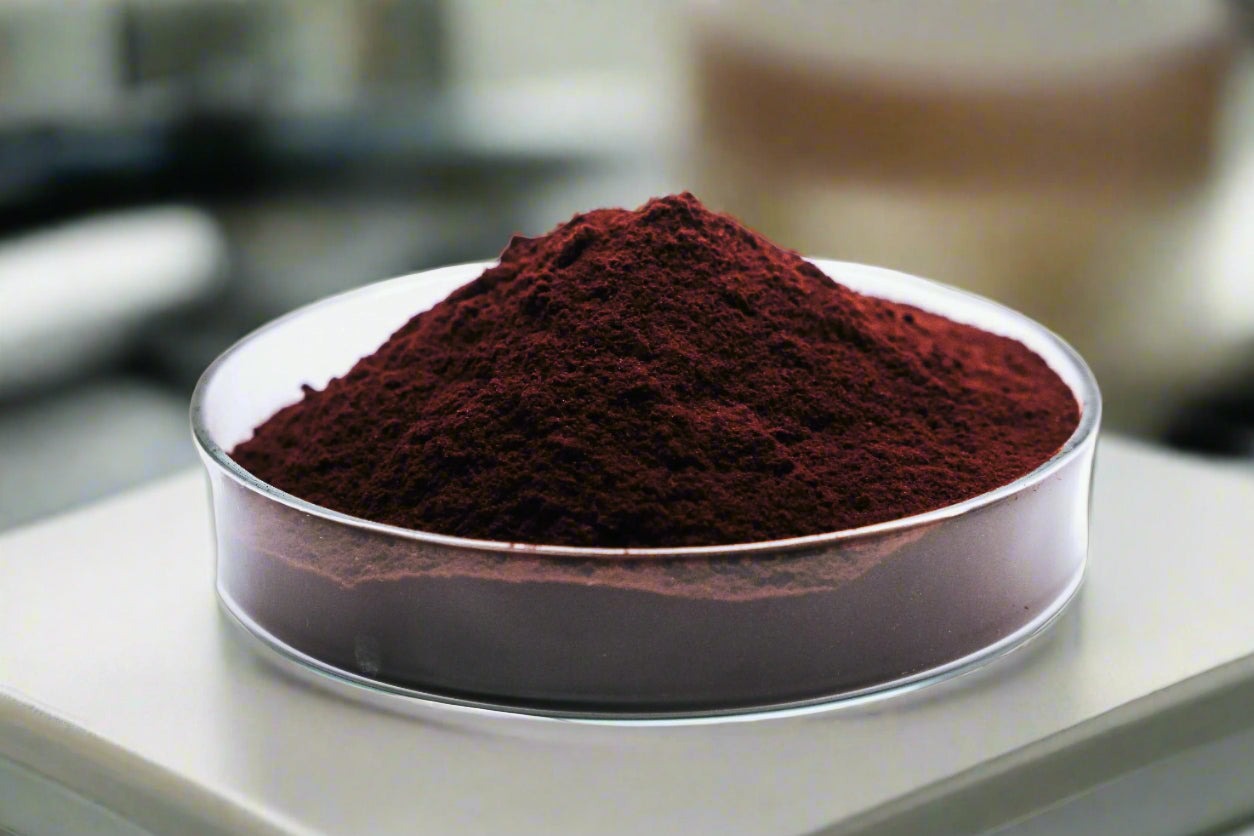
Astaxanthin Powder is an important carotenoid ingredient used in modern aquaculture feed, especially for salmon, trout, shrimp, and other aquatic species. Its best-established commercial application is fish pigmentation, particularly the development of the characteristic pink-red color of salmon flesh.
Farmed salmon receive most of their nutrients from formulated feed. Unlike plants and some microorganisms, salmon cannot produce sufficient astaxanthin themselves, so carotenoids need to be supplied through the diet. Astaxanthin is therefore incorporated into salmon feed to support muscle pigmentation and provide a concentrated dietary carotenoid.
For feed manufacturers and aquaculture producers, Astaxanthin Powder offers a practical way to control the carotenoid content of formulated feed. Product source, concentration, physical form, stability, bioavailability, and feeding strategy all influence how efficiently astaxanthin is deposited in fish tissues.
What Is Astaxanthin Powder?
Astaxanthin is a red-orange xanthophyll carotenoid naturally found in microalgae, yeast, bacteria, and aquatic organisms. In aquaculture, it is widely recognized as a feed pigment and is particularly important for salmonid species.
Commercial Astaxanthin Powder can be produced from natural sources or through synthetic production. Common natural sources include:
- Haematococcus pluvialis
- Phaffia rhodozyma
- Paracoccus carotinifaciens
Haematococcus pluvialis is a well-known microalgal source, while Phaffia rhodozyma is a yeast source of natural astaxanthin. These sources have been investigated for fish pigmentation and aquaculture feed applications.
Astaxanthin is fat-soluble, so its absorption and deposition can be influenced by the lipid content and overall composition of the feed.
Why Is Astaxanthin Used in Salmon Feed?
The primary reason for adding astaxanthin to salmon feed is to support flesh pigmentation.
In wild environments, salmon obtain carotenoids through their natural diet. In commercial aquaculture, formulated feed must provide the required carotenoid supply. Dietary astaxanthin is absorbed and can subsequently accumulate in tissues, including muscle.
The resulting pigmentation contributes to the pink-red appearance of salmon fillets, which is an important characteristic of farmed salmon products. Reviews of aquaculture nutrition identify pigmentation as the most evident commercial benefit of astaxanthin supplementation.
Beyond pigmentation, astaxanthin has also been investigated for antioxidant, immune-related, stress-response, and growth-related functions. However, the strength of evidence varies among species, doses, and production conditions.
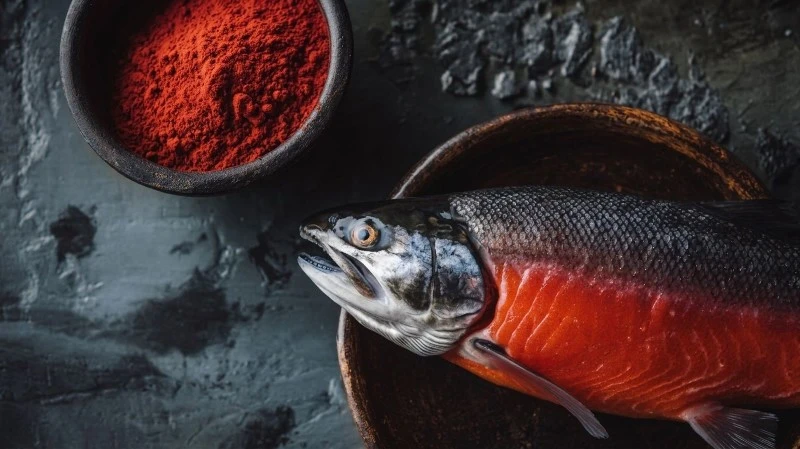
Astaxanthin Powder for Salmon Flesh Pigmentation
Supporting Pink-Red Salmon Flesh
Astaxanthin is deposited in salmon muscle and contributes to the characteristic pink-red color of the flesh.
The amount of pigment retained depends on several factors, including dietary concentration, feeding duration, fish size, feed composition, astaxanthin source, and bioavailability.
Research has shown that dietary astaxanthin can increase muscle carotenoid deposition and influence flesh coloration. Earlier Atlantic salmon studies also demonstrated that feeding strategy can influence astaxanthin retention and pigmentation efficiency.
For commercial salmon feed, consistent pigment supply is therefore an important part of achieving predictable flesh coloration.
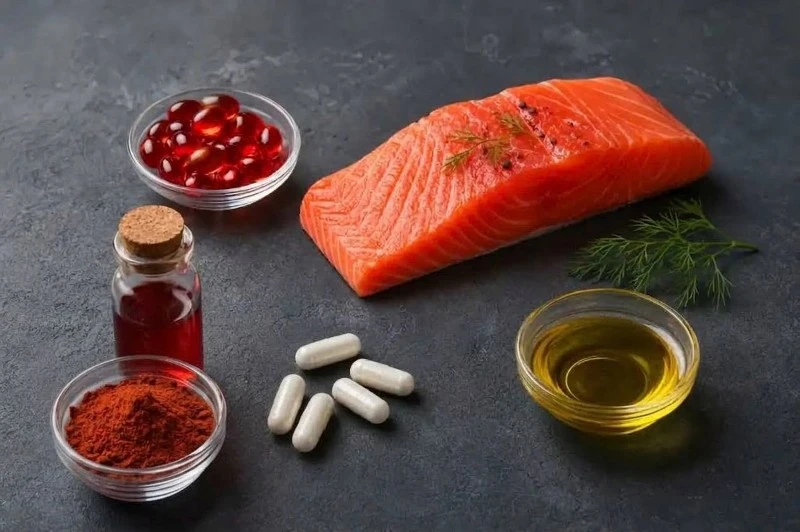
Natural Astaxanthin Powder for Salmon Feed
Natural Astaxanthin Powder is increasingly studied as a carotenoid option for aquaculture feed.
Haematococcus pluvialis
Haematococcus pluvialis is one of the most recognized natural sources of astaxanthin. The microalga can accumulate substantial amounts of astaxanthin under suitable cultivation conditions.
Its astaxanthin has been widely investigated for aquaculture applications, including salmon and trout pigmentation.
Phaffia rhodozyma
Phaffia rhodozyma, also known as Xanthophyllomyces dendrorhous, is a yeast capable of naturally producing astaxanthin.
Recent research directly compared Phaffia rhodozyma with other natural sources and synthetic astaxanthin in Atlantic salmon. The study found that pigment from Phaffia rhodozyma produced pigmentation results comparable to synthetic astaxanthin under the tested conditions.
Paracoccus carotinifaciens
Paracoccus carotinifaciens is another microbial source of natural astaxanthin. It has also been evaluated in Atlantic salmon feeding research.
An 88-day study comparing Haematococcus pluvialis, Phaffia rhodozyma, and Paracoccus carotinifaciens found that all three natural sources had significant potential for salmon pigmentation. Pigment source did not significantly affect fillet redness in that trial.
These findings demonstrate that different natural sources can be relevant to salmon feed, while also showing why individual products should be evaluated based on their actual specifications and feeding performance.
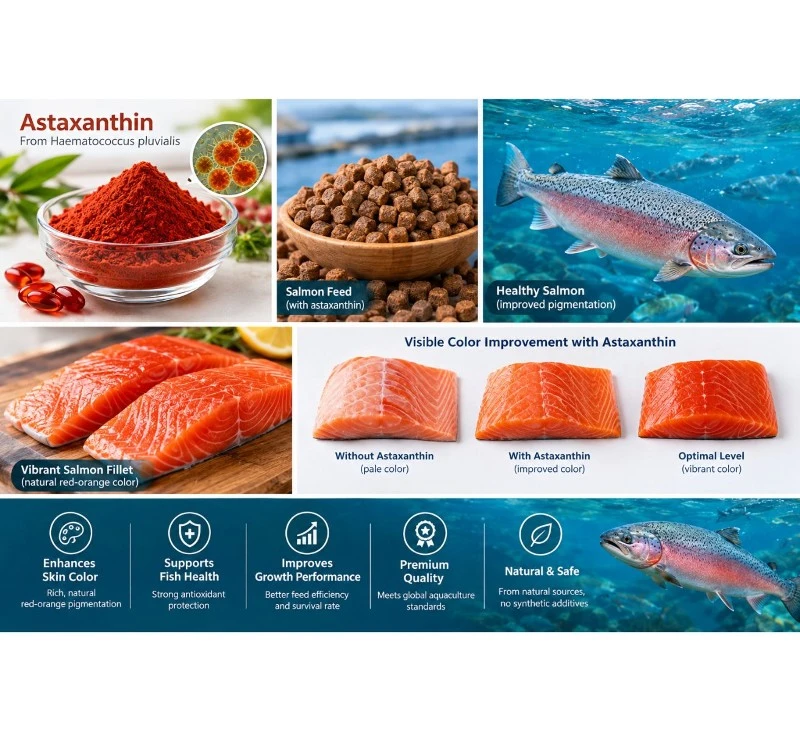
Benefits of Astaxanthin Powder for Fish
1. Supports Fish Pigmentation
The most established application of Astaxanthin Powder is pigmentation.
In salmon, astaxanthin can accumulate in muscle and contribute to pink-red flesh coloration. In other species, it can influence skin, muscle, shell, or other tissues.
This makes astaxanthin particularly useful for aquaculture products where appearance and pigmentation are important commercial characteristics.
2. Provides a Concentrated Carotenoid
Astaxanthin Powder allows feed manufacturers to introduce a defined quantity of carotenoid into formulated diets.
Instead of relying entirely on naturally occurring carotenoids in individual feed ingredients, manufacturers can use a standardized astaxanthin ingredient as part of a controlled pigmentation program.
This is particularly useful when consistent pigmentation is required between feed batches and production cycles.
3. Supports Astaxanthin Deposition in Fish Tissue
Dietary astaxanthin can be absorbed and retained in fish tissue.
However, absorption and retention are not complete. Earlier research on Atlantic salmon reported relatively low overall efficiency of dietary astaxanthin utilization, highlighting the importance of formulation, feeding frequency, source, and bioavailability.
Therefore, simply increasing the amount of astaxanthin in feed does not necessarily result in a proportional increase in muscle deposition.
4. Provides Antioxidant Potential
Astaxanthin is widely studied for its antioxidant properties. Research has investigated its role in protecting biological systems against oxidative stress and supporting antioxidant defense mechanisms.
Aquaculture reviews report antioxidant-related effects in various cultured fish and crustaceans.
However, results can vary according to species, dose, environmental conditions, and feed formulation. Antioxidant activity should therefore be considered a potential nutritional function rather than a guaranteed production effect.
5. May Support Immune and Stress-Related Functions
Astaxanthin has also been investigated for potential effects on immune response, inflammation, stress tolerance, and disease resistance.
These properties are of interest in aquaculture because fish can experience environmental stress from temperature changes, transportation, handling, stocking density, and water-quality fluctuations.
A 2025 meta-analysis covering 64 studies and 33 aquaculture species reported overall improvements in several growth, feed-utilization, antioxidant, and immune indicators, but also emphasized that responses vary according to species, dosage, and environmental context. Importantly, Atlantic salmon studies were not included in that quantitative meta-analysis because they did not meet its inclusion criteria.
For salmon-specific applications, pigmentation remains the clearest established use.

Astaxanthin for Salmon Feed and Other Fish
Although salmon is a major application, Astaxanthin Powder can also be used in feed programs for other aquatic species.
Rainbow Trout
Rainbow trout is another important salmonid species for astaxanthin pigmentation. Dietary carotenoids can be deposited in muscle and influence flesh coloration.
Shrimp
Astaxanthin is widely studied in shrimp nutrition. It contributes to body coloration and has also been investigated for antioxidant and immune-related functions.
Ornamental Fish
In ornamental aquaculture, pigmentation is particularly important because color intensity and appearance can influence the commercial value of fish. Astaxanthin can be incorporated into feed to support red and orange coloration.
Other Farmed Fish
Astaxanthin has also been investigated in species such as sea bream, tilapia, catfish, and other commercially important fish. The appropriate use depends on species-specific metabolism, feed requirements, and the desired pigmentation target.

Factors That Affect Astaxanthin Pigmentation
The effectiveness of Astaxanthin Powder depends on more than the amount added to feed.
Astaxanthin Concentration
The assay of the commercial ingredient determines how much active astaxanthin is supplied at a particular inclusion rate.
A reliable Certificate of Analysis should verify the stated concentration.
Source
Natural sources can differ in their chemical composition, astaxanthin form, associated compounds, and production process.
The source should therefore be clearly documented.
Bioavailability
The chemical form and physical characteristics of astaxanthin influence digestion, absorption, transport, and deposition.
Dietary lipids can also affect astaxanthin retention and utilization.
Feeding Duration
Pigment deposition generally depends on continuous dietary supply over an appropriate period. Production stage and harvest timing should be considered when designing a pigmentation program.
Fish Size and Growth Stage
Young and growing fish can differ from larger fish in feed intake, metabolism, and pigment deposition.
Complete Feed Composition
The basal feed may already contain carotenoids from ingredients such as algae, corn, plant materials, or other pigment sources. These background carotenoids can influence the final color profile.
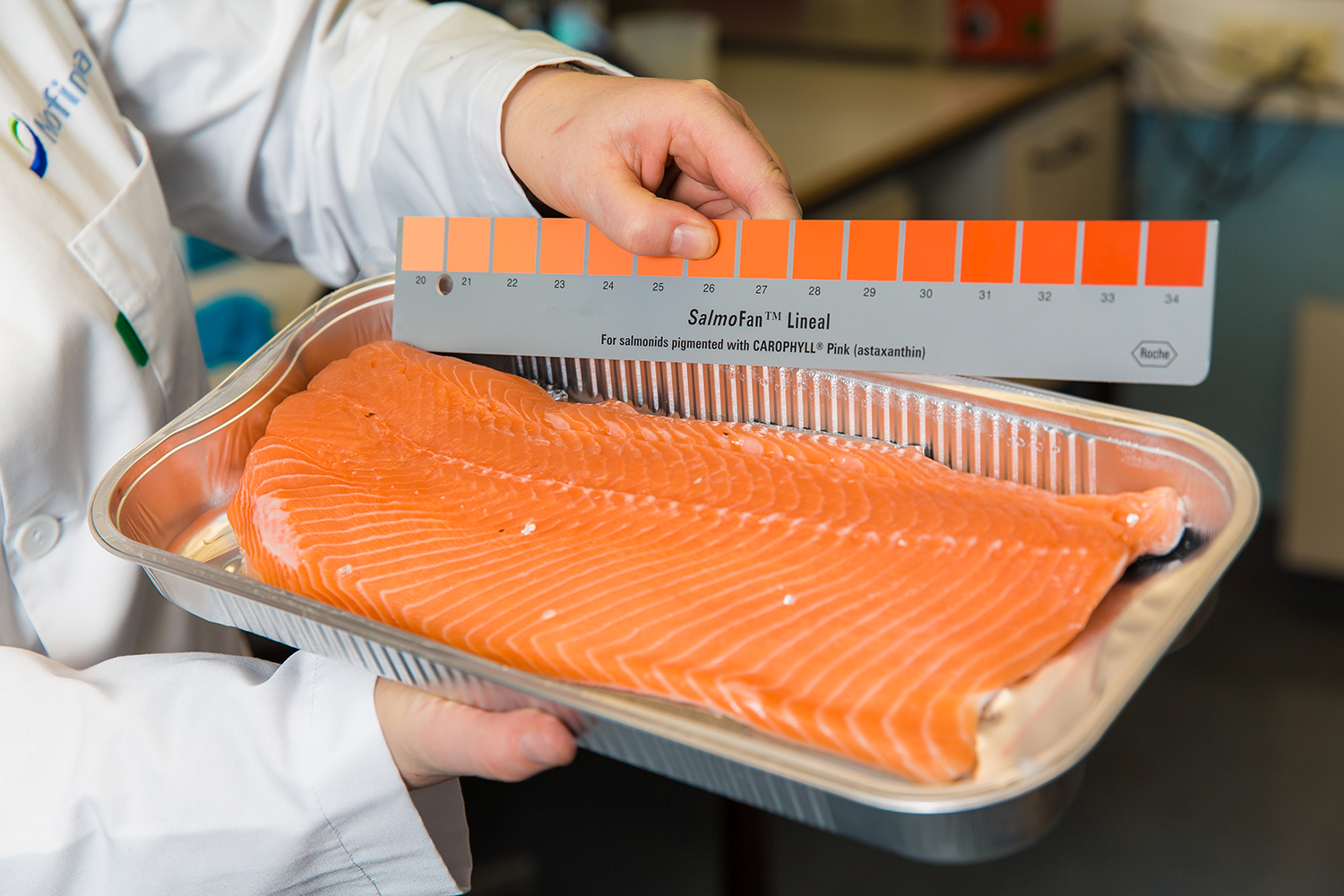
Natural Astaxanthin vs. Synthetic Astaxanthin
Natural and synthetic astaxanthin are both used or studied in aquaculture, but they should not be assumed to perform identically.
Natural astaxanthin is obtained from biological sources, while synthetic astaxanthin is produced through chemical synthesis. Differences can occur in molecular form, stereoisomer composition, esterification, physical properties, stability, and bioavailability.
When comparing products, aquafeed manufacturers should consider:
- Astaxanthin concentration
- Source
- Molecular form
- Bioavailability
- Stability
- Carrier material
- Particle size
- Dispersion
- Processing compatibility
- Regulatory requirements
- Cost
- Batch consistency
A recent Atlantic salmon trial found that natural astaxanthin from three biological sources was effective for pigmentation. The researchers found no significant difference in fillet redness among pigment sources, while some differences were observed in muscle astaxanthin concentration and other color measurements.
Therefore, natural and synthetic astaxanthin should be evaluated according to the specific product and application rather than assuming one category will always provide superior results.

How to Choose Astaxanthin Powder for Salmon Feed
For commercial aquafeed production, quality control is essential.
Astaxanthin Assay
The active astaxanthin content should be clearly specified and supported by analytical documentation.
Natural Source
For natural astaxanthin products, the biological source should be identified and traceable.
Stability
Astaxanthin can be affected by oxygen, light, heat, and other environmental conditions. Stable processing and appropriate packaging are important for preserving product quality.
Physical Form
Particle size, powder characteristics, carrier system, and dispersibility can influence incorporation into feed.
Purity
The ingredient should meet agreed specifications for heavy metals, microbiological quality, contaminants, and other relevant parameters.
Batch Consistency
Consistent astaxanthin concentration and physical properties help feed manufacturers maintain predictable formulations.
Technical Documentation
Bulk buyers should consider requesting:
- Certificate of Analysis (COA)
- Technical Data Sheet (TDS)
- Product specification
- SDS/MSDS
- Microbiological test results
- Heavy-metal test results
- Stability information
- Source and traceability documentation

Is There a Universal Astaxanthin Dosage for Fish Feed?
There is no single universal inclusion rate for Astaxanthin Powder across all fish species and production systems.
Research has used widely different concentrations depending on species, fish size, feed composition, feeding period, and research objectives. A 2025 meta-analysis reported astaxanthin supplementation levels ranging from 4 to 4,000 mg/kg across the aquaculture studies it reviewed, demonstrating the considerable variation among species and experimental purposes.
These research levels should not automatically be treated as commercial recommendations.
For salmon feed, the appropriate inclusion level should be determined according to:
- Salmon size
- Production stage
- Feed intake
- Feeding duration
- Desired flesh color
- Astaxanthin assay
- Product bioavailability
- Complete feed formulation
- Processing conditions
- Regulatory requirements
- Production economics
Commercial feed manufacturers should establish their own formulation strategy through technical specifications and, where appropriate, controlled feeding trials.
Conclusion
Astaxanthin Powder for Salmon Feed and Fish Pigmentation is an important application of carotenoid nutrition in aquaculture. Its primary role is to provide dietary astaxanthin that can be absorbed and deposited in fish tissues, contributing to the characteristic pink-red pigmentation of salmon flesh.
Natural sources such as Haematococcus pluvialis, Phaffia rhodozyma, and Paracoccus carotinifaciens have demonstrated potential for salmon pigmentation, with recent Atlantic salmon research showing that several natural sources can achieve effective pigmentation under controlled feeding conditions.
Beyond pigmentation, astaxanthin has been investigated for antioxidant, immune, stress-related, and growth functions in aquaculture. However, these effects can vary substantially between species, doses, and environmental conditions, so they should not be presented as guaranteed outcomes.
For aquafeed manufacturers, successful use of Astaxanthin Powder depends on assay, source, bioavailability, stability, physical form, feed compatibility, and batch consistency. Careful product selection and formulation can help support reliable pigmentation and consistent quality in farmed salmon and other aquatic species.
References
Elbahnaswy, S., & Elshopakey, G. E. (2023). Recent progress in practical applications of a potential carotenoid astaxanthin in aquaculture industry: A review. Fish Physiology and Biochemistry, 50, 97–126.
Effect of natural carotenoids obtained from Haematococcus pluvialis, Paracoccus carotinifaciens, and Phaffia rhodozyma on flesh pigmentation and related biochemical mechanisms in Atlantic salmon (Salmo salar L.). Aquaculture, 596, 741743 (2025).
Application of Natural Antioxidants as Feed Additives in Aquaculture: A Review. (2025).
Biological function of astaxanthin and its application in aquatic animal feeding. (2025).
Effectiveness of Astaxanthin as a Feed Supplement to Improve Growth Performance and Feed Utilization in Aquaculture Animals: A Meta-Analysis. Antioxidants, 14(5), 609 (2025).
Pigmentation of Atlantic salmon (Salmo salar) fed astaxanthin in all meals or in alternating meals. Aquaculture.
FAQ
Q1: What is Astaxanthin Powder for Salmon Feed?
A1: Astaxanthin Powder is a concentrated red-orange carotenoid ingredient used in formulated aquaculture feed. It is particularly important in salmon feed because it supports the characteristic pink-red pigmentation of salmon flesh.
Q2: Why is Astaxanthin added to salmon feed?
A2: Astaxanthin is added primarily to provide dietary carotenoids and support muscle pigmentation. Salmon cannot produce sufficient astaxanthin themselves, so formulated feed supplies this carotenoid to support tissue deposition and flesh coloration.
Q3: What is astaxanthin?
A3: Astaxanthin is a red-orange xanthophyll carotenoid naturally found in microalgae, yeast, bacteria, and aquatic organisms. In aquaculture, it is widely used as a feed pigment and concentrated carotenoid ingredient.
Q4: How does astaxanthin affect salmon flesh color?
A4: Dietary astaxanthin is absorbed by salmon and can be deposited in tissues, including muscle. Its accumulation in muscle contributes to the characteristic pink-red appearance of salmon fillets.
Q5: What are the main benefits of Astaxanthin Powder for salmon?
A5: The main benefits include supporting salmon flesh pigmentation, providing a concentrated dietary carotenoid, supporting astaxanthin deposition in muscle, and helping feed manufacturers control carotenoid levels in formulated feed. Astaxanthin is also studied for antioxidant and immune-related nutritional functions.
Q6: Is pigmentation the main application of astaxanthin in salmon farming?
A6: Yes. Flesh pigmentation is the primary commercial application of astaxanthin in salmon aquaculture. Dietary supplementation helps support the pink-red color associated with salmon flesh.
Q7: Can Astaxanthin Powder increase astaxanthin deposition in salmon muscle?
A7: Yes. Dietary astaxanthin can be absorbed and deposited in salmon muscle. The level of deposition can vary according to factors such as astaxanthin concentration, source, bioavailability, feeding duration, fish size, and complete feed composition.
Q8: What natural sources of astaxanthin are used for salmon feed?
A8: Common natural sources include Haematococcus pluvialis, Phaffia rhodozyma, and Paracoccus carotinifaciens. These microorganisms have been studied as natural sources of astaxanthin for aquaculture feed applications.
Q9: What is Haematococcus pluvialis astaxanthin?
A9: Haematococcus pluvialis is a microalgal source of natural astaxanthin. The microalga can accumulate substantial amounts of astaxanthin under suitable cultivation conditions and is widely studied for fish pigmentation applications.
Q10: What is Phaffia rhodozyma astaxanthin?
A10: Phaffia rhodozyma, also known as Xanthophyllomyces dendrorhous, is a yeast that naturally produces astaxanthin. It has been investigated as a natural carotenoid source for salmon and other aquaculture species.