


In recent years, the creature-nourishing industry has been progressively centered on characteristic and feasible arrangements to progress animal well-being and efficiency. Among the various plant-based compounds picking up consideration, tea saponin has risen as a promising fixing with surprising benefits for animal well-being. Derived from tea plants, especially green tea (Camellia sinensis), tea saponin offers a range of health-promoting properties that can essentially upgrade animal health and boost resistant work.

The Science Behind Tea Saponin: A Natural Wonder from Green Tea
Tea saponin is a group of triterpene glycosides found in tea plants, with particularly high concentrations in green tea. These compounds are characterized by their unique molecular structure, consisting of a hydrophobic aglycone (sapogenin) attached to one or more hydrophilic sugar chains. This amphipathic nature gives tea saponins their distinctive properties and biological activities.
The extraction of tea saponin from green tea involves a meticulous process that preserves the compound's integrity and potency. Advanced techniques such as supercritical fluid extraction and ultrasound-assisted extraction have been developed to optimize the yield and quality of tea saponin extracts. These methods ensure that the beneficial properties of the compound are maintained for use in animal feed applications.
Research has shown that tea saponin exhibits a wide array of biological activities, including:
- Antimicrobial properties
- Anti-inflammatory effects
- Antioxidant capabilities
- Immunomodulatory actions
- Gut health promotion
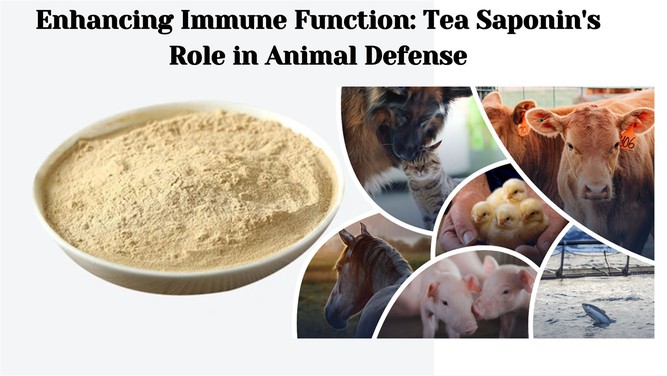
Enhancing Immune Function: Tea Saponin's Role in Animal Defense
One of the most critical benefits of green tea extract, like tea saponin in creature wellbeing, is its capacity to boost safe work. The safe framework plays a vital part in securing creatures from pathogens, natural stressors, and infection. By improving safe reaction, tea saponin helps make a vigorous defense instrument that can lead to more beneficial, more versatile animals.
Tea saponin's immunomodulatory effects are multifaceted and involve several mechanisms:
- Stimulation of Immune Cell Production: Considerations have appeared that tea saponin can increment the generation and action of different safe cells, counting lymphocytes, macrophages, and common executioner cells. This improved cellular resistance makes a difference; creatures mount a more successful reaction against potential dangers.
- Cytokine Regulation: Tea saponin has been observed to modulate the production of cytokines, which are signaling molecules that play a crucial role in immune response. By optimizing cytokine levels, tea saponin helps maintain a balanced immune system, preventing both underactivity and overreaction.
- Antioxidant Protection: The potent antioxidant properties of tea saponin contribute to immune health by neutralizing harmful free radicals. This protection helps prevent oxidative stress, which can otherwise weaken the immune system and make animals more susceptible to diseases.
- Gut Microbiome Support: A significant portion of an animal's immune system is located in the gut. Tea saponin has been shown to promote beneficial gut bacteria while inhibiting harmful pathogens, thereby supporting overall gut health and, by extension, immune function.
Beyond Immunity: Comprehensive Health Benefits of Tea Saponin for Animals
While the immune-boosting properties of tea saponin are indeed remarkable, its benefits for animal health extend far beyond enhancing immune function. This versatile compound offers a range of additional advantages that contribute to overall animal well-being and performance.
- Improved Digestive Health: Tea saponin has been shown to have positive effects on the gastrointestinal tract of animals. It can help modulate gut microbiota, promoting the growth of beneficial bacteria while inhibiting harmful pathogens. This prebiotic-like action contributes to improved digestive efficiency and nutrient absorption.
- Enhanced Growth Performance: Numerous studies have reported improved growth rates and feed conversion ratios in animals supplemented with tea saponin. This effect is likely due to a combination of factors, including enhanced nutrient utilization, improved gut health, and reduced energy loss through methane production in ruminants.
- Antioxidant Protection: The potent antioxidant properties of tea saponin help protect animal cells from oxidative damage. This protection is particularly important in high-stress situations or during periods of rapid growth, when animals are more susceptible to oxidative stress.
- Anti-inflammatory Effects: Chronic inflammation can have detrimental effects on animal health and productivity. Tea saponin has been shown to possess anti-inflammatory properties, helping to mitigate inflammation-related issues and promote overall health.
- Parasite Control: Some studies have suggested that tea saponin may have antiparasitic properties. While more research is needed in this area, the potential for natural parasite control is an exciting prospect for sustainable animal production.
- Stress Reduction: Animals in production systems often face various stressors that can impact their health and performance. Tea saponin has been observed to have adaptogenic properties, helping animals cope better with environmental and physiological stressors.
- Improved Meat and Egg Quality: In poultry production, tea saponin supplementation has been associated with improved egg quality parameters, including increased egg weight and shell thickness. In meat-producing animals, it may contribute to improved meat quality by reducing oxidative processes in muscle tissues.
- Environmental Benefits: By improving feed efficiency and reducing methane emissions in ruminants, tea saponin contributes to more sustainable animal production. This aligns with the growing demand for environmentally friendly agricultural practices.

Conclusion
Tea saponin, derived from green tea extract, has emerged as a powerful natural compound with the potential to revolutionize animal health and nutrition. Its ability to boost immune function, enhance digestive health, improve growth performance, and offer a range of other health benefits makes it an invaluable tool for the animal feed industry.
For producers looking to harness the power of tea saponin in their animal feed formulations, it's crucial to partner with experienced suppliers who can provide high-quality, standardized tea saponin products. Expert guidance in incorporating tea saponin into feed formulations can help ensure optimal results and maximize the benefits for animal health and performance.
If you're interested in exploring how tea saponin can benefit your animal production system, or if you have any questions about incorporating this powerful natural compound into your feed formulations, we invite you to reach out to our team of experts. Contact us at info@hjagrifeed.com for personalized advice and support in leveraging the power of tea saponin for improved animal health and productivity.
References
Cheeke, P. R. (2000). Actual and potential applications of Yucca schidigera and Quillaja saponaria saponins in human and animal nutrition. Journal of Animal Science, 78(suppl_1), 1-10.
Francis, G., Kerem, Z., Makkar, H. P., & Becker, K. (2002). The biological action of saponins in animal systems: a review. British Journal of Nutrition, 88(6), 587-605.
Guo, Y. Q., Liu, J. X., Lu, Y., Zhu, W. Y., Denman, S. E., & McSweeney, C. S. (2008). Effect of tea saponin on methanogenesis, microbial community structure and expression of mcrA gene, in cultures of rumen micro-organisms. Letters in Applied Microbiology, 47(5), 421-426.
Hu, W., Liu, J., Wu, Y., Guo, Y., & Ye, J. (2006). Effects of tea saponins on in vitro ruminal fermentation and growth performance in growing Boer goat. Archives of Animal Nutrition, 60(1), 89-97.
Mao, H. L., Wang, J. K., Zhou, Y. Y., & Liu, J. X. (2010). Effects of addition of tea saponins and soybean oil on methane production, fermentation and microbial population in the rumen of growing lambs. Livestock Science, 129(1-3),


