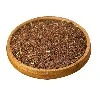
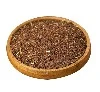
Premium Tea Seed Meal is a plant-derived agricultural by-product obtained mainly from Camellia oleifera seeds after oil extraction. Also called tea seed cake or Camellia seed meal, it naturally contains tea saponins, protein, carbohydrates, minerals, residual oil, and other plant compounds.
Because of its unique composition, Premium Tea Seed Meal has attracted interest in animal feed, livestock nutrition, agriculture, aquaculture, soil management, and tea saponin extraction. Its applications depend on the processing method, chemical composition, saponin concentration, and intended use.
What Is Premium Tea Seed Meal?
Tea Seed Meal is produced after oil is extracted from Camellia seeds. The remaining solid material is dried and processed into meal or powder.
The composition of tea seed meal can vary according to the Camellia species, growing conditions, oil extraction method, and subsequent processing. Studies have identified saponins, proteins, carbohydrates, lipids, minerals, and phenolic compounds as important components of Camellia seed-derived materials.
One of its most notable components is tea saponin, a naturally occurring triterpenoid compound with surface-active and biological properties.

Why Is Tea Seed Meal Valuable?
The value of Tea Seed Meal comes from its combination of nutritional components and naturally occurring bioactive compounds.
It can serve as:
- A plant-based agricultural raw material
- A potential feed ingredient after appropriate evaluation
- A source of tea saponins
- A raw material for agricultural products
- A material for further extraction and processing
- A by-product utilization solution for the Camellia oil industry
Research into Camellia seed cake increasingly focuses on recovering valuable compounds and developing higher-value applications, supporting more efficient use of agricultural resources.
Benefits of Tea Seed Meal for Animal Feed
Plant-Based Feed Ingredient
Tea Seed Meal contains protein and other nutrients that can contribute to its potential nutritional value.
However, its nutritional composition varies between products. Therefore, feed manufacturers should obtain laboratory specifications before incorporating it into commercial animal diets.
Important parameters may include:
- Crude protein
- Moisture
- Ash
- Residual oil
- Fiber
- Saponin concentration
- Microbiological quality
This information allows formulators to determine whether the product is appropriate for the target animal and feed application.
Source of Natural Saponins
Tea Seed Meal is particularly valuable as a natural source of saponins.
Tea saponins are triterpenoid compounds naturally present in Camellia seeds. Scientific research has characterized numerous saponins from Camellia species and investigated their biological activities.
For manufacturers, Tea Seed Meal can therefore be used as a raw material for Tea Saponin extraction.
Compared with purified Tea Saponin Powder, however, Tea Seed Meal contains many other components and has a less standardized saponin concentration.
Potential Application in Ruminant Nutrition
Cattle, sheep, and goats have complex rumen microbial ecosystems. Plant saponins have been widely investigated for their effects on rumen microorganisms and fermentation.
Research reviews have reported that saponin-containing plant materials can influence rumen microbial populations, fermentation characteristics, nutrient utilization, and methane production.
This makes Tea Seed Meal an interesting raw material for research into botanical ingredients for ruminant feed.
However, results can differ significantly according to the saponin source, concentration, animal species, basal diet, and inclusion level.
Potential Support for Rumen Fermentation Research
Saponins can interact with certain rumen microorganisms and may alter microbial populations.
Researchers have therefore investigated saponin-containing ingredients for their potential influence on:
- Rumen fermentation
- Protozoal populations
- Microbial protein production
- Nutrient utilization
- Methane formation
These effects are not guaranteed for every Tea Seed Meal product, so commercial applications should be supported by product-specific trials.
Potential Methane-Mitigation Applications
Methane is naturally produced during ruminant digestion. Reducing methane emissions while maintaining animal productivity is an important area of livestock research.
Some plant saponins have demonstrated potential to modify rumen fermentation and reduce methane production under specific experimental conditions.
Tea Seed Meal may therefore be investigated as a source of naturally occurring saponins for sustainable livestock nutrition.
It should not, however, be promoted as a guaranteed methane-reduction product without supporting evidence from trials using the specific product and target animal.
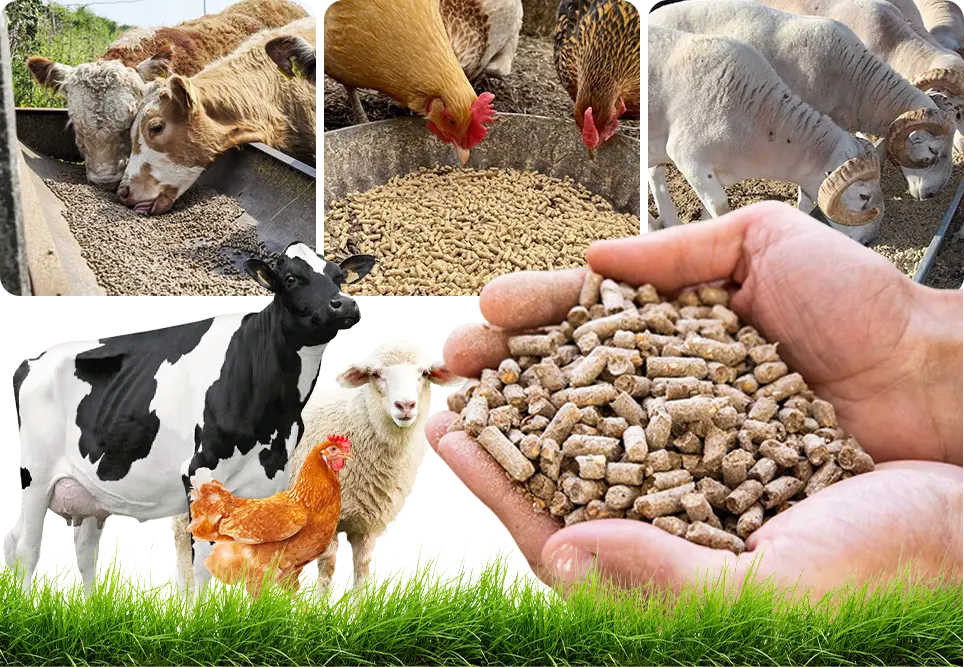
Tea Seed Meal for Cattle, Sheep, and Goats
Cattle Feed
Cattle are among the main livestock species considered in research involving saponin-containing plant materials.
Premium Tea Seed Meal may be investigated for cattle feed formulations where the nutritional composition and saponin content are clearly characterized.
Potential areas of application include:
- Rumen fermentation research
- Botanical feed formulation
- Sustainable feed development
- Nutrient utilization studies
- Saponin-based nutrition programs
For dairy and beef cattle, Tea Seed Meal should be incorporated into a balanced ration that meets the animal's energy, protein, fiber, vitamin, and mineral requirements.
Sheep and Goat Feed
Sheep and goats can also be potential targets for research involving Camellia-derived feed ingredients.
Tea Seed Meal may be considered for specialized feed programs where the objective is to evaluate plant saponins and other nutritional components.
Because tolerance and nutritional responses can vary between species, inclusion levels should be determined based on the product's actual specifications and feeding research.

Tea Seed Meal for Poultry Feed
Tea Seed Meal has also been investigated for poultry applications, but saponin concentration is an important consideration.
High concentrations of saponins can limit the suitability of untreated tea seed meal as a direct poultry-feed ingredient.
Recent research into Camellia oleifera meal found that detoxification and fermentation could reduce saponin levels and improve its nutritional characteristics for poultry feed applications.
This demonstrates the importance of distinguishing between:
Raw Tea Seed Meal → Higher natural saponin content
Processed/Detoxified Tea Seed Meal → Modified composition and potentially improved feed suitability
Feed manufacturers should always evaluate the specific processing method and laboratory composition before using Tea Seed Meal in poultry diets.

Benefits of Tea Seed Meal for Agriculture
Tea Seed Meal is not limited to animal-feed applications. Its naturally occurring saponins make it an interesting material for agriculture and environmental applications.
Natural Agricultural Raw Material
Tea Seed Meal can be used as a raw material in agricultural products and can also be further processed to recover tea saponins.
Tea saponins have natural surface-active properties, making them useful in certain agricultural formulations.
Research has also investigated Camellia-derived saponins for potential pest-management applications. Studies have reported insecticidal activity from saponin fractions obtained from Camellia oleifera.
Actual agricultural efficacy depends on the formulation, target pest, application rate, and regulatory status.
Soil Management and Remediation
Tea saponins have attracted interest in soil remediation because they function as natural nonionic surfactants.
Research has investigated their ability to influence the mobility and removal of certain contaminants, including heavy metals, in soil.
Potential research applications include:
- Soil remediation
- Heavy-metal removal
- Phytoremediation
- Microbial remediation
- Contaminated-soil management
These applications generally involve tea saponin extracts rather than simply untreated Tea Seed Meal, so the specific material should be clearly identified.
Sustainable Agricultural By-Product Utilization
Tea Seed Meal is generated during Camellia oil production. Converting this by-product into useful feed, agricultural, or industrial materials can improve resource efficiency.
Instead of disposing of the seed residue, manufacturers can recover valuable compounds such as saponins and develop additional products.
This supports the concept of a circular agricultural economy, where by-products are transformed into higher-value resources.

Tea Seed Meal vs. Tea Saponin Powder
Tea Seed Meal and Tea Saponin Powder are related but different products.
| Feature | Tea Seed Meal | Tea Saponin Powder |
|---|---|---|
| Source | Camellia seed after oil extraction | Extracted from Camellia materials |
| Composition | Protein, saponins, carbohydrates, minerals, etc. | Concentrated saponin fraction |
| Saponin content | Naturally variable | More standardized |
| Processing | Drying and milling | Extraction and concentration |
| Feed formulation | Requires nutritional evaluation | More precise saponin dosing |
| Main value | Agricultural raw material | Functional saponin ingredient |
| Further processing | Suitable for saponin extraction | Ready for specialized applications |
If a manufacturer requires a standardized saponin concentration, Tea Saponin Powder may be more suitable.
If the goal is to obtain a Camellia-derived agricultural by-product containing multiple natural components, Tea Seed Meal may be more appropriate.

How to Choose Premium Tea Seed Meal
Bulk buyers should evaluate several important specifications before purchasing Tea Seed Meal.
Saponin Content
The saponin concentration should be clearly stated because it can influence the intended application and feed suitability.
Protein Content
Protein content is important when the material is being evaluated as a feed ingredient.
Moisture
Controlled moisture helps maintain storage stability and reduce the risk of deterioration.
Residual Oil
Residual oil depends on the extraction method and may affect the nutritional and physical properties of the meal.
Ash and Fiber
These parameters provide additional information about the composition and consistency of the material.
Particle Size
Uniform particle size can improve handling, mixing, and further processing.
Microbiological Quality
Feed-grade materials should meet appropriate microbiological requirements for the intended market.
Certificate of Analysis
A professional supplier should provide a COA with relevant parameters such as:
- Saponin content
- Protein
- Moisture
- Ash
- Fiber
- Residual oil
- Microbiological specifications
- Heavy metals, where applicable

Storage and Handling
Proper storage helps maintain the quality of Tea Seed Meal during transportation and long-term storage.
Recommended practices include:
- Store in a cool and dry warehouse.
- Protect from moisture.
- Avoid prolonged direct sunlight.
- Keep packaging properly sealed.
- Prevent contamination.
Follow supplier-recommended storage conditions.
Bulk shipments should be stored in clean facilities with suitable ventilation and moisture control.

Safety and Feed-Use Considerations
Although Tea Seed Meal is a natural plant-derived material, it should not automatically be considered suitable for unrestricted animal feeding.
The naturally occurring saponins are an important factor. Depending on their concentration and chemical structure, saponins can have different effects on feed intake, digestion, and animal performance.
An assessment by the European Food Safety Authority of a specific Camellia oleifera seed extract also demonstrates the importance of product-specific safety evaluation. The assessment did not establish target-animal safety for that particular additive based on the available evidence.
Therefore, commercial use should be based on:
- Product-specific laboratory analysis
- Appropriate feeding trials
- Target-animal evaluation
- Correct inclusion levels
- Applicable feed regulations
- Reliable quality documentation

Applications of Premium Tea Seed Meal
Depending on product specifications and applicable regulations, Premium Tea Seed Meal may be considered for:
- Livestock feed research
- Cattle feed
- Sheep and goat feed
- Processed poultry feed
- Tea Saponin extraction
- Agricultural products
- Soil-management applications
- Botanical agricultural formulations
- Aquaculture-related applications
- Industrial recovery of plant compounds
Conclusion
Premium Tea Seed Meal is a versatile Camellia-derived agricultural by-product with potential applications in animal feed, agriculture, and further processing.
Its naturally occurring saponins make it an especially valuable raw material for Tea Saponin production. Research into plant saponins has also explored their effects on rumen fermentation, microbial populations, nutrient utilization, and methane production, making Camellia-derived materials relevant to livestock nutrition research.
In agriculture, tea saponins have been investigated for their natural surfactant properties, soil-remediation potential, and botanical applications. At the same time, utilizing Camellia seed meal helps create additional value from the by-products of oil production.
For feed manufacturers and agricultural companies, the key to successful application is consistent quality, verified saponin content, appropriate processing, nutritional evaluation, proper storage, and compliance with local regulations.
With suitable quality control and application-specific research, Premium Tea Seed Meal can serve as a useful plant-based raw material for modern livestock nutrition, agriculture, and sustainable resource utilization.
References
Zhang, J., Liu, J., Wang, J., et al. Advances in Camellia oleifera seed meal saponins: Extraction, analysis, bioactivity, and application. Food Chemistry, 492, 145277, 2025.
Advances in valorization of Camellia oleifera Abel. seed cake: A review on the bioactive components, health benefits, extraction methods, and potential food applications. Food Research International, 208, 116134, 2025.
Wina, E., Muetzel, S., & Becker, K. The Impact of Saponins or Saponin-Containing Plant Materials on Ruminant Production-A Review. Journal of Agricultural and Food Chemistry, 53(21), 8093–8105.
Transforming Camellia oleifera meal into feedstuff: Enhancing value through detoxification and fermentation. Bioresource Technology, 2026.
Insecticidal Activity and Insecticidal Mechanism of Total Saponins from Camellia oleifera. 2019.
Tea saponins: Effective natural surfactants beneficial for soil remediation, from preparation to application. RSC Advances.
EFSA Panel on Additives and Products or Substances used in Animal Feed. Safety and efficacy of a feed additive consisting of a Camellia oleifera seed extract for use in animal species. EFSA Journal, 2024.