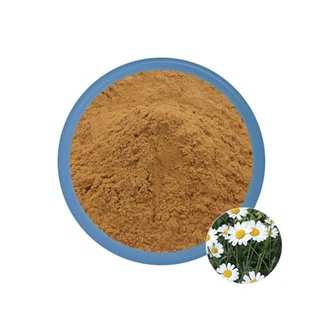
In an era where environmental consciousness is paramount, the agricultural sector is witnessing a paradigm shift towards sustainable practices. Among the innovative solutions emerging in this field, tea saponin stands out as a promising natural pesticide. Derived from tea plants, this compound offers a chemical-free alternative for plant protection, aligning with the growing demand for eco-friendly farming methods. This article delves into the properties, applications, and benefits of tea saponin in agriculture, shedding light on its role in fostering a greener approach to pest management.

Comprehending Tea Saponin: Nature's Pest Control Agent
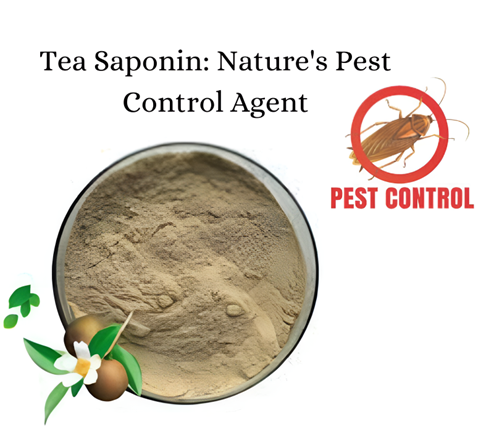
Tea saponin is a group of secondary metabolites primarily extracted from the seeds of tea plants (Camellia sinensis). These compounds belong to the larger family of saponins, which are naturally occurring plant glycosides known for their foaming properties and biological activities. The unique structure of tea saponin, consisting of a hydrophobic aglycone linked to hydrophilic sugar moieties, contributes to its diverse range of applications.
The pest control properties of tea saponin stem from its ability to disrupt the cell membranes of insects and other pests. When applied to plants, it creates a protective barrier that deters harmful organisms while remaining harmless to beneficial insects and the environment. This selective action sets tea saponin apart from broad-spectrum synthetic pesticides, which often indiscriminately affect both harmful and beneficial organisms.
Research has shown that tea saponin exhibits potent insecticidal, antifungal, and antimicrobial activities. Its efficacy against a wide range of agricultural pests, including aphids, mites, and certain soil-borne pathogens, has been documented in numerous studies. Moreover, the compound's low toxicity to mammals and quick biodegradability makes it an attractive option for organic farming and integrated pest management programs.
Applications and Benefits of Tea Saponin in Agriculture
The versatility of tea saponin extends beyond its primary role as a natural pesticide. Its applications in agriculture are multifaceted, offering farmers a holistic approach to crop protection and soil health management. As a foliar spray, tea saponin acts as a contact insecticide, effectively controlling soft-bodied pests like aphids, whiteflies, and spider mites.
The compound's surfactant properties enhance its spread and adherence to leaf surfaces, ensuring thorough coverage and prolonged protection. This characteristic also makes tea saponin an excellent adjuvant, improving the efficacy of other biopesticides and reducing the overall chemical load in agricultural systems.
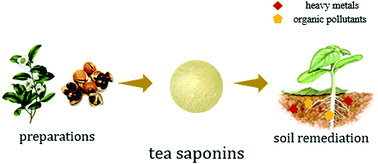
In soil applications, tea saponin demonstrates remarkable nematicidal properties, suppressing harmful nematode populations that can devastate root systems. Its ability to modify soil structure and improve water retention contributes to enhanced nutrient uptake and root development, indirectly boosting plant resilience against pests and diseases.
The benefits of incorporating tea saponin into agricultural practices extend beyond pest control. Studies have shown that tea saponin can stimulate plant growth and increase crop yields. This growth-promoting effect is attributed to its ability to enhance photosynthesis and activate plant defense mechanisms, leading to stronger, more productive plants.
Furthermore, the use of tea saponin aligns with the principles of sustainable agriculture by reducing reliance on synthetic chemicals. This transition not only mitigates environmental concerns associated with conventional pesticides but also addresses the growing consumer demand for chemical-free produce. Farmers adopting tea saponin-based pest management strategies can potentially access premium markets for organic and eco-friendly products, enhancing their economic sustainability.
Innovations and Future Prospects in Tea Saponin Research
The potential of tea saponin as a natural pesticide has spurred extensive research and development efforts. Scientists and agronomists are exploring novel formulations and application methods to optimize its efficacy and expand its use across different crops and growing conditions.
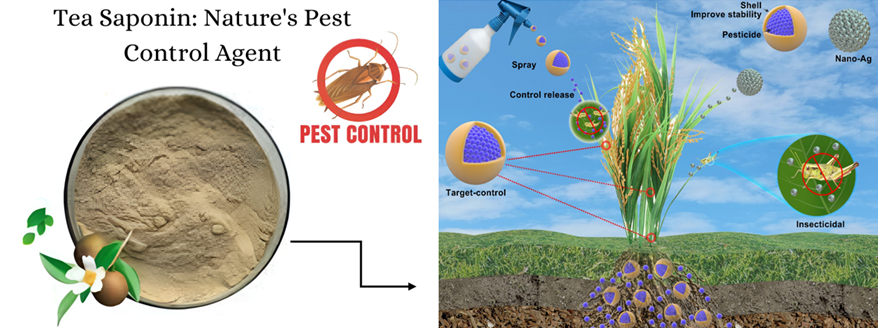
One area of innovation involves the development of nano-encapsulated tea saponin formulations. This technology aims to enhance the compound's stability, control its release, and improve its resistance to environmental degradation. Nano-encapsulation could potentially extend the protective period of tea saponin applications, reducing the frequency of treatments and labor costs for farmers.
Another promising avenue of research focuses on combining tea saponin with other natural compounds or beneficial microorganisms. These synergistic approaches seek to create comprehensive biocontrol solutions that address multiple pest and disease challenges simultaneously. For instance, integrating tea saponin with entomopathogenic fungi or plant growth-promoting rhizobacteria could yield powerful, multi-functional biopesticides that protect crops while enhancing soil health.
The exploration of tea saponin's potential extends beyond traditional agriculture. Researchers are investigating its applications in urban farming, hydroponics, and vertical agriculture systems. In these controlled environments, tea saponin could play a crucial role in maintaining plant health without the need for synthetic chemicals, aligning with the goals of sustainable urban food production.
As climate change poses new challenges to agriculture, the adaptability of tea saponin-based pest management strategies becomes increasingly relevant. Studies are underway to assess the compound's efficacy under various environmental stresses, including drought and extreme temperatures. Early results suggest that tea saponin could enhance plant resilience to abiotic stresses, offering a dual benefit of pest control and climate adaptation.
The growing interest in green tea extract as a source of bioactive compounds has also contributed to advancements in tea saponin research. While tea saponin is primarily extracted from tea seeds, innovative extraction methods are being developed to isolate saponins from green tea leaves and byproducts. This approach not only expands the availability of tea saponin but also presents an opportunity to valorize tea processing waste, contributing to a circular economy model in the tea industry.
As research progresses, the regulatory landscape surrounding natural pesticides is evolving. Efforts are underway to streamline the approval process for biopesticides like tea saponin, recognizing their potential to contribute to sustainable agriculture. This regulatory support, coupled with increasing consumer awareness and demand for eco-friendly products, is expected to drive the adoption of tea saponin-based solutions in commercial agriculture.
Conclusion
Tea saponin represents a compelling example of how nature's solutions can address modern agricultural challenges. As a natural pesticide, it offers an effective, environmentally friendly alternative to synthetic chemicals, aligning with the global push towards sustainable farming practices. The multifaceted benefits of tea saponin-from pest control to plant growth promotion and soil health enhancement-make it a valuable tool in the arsenal of eco-conscious farmers and gardeners.
For those interested in exploring the benefits of tea saponin and other natural agricultural solutions, HJHERB Biotechnology offers a range of high-quality, naturally derived products. To learn more about incorporating tea saponin into your agricultural practices or to discuss custom formulations, please contact us at info@hjagrifeed.com. Our team of experts is ready to support your journey towards sustainable, chemical-free plant protection.
References
Chen, Y., et al. (2018). "Tea saponin as a natural non-ionic surfactant: Applications and future perspectives." Applied Sciences, 8(12), 2354.
Zhu, F., et al. (2020). "Tea saponin: A natural surfactant from tea seed with multifunctional applications in food, agriculture, and cosmetics." Comprehensive Reviews in Food Science and Food Safety, 19(4), 2050-2084.
Upadhyay, R. K. (2019). "Plant-derived antimicrobial agents: A review." Chemistry & Biodiversity, 16(11), e1900380.
Zhang, Q., et al. (2020). "Tea saponin reduces the damage of Ectropis obliqua in tea plants by regulating the activity of protective enzymes." Frontiers in Plant Science, 11, 159.
Debnath, B., et al. (2019). "Role of plant alkaloids on human health: A review of biological activities." Materials Today Chemistry, 14, 100202.