In the world of agriculture and horticulture, the quest for sustainable and effective plant growth promoters is ongoing. Among the myriad of options available, tea seed meal has emerged as a potent and eco-friendly solution. This byproduct of tea oil production, derived from the seeds of Camellia oleifera, is gaining recognition for its remarkable ability to enhance plant growth and vitality. In this comprehensive exploration, we'll delve into the multifaceted benefits of tea seed meal as a plant growth promoter and biostimulant, uncovering its potential to revolutionize crop production and gardening practices.
The Composition and Properties of Tea Seed Meal
Tea seed meal is a treasure trove of bioactive compounds that contribute to its efficacy as a plant growth promoter. Rich in saponins, polyphenols, and essential nutrients, this natural product offers a holistic approach to plant nutrition and protection. The saponins, in particular, play a crucial role in the meal's biostimulant properties, enhancing nutrient uptake and bolstering plant defense mechanisms.
The nutrient profile of tea seed meal is impressive, boasting significant amounts of nitrogen, phosphorus, and potassium – the holy trinity of plant macronutrients. Additionally, it contains trace elements such as calcium, magnesium, and sulfur, which are indispensable for various physiological processes in plants. This balanced nutrient composition makes tea seed meal an ideal organic fertilizer, capable of meeting the diverse nutritional needs of crops and ornamental plants alike.
Moreover, the organic matter content in tea seed meal improves soil structure and promotes beneficial microbial activity. As it decomposes, it enhances soil porosity, water retention capacity, and overall fertility, creating an optimal environment for root development and nutrient absorption. This dual action of direct plant nutrition and soil improvement sets tea seed meal apart from conventional synthetic fertilizers.
Mechanisms of Action: How Tea Seed Meal Promotes Plant Growth
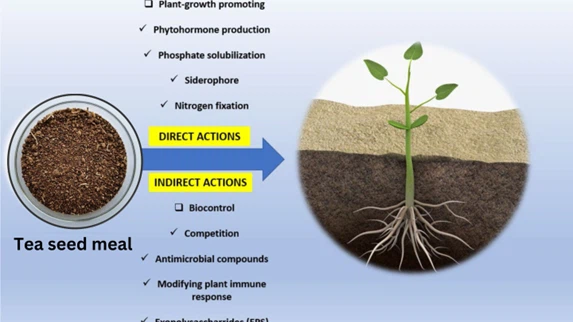
The growth-promoting effects of tea seed meal are attributed to several interconnected mechanisms. At the forefront is its ability to stimulate root development. The saponins present in tea seed meal act as natural surfactants, reducing surface tension and facilitating the movement of water and nutrients in the soil. This enhanced mobility allows roots to access resources more efficiently, leading to increased root mass and improved nutrient uptake.
Another key mechanism is the induction of plant defense responses. The bioactive compounds in tea seed meal, particularly the polyphenols, act as elicitors, triggering the plant's innate immune system. This priming effect enhances the plant's ability to withstand biotic and abiotic stresses, resulting in more robust and resilient crops. The induced resistance can protect plants against a wide range of pathogens and pests, reducing the need for chemical pesticides.
Tea seed meal also influences plant hormone balance, particularly affecting the levels of auxins and cytokinins. These hormones are crucial regulators of plant growth and development, controlling processes such as cell division, elongation, and differentiation. By modulating hormone levels, tea seed meal can promote more balanced and vigorous plant growth, leading to improved yields and quality.
Furthermore, the slow-release nature of nutrients from tea seed meal ensures a steady supply of essential elements throughout the growing season. This sustained nutrition prevents nutrient leaching and promotes more efficient use of resources, aligning perfectly with sustainable agriculture practices.
Applications and Benefits in Various Agricultural and Horticultural Settings
The versatility of tea seed meal as a plant growth promoter and biostimulant is evident in its wide range of applications across different
agricultural and horticultural contexts. In field crops, such as cereals and vegetables, the application of tea seed meal has been shown to significantly increase yields while improving crop quality. For instance, studies have reported enhanced fruit size, color, and sugar content in tomatoes and strawberries treated with tea seed meal.
In orchards and vineyards, green tea extract offers a sustainable solution for long-term soil fertility management. Its slow-release properties make it ideal for perennial crops, providing consistent nutrition throughout the growing season. Fruit trees treated with tea seed meal have exhibited improved resistance to diseases, increased fruit set, and enhanced overall tree vigor.
The benefits of tea seed meal extend to greenhouse and hydroponic systems as well. In these controlled environments, the meal's biostimulant effects can be optimized, leading to faster growth rates and higher-quality produce. Hydroponic growers have reported improved root development and enhanced nutrient uptake efficiency when incorporating tea seed meal into their nutrient solutions.
For home gardeners and landscapers, tea seed meal offers an eco-friendly alternative to synthetic fertilizers. Its dual action as a fertilizer and soil conditioner makes it particularly valuable for maintaining healthy lawns, vibrant flower beds, and productive vegetable gardens. The natural pest-repellent properties of tea seed meal also make it an attractive option for organic gardening enthusiasts.
In the realm of turf management, tea seed meal has shown promise in promoting denser, more resilient grass growth. Golf courses and sports fields can benefit from its ability to enhance root development and improve stress tolerance, resulting in lush, wear-resistant turf.
The environmental benefits of using tea seed meal as a plant growth promoter are noteworthy. By reducing reliance on synthetic fertilizers and pesticides, it helps mitigate soil and water pollution. The organic matter content of tea seed meal also contributes to carbon sequestration, aligning with efforts to combat climate change through sustainable agricultural practices.

Conclusion
Tea seed meal stands out as a multifaceted and potent plant growth promoter and biostimulant, offering a sustainable solution for modern agriculture and horticulture. Its unique composition of bioactive compounds, coupled with its nutrient-rich profile, makes it an invaluable tool for enhancing plant growth, improving soil health, and boosting crop resilience. As the agricultural sector continues to seek environmentally friendly alternatives to conventional inputs, tea seed meal is poised to play an increasingly significant role in sustainable crop production systems worldwide.
The journey of exploring and harnessing the full potential of tea seed meal is ongoing, with exciting possibilities on the horizon. For those interested in incorporating this natural powerhouse into their agricultural or gardening practices, or for more information on sustainable plant growth solutions, we invite you to reach out to us at info@hjagrifeed.com. Our team of experts is ready to provide guidance and support in optimizing the use of tea seed meal for your specific needs.
References
Chen, L., et al. (2018). "Tea seed pellet as a potential organic fertilizer for sustainable tea production." Sustainability, 10(12), 4544.
Kamran, M., et al. (2020). "Tea seed powder: A potential organic fertilizer for sustainable crop production." Environmental Science and Pollution Research, 27(24), 29987-30004.
Liu, X., et al. (2019). "Effects of tea seed powder on soil properties, plant growth, and microbial communities in the rhizosphere of Camellia sinensis." Journal of Soil Science and Plant Nutrition, 19(3), 712-723.
Wang, Y., et al. (2021). "Tea seed meal as a sustainable biostimulant in agriculture: Current status and future perspectives." Journal of Cleaner Production, 315, 128217.
Ye, Y., et al. (2015). "Effects of tea saponin on soil microbial communities and soybean growth." Biology and Fertility of Soils, 51(5), 563-572.