Astaxanthin is one of the most important carotenoids used in modern aquaculture feed, particularly for salmon and other salmonid species. In farmed Atlantic salmon, dietary astaxanthin is closely associated with the characteristic pink-red color of the flesh and is therefore an important component of commercial feed formulations.
Unlike some nutrients that fish can synthesize internally, salmon obtain carotenoids such as astaxanthin primarily through their diet. This makes dietary supplementation important when producers want to achieve consistent flesh pigmentation and manage the nutritional profile of formulated feeds. Reviews of aquaculture nutrition identify astaxanthin as one of the major carotenoids used commercially for fish pigmentation.
Natural astaxanthin is available from sources such as Haematococcus pluvialis , Phaffia rhodozyma and Paracoccus carotinifaciens . These sources are increasingly studied for use in salmon feed and other aquaculture applications.
Contact us for inquiry and certifications and for free sample. Email:info@hjagrifeed.com
What is Astaxanthin?
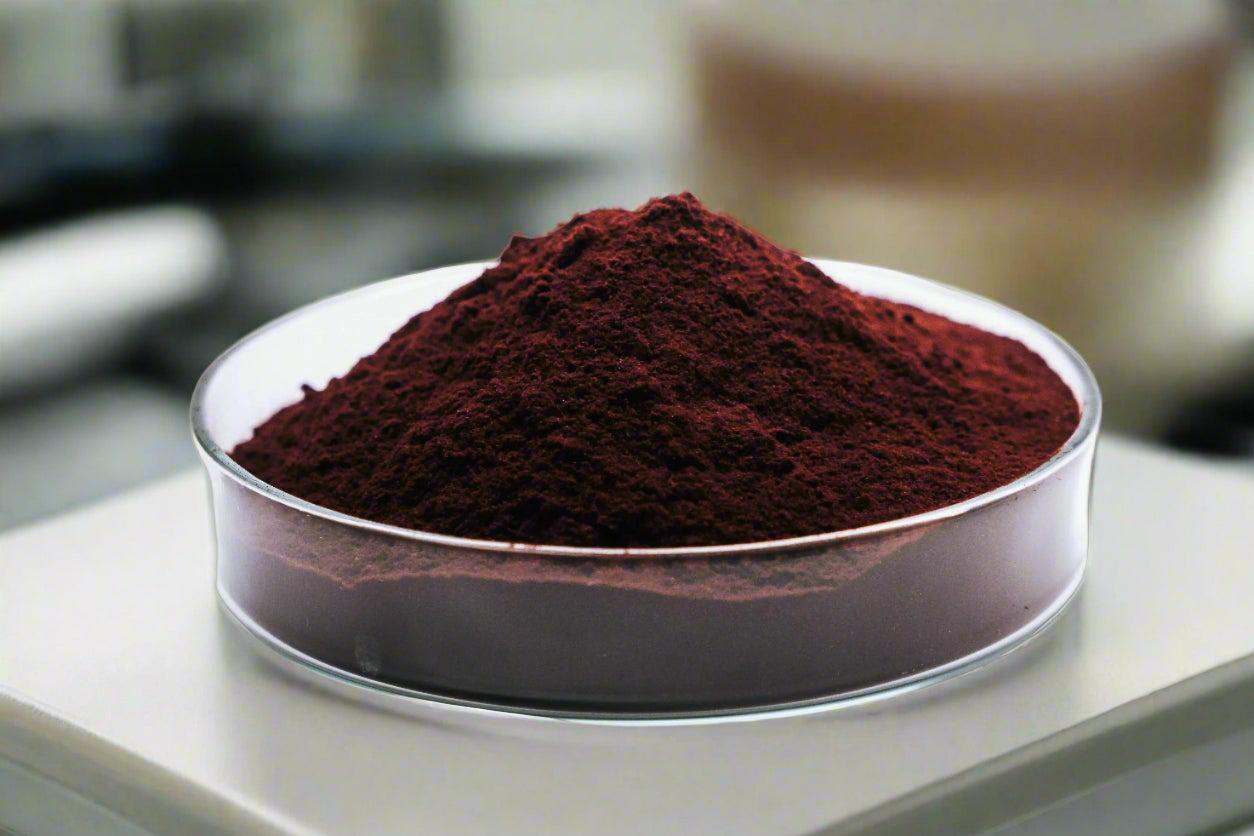
Astaxanthin is a red-orange xanthophyll carotenoid belonging to the carotenoid family. It naturally occurs in various microorganisms and aquatic organisms and is responsible for much of the characteristic red or pink coloration found in salmon, trout, shrimp and other aquatic species.
For aquaculture, astaxanthin is primarily used as a dietary pigment . After being consumed, it can be absorbed and transported through the fish's tissues, where part of the dietary pigment is retained in muscle and other tissues.
In Atlantic salmon, the accumulation of astaxanthin in muscle contributes to the pink-red appearance of the fillet. The amount retained depends on factors such as feed concentration, feeding duration, fish size, diet composition, source and form of astaxanthin , and physiological condition.
Why Is Astaxanthin Important in Salmon Feed?
Wild salmon obtain carotenoids from their natural diet, including carotenoid-containing aquatic organisms. Farmed salmon, however, receive formulated feeds, so carotenoid supply has to be deliberately incorporated into the feed.
Astaxanthin has several important functions in salmon aquaculture:
- Supports salmon flesh pigmentation
- Contributes to the characteristic pink-red fillet color
- Provides a concentrated carotenoid source
- Can accumulate in salmon muscle tissue
- Provides antioxidant activity
- Has been investigated for immune and stress-related functions
Supports the nutritional and commercial quality of farmed salmon
Among these applications, flesh pigmentation is the clearest and most established commercial use .

Astaxanthin for Salmon Flesh Pigmentation
The most important reason for adding astaxanthin to salmon feed is to achieve the desired flesh color.
Consumers commonly associate the pink-red color of salmon flesh with salmon quality, and pigmentation is therefore an important characteristic of farmed salmon products. Astaxanthin is deposited in the muscle and contributes to this coloration.
Research on Atlantic salmon has demonstrated that dietary astaxanthin can produce measurable differences in flesh pigmentation. Earlier feeding research found that flesh deposition was related to dietary carotenoid dose, while more recent studies continue to investigate how source and formulation affect pigmentation efficiency.
A 2025 study directly compared natural astaxanthin sources from Haematococcus pluvialis , Phaffia rhodozyma , and Paracoccus carotinifaciens with synthetic astaxanthin in Atlantic salmon over an 88-day feeding trial. The study found that natural sources were effective for salmon pigmentation, although pigment source did not significantly change fillet redness under the experimental conditions.
This demonstrates that the source of astaxanthin matters for formulation and product development, but natural and synthetic sources should be evaluated based on their actual specification, bioavailability and feeding performance rather than assuming that one source will always outperform another.

Benefits of Astaxanthin in Salmon Aquaculture
1. Supports Natural-Looking Salmon Flesh Color
Astaxanthin is deposited in salmon muscle and contributes to the characteristic pink-red appearance of salmon fillets.
For commercial aquaculture, consistent pigmentation is an important quality consideration. Feed manufacturers can therefore use astaxanthin as part of a controlled pigmentation program.
The effectiveness of pigmentation depends on the amount supplied and how efficiently the fish absorbs and retains the carotenoid.
2. Provides a Concentrated Carotenoid Source
Astaxanthin powder or other concentrated astaxanthin preparations allow feed manufacturers to introduce a controlled amount of carotenoid into formulated salmon diets.
Compared with relying only on naturally occurring pigments in feed ingredients, a standardized astaxanthin ingredient provides greater control over the carotenoid contribution of the finished feed.
3. Supports Carotenoid Deposition
Dietary astaxanthin can be absorbed and deposited in fish tissues. However, absorption and retention are not complete, and utilization varies with fish size, diet, astaxanthin form and feeding strategy.
Research in Atlantic salmon has shown that pigment deposition can be influenced by feeding frequency and dietary delivery strategy.
This is one reason why feed manufacturers should consider the complete feeding program rather than evaluating astaxanthin concentration alone.
4. Provides Antioxidant Activity
Astaxanthin is widely studied for its antioxidant properties. In aquaculture research, dietary astaxanthin has been associated with changes in antioxidant biomarkers and other physiological responses.
A broad 2023 review describes antioxidant, immune-related and stress-related functions reported in aquatic animals, while a 2025 review similarly discusses antioxidant and immune functions of astaxanthin in aquatic-animal feeding.
However, these effects can vary according to species, dose, environmental conditions and experimental design. Therefore, antioxidant activity should be considered a potential nutritional benefit rather than a guaranteed production outcome.
5. Supports Research Into Fish Health and Stress Response
Aquaculture research has investigated astaxanthin in relation to oxidative stress, immune response, inflammation and stress tolerance.
These effects are particularly interesting because farmed fish can experience environmental challenges associated with handling, stocking density, transportation, temperature changes and other production conditions.
Nevertheless, the evidence for growth, health and stress-related outcomes is not identical across all fish species. A 2025 meta-analysis found overall positive effects of astaxanthin supplementation across qualifying aquaculture studies but specifically noted that Atlantic salmon studies did not meet its inclusion criteria for the quantitative analysis.
For salmon-specific feed development, pigmentation therefore remains the more established application.

Natural Astaxanthin Sources for Salmon Feed
Several natural biological sources are used or studied as sources of astaxanthin.
Haematococcus pluvialis
Haematococcus pluvialis is one of the best-known natural sources of astaxanthin. This microalga can accumulate substantial quantities of astaxanthin under appropriate cultivation conditions.
Its natural astaxanthin has been extensively studied for aquaculture applications, including salmon pigmentation.
Phaffia rhodozyma
Phaffia rhodozyma, also known as Xanthophyllomyces dendrorhous, is a yeast capable of producing natural astaxanthin.
Recent Atlantic salmon research compared Phaffia rhodozyma with other natural sources and synthetic astaxanthin. The study found that Phaffia rhodozyma-derived pigment was effective for pigmentation and produced results comparable to synthetic astaxanthin for several measured parameters.
Paracoccus carotinifaciens
This microorganism is another natural source of astaxanthin that has been investigated in aquaculture feed.
The 2025 Atlantic salmon study included Paracoccus carotinifaciens alongside Haematococcus pluvialis and Phaffia rhodozyma, providing useful comparative evidence for natural carotenoid sources.

Natural Astaxanthin vs. Synthetic Astaxanthin
Both natural and synthetic astaxanthin are used or studied in aquaculture, and their characteristics can differ.
Natural sources may contain astaxanthin in different molecular forms and may also contain other compounds associated with the biological source. Synthetic astaxanthin has a standardized composition and is widely used in commercial feed formulations.
The choice between natural and synthetic sources can depend on:
- Regulatory requirements
- Target market
- Feed formulation
- Astaxanthin concentration
- Bioavailability
- Stability
- Cost
- Processing method
- Source requirements
- Desired product positioning
Importantly, natural astaxanthin should not automatically be assumed to be more effective than synthetic astaxanthin. In the 2025 Atlantic salmon study, several natural sources achieved pigmentation results comparable to synthetic astaxanthin, while differences were observed in some measures of tissue accumulation and appearance.

Astaxanthin Applications in Aquaculture
Although salmon is one of the major commercial applications, astaxanthin is also used in other aquaculture sectors.
Atlantic Salmon
The primary application is flesh pigmentation. Astaxanthin is incorporated into formulated feed to help produce the characteristic pink-red color of salmon muscle.
Rainbow Trout
Rainbow trout is another major salmonid species in which dietary astaxanthin is used for flesh pigmentation.
Shrimp
Astaxanthin is also widely studied in shrimp nutrition. It contributes to body coloration and has been investigated for antioxidant, immune and stress-related functions.
Ornamental Fish
Astaxanthin can be used in ornamental fish feed to support red and orange coloration, where visual appearance is an important commercial characteristic.
These applications demonstrate the broader importance of carotenoid nutrition in aquaculture.

Factors Affecting Astaxanthin Utilization in Salmon
Simply adding astaxanthin to feed does not guarantee a specific flesh color. Several factors affect deposition.
Feed Concentration
The amount of astaxanthin supplied through the feed influences how much is available for absorption and tissue deposition.
Feeding Duration
Longer feeding periods can increase tissue accumulation, although deposition is not unlimited and depends on the biological characteristics of the fish.
Fish Size and Growth Stage
Astaxanthin utilization can vary with fish size and developmental stage. Feeding strategies should therefore be adjusted according to the production phase.
Astaxanthin Source
Different natural and synthetic sources can have different chemical forms, concentrations, stability and bioavailability.
Feed Composition
Dietary fat, lipid composition and other feed ingredients can influence carotenoid absorption and utilization.
Storage and Processing
Astaxanthin is sensitive to environmental factors such as oxygen, light and heat. Proper formulation, packaging and storage are important for maintaining ingredient quality.

Is There a Universal Astaxanthin Dosage for Salmon?
There is no single universal inclusion rate suitable for every salmon production system.
Historical research has evaluated dietary levels across different production stages, and commercial salmon feeds have commonly used pigment concentrations within defined formulation ranges. For example, an earlier Atlantic salmon study investigated carotenoid levels up to 70 mg/kg feed and observed a linear relationship between dietary dose and flesh deposition under the experimental conditions.
However, research doses should not automatically be treated as commercial recommendations.
The appropriate inclusion level depends on:
- Salmon size
- Production stage
- Feed intake
- Feeding duration
- Target flesh color
- Astaxanthin source
- Product assay
- Bioavailability
- Complete feed composition
- Regulatory requirements
- Production economics
Feed manufacturers should formulate according to their own technical specifications and conduct feeding trials where necessary.
How to Choose Bulk Astaxanthin for Salmon Feed
For commercial aquaculture feed production, purchasing astaxanthin based only on the advertised percentage is not enough.
Important quality parameters include:
- Astaxanthin assay: The guaranteed active concentration should be clearly specified.
- Source: The biological or synthetic origin should be documented.
- Chemical form: Free and esterified astaxanthin can have different characteristics.
- Bioavailability: The physical and chemical form can affect absorption and deposition.
- Stability: Protection against oxidation, light and heat is important.
- Particle size and dispersion: These characteristics affect incorporation into feed and distribution throughout the finished formulation.
- Purity: The product should meet agreed specifications for impurities, microbiological quality and heavy metals.
- Batch consistency: Consistent assay and physical characteristics are essential for repeatable feed production.
- Documentation: A professional bulk supplier should provide a Certificate of Analysis, technical specification and appropriate safety documentation.

Why Astaxanthin Remains Important in Salmon Aquaculture
Modern salmon farming requires precise control of feed composition, fish growth, product quality and production efficiency. Astaxanthin fits this system because it provides a measurable and controllable carotenoid source.
Its strongest commercial role is salmon flesh pigmentation. At the same time, its antioxidant properties and potential physiological functions continue to be investigated in aquaculture nutrition.
Recent research demonstrates that natural astaxanthin sources can effectively contribute to Atlantic salmon pigmentation. An 88-day study comparing three natural sources with synthetic astaxanthin found that natural pigments had significant potential for salmon pigmentation, while also emphasizing the need for additional research in slaughter-ready fish.
This supports the continued interest in natural astaxanthin as a feed ingredient for salmon aquaculture.
Conclusion
Astaxanthin for Salmon Aquaculture is primarily used as a dietary carotenoid to support the characteristic pink-red pigmentation of salmon flesh. It can be absorbed from formulated feed and deposited in muscle, making it an important ingredient in commercial salmon feed programs.
Natural sources such as Haematococcus pluvialis, Phaffia rhodozyma, and Paracoccus carotinifaciens have been studied in Atlantic salmon and have demonstrated potential for effective pigmentation.
Beyond pigmentation, astaxanthin is also being investigated for antioxidant, immune and stress-related functions. However, these effects depend on species, dosage, feed composition, production conditions and other variables, so they should not be treated as guaranteed outcomes.
For aquaculture feed manufacturers, the key to successful application is selecting a consistent astaxanthin ingredient with an appropriate assay, source, stability, bioavailability, physical form and supporting quality documentation. With careful formulation, astaxanthin can remain an important component of modern salmon feed and aquaculture nutrition programs.
References
Elbahnaswy, S., & Elshopakey, G. E. (2023). Recent progress in practical applications of a potential carotenoid astaxanthin in aquaculture industry: A review. Fish Physiology and Biochemistry, 50, 97–126.
Effect of natural carotenoids obtained from Haematococcus pluvialis, Paracoccus carotinifaciens, and Phaffia rhodozyma on flesh pigmentation and related biochemical mechanisms in Atlantic salmon (Salmo salar L.). Aquaculture, 596, 741743 (2025).
Application of Natural Antioxidants as Feed Additives in Aquaculture: A Review. Animals (2025).
Biological function of astaxanthin and its application in aquatic animal feeding. Food Chemistry: X, 32, 103319 (2025).
Effectiveness of Astaxanthin as a Feed Supplement to Improve Growth Performance and Feed Utilization in Aquaculture Animals: A Meta-Analysis. (2025).
Pigmenting efficacy of astaxanthin and canthaxanthin in fresh-water reared Atlantic salmon, Salmo salar. Aquaculture, 211 (2002).
Astaxanthin use as carotenoid source and its benefits in feeds. Feed and Feeding Practices in Aquaculture, 2nd ed. (2022).
FAQ
Q1: What is Astaxanthin for Salmon Aquaculture?
A1: Astaxanthin is a red-orange xanthophyll carotenoid used in aquaculture feed, especially for salmon and other salmonid species. Its primary commercial role is supporting the characteristic pink-red pigmentation of salmon flesh.
Q2: Why is astaxanthin used in salmon feed?
A2: Farmed salmon receive formulated feeds, so carotenoid sources such as astaxanthin need to be deliberately included in the diet. Astaxanthin helps provide a controlled carotenoid source and supports salmon flesh pigmentation.
Q3: How does astaxanthin affect salmon flesh color?
A3: After dietary astaxanthin is consumed, it can be absorbed and transported through the fish before being retained in tissues. Its accumulation in salmon muscle contributes to the pink-red appearance of the fillet.
Q4: What are the main benefits of astaxanthin in salmon feed?
A4: The main benefits include supporting flesh pigmentation, providing a concentrated carotenoid source, supporting carotenoid deposition, and providing antioxidant activity. Astaxanthin has also been investigated for immune and stress-related functions.
Q5: What is the primary commercial application of astaxanthin for salmon?
A5: Flesh pigmentation is the clearest and most established commercial application. Astaxanthin is incorporated into formulated salmon feed to help achieve the desired pink-red muscle color.
Q6: Can astaxanthin improve the natural-looking color of salmon flesh?
A6: Yes. Dietary astaxanthin can be deposited in salmon muscle and contribute to the characteristic pink-red appearance of salmon fillets. The final pigmentation depends on feed concentration, absorption, retention, feeding duration, fish size, and other factors.
Q7: Does astaxanthin accumulate in salmon muscle?
A7: Yes. Dietary astaxanthin can be absorbed and deposited in fish tissues, including muscle. However, absorption and retention are not complete and vary according to the astaxanthin form, diet, fish size, and feeding strategy.
A8: Astaxanthin is widely studied for its antioxidant properties. Aquaculture research has associated dietary astaxanthin with changes in antioxidant biomarkers and physiological responses. These effects can vary according to species, dosage, environmental conditions, and experimental design.
Q9: Can astaxanthin support salmon immune and stress responses?
A9: Astaxanthin has been investigated in relation to oxidative stress, immune response, inflammation, and stress tolerance. However, results can vary among species and production conditions, so these functions should not be considered guaranteed production outcomes.
Q10: What are the natural sources of astaxanthin for salmon feed?
A10: Important natural sources include Haematococcus pluvialis , Phaffia rhodozyma and Paracoccus carotinifaciens . These biological sources have been studied for salmon and other aquaculture applications.