Egg yolk color is an important quality characteristic in the poultry industry. Feed composition, carotenoid intake, hen age, genetics, and production conditions can all influence yolk pigmentation. For producers looking for a natural red-orange pigment source, Natural Astaxanthin Powder has attracted attention as a functional carotenoid for laying hen diets.
Astaxanthin is a red-orange xanthophyll carotenoid found naturally in sources such as the microalga Haematococcus pluvialis and the yeast Phaffia rhodozyma. When supplied through poultry feed, astaxanthin can be absorbed and deposited in egg yolks, where it contributes to a deeper and more reddish yolk color.
Research in laying hens has consistently demonstrated that dietary natural astaxanthin can increase yolk astaxanthin deposition and intensify yolk coloration. This makes natural astaxanthin powder a useful ingredient for feed manufacturers developing pigment-focused poultry nutrition programs.
What Is Natural Astaxanthin Powder?
Natural Astaxanthin Powder is a powdered carotenoid ingredient containing astaxanthin obtained from natural biological sources. One of the most widely studied sources for poultry applications is Haematococcus pluvialis, a microalga known for accumulating high concentrations of astaxanthin under specific cultivation conditions.
Astaxanthin is a fat-soluble pigment. Unlike conventional nutritional ingredients that primarily supply protein, minerals, or vitamins, its major feed application in laying hens is associated with pigment deposition and antioxidant activity.
For commercial feed formulations, the actual performance of an astaxanthin powder depends on factors such as:
- Astaxanthin concentration
- Natural source
- Free or esterified form
- Particle size
- Dispersion and solubility
- Stability during feed processing and storage
- Bioavailability
- Protection from light, oxygen, and excessive heat
- Batch-to-batch consistency
These factors should be considered when selecting a bulk astaxanthin ingredient for poultry feed.

How Does Astaxanthin Affect Egg Yolk Color?
Laying hens cannot synthesize carotenoids from scratch, so carotenoids must be obtained from the diet. After digestion and absorption, dietary carotenoids can be transported through the bloodstream and incorporated into tissues, including the developing egg yolk.
Astaxanthin can therefore become part of the carotenoid profile of the yolk. Because astaxanthin has a strong red-orange color, its deposition can shift yolk appearance toward a deeper orange-red tone.
A controlled study using natural astaxanthin from Haematococcus pluvialis supplied laying hens with 0, 20, 40, 80, or 160 mg/kg astaxanthin for four weeks. Yolk color darkened progressively as dietary astaxanthin increased, while common production and egg-quality measurements were not significantly affected under the study conditions.
Another study with Hy-Line Brown laying hens found that dietary natural astaxanthin increased the accumulation of astaxanthin in egg yolks over a six-week feeding period. The research also observed changes in antioxidant-related measurements in the hens and yolks.
These findings demonstrate why astaxanthin is increasingly considered when a feed formulation requires a natural source of red-orange yolk pigmentation.
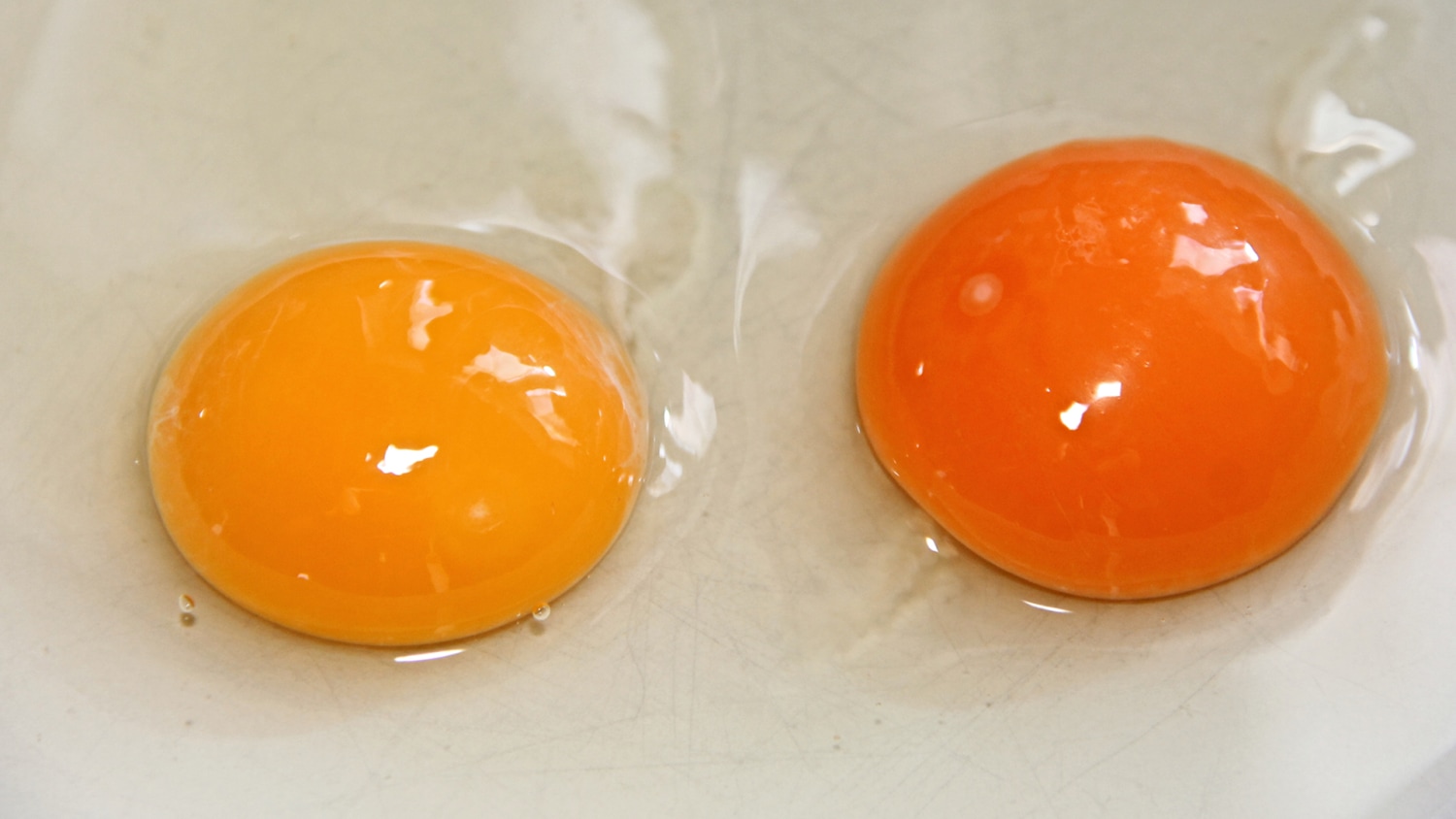
Natural Astaxanthin and Yolk Pigmentation
Natural astaxanthin does not work in isolation from the other carotenoids in a poultry diet. Lutein and zeaxanthin are naturally important contributors to yellow yolk coloration, while other carotenoids can contribute different shades.
The final yolk color is therefore influenced by the overall carotenoid profile of the diet, rather than astaxanthin alone.
For example, a feed containing predominantly yellow carotenoids may produce a different yolk appearance from a formulation that combines yellow carotenoids with a red-orange pigment source such as astaxanthin.
This gives feed manufacturers flexibility when developing pigment systems according to the desired yolk color.
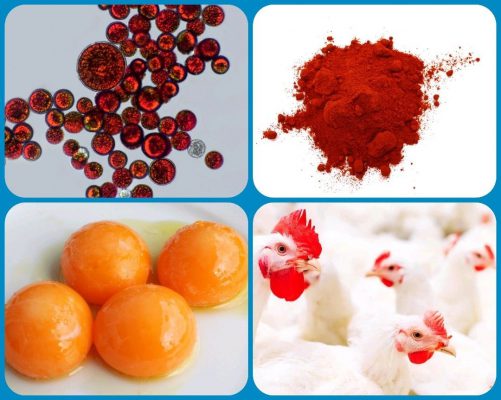
Benefits of Natural Astaxanthin Powder for Laying Hens
1. Supports Deeper Yolk Color
The most established application of dietary astaxanthin in laying hens is yolk pigmentation. Studies have reported dose-related increases in yolk color when natural astaxanthin is added to the diet.
This makes astaxanthin particularly relevant for feed formulations where a deeper orange or reddish yolk is desired.
2. Promotes Astaxanthin Deposition in Egg Yolks
Dietary astaxanthin can be absorbed and transferred into eggs. Research has demonstrated measurable accumulation of astaxanthin in yolks following supplementation.
The level of deposition depends on factors including dietary concentration, feeding duration, ingredient form, hen physiology, and the overall diet.
3. Provides a Natural Carotenoid Source
Natural astaxanthin provides an alternative to relying exclusively on synthetic pigment ingredients. Haematococcus pluvialis and Phaffia rhodozyma are among the natural sources discussed in poultry nutrition research and commercial astaxanthin production.
For manufacturers developing natural-positioned feed formulations, source transparency and production method are important considerations.
4. May Provide Antioxidant Support
Astaxanthin is also studied for its antioxidant properties. In a laying-hen study, natural astaxanthin supplementation increased several antioxidant-related measurements and free-radical-scavenging activities under the tested conditions.
These findings support the nutritional interest in astaxanthin beyond pigmentation, although results can vary with dose, hen age, diet composition, environmental conditions, and other factors.
5. Can Be Used for Egg Fortification Research
Because astaxanthin can accumulate in egg yolks, researchers have also investigated dietary supplementation as a method of producing astaxanthin-enriched eggs.
A study examining different supplementation levels found a dose-dependent increase in astaxanthin concentration in eggs and changes in yolk redness, while production performance and physical egg quality were not adversely affected under the study conditions.

Natural Astaxanthin Powder Applications in Poultry Feed
Natural Astaxanthin Powder can be incorporated into different types of poultry feed formulations, particularly diets intended for laying hens.
Layer Feed
The primary application is commercial layer feed. Astaxanthin can be included as part of a broader carotenoid strategy to influence yolk color.
Yolk Pigmentation Programs
Feed manufacturers can combine astaxanthin with other carotenoids such as lutein and zeaxanthin to develop a specific pigmentation profile.
The appropriate combination depends on the target yolk color, existing carotenoid levels in the basal diet, and the desired market specification.
Natural Carotenoid-Enriched Feed
Natural astaxanthin can also be used in feed formulations positioned around naturally sourced carotenoid ingredients.
Egg Enrichment
Because dietary astaxanthin can accumulate in egg yolks, it can be considered for specialized feed programs targeting carotenoid-enriched eggs. Research has demonstrated that the degree of enrichment is affected by supplementation level and feeding duration.

Natural Astaxanthin Sources for Poultry Feed
Several biological sources can provide astaxanthin.
Haematococcus pluvialis
Haematococcus pluvialis is one of the best-known natural sources of astaxanthin. The microalga can accumulate substantial amounts of astaxanthin, particularly under stress conditions during cultivation.
It has been widely studied for poultry, aquaculture, and other animal-feed applications.
Phaffia rhodozyma
Phaffia rhodozyma, also known as Xanthophyllomyces dendrorhous, is a yeast source of natural astaxanthin. It has also been investigated and used as a biological pigment source for animal nutrition.
Other Natural Sources
Natural astaxanthin can also be obtained from other microorganisms and marine biological materials. However, source selection should be based on the intended application, astaxanthin concentration, production method, stability, regulatory requirements, and feed-grade specifications.

Factors Affecting Astaxanthin Performance
The effectiveness of an astaxanthin powder in layer feed can vary considerably depending on formulation and processing conditions.
Astaxanthin Concentration
The specification should clearly identify the guaranteed astaxanthin content. A higher-assay ingredient allows manufacturers to formulate more precisely.
Bioavailability
Astaxanthin is fat-soluble, and its absorption can be affected by ingredient form, feed composition, digestive conditions, and other physiological factors.
Research has also investigated differences between free and esterified astaxanthin in terms of deposition into egg yolks, indicating that the chemical form can influence utilization.
Stability
Astaxanthin is sensitive to environmental conditions such as oxygen, light, and heat. Appropriate processing, packaging, and storage are therefore important for maintaining ingredient quality.
Interaction With Other Carotenoids
The basal diet already contains carotenoids from ingredients such as corn, alfalfa, marigold meal, or other plant materials. These background pigments can influence the final yolk color.
Hen Age and Production Conditions
Hen genetics, age, health, production stage, feed intake, and environmental conditions can all influence carotenoid absorption and deposition.
How to Choose Bulk Natural Astaxanthin Powder
For commercial poultry feed production, buyers should evaluate more than the product name.
Important specifications include:
- Astaxanthin assay
- Natural source
- Free or esterified astaxanthin form
- Carrier and excipients
- Moisture
- Particle size
- Solubility or dispersibility
- Stability
- Microbiological specifications
- Heavy-metal specifications
- Batch consistency
- Packaging
- Shelf life
- Storage requirements
- Certificate of Analysis (COA)
- Technical Data Sheet (TDS)
- Safety Data Sheet (SDS/MSDS)
A reliable bulk supplier should be able to provide documentation that allows feed manufacturers to evaluate the ingredient before commercial use.
Conclusion
Natural Astaxanthin Powder for Egg Yolk Pigmentation is a specialized carotenoid ingredient for laying-hen feed formulations. Natural astaxanthin, particularly from sources such as Haematococcus pluvialis, can be absorbed by hens, deposited into egg yolks, and contribute to deeper orange-red yolk coloration.
Research has demonstrated dose-related changes in yolk color and measurable astaxanthin accumulation in eggs. Studies have also investigated its antioxidant-related effects in laying hens, adding nutritional interest beyond pigmentation.
For commercial applications, performance depends on the astaxanthin source, concentration, physical form, stability, feed composition, and production conditions. There is no universal inclusion rate, so feed manufacturers should formulate according to their specific yolk-color target and product specifications.
When purchasing natural astaxanthin powder in bulk, a consistent assay, reliable quality documentation, suitable packaging, and technical support are essential for developing stable and repeatable poultry feed formulations.
References
Wang et al. (2020). Effects of supplementing natural astaxanthin from Haematococcus pluvialis to laying hens on egg quality during storage at 4°C and 25°C. Poultry Science, 99(12), 6877–6883.
Li et al. (2020). Effects of dietary supplementation of natural astaxanthin from Haematococcus pluvialis on antioxidant capacity, lipid metabolism, and accumulation in the egg yolk of laying hens. Poultry Science, 99(11), 5874–5882.
Zhang et al. (2021). Dietary supplementation with natural astaxanthin from Haematococcus pluvialis improves antioxidant enzyme activity, free radical scavenging ability, and gene expression of antioxidant enzymes in laying hens. Poultry Science, 100(5), 101045.
Sources, dynamics in vivo, and application of astaxanthin and lutein in laying hens: A review. Animal Nutrition, 13, 324–333 (2023).
Effects of duration and supplementation dose with astaxanthin on egg fortification. Poultry Science (2021).
High dietary astaxanthin supplementation alters egg yolk nutritional composition in hens. Poultry Science, 104(9), 105393 (2025).
FAQ
Q1: What is Natural Astaxanthin Powder?
A1: Natural Astaxanthin Powder is a powdered carotenoid ingredient containing astaxanthin obtained from natural biological sources. It is used in laying-hen feed formulations primarily for yolk pigmentation and as a source of carotenoid nutrition.
Q2: What is astaxanthin?
A2: Astaxanthin is a red-orange xanthophyll carotenoid found naturally in sources such as Haematococcus pluvialis and Phaffia rhodozyma. It is a fat-soluble pigment that can be absorbed by laying hens and deposited in egg yolks.
Q3: What is the main application of Natural Astaxanthin Powder in laying hens?
A3: The primary application is egg yolk pigmentation. Dietary astaxanthin can be deposited in egg yolks and contribute to a deeper orange-red or reddish yolk color.
Q4: How does astaxanthin affect egg yolk color?
A4: After dietary carotenoids are digested and absorbed, they can be transported through the bloodstream and incorporated into developing egg yolks. Because astaxanthin has a strong red-orange color, its deposition can shift yolk appearance toward a deeper orange-red tone.
Q5: Can Natural Astaxanthin Powder make egg yolks darker?
A5: Dietary natural astaxanthin can increase yolk pigmentation, with research reporting dose-related changes in yolk color. The final color also depends on the overall carotenoid profile of the diet and other production factors.
Q6: Does astaxanthin accumulate in egg yolks?
A6: Yes. Research has demonstrated measurable accumulation of astaxanthin in egg yolks following dietary supplementation. The amount deposited can depend on dietary concentration, feeding duration, ingredient form, hen physiology, and the overall diet.
Q7: What natural sources of astaxanthin are used in poultry nutrition?
A7: Important natural sources include Haematococcus pluvialis and Phaffia rhodozyma. Other microorganisms and marine biological materials may also provide natural astaxanthin, depending on the production method and intended application.
Q8: What is Haematococcus pluvialis astaxanthin?
A8: Haematococcus pluvialis is a microalga widely recognized as a natural source of astaxanthin. It can accumulate substantial amounts of astaxanthin under specific cultivation and stress conditions and is widely studied for poultry and aquaculture applications.
Q9: What is Phaffia rhodozyma astaxanthin?
A9: Phaffia rhodozyma, also known as Xanthophyllomyces dendrorhous, is a yeast capable of producing natural astaxanthin. It has been investigated as a biological pigment source for animal nutrition.
Q10: What are the benefits of Natural Astaxanthin Powder for laying hens?
A10: Natural Astaxanthin Powder can support deeper yolk pigmentation, astaxanthin deposition in eggs, natural carotenoid nutrition, and antioxidant-related nutrition. The clearest commercial application is its role in yolk pigmentation.