Aquaculture is now one of the world's fastest-growing food producing sectors in which fish culture plays a key role in fulfilling the global protein demand. Fish growth rate, end product quality, and fish health are directly responsible for aquaculture success. Of all the natural feed additives used for aquaculture improvement, astaxanthin powder has been accepted as an excellent agent with numerous advantages.
Astaxanthin is a carotenoid pigment naturally occurring in microalgae, yeast, and krill that is celebrated for its intense red-orange color and potential for high antioxidative capacity. While used as a fish feed additive, astaxanthin powder provides not just color but will also provoke immunity, growth rate, reproductive ability, and stress resistance. It is thus a critical sustainable aquaculture component.
This blog discusses in detail how astaxanthin powder aids fish growth and health, biological activity, application, and evidence towards its applicability in aquafeeds.

What is Astaxanthin?
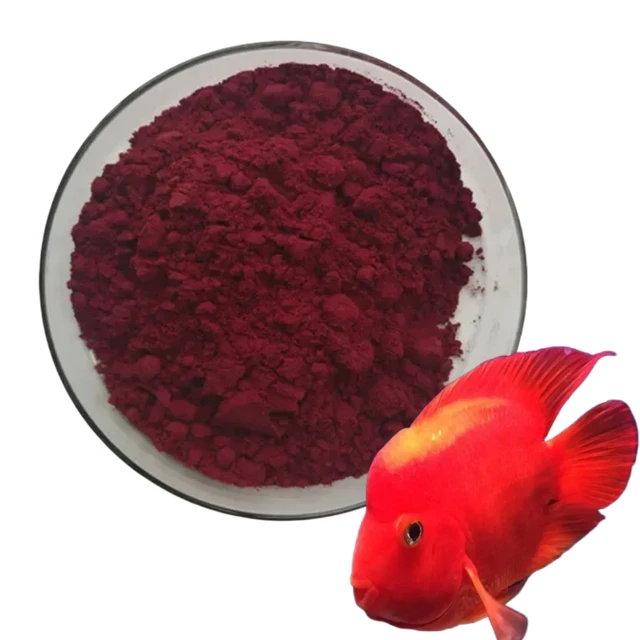
Astaxanthin is a carotenoid pigment of natural origin that falls under the xanthophyll category. It is produced by some microalgae (e.g., Haematococcus pluvialis and Chlorella zofingiensis) and is stored in animals at higher food chain levels, e.g., krill, shrimp, and salmon.
Astaxanthin, naturally, colors salmon, trout, shrimp, and lobster their reddish-orange hue. Beyond coloration, astaxanthin is a very powerful antioxidant, more so than beta-carotene, lutein, or vitamin E. Antioxidant activity is attributed to safeguarding fish cells against oxidative stress, a commonality in exhaustive aquaculture practices.
The Role of Astaxanthin in Fish Growth and Health
1. Pigment enhancement
Pigmentation is perhaps one of the better-documented applications of astaxanthin powder in aquaculture. Salmonids and aquarium fish must be highly colored, and this has a direct effect on market value.
- Salmonids: Astaxanthin is stored in muscle tissue in salmon and trout, resulting in the salmon pink-red flesh color that quality products demanding by consumers.
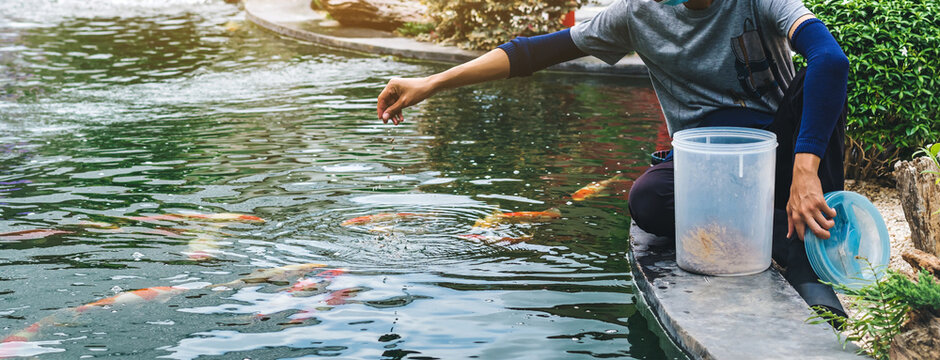
- Ornamental Fish: In ornamental fish like cichlids, goldfish, and koi, astaxanthin increases depth of skin and scale color intensity, improving appearance.
Astaxanthin is unique in that it not only contributes a pigment but also health benefits, unlike synthetic pigments. The pigment is therefore a choice of preference for high-end aquafeeds.
2. Strong Antioxidant Defense
Free radical-generated oxidative stress is the predominant problem in aquaculture. It has the potential to impair growth, immunity, and reproductive health of fish. Astaxanthin is a free radical scavenger, and it can defend lipids, proteins, and DNA from oxidative damage.
Research indicates that astaxanthin:
- Suppresses lipid peroxidation of fish tissues.
- Enriches antioxidant enzyme function (e.g., superoxide dismutase and catalase).
- Shows protective functions against high-density culture-induced stress, water quality stress, and temperature stress of fish.
This antioxidant action is responsible for delivering fish vitality in challenging farm conditions.
3. Immune Enhancement
Immunity in fish is essential to survival, especially when faced with intense aquaculture with a high probability of disease outbreak. Astaxanthin supplementation has been found to:
- Enhance immune cell function (e.g., macrophages and lymphocytes).
- Induce antibody and cytokine activity.
- Enhance resistance against bacterial and viral diseases.
For instance, research on rainbow trout (Oncorhynchus mykiss) indicated that astaxanthin supplementation enhanced survival after bacterial challenge. Astaxanthin enhances innate and adaptive immunity and, consequently, minimizes antibiotic consumption, thus enhancing sustainability in aquaculture.
4. Growth Performance Enhancement
Optimum growth is one of aquaculture priority concerns. Astaxanthin enhances growth through the following ways:
- Enhanced Feed Efficiency: Astaxanthin enhances nutrient uptake by enhancing metabolic efficiency.
- Improved Mitochondrial Functionality: It guards mitochondria, cell "batteries," to produce energy better.
- Reduced Stress: By inhibiting oxidative stress, fish allocate more energy to growth than stress response.
In salmonids, dietary astaxanthin is associated with greater weight gain, FCR, and survival and thus is an ideal growth stimulant.
5. Reproductive Health and Fertility
Astaxanthin is also active in fish reproduction. With its antioxidant activity, it defends reproductive tissue, gametes, and developing embryos against damage.
- Egg Quality: Cows given astaxanthin supplemented diets have more fertile and hatching eggs.
- Sperm Viability: Males show improved sperm motility and viability with astaxanthin supplementation.
This earns astaxanthin a valuable supplement to aquaculture hatcheries that desire maximum breeding success.
6. Stress Resistance
Aquaculture fish are subjected to stress caused by handling, transport, temperature shock, and water quality. It may lead to compromised immunity, decreased growth, and mortality.
Astaxanthin reduces stress by:
- Cell membrane stabilization.
- Inhibiting cortisol synthesis (stress hormone).
- Providing antioxidant protection upon exposure to stress.
Astaxanthin-supplemented fish recover quickly from stress and have better physiological balance than unsupplemented fish.
Practical Applications of Astaxanthin Powder in Aquaculture
1. Species to Benefit from Astaxanthin
Astaxanthin powder is used extensively amongst other aquaculture species:
- Salmon and Trout: For pigmentation, growth, and stress resistance.
- Shrimp and Prawns: For colour, immunity, and survival rate.
- Tilapia and Carp: For antioxidant enrichment and productivity improvement.
- Ornamental Fish: For pigment and overall health.
2. Inclusion Rates and Dosage
Inclusion rate for astaxanthin also depends on species and application:
- Salmonids: 40–100 mg/kg feed for pigmentation.
- Shrimp: 50–150 mg/kg feed for colour and immunity.
- Tilapia and Carp: 20–80 mg/kg feed for growth and well-being.
3. Sources of Astaxanthin Powder
Commercial astaxanthin powder can be obtained from:
- Microalgae (Haematococcus pluvialis) – richest natural source.
- Yeast (Phaffia rhodozyma) – another natural source.
- Synthetic Astaxanthin – widely used but has some limitations with respect to health benefits from the natural source.
Natural astaxanthin is normally incorporated into high-quality aquafeeds due to market demand for health-enhancing and eco-friendly aquafeeds.

Scientific Evidence of Astaxanthin in Fish
Some research papers outline some benefits that astaxanthin possesses in aquaculture:
- Amar et al. (2001): Observed enhanced pigmentation and antioxidant protection in rainbow trout fed astaxanthin in diet.
- Christiansen et al. (1995): Documented enhanced growth rate and survival of salmonids as a result of astaxanthin supplementation.
- Pan et al. (2011): Demonstrate enhanced immunity and stress tolerance in astaxanthin-supplemented shrimp.
- Guerin et al. (2003): Categorized astaxanthin as a high-rank antioxidant, ranking ahead of vitamin E and beta-carotene.
The findings mentioned above without a doubt demonstrate the contribution of astaxanthin towards maximizing fish performance, health, and aquaculture production.

Market Value and Sustainability
Apart from biological value, astaxanthin application has implications for market value and sustainability too:
- Market Value: People like deep-colored shrimp and salmon.
- Decreased Antibiotic Consumption: With its immunostimulatory function, astaxanthin lowers the consumption of antibiotics, and this is sustainable agriculture.
- Renewable Source: Astaxanthin from microalgae is in harmony with green aquaculture.

Conclusion
Astaxanthin powder is a more-than-a-colorant fish feed ingredient. It is an additive applicable across industries, providing universal benefits of enhanced fish health, immunity, growth performance, reproductive success, and stress resistance. With firm scientific support, astaxanthin is a critical component in sustainable aquaculture since it lowers the risk of disease, enhances the efficiency of feed, and enhances product quality.
As the aquaculture sector keeps on growing, traditional feed additives such as astaxanthin powder will continue to play a critical role in obtaining more healthy, strong, and sustainable fish farming systems.
References
Amar, E. C., Kiron, V., Satoh, S., Watanabe, T. (2001). Influence of dietary supplementation of astaxanthin and vitamin E on lipid peroxidation and antioxidative status of rainbow trout (Oncorhynchus mykiss). Aquaculture Research, 32, 209–219.
Christiansen, R., Lie, Ø., Torrissen, O. J. (1995). Growth and survival of Atlantic salmon, Salmo salar L., fed different dietary levels of astaxanthin. Aquaculture Nutrition, 1(2), 77–84.
Guerin, M., Huntley, M. E., Olaizola, M. (2003). Haematococcus astaxanthin: Applications for human health and nutrition. Trends in Biotechnology, 21(5), 210–216.
Pan, C. H., Chien, Y. H., Hunter, B. (2011). The resistance to ammonia stress of Penaeus monodon Fabricius juveniles fed diets supplemented with astaxanthin. Aquaculture, 261(2), 472–478.
Higuera-Ciapara, I., Félix-Valenzuela, L., Goycoolea, F. M. (2006). Astaxanthin: A review of its chemistry and applications. Critical Reviews in Food Science and Nutrition, 46(2), 185–196.
Yuan, J. P., Peng, J., Yin, K., & Wang, J. H. (2011). Potential health-promoting effects of astaxanthin: A high-value carotenoid predominantly from microalgae. Molecular Nutrition & Food Research, 55(1), 150–165.