To aquaculture farmers, feed makers, and consumers, the color, growth, and health of fish are valuable commodities. Of all the natural additives sending waves in aquaculture nutrition, perhaps the most valued is astaxanthin powder. Astaxanthin is a renowned antioxidant and natural pigment that not only induces more glitzy brilliant coloration in fish but also is a crucial supporting actor in immunity, stress tolerance, and development.
This is an article on the application of astaxanthin powder in aquaculture and how it is beneficial to fish health, coloration, and eco-friendly aquaculture.

What is Astaxanthin?
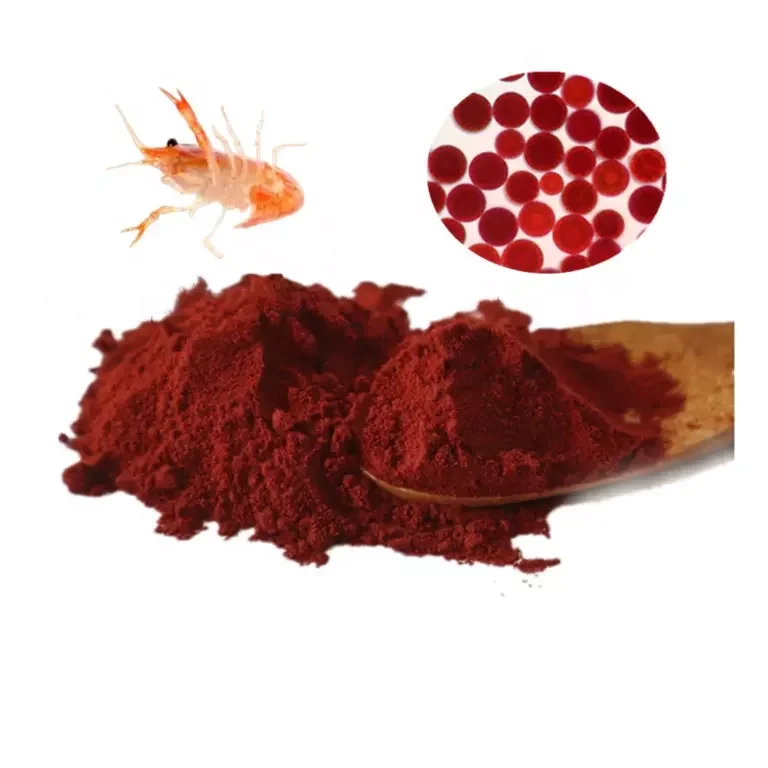
Astaxanthin is a xanthophyll carotenoid pigment. It occurs naturally in microalgae (Haematococcus pluvialis), yeast (Phaffia rhodozyma), krill, and crustaceans. It is the reddish-orange color of salmon, shrimp, and flamingos.
As opposed to artificial pigments, nature's astaxanthin gives not only color but a range of biological benefits, mainly due to its antioxidant activity, which is several fold higher than that of vitamin E, beta-carotene, or vitamin C.
In powder form as astaxanthin, it can be utilized as a simply adaptable ingredient in aquafeeds with the guarantee of stable dosing and uniformity.

The Role of Astaxanthin in Fish Nutrition
- Astaxanthin is more than just a pigment supplement-it is also used for several aquaculture applications. Since fish cannot synthesize astaxanthin, they must be nutritionally supplemented. Aquaculture has embraced astaxanthin as an ingredient feed due to three primary reasons:
- Pigmentation – enhancement of color improvement of flesh and skin, a valuable quality attribute for salmonids, koi, and ornamental fish.
- Immunity – enhancement of resistance of fish to disease and reduced mortality.
- Growth and Resistance to Stress – improving improved utilization of feed and wholesomeness in high-density aquaculture systems.

1. Natural Colour Augmentation of Fish
Colloredation is a superb indicator of fish fitness and market worth. In commercial aquaculture, particularly in salmon, trout, red sea bream, and ornamental fish, high pigmentation increases consumer acceptance and perceived quality.
- Astaxanthin is deposited into fish muscle and skin, creating natural colors which cannot be exactly duplicated by any artificial pigment.
- Scientific research shows astaxanthin-dieted flesh redness (a) values* of salmonids are improved for increased marketability.
- Astaxanthin powder increases scale brightness in koi and pond aquarium fish, increasing the beauty value.
So, astaxanthin is not just a matter of beauty-it's an aquaculture quality control process.
2. Immune System Enhancing
The strongest benefit of employing astaxanthin powder is its immune system-modulating activity.
- Antioxidant Protection: Cultured fish tend to endure oxidative stress due to intensive stocking density, environmental change, and handling. Astaxanthin is a free radical killer and thereby protects tissue and cell membranes from damage.
- Disease Resistance: Research indicates that supplementing with astaxanthin enhances non-specific immune responses such as lysozyme activity, phagocytosis, and complement activity, and reduces susceptibility to pathogens.
- Anti-inflammatory Effects: By regulating inflammatory cytokines, astaxanthin keeps fish from staying unhealthy in the face of stressful conditions.
To aquaculture operations for which the use of antibiotics and synthetic chemicals is not preferable, astaxanthin is a natural way to prevent disease.
3. Facilitating Fish Growth and Performance
Fish growth depends on feed efficiency, energy expenditure, and metabolic homeostasis. Astaxanthin powder facilitates such activities in various ways:
- Increased Feed Conversion Ratio (FCR): Fish receiving astaxanthin-supplemented diets are more effective converters of nutrients.
- Enhanced Reproductive Performance: Astaxanthin in broodstock enhances egg quality, larval viability, and fertility.
- Enhanced Stress Resistance: Stress management, transport stress, and environmental stressors cause reduced growth. Astaxanthin reduces cortisol levels so that the fish are able to maintain performance.
This places astaxanthin on the list as a lucrative investment for aquaculture farms that want to maximize output while maintaining fish health.
4. Antioxidant and Cellular Health Benefits
Astaxanthin antioxidant effect is stronger than carotenoids. Scientific research shows that it is:
- 500 times more powerful than vitamin E
- 6,000 times more superior than vitamin C
By being incorporated into cell membranes, astaxanthin protects fish cells against oxidative stress, lipid peroxidation, and UV light damage. This leads to healthier tissue, enhanced recovery from stress, and overall greater vitality.
5. Natural Pigment Eco-Friendly Aquaculture
The demand of consumers is changing towards natural and environmentally friendly aquaculture products. Astaxanthin powder, especially one from yeast or algae, fulfills this high-value demand:
- It reduces the usage of synthetic coloring agents.
- It naturally stimulates fish health with reduced antibiotics.
- It promotes sustainable agriculture by providing growth and survival without poisonous residues.

Applications of Astaxanthin Powder in Aquaculture
Astaxanthin powder is widely applied in feed for:
- Salmon and Trout – to promote flesh coloration, fillet quality, and market value.
- Shrimp and Crustaceans – to enhance shell coloration and stress tolerance.
- Ornamental Fish (Koi, Goldfish, Tropical fish) – to enhance deep scale color and vitality.
- Tilapia and Sea Bream – where growth, coloration, and immunity are of top priority.
Dosage recommended is variable depending on the species and application. Salmonids would receive 40–60 mg/kg feed, whereas that used in ornamental species is higher for colour enhancement.

Problems and Issues
Even though astaxanthin powder has numerous benefits, problems arise when used in aquaculture:
- Cost: Natural astaxanthin, particularly Haematococcus pluvialis, will be more expensive than the synthetic one. But its additional health benefits usually counterbalance the additional cost.
- Stability: Astaxanthin is sensitive to heat and light. Proper feed formulation and encapsulation should be done to maintain stability.
- Species-Specific Requirements: The dosage and the formulation for different species of fish vary.
Aquaculture feed manufacturers always use stabilized or encapsulated astaxanthin powder for maximum performance.
The Future of Aquaculture with Astaxanthin
With aquaculture expanding annually, the role of functional feed ingredients like astaxanthin will become increasingly important. Tightening regulations on synthetic additives and antibiotics are making astaxanthin an attractive, natural, multibenefit solution to industry, regulatory, and consumer demands.
Innovation for the future may include:
- More affordable processes for astaxanthin production.
- Astaxanthin delivery systems formulated specifically for specific aquaculture species.
- Utilization of astaxanthin with other natural dietary supplements to create synergistic health outcomes.

Conclusion
Astaxanthin powder is not just a pigment-it's an effective health-improving agent that induces coloration, immunity, growth, and resistance to stress in fish. With the use of astaxanthin in aqua-feeds, manufacturers and aqua-feed industries enhance not only the aesthetic value of fish but overall health and sustainability as well.
For aquaculture enterprises that seek to be competitive and sustainable, astaxanthin powder is a critical component to have in the new paradigms of fish nutrition.
References
Hussein, G., Sankawa, U., Goto, H., Matsumoto, K., & Watanabe, H. (2006). Astaxanthin, a carotenoid with potential in human health and nutrition. Journal of Natural Products, 69(3), 443–449. https://doi.org/10.1021/np050354+
Lorenz, R. T., & Cysewski, G. R. (2000). Commercial potential for Haematococcus microalgae as a natural source of astaxanthin. Trends in Biotechnology, 18(4), 160–167. https://doi.org/10.1016/S0167-7799(00)01433-5
Higuera-Ciapara, I., Félix-Valenzuela, L., & Goycoolea, F. M. (2006). Astaxanthin: A review of its chemistry and applications. Critical Reviews in Food Science and Nutrition, 46(2), 185–196. https://doi.org/10.1080/10408690590957188
Ambati, R. R., Phang, S. M., Ravi, S., & Aswathanarayana, R. G. (2014). Astaxanthin: Sources, extraction, stability, biological activities and its commercial applications-a review. Marine Drugs, 12(1), 128–152. https://doi.org/10.3390/md12010128
Sommer, T. R., Potts, W. T. W., & Morrissy, N. M. (1991). Utilization of astaxanthin from prawns for pigmentation of rainbow trout. Aquaculture, 94(1), 79–88. https://doi.org/10.1016/0044-8486(91)90138-
Niu, J., Tian, L. X., Liu, Y. J., Yang, H. J., Ye, C. X., Gao, W., & Mai, K. S. (2009). Effect of dietary astaxanthin on growth performance, antioxidant capacity and resistance to Aeromonas hydrophila of juvenile Nile tilapia. Aquaculture, 287(1-2), 156–160. https://doi.org/10.1016/j.aquaculture.2008.10.007