


Nutrition plays a crucial role in aquaculture and ornamental fish culture since it dictates the health, growth, and quality of the fish. Out of all the natural feed additives, astaxanthin powder has been shown to be the most effective product for fish pigmentation, immunity, and growth rate. As a natural carotenoid pigment, astaxanthin is mainly produced using microalgae such as Haematococcus pluvialis, yeast (Phaffia rhodozyma), and crustacean shell.
The bioactive and antioxidant characteristics of astaxanthin result in the optimal choice for aquaculture industries that prefer to produce healthy, live, and robust fish. The article below illustrates the advantages, uses, and scientific evidence validating the use of astaxanthin powder in fish.

What is Astaxanthin?
Astaxanthin is the reddish-orange carotenoid color found in aquatic creatures such as algae, krill, shrimp, and salmon. Astaxanthin is unlike synthetic pigments in being natural, bioavailable, and nontoxic and thus a safe fish feed additive.
Astaxanthin powder is most commonly applied in aquaculture to enhance fish diet with the aim of promoting flesh and skin coloration of fish like salmon, trout, koi, goldfish, and cichlids as aquatic ornamental fish. Apart from its color impact, it accelerates the metabolism, growth, reproduction, and the immune system of fish.

Advantages of Astaxanthin Powder in Fish
1. Ideal Pigmentation and Market Value
Colour is the most important quality characteristic of ornamental fish and farmed fish like salmon and trout. Astaxanthin achieves this by accumulating in fish muscle and skin, producing an enhanced, more pleasing colour.
Ornamental fish like goldfish and koi are more highly pigmented with red, orange, and yellow.
Salmonids that have been fed astaxanthin-supplemented diets will have the desirable pink-to-red flesh colour that customers prefer.
Supplementation with astaxanthin has been shown to induce more intense coloration compared with canthaxanthin or beta-carotene (Torrissen & Christiansen, 1995).
2. Enhances Growth and Feed Efficiency
Growth in fish is metabolic- and diet-dependent. Astaxanthin is growth-stimulating through:
- Enhancing protein utilization.
- Enhancing feed conversion ratio (FCR).
- Enhancing overall metabolism and energy efficiency.
Experiments with rainbow trout demonstrated astaxanthin supplementation to be striking on growth rate and feed use compared with control diets (Christiansen & Torrissen, 1996).
3. Immune System Potentiation
The antioxidant effect of astaxanthin results in it being a natural immune modifier. Through the neutralization of pathogenic free radicals, it protects fish cells against oxidative stress and creates disease resistance.
Benefits include:
- Increased survival in stressful situations such as transport, crowding, or heat shock.
- Reduced susceptibility to bacterial and viral diseases.
- Improved immunity to vaccine in aquaculture.
Studies on tilapia (Oreochromis niloticus) concluded that dietary astaxanthin improved immune indicators, i.e., phagocytic activity and titres of antibodies (Amar et al., 2004).
4. Optimizes Reproductive Health
Astaxanthin optimizes reproduction performance in fish by:
- Improving egg quality and fertility.
- Improving larval survival.
- Maintaining gonadal development.
Astaxanthin-supplemented broodstock feeds were reported to produce healthier fry with improved resistance to disease and stress.
5. Antioxidant Protective Against Oxidative Stress
Aquaculture-reared fish are normally exposed to stress factors such as poor water quality, over-stocking, and handling. These stress factors improve oxidative stress, which results in tissue damage and growth retardation.
Through its active antioxidant action, astaxanthin inhibits:
- Protection of fish tissue against lipid peroxidation.
- Maintenance of healthy liver and gill functions.
- Suitability in resistance under intensive aquaculture management.

Applications of Astaxanthin Powder in Fish
1. Food Fish Aquaculture
Astaxanthin is widely used in aquaculture of salmon, trout, and shrimp for:
To achieve desirable flesh coloration.
To improve marketability and consumer acceptability.
To improve growth and survival.
2. Ornamental Fin Fish Industry
In koi, goldfish, guppies, and other fin fish raised as ornaments, pigmentation is an indicator of beauty and health. Astaxanthin is required in ornamental feed to get maximum pigmentation and healthy fish.
3. Larval and Juvenile Fish Development
Astaxanthin in feed during larval development enhances growth at early stages, bone formation, and disease resistance. This contributes to enhanced survival through critical early stages of life.
4. Functional Feed Formulations
Increasingly, astaxanthin is being added to functional aquafeeds-products not merely for growth, but for enhancement of fish health, stress tolerance, and disease resistances.
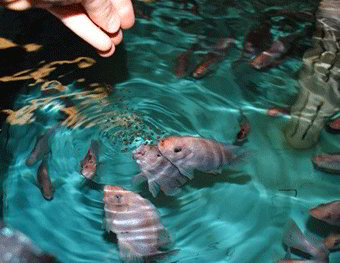
Natural vs. Synthetic Astaxanthin
Although there is synthetic astaxanthin, algal and yeast extracts of natural astaxanthin are superior in terms of bioactivity and safety. Natural astaxanthin has been shown to exhibit higher antioxidant activity and more acceptable coloring (Higuera-Ciapara et al., 2006).
Natural Sources: Haematococcus pluvialis algae, Phaffia rhodozyma yeast, krill meal.
Synthetic Sources: Petrochemical derivatives, lower bioavailability, and unacceptable everywhere in environmentally friendly markets.
Natural astaxanthin powder is ideal for ecofriendly aquaculture.

Dosage and Feeding Guidelines
Dosage required is fish type, growth stage, and use (pigmentation vs. health):
- Salmonids: 30–100 mg/kg of feed.
- Ornamental fish: 50–200 mg/kg of feed.
- Tilapia and carp: 20–80 mg/kg of feed.
Astaxanthin should be correctly formulated into feed products to gain maximum performance. Capsule or stabilized powder format product provides increased bioavailability and stability against feed processing degradation.

Sustainability and Market Trends
As consumers look for more natural aquaculture products, astaxanthin is becoming a sought-after ingredient in environmentally friendly green fish farming. Astaxanthin's function in immune stimulation as well as pigmentation is cutting down on the use of synthetic pigments and chemical
application that are components of environmentally friendly agriculture.
Market trends have observed growing demand for natural astaxanthin from aquaculture due to:
- Growing consumption of fish globally.
- Growing ornamental fish markets.
- Shift towards functional aquafeeds for performance and health.

Conclusion
Astaxanthin powder is nothing more than a fish color booster-it's a general health-supporting product. With its pigmentation enhancement, immune guarding, growth stimulation, and reduction of oxidative stress, astaxanthin sits at the core of aquaculture and freshwater aquarium fish keeping.
As aquaculture businesses shift towards being sustainable, yeast and algae-derived natural astaxanthin powder is becoming a key product to produce healthy, robust, and marketable fish.
References
Amar, E. C., Kiron, V., Satoh, S., & Watanabe, T. (2004). Enhancement of innate immunity in rainbow trout (Oncorhynchus mykiss) by dietary supplementation of carotenoids. Fish & Shellfish Immunology, 16(5), 527–537.
Christiansen, R., & Torrissen, O. J. (1996). Growth and survival of Atlantic salmon (Salmo salar) in relation to astaxanthin concentration in the diet. Aquaculture, 143(1), 331–342.
Higuera-Ciapara, I., Félix-Valenzuela, L., & Goycoolea, F. M. (2006). Astaxanthin: A review of its chemistry and applications. Critical Reviews in Food Science and Nutrition, 46(2), 185–196.
Torrissen, O. J., & Christiansen, R. (1995). Requirements for carotenoids in fish diets. Journal of Applied Ichthyology, 11(3–4), 225–230.
Pérez-Velasco, D., Martínez-Sánchez, A., & Gallego-Noche, B. (2020). Carotenoids in aquaculture: astaxanthin's value in fish health and nutrition. Aquaculture Research, 51(12), 5061–5073.


