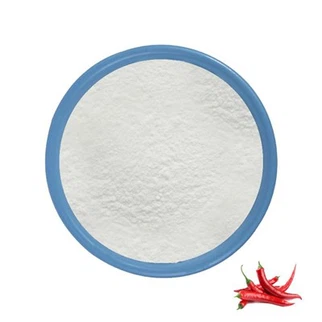
Astaxanthin is one of the most important carotenoids used in modern aquaculture, particularly in salmon and trout feeds. Its best-established function is flesh pigmentation, helping farmed salmon develop the characteristic pink-red color associated with salmon products.
For feed manufacturers, distributors, and aquaculture companies, Bulk Astaxanthin Extract for Salmon Feed and Aquaculture provides a concentrated carotenoid ingredient that can be incorporated into commercial feed formulations. Depending on the production method and source, bulk astaxanthin may be supplied as a powder, extract, oil suspension, beadlet, or other stabilized preparation.
Natural astaxanthin can be produced by microorganisms including Haematococcus pluvialis, Phaffia rhodozyma and certain bacteria. Research in Atlantic salmon has demonstrated that several natural astaxanthin sources can effectively support flesh pigmentation.
Beyond pigmentation, astaxanthin has antioxidant activity and has been studied for potential effects on oxidative stress, immune-related responses, and other physiological functions in aquatic animals. However, these effects can vary according to species, formulation, dose, and production conditions.
Contact us for inquiry and certifications and for free sample. Email:info@hjagrifeed.com
What Is Bulk Astaxanthin Extract?
Bulk Astaxanthin Extract is a concentrated source of astaxanthin intended for use in commercial formulations.
Astaxanthin is a red-orange xanthophyll carotenoid. In aquatic organisms, it can accumulate in tissues and contribute to their characteristic coloration. Salmonids obtain carotenoids from their diet rather than synthesizing astaxanthin de novo, making dietary supplementation important in commercial aquaculture.
The term bulk generally refers to material supplied in commercial quantities to feed manufacturers, ingredient distributors, aquaculture producers, and private-label companies.
Bulk astaxanthin products can differ in:
- Astaxanthin concentration
- Natural or synthetic source
- Powder or oil-based form
- Chemical form
- Isomer composition
- Particle size
- Stability
- Bioavailability
- Dispersion characteristics
- Packaging
Therefore, buyers should evaluate the complete specification rather than comparing products only by the declared astaxanthin percentage.

Why Is Astaxanthin Used in Salmon Feed?
The primary reason for adding astaxanthin to salmon feed is pigmentation.
Wild salmon obtain carotenoids through their natural food sources. Farmed salmon receive formulated diets, so astaxanthin is incorporated into feed to provide the dietary carotenoid needed for muscle pigmentation.
Astaxanthin is widely recognized as a major carotenoid used in salmonid aquaculture, where it contributes to the pink-orange coloration of fish flesh.
For commercial producers, maintaining an appropriate dietary supply of astaxanthin can therefore be an important part of managing the visual characteristics of harvested salmon.
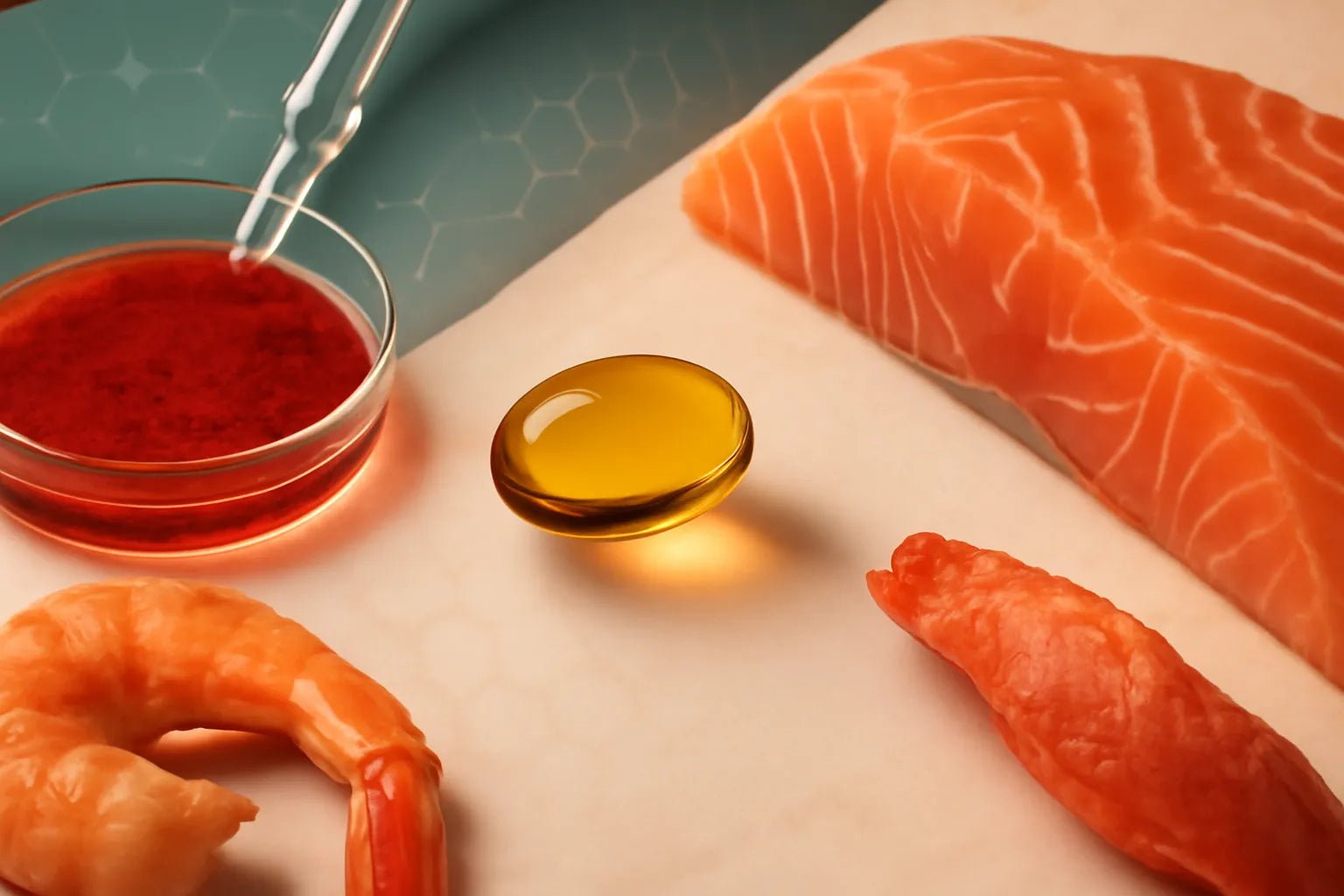
Benefits of Bulk Astaxanthin Extract for Salmon Feed
1. Supports Salmon Flesh Pigmentation
The most established application of astaxanthin in salmon feed is its ability to support muscle pigmentation.
After dietary intake, astaxanthin is absorbed and transported through the fish before being deposited in tissues, including muscle. This contributes to the pink-red appearance of salmon fillets.
An 88-day feeding study in Atlantic salmon compared natural carotenoid sources from Haematococcus pluvialis, Phaffia rhodozyma, and Paracoccus carotinifaciens with synthetic astaxanthin. The study found that the natural sources effectively supported pigmentation, with no significant difference in fillet redness among the tested pigment sources.
2. Helps Provide Consistent Color
Commercial salmon production requires consistent feed quality and predictable pigmentation.
A controlled astaxanthin program provides a defined dietary source of carotenoid throughout the relevant production period.
However, final flesh color depends on multiple factors, including:
- Astaxanthin concentration
- Pigment source
- Bioavailability
- Fish size
- Growth rate
- Feeding duration
- Feed composition
- Feeding management
- Storage and processing conditions
Consequently, pigment concentration alone does not determine the final color response.
3. Provides a Concentrated Carotenoid Ingredient
Bulk astaxanthin allows feed manufacturers to incorporate a standardized amount of carotenoid into premixes and finished feeds.
A concentrated extract can simplify formulation when manufacturers need to achieve a defined astaxanthin level without adding a large quantity of raw material.
The actual inclusion level should be calculated according to the product assay and formulation requirements.
4. Supports Carotenoid Deposition
Dietary astaxanthin can be absorbed and deposited in salmon tissue.
Research has shown that the efficiency of deposition can vary according to the astaxanthin source and feeding conditions. This makes bioavailability an important consideration when selecting a commercial bulk ingredient.
A product with a high assay does not necessarily deliver proportionally higher tissue deposition if its stability, digestibility, or bioavailability is poor.

Natural Sources of Astaxanthin
Several biological sources can provide natural astaxanthin for aquaculture.
Haematococcus pluvialis
Haematococcus pluvialis is a microalga widely recognized as one of the most important natural sources of astaxanthin.
Under suitable stress conditions, the microalga accumulates large quantities of astaxanthin. Extracts or biomass derived from H. pluvialis can therefore be processed into commercial carotenoid ingredients.
Phaffia rhodozyma
Phaffia rhodozyma, also known as Xanthophyllomyces dendrorhous, is a yeast capable of producing astaxanthin.
It has been investigated as a natural pigment source for fish feeds and can be processed into feed-grade carotenoid ingredients.
Paracoccus carotinifaciens
Certain bacteria can also produce astaxanthin. Paracoccus carotinifaciens is one example that has been investigated as a natural astaxanthin source.
The 2025 Atlantic salmon study comparing several natural sources demonstrated that source selection can influence tissue astaxanthin deposition even when pigmentation responses are similar.

Natural vs. Synthetic Astaxanthin
Natural and synthetic astaxanthin are both used in aquaculture.
They may differ in:
Production method
- Isomer composition
- Chemical form
- Esterification
- Stability
- Bioavailability
- Cost
- Regulatory requirements
Natural astaxanthin can be attractive for manufacturers developing naturally sourced feed products, while synthetic astaxanthin remains an important commercial source because of its established use and standardized production.
Research comparing natural sources with synthetic astaxanthin in Atlantic salmon found effective pigmentation from the tested natural sources, although some differences in muscle astaxanthin concentration were observed.
For commercial buyers, the appropriate source depends on the feed specification, target market, cost structure, regulatory requirements, and desired positioning of the finished product.

Astaxanthin for Other Aquaculture Species
Although salmon is a major application, astaxanthin is also used in other aquaculture feeds.
Rainbow Trout
Rainbow trout are important salmonid species in which astaxanthin has been studied extensively for pigmentation and nutritional applications.
Shrimp
Astaxanthin is commonly investigated and used in shrimp nutrition because crustaceans obtain carotenoids from their diets.
Ornamental Fish
In ornamental aquaculture, carotenoid supplementation can help maintain or intensify desirable coloration.
Other Farmed Fish
Astaxanthin may also be incorporated into specialized feeds for other fish species when pigmentation or functional carotenoid nutrition is relevant.
The appropriate formulation differs substantially between species, so salmon-feed data should not automatically be applied to shrimp or other aquatic animals.
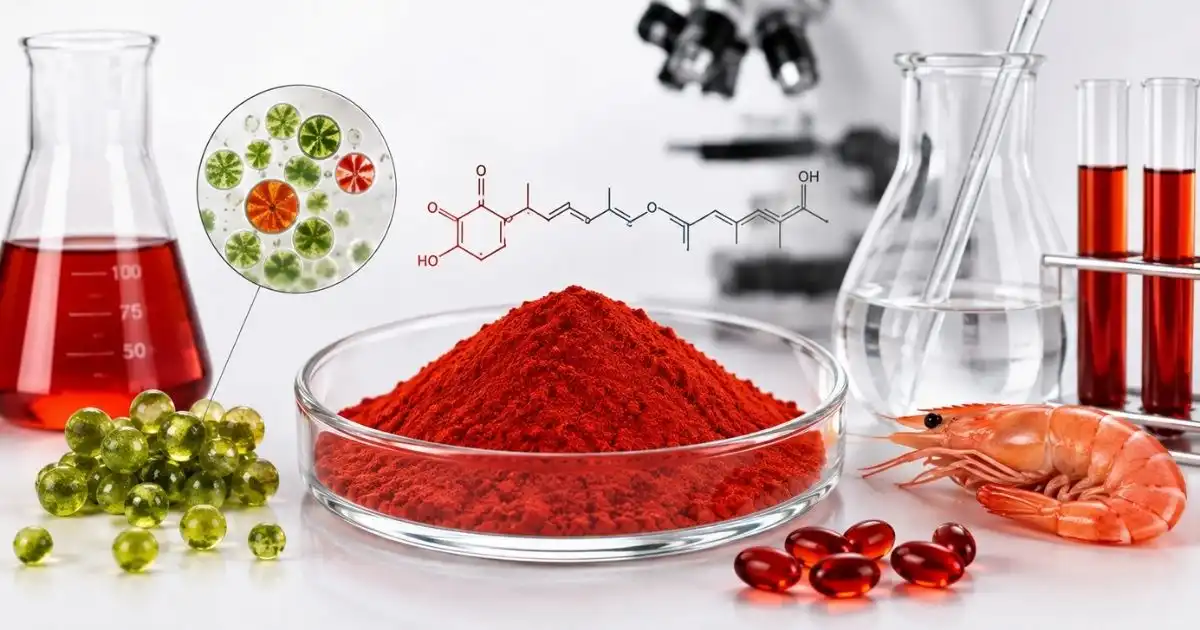
Astaxanthin and Fish Nutrition
Although pigmentation is its strongest commercial application, astaxanthin has also attracted interest as a functional feed ingredient.
Antioxidant Properties
Astaxanthin has antioxidant activity and has been investigated for its role in antioxidant defense.
Aquaculture studies have examined relationships between astaxanthin supplementation and oxidative-stress indicators, antioxidant enzymes, and other physiological responses. Reviews describe antioxidant activity as one of the important biological properties of astaxanthin.
However, antioxidant effects should not be presented as guaranteed results for every fish. Outcomes depend on the species, feed composition, environmental stressors, dose, and experimental conditions.
Immune-Related Research
Astaxanthin has also been studied in relation to immune function in aquatic animals.
Some studies report changes in immune-related parameters following dietary supplementation. However, evidence varies among species and experimental designs.
For commercial salmon feed, pigmentation remains the most clearly established function, while broader physiological effects are better described as potential nutritional benefits rather than guaranteed outcomes.
Growth and Feed Utilization
Astaxanthin has also been investigated in relation to growth performance and feed utilization.
A recent meta-analysis reviewed astaxanthin supplementation across aquaculture species and found evidence of effects on some growth-related and physiological parameters, but the available studies were heterogeneous and Atlantic salmon-specific growth studies were not included in the final meta-analysis.
Therefore, astaxanthin should not be positioned as a universal growth promoter.

Bulk Astaxanthin Extract for Feed Formulation
Bulk astaxanthin can be incorporated into different types of aquaculture feed.
Salmon Grower Feed
Astaxanthin can be incorporated into grower diets to support gradual carotenoid deposition as fish develop.
Salmon Finishing Feed
Finishing diets can use astaxanthin as part of a pigmentation strategy before harvest.
Aquaculture Premixes
Bulk astaxanthin can be combined with vitamins, minerals, antioxidants, and other feed ingredients in premix systems.
Extruded Feed
Astaxanthin can be incorporated into extruded aquafeeds, although processing stability should be evaluated because heat and oxygen exposure can affect carotenoid retention.
Customized Feed Formulations
Feed manufacturers can adjust the astaxanthin level according to fish species, production stage, feed composition, target pigmentation, and market requirements.

How to Choose Bulk Astaxanthin Extract
For commercial purchasing, several specifications deserve attention.
Astaxanthin Assay
The declared astaxanthin concentration should be supported by reliable analytical testing.
Source
The supplier should clearly identify whether the astaxanthin comes from Haematococcus pluvialis, Phaffia rhodozyma, Paracoccus carotinifaciens, or another source.
Bioavailability
The chemical form and physical preparation can influence absorption and tissue deposition.
Stability
The ingredient should have appropriate stability during feed manufacturing and storage.
Physical Form
Buyers should consider whether powder, oil suspension, beadlet, or another form is most compatible with their feed-production process.
Dispersion
Uniform distribution throughout the feed is important for consistent intake.
Purity
The product should be tested for relevant impurities and contaminants according to the target market.
Batch Consistency
Consistent assay, moisture, particle size, color, and physical properties are important for large-scale feed production.

Quality Documentation for Bulk Buyers
A professional bulk astaxanthin supplier should be able to provide appropriate technical documentation, such as:
- Certificate of Analysis (COA)
- Product specification
- SDS/MSDS
- Astaxanthin assay
- Source information
- Microbiological testing
- Heavy-metal testing
- Stability information
- Batch traceability
Packaging and storage specifications
For international aquaculture ingredient buyers, documentation should also be aligned with the regulatory requirements of the destination market.

Why Bulk Supply Matters for Aquaculture Feed Manufacturers
Large-scale feed producers require more than a high astaxanthin concentration. They need a reliable ingredient supply with consistent specifications from batch to batch.
Bulk supply can provide advantages such as:
Consistent formulation:
Standardized ingredient specifications make it easier to maintain a target astaxanthin level.
Production efficiency:
Commercial packaging reduces the need to handle multiple small packages.
Supply continuity:
Reliable bulk sourcing helps manufacturers maintain production schedules.
Quality control:
COA and batch documentation allow manufacturers to monitor incoming raw materials.
Customized solutions:
Different astaxanthin concentrations and physical forms can be considered for different feed formulations.
Conclusion
Bulk Astaxanthin Extract for Salmon Feed and Aquaculture is an important carotenoid ingredient for commercial aquaculture, particularly because of its established role in salmon flesh pigmentation.
Natural sources such as Haematococcus pluvialis, Phaffia rhodozyma, and Paracoccus carotinifaciens can provide astaxanthin for aquaculture applications. Research in Atlantic salmon has demonstrated effective pigmentation from several natural sources, while also showing that source can influence astaxanthin deposition in muscle.
Astaxanthin also has antioxidant properties and has been investigated for immune-related and other physiological functions. These broader nutritional effects should be evaluated according to the specific fish species, feed formulation, dose, and production conditions rather than treated as universal benefits.
For bulk buyers, important purchasing considerations include astaxanthin assay, source, bioavailability, physical form, stability, purity, batch consistency, packaging, and technical documentation.
With appropriate quality control and feed formulation, bulk astaxanthin extract can provide a reliable source of carotenoid for salmon pigmentation and support the development of specialized aquaculture feed products.
References
Elbahnaswy, S., & Elshopakey, G. E. (2024). Recent progress in practical applications of a potential carotenoid astaxanthin in aquaculture industry: A review. Fish Physiology and Biochemistry, 50, 97–126.
Effect of natural carotenoids obtained from Haematococcus pluvialis, Paracoccus carotinifaciens, and Phaffia rhodozyma on flesh pigmentation and related biochemical mechanisms in Atlantic salmon (Salmo salar L.). Aquaculture, 596, 741743, 2025.
Wang, W., et al. (2025). Progress in the bioavailability of natural astaxanthin: Influencing factors, enhancement strategies, evaluation methods, and limitations of current research. Trends in Food Science & Technology, 160, 104998.
Oninku, B., Lomas, M. S., Burr, G. S., & Aryee, A. N. (2025). Astaxanthin: An overview of its sources, extraction methods, encapsulation techniques, characterization, and bioavailability. Journal of Agriculture and Food Research, 21, 101869.
Biological function of astaxanthin and its application in aquatic animal feeding. Food Chemistry: X, 2025.
Effectiveness of Astaxanthin as a Feed Supplement to Improve Growth Performance and Feed Utilization in Aquaculture Animals: A Meta-Analysis. Antioxidants, 2025.
FAQ
Q1: What is Bulk Astaxanthin Extract?
A1: Bulk Astaxanthin Extract is a concentrated source of astaxanthin intended for commercial feed formulations. It can be supplied in forms such as powder, extract, oil suspension, beadlet, or other stabilized preparations, depending on the production method and source.
Q2: What is astaxanthin?
A2: Astaxanthin is a red-orange xanthophyll carotenoid used extensively in aquaculture nutrition. It can accumulate in aquatic animal tissues and contribute to characteristic coloration. Salmonids obtain carotenoids from their diets rather than synthesizing astaxanthin de novo.
Q3: Why is astaxanthin used in salmon feed?
A3: The primary application of astaxanthin in salmon feed is flesh pigmentation. Dietary astaxanthin is absorbed and transported through the fish before being deposited in tissues, including muscle, contributing to the pink-red appearance of salmon fillets.
Q4: What is the main benefit of astaxanthin for salmon?
A4: The most established benefit is supporting salmon flesh pigmentation. A controlled dietary supply of astaxanthin can help provide the carotenoid required for pigmentation during commercial salmon production.
Q5: Can Bulk Astaxanthin Extract help provide consistent salmon color?
A5: It can provide a defined dietary source of carotenoid for pigmentation programs. However, final flesh color depends on several factors, including astaxanthin concentration, source, bioavailability, fish size, growth rate, feeding duration, feed composition, feeding management, and storage and processing conditions.
Q6: How does astaxanthin support salmon flesh pigmentation?
A6: After dietary intake, astaxanthin is absorbed and transported through the fish and can be deposited in muscle tissue. This deposition contributes to the pink-red coloration characteristic of salmon flesh.
Q7: Does astaxanthin have benefits beyond pigmentation?
A7: Astaxanthin has antioxidant activity and has been studied for potential effects on oxidative stress, immune-related responses, and other physiological functions in aquatic animals. These effects can vary according to species, formulation, dose, and production conditions.
Q8: Does astaxanthin promote salmon growth?
A8: Astaxanthin has been investigated in relation to growth performance and feed utilization, but research results vary among species and experimental conditions. It should not be positioned as a universal growth promoter.
Q9: What natural sources can provide astaxanthin?
A9: Important natural sources include Haematococcus pluvialis, Phaffia rhodozyma, and Paracoccus carotinifaciens. These sources can differ in production method, chemical form, bioavailability, stability, and tissue deposition.
Q10: What is Haematococcus pluvialis astaxanthin?
A10: Haematococcus pluvialis is a microalga widely recognized as an important natural source of astaxanthin. Under suitable stress conditions, it can accumulate high levels of astaxanthin, which can then be processed into commercial carotenoid ingredients.