With increasing feed prices and expanding markets for environmentally friendly animal production, poultry farmers and feed manufacturers are looking towards substitute ingredients-especially those obtained from agricultural residues. Corn cob powder is a residue that has caught their interest, the fibrous, ground remnant of the corn ear after kernel stripping. But is it effective enough to be added to poultry feed? Let us take a deeper look at corn cob powder's nutritional potential, advantages, shortcomings, and utilization in poultry feeds.
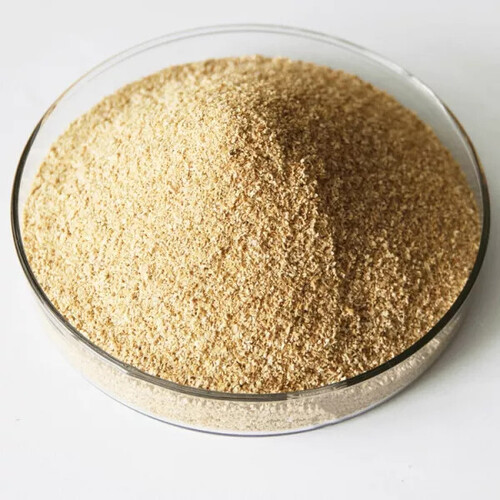
What Is Corn Cob Powder?
Corn cob powder is created by grinding dried corn cobs finely. Although it's widely employed in industrial uses as an absorbent material or abrasive, it's also being researched for use as animal feed, more specifically as a fiber supplement in livestock and poultry feeds.
It is:
- High in fiber
- Low in fat and protein
- A low-cost bulking agent
It does not contain complete nutrients on its own. Nonetheless, it can be added to the balanced poultry diets to definite play functions, mostly for gastrointestinal functions.
Nutritional Composition of Corn Cob Powder (Approximate, Dry Matter Basis)
| Component | Value (%) |
|---|---|
| Crude Fiber | 30–35% |
| Crude Protein | 2–4% |
| Fat | <1% |
| Ash | 1–2% |
| Nitrogen-Free Extract (Carbohydrates) | ~50% |
| Moisture | <10% |
Note: Values might differ according to corn type, processing technology, and storage duration.

Is Corn Cob Powder Safe for Poultry?
Yes, corn cob powder is safe to be used in poultry feed-but in limited inclusion levels. Poultry possess simple (monogastric) guts, which are less effective in fiber breakdown than ruminants. Thus, although a trace amount of fiber is helpful, excess can hurt digestion and absorption of nutrients.

Advantages of Corn Cob Powder in Poultry Feed
1. Maintains Gut Health
Small quantities of indigestible fiber can bring about:
- Development of the gizzard
- Slower feed passage, thus increasing nutrient digestion
- Improved health of gut microflora through functioning as a prebiotic
Adding corn cob powder in broiler or layer diets has the potential to enhance gut tolerance when properly controlled.
2. Feed Filler and Binder
Corn cob powder can be applied as a bulk agent to control feed cost. It also helps bind feed components in pellet shape, enhancing:
- Pellet durability
- Less fines and waste of feed
- Feed flowability
3. Cost-Effective Alternative
- As a by-product of corn, corn cob powder can be easily sourced and low in price, particularly in areas of high corn production. It can reduce overall feed costs when supplemented with nutrient-rich feedstuffs.
4. Eco-Friendly
- Corn cob utilization minimizes agricultural loss and ensures sustainable poultry farming. It promotes circular agriculture through transforming waste into valuable input.
Drawbacks of Corn Cob Powder in Poultry Feed
1. Poor Digestibility to Poultry
Because of its lignin and cellulose content, corn cob powder is not well digested by poultry. Excessive use may result in:
- Decreased feed efficiency
- Decreased growth rate
- Increased volume of manure
2. Nutritional Dilution
- Corn cob powder contains low protein, fat, and vitamins, hence excessive use will dilute the energy and nutrient content of the feed. Balanced formulation is therefore critical.
3. Mycotoxin Risk
- If not stored properly, corn cobs can mold and form mycotoxins, which are toxic to poultry. Drying and storage properly before grinding into powder is important.

Recommended Inclusion Rates for Poultry
For optimal benefits and least risks, inclusion rates should be low, depending on bird type and age:
| Poultry Type | Inclusion Rate (%) | Notes |
|---|---|---|
| Broilers (Starter) | 0–2% | Avoid high fiber in early growth stage |
| Broilers (Grower/Finisher) | 2–4% | Improves gut development, slows feed transit |
| Layers | 2–5% | May improve shell quality indirectly by promoting gut health |
| Breeders | 1–3% | Provides gut stimulation without overloading fiber |
Always consult a poultry nutritionist to confirm balanced formulation on the basis of particular farm objectives.
Processing for Improved Digestibility
In order to enhance utilization in poultry rations, corn cob powder may be pre-treated:
1. Fermentation
- Breaks down fiber and increases digestibility
- Adds favorable microbes
- Improves palatability
2. Enzyme Supplementation
- The inclusion of fiber-degrading enzymes such as xylanase, cellulase, or β-glucanase may enable birds to use fiber more effectively and enhance nutrient absorption.
3. Fine Grinding
- Powder should be ground finely to prevent physical damage to the digestive tract and enhance homogeneity during feed mixing.
Practical Application in Poultry Feed
Corn cob powder performs optimally when:
- Used in combination with high-protein and energy feed ingredients such as soybean meal or corn meal.
- Added to pelleted or mash feed for ease of mixing.
- Supplemented with enzymes and probiotics to aid digestion.
In developing countries, it can be a cost-cutting, available strategy, especially in backyard or semi-intensive chicken systems.
Conclusion
Therefore, can corn cob powder be employed in poultry diets? Yes-but with proper formulation and processing.
Although it does not contribute significantly to nutrition alone, corn cob powder is an excellent source of fiber and filler when incorporated at low levels. It maintains intestinal health, minimizes feed expense, and facilitates sustainability in poultry production. At high levels of inclusion, though, it may cause poor performance because of its high indigestible fiber.
For commercial broiler farms or smallholders wanting to reduce feed expense without impacting bird health, corn cob powder may be a clever inclusion-as long as it is processed, formulated, and regulated.
References
Onu, PN (2010). Effect of fermented corn cob meal on the performance of broiler chickens. International Journal of Poultry Science, 9(8), 797–803.
FAO. (2012). Animal Feed Resources Information System. Food and Agriculture Organization of the United Nations.
Oladunjoye, IO, & Ojebiyi, OO (2010). Performance characteristics of broiler chicks fed corn cob-based diets. American-Eurasian Journal of Agricultural & Environmental Sciences, 9(1), 66–69.
National Research Council (1994). Nutrient Requirements of Poultry. National Academies Press.
El-Deek, AA, & Brikaa, AM (2009). Effect of different dietary fiber sources on performance and physiological responses of growing Japanese quail. International Journal of Poultry Science, 8(3), 257–265.