


HJHERB Biotechnology supplies Tea Seed Meal a plant-based agricultural by-product obtained mainly from Camellia oleifera seeds after oil extraction. Also known as tea seed cake or Camellia seed meal, it contains naturally occurring saponins along with protein, carbohydrates, minerals, residual oil, and other plant compounds.
Because of its composition, Tea Seed Meal has attracted interest for livestock feed, agricultural applications, and the recovery of valuable tea saponins. However, its suitability for animal nutrition depends strongly on its saponin concentration, processing method, animal species, and inclusion level. Contact us for inquiry and certifications and for free sample. Email : info@hjagrifeed.com
What Is Bulk Tea Seed Meal?
Tea Seed Meal is the solid material remaining after oil is extracted from Camellia seeds. The material can be supplied in bulk for manufacturers, feed producers, agricultural companies, and ingredient processors.
Its composition can vary depending on the Camellia variety, cultivation conditions, oil-extraction technology, and subsequent processing. Research has identified protein, carbohydrates, lipids, minerals, polyphenols, and saponins among the major components of Camellia seed cake.
For bulk buyers, consistent specifications are therefore important. A reliable supplier should provide information about the source, processing method, moisture, saponin content, protein, ash, and other relevant quality parameters.

Natural Source of Tea Saponins
One of the most distinctive components of Tea Seed Meal is its naturally occurring saponin content.
Tea saponins are triterpenoid compounds found in Camellia seeds. Scientific studies have characterized numerous saponins from Camellia species and investigated their biological and functional properties.
This natural saponin content makes Tea Seed Meal particularly interesting for companies working with botanical feed ingredients and saponin-based products.
However, the same saponins that give Tea Seed Meal its functional properties can also limit its direct use in animal feed at high concentrations.

Benefits of Tea Seed Meal for Livestock
1. Provides a Plant-Based Feed Material
Tea Seed Meal contains several nutrients and organic compounds that make it an interesting agricultural raw material.
Its protein and carbohydrate fractions can contribute to the nutritional value of processed meal, while the naturally occurring saponins provide additional functional characteristics.
The nutritional value of individual batches should be determined through laboratory analysis because composition can vary considerably.
2. Potential Application in Ruminant Nutrition
Cattle, sheep, and goats have complex rumen microbial ecosystems that allow them to utilize fibrous plant materials.
Plant saponins have been studied for their ability to influence rumen microbial populations and fermentation characteristics. Research reviews have reported effects on protozoa, rumen fermentation, nutrient utilization, and methane production, although results vary according to the saponin source and feeding conditions.
This makes Camellia-derived saponin ingredients an area of interest for ruminant feed research.
3. Rumen Fermentation Research
Saponins can interact with microbial cell membranes and may influence particular populations of rumen microorganisms.
Researchers have investigated whether these changes can affect fermentation patterns and microbial protein production.
For feed manufacturers, Tea Seed Meal may therefore be considered as a raw material for specialized ruminant nutrition programs, provided its saponin level and safety profile are appropriately evaluated.
4. Potential Methane-Mitigation Applications
Methane is naturally generated during rumen fermentation. Plant-derived compounds, including saponins, have been studied as potential tools for modifying rumen fermentation and reducing methane production.
Research has reported methane-reduction potential for some saponin-containing plant materials, but results are not consistent across all products and diets.
Therefore, bulk Tea Seed Meal should not be marketed as a guaranteed methane-reduction product without product-specific feeding evidence.
5. Sustainable Agricultural By-Product
One major advantage of Tea Seed Meal is its origin as a by-product of Camellia oil production.
Instead of treating the remaining seed cake simply as waste, researchers are investigating ways to recover valuable compounds and develop higher-value applications.
Recent research describes Camellia seed cake as a promising source of bioactive compounds and highlights opportunities for its utilization in food, agriculture, biotechnology, and other industries.
This supports the concept of Tea Seed Meal as part of a more circular agricultural production system.
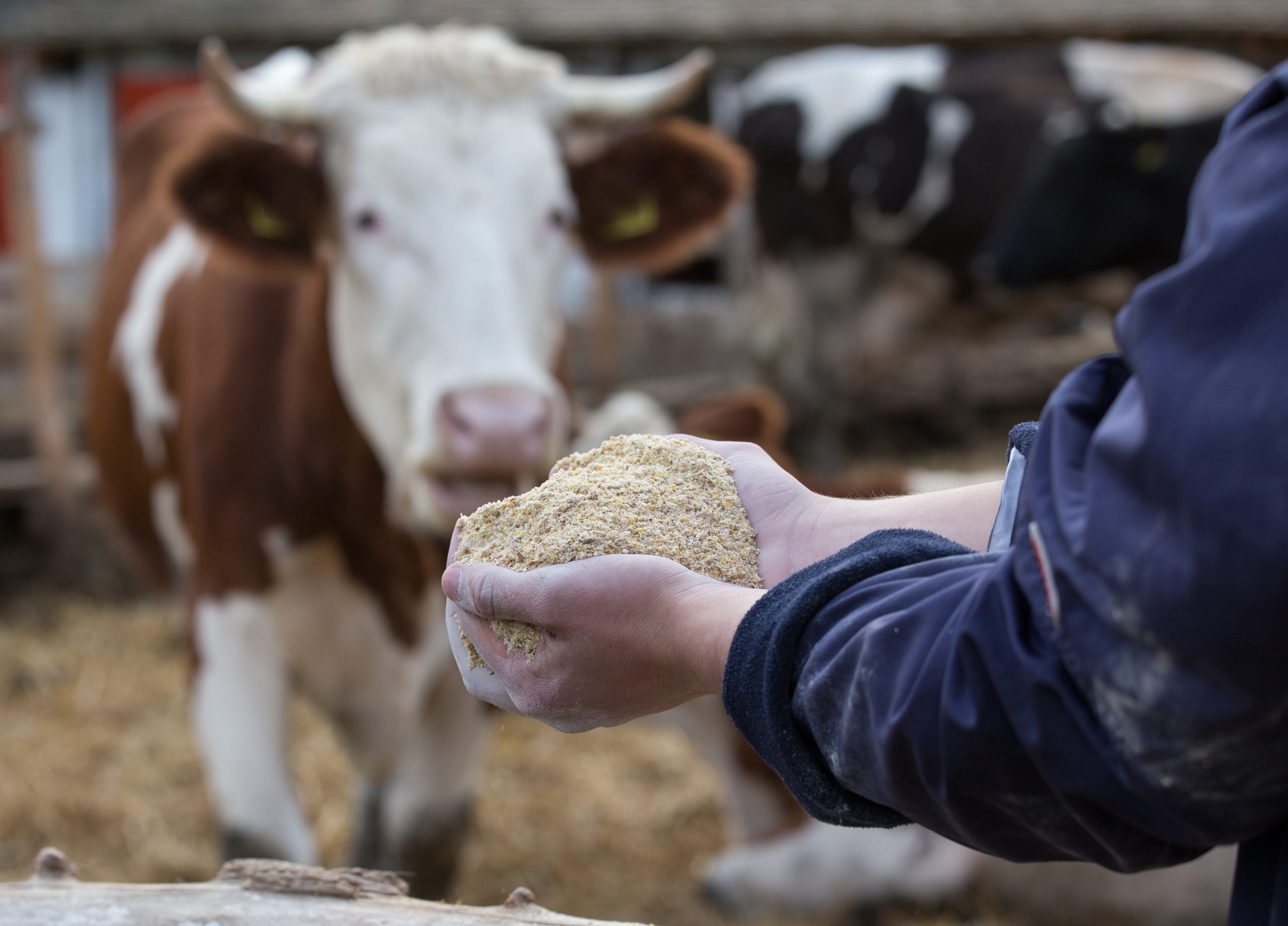
Bulk Tea Seed Meal for Cattle
Cattle are among the livestock species most relevant to research involving tea saponins.
Bulk Tea Seed Meal may be considered for cattle feed development where the product has appropriate specifications and has been evaluated for the intended application.
Potential areas of interest include:
- Rumen fermentation management
- Botanical feed formulation
- Nutrient utilization research
- Saponin supplementation
- Sustainable feed-ingredient development
- Agricultural by-product utilization
For dairy cattle, the complete ration must also provide appropriate levels of energy, protein, fiber, minerals, vitamins, and other nutrients.

Bulk Tea Seed Meal for Sheep and Goats
Sheep and goats are also ruminants, making them potential targets for research involving Camellia-derived saponin ingredients.
Tea Seed Meal may be investigated as part of specialized feed formulations, but the appropriate inclusion level should be established according to the composition of the specific product.
Animal species, age, body weight, production stage, basal diet, and saponin concentration should all be considered before formulation.

Tea Seed Meal for Poultry Feed
Tea Seed Meal has also been investigated as a potential poultry feed ingredient. However, its naturally high saponin content is an important consideration.
Recent research on Camellia oleifera meal found that untreated meal could negatively affect growth performance in chickens, while detoxification followed by fermentation reduced saponin levels and improved the nutritional characteristics of the material.
This highlights an important distinction between raw Tea Seed Meal and processed or detoxified Tea Seed Meal.
Feed manufacturers should therefore evaluate the processing history and saponin concentration before incorporating bulk Tea Seed Meal into poultry diets.

Tea Seed Meal vs. Tea Saponin Powder
Although both products originate from Camellia seeds, they are different ingredients.
Tea Seed Meal is a relatively complete agricultural by-product containing saponins, protein, carbohydrates, minerals, and other components.
Tea Saponin Powder is produced by extracting and concentrating the saponin fraction.
For applications requiring a controlled amount of active saponin, Tea Saponin Powder can offer more precise formulation than untreated Tea Seed Meal.
For companies interested in a lower-processing agricultural raw material or a source for further extraction, bulk Tea Seed Meal may be more appropriate.

Bulk Tea Seed Meal Applications
Depending on processing, specifications, and local regulations, bulk Tea Seed Meal may be considered for:
- Livestock feed research
- Cattle feed formulations
- Sheep and goat feed
- Processed poultry feed
- Tea saponin extraction
- Botanical feed ingredients
- Agricultural applications
- Fertilizer and soil-related applications
- Industrial recovery of plant compounds
Sustainable utilization of Camellia oil-processing by-products

Important Quality Specifications for Bulk Buyers
When purchasing Tea Seed Meal in bulk, buyers should evaluate several parameters.
Saponin Content
Saponin concentration is one of the most important specifications because it can influence both the functional characteristics and feed suitability of the material.
Protein Content
Protein levels help determine the nutritional contribution of the meal and should be verified through laboratory testing.
Moisture
Excessive moisture can negatively affect storage stability and increase the risk of microbial deterioration.
Ash Content
Ash provides information about the mineral fraction and can help assess consistency between batches.
Residual Oil
The amount of remaining oil depends on the extraction process and can influence the energy value and physical characteristics of the meal.
Microbiological Quality
Bulk feed ingredients should be evaluated for relevant microbial parameters according to the requirements of the destination market.
Particle Size
Particle size and uniformity are important for handling, mixing, transportation, and further processing.
Certificate of Analysis
A commercial supplier should be able to provide a COA with agreed specifications for each batch or shipment.
Storage and Handling of Bulk Tea Seed Meal
Proper storage is important for maintaining the quality of bulk Tea Seed Meal.
Recommended practices include:
- Store in a cool and dry environment.
- Protect the material from excessive moisture.
- Avoid direct sunlight.
- Use clean and suitable packaging.
- Prevent contamination during transportation.
- Maintain appropriate warehouse ventilation.
- Follow the supplier's recommended storage conditions.
For long-term storage, buyers should establish appropriate moisture and temperature controls based on the product specification.

Safety and Feed-Use Considerations
Tea Seed Meal should not automatically be considered suitable for unrestricted use in livestock feed simply because it is a natural plant material.
Its saponin concentration is particularly important. High levels of saponins may limit direct feed use, and processing methods such as detoxification or fermentation can significantly change the material's nutritional characteristics.
An EFSA assessment of a specific Camellia oleifera seed extract intended for use as a feed additive illustrates the importance of product-specific safety evaluation. The assessment found insufficient data to establish target-animal safety for that particular additive.
Therefore, commercial feed applications should be supported by appropriate product specifications, feeding data, safety assessments, and compliance with the regulations of the target market.
HJHERB BIOTECH Certificates
At HJHERB Biotechnology, we are committed to providing specialized nutraceutical and functional benefits to nutraceuticals, Pet food, and organic agriculture. we pride ourselves on our science-based, solution-focused approach to animal feed. Our ISO 9001 certification ensures that we conform to world-class standards, guaranteeing consistent quality and stable compounds. We have a professional staff of natural product chemists, pharmacognosists, microbiologists, and herbalists who work tirelessly to ensure that we deliver quality products to our customers.

Conclusion
Bulk Tea Seed Meal is a versatile Camellia-derived agricultural by-product with potential applications in livestock nutrition, saponin extraction, agriculture, and other industries.
Its naturally occurring saponins make it particularly interesting for ruminant nutrition research, where plant saponins have been investigated for their effects on rumen microorganisms, fermentation, nutrient utilization, and methane production.
However, Tea Seed Meal is not identical to purified Tea Saponin Powder. The composition of bulk meal can vary, and high saponin concentrations may limit direct use in animal feed. Processing, detoxification, fermentation, and careful formulation can be important depending on the intended application.
For livestock feed manufacturers and bulk ingredient buyers, the best approach is to select Tea Seed Meal based on consistent quality, verified saponin content, nutritional specifications, appropriate processing, reliable documentation, and target-market feed regulations.
Request Samples, Pricing & Technical Documents
Looking for a reliable Tea Seed Meal Bulk manufacturer with competitive factory pricing and dependable global supply? HJHERB BIOTECH provides high-purity veterinary-grade Tea Seed Meal Bulk for pharmaceutical manufacturers, distributors, and animal health companies worldwide.
We offer 10–30 g free samples for product evaluation, flexible bulk supply, OEM manufacturing, private labeling, and customized packaging. To support fast order fulfillment, we maintain inventory in our US warehouse and provide complete technical documentation, including COA, MSDS, product specifications, and third-party test reports with every order.
Contact us whether you need a long-term manufacturing partner or a trusted bulk supplier, our experienced team is ready to provide competitive quotations, technical support, and customized solutions for your business.
Add this branded ingredient to your final product. Email: info@hjagrifeed.com
References
Advances in valorization of Camellia oleifera Abel. seed cake: A review on the bioactive components, health benefits, extraction methods, and potential food applications. Food Research International, 208, 116134, 2025.
Wina, E., Muetzel, S., & Becker, K. The Impact of Saponins or Saponin-Containing Plant Materials on Ruminant Production-A Review. Journal of Agricultural and Food Chemistry, 53(21), 8093–8105, 2005.
Transforming Camellia oleifera meal into feedstuff: Enhancing value through detoxification and fermentation. Bioresource Technology, 441, 133578, 2026.
Zhang, J., Liu, J., Wang, J., et al. Advances in Camellia oleifera seed meal saponins: Extraction, analysis, bioactivity, and application. Food Chemistry, 492, 145277, 2025.
EFSA Panel on Additives and Products or Substances used in Animal Feed (FEEDAP). Safety and efficacy of a feed additive consisting of a Camellia oleifera C. Abel seed extract for use in all animal species except fin fish. EFSA Journal, 22(10), e9022, 2024.


