Natural Astaxanthin Extract is an important carotenoid ingredient used in salmon farming and aquaculture. It is especially valued for its ability to enhance the natural pink-to-red pigmentation of salmon flesh. In addition, astaxanthin has antioxidant properties and has been studied for its potential role in supporting immune function, stress response, growth, and overall fish health.
For salmon-feed manufacturers and aquaculture producers looking for natural ingredients, astaxanthin derived from sources such as Haematococcus pluvialis provides an attractive alternative to synthetic pigment sources.
What Is Natural Astaxanthin?
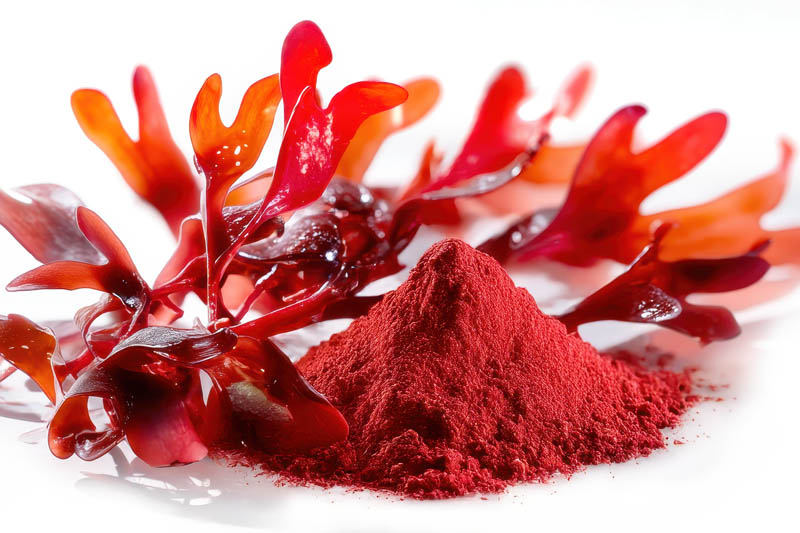
Astaxanthin is a red-orange xanthophyll carotenoid that occurs naturally in microorganisms and aquatic organisms. One of the most important commercial natural sources is the freshwater microalga Haematococcus pluvialis, which can accumulate high levels of astaxanthin under suitable cultivation conditions.
Other natural sources include red yeast such as Phaffia rhodozyma and Xanthophyllomyces dendrorhous.
Natural astaxanthin can be extracted and processed into ingredients suitable for aquaculture feed formulations.
Why Is Astaxanthin Important for Salmon?
Wild salmon obtain carotenoids through their natural diet. Farmed salmon, however, depend primarily on formulated feeds.
Astaxanthin is therefore incorporated into salmon feed to provide a reliable dietary carotenoid source.
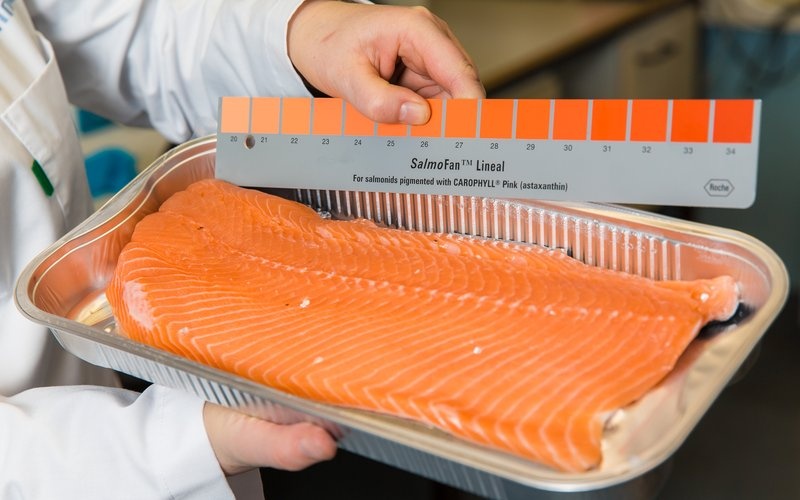
The most established application is flesh pigmentation. Dietary astaxanthin is absorbed and deposited in salmon muscle, contributing to the characteristic color expected in commercially farmed salmon.
Benefits of Natural Astaxanthin for Salmon
1. Enhances Flesh Pigmentation
The primary benefit of astaxanthin in salmon farming is its ability to enhance flesh coloration.
When salmon consume astaxanthin-containing feed, the pigment can accumulate in muscle tissue. The amount deposited depends on factors such as dietary concentration, feeding duration, fish size, and feed formulation.
Research has demonstrated that dietary astaxanthin can significantly influence the pigmentation of Atlantic salmon.
This makes natural astaxanthin an important ingredient for producers targeting consistent pink-red salmon flesh.
2. Supports Product Appearance
Salmon color is an important commercial quality characteristic. A consistent pink-to-red appearance can improve the visual appeal of salmon fillets and help producers meet customer expectations.
Because pigmentation is strongly influenced by dietary carotenoid intake, controlled astaxanthin supplementation provides feed manufacturers with a practical way to manage flesh color.
3. Provides Antioxidant Properties
Astaxanthin is recognized for its antioxidant activity.
Fish experience oxidative processes as part of normal metabolism, while intensive aquaculture can introduce additional environmental and physiological challenges. Research has investigated astaxanthin for its potential contribution to antioxidant defenses and protection against oxidative stress.
These properties make astaxanthin interesting as both a pigment and a functional feed ingredient.
4. May Support Immune Function
Studies have investigated the potential effects of astaxanthin on immune-related responses in farmed aquatic animals.
Research reviews describe potential immunomodulatory effects, although results can vary depending on species, dosage, feeding period, and environmental conditions.
For salmon producers, astaxanthin can therefore be considered as part of a broader nutritional strategy rather than as a replacement for proper disease prevention and farm management.
5. May Help Support Stress Response
Salmon can experience stress from transportation, handling, grading, changes in water quality, and other production conditions.
Because astaxanthin has antioxidant properties, researchers have investigated its potential role in helping aquatic animals cope with oxidative and physiological stress.
The potential benefits depend on the specific feeding program and environmental conditions.
Natural Astaxanthin Sources
The most commercially recognized natural source is Haematococcus pluvialis.
This microalga can accumulate substantial quantities of astaxanthin, particularly when exposed to environmental conditions that stimulate pigment production.
Natural astaxanthin can also be obtained from microbial sources such as Phaffia rhodozyma.
For manufacturers promoting natural aquaculture ingredients, microalgal astaxanthin can be particularly attractive because it fits naturally into plant- and microorganism-derived ingredient strategies.

Natural Astaxanthin vs. Synthetic Astaxanthin
Both natural and synthetic astaxanthin are used in aquaculture.
| Feature | Natural Astaxanthin | Synthetic Astaxanthin |
|---|---|---|
| Source | Microalgae or microorganisms | Chemical synthesis |
| Main application | Pigmentation and functional nutrition | Primarily pigmentation |
| Natural-source positioning | Strong | Limited |
| Standardization | Depends on product | Generally highly standardized |
| Cost | Usually higher | Often more economical |
| Market appeal | Suitable for natural-product positioning | Suitable for cost-efficient formulations |
A 2025 study comparing natural carotenoid sources in Atlantic salmon found that natural sources including H. pluvialis and Phaffia rhodozyma were effective for pigmentation. The study reported comparable redness among treatments, while some natural-source groups produced darker flesh than the synthetic astaxanthin group.
Applications in Salmon Farming
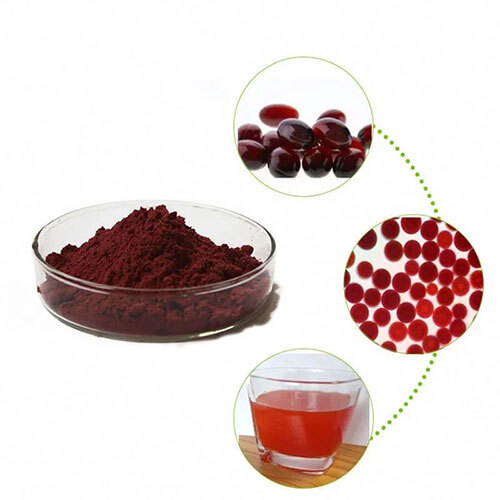
Natural astaxanthin extract can be used in several aquaculture applications.
Salmon Feed
The primary application is formulated salmon feed. Astaxanthin can be incorporated into feed premixes and complete diets to provide the desired carotenoid level.
Grow-Out Diets
During salmon grow-out, astaxanthin supplementation can support progressive muscle pigmentation before harvest.
Premium Aquafeeds
Natural astaxanthin can be combined with other functional ingredients in premium aquafeeds designed for nutritional and product-quality objectives.
Functional Aquaculture Nutrition
Because of its antioxidant properties, natural astaxanthin can be included in functional feed formulations alongside vitamins, minerals, omega-3 fatty acids, and other nutritional ingredients.

Factors Affecting Astaxanthin Deposition
The amount of astaxanthin deposited in salmon flesh is not determined by feed concentration alone.
Important factors include:
- Fish size
- Salmon species
- Dietary astaxanthin concentration
- Feeding duration
- Feed composition
- Astaxanthin source
- Digestibility
- Environmental conditions
- Fish health
Research has shown that fish size and dietary astaxanthin concentration are important variables in determining salmon pigmentation.
Therefore, feed manufacturers should develop inclusion strategies based on the specific production system rather than using a universal dosage.
How to Choose Natural Astaxanthin Extract
For commercial salmon-feed production, ingredient quality is essential.
Manufacturers should evaluate:
Astaxanthin concentration:
The active concentration should be clearly specified.
Natural source:
Confirm whether the product is derived from Haematococcus pluvialis, yeast, or another natural source.
Purity:
The product should meet appropriate quality and contaminant specifications.
Stability:
Carotenoids can be sensitive to heat, oxygen, light, and moisture, so stability is important during feed manufacturing and storage.
Processing method:
Extraction and processing can influence the final quality and bioavailability of the ingredient.
Certificate of Analysis:
Commercial buyers should request a COA showing relevant specifications such as astaxanthin assay, moisture, microbiological quality, heavy metals, and shelf life.

Natural Astaxanthin in Salmon Feed Formulation
Natural astaxanthin can be incorporated into salmon feed through a controlled premix.
A typical formulation process includes:
- Selecting a standardized natural astaxanthin ingredient.
- Preparing a suitable premix.
- Mixing the premix uniformly with feed ingredients.
- Processing the feed while minimizing unnecessary pigment degradation.
- Testing the finished feed.
- Storing the product under appropriate conditions.
The exact inclusion rate should be established according to the astaxanthin concentration, feed formulation, salmon size, production stage, desired pigmentation, and applicable regulations.

Importance of Astaxanthin Stability
Stability is particularly important for natural astaxanthin.
Exposure to excessive heat, oxygen, light, and moisture can reduce carotenoid stability. This can affect the amount of pigment remaining in the finished feed.
Proper packaging and storage can help maintain product quality.
Feed manufacturers should consider stability throughout the entire supply chain, from ingredient storage to feed processing and final warehouse storage.
Conclusion
Natural Astaxanthin Extract for Salmon Farming and Aquaculture is a valuable carotenoid ingredient with an established role in salmon pigmentation. Natural sources such as Haematococcus pluvialis provide a concentrated source of astaxanthin that can be incorporated into formulated aquafeeds.
Its primary commercial benefit is helping salmon develop the desirable pink-to-red flesh color associated with quality salmon products. Research also indicates potential antioxidant, immune-supporting, and stress-related benefits, although these effects depend on the fish species, dosage, feeding conditions, and overall diet.
For salmon farmers and aquafeed manufacturers, selecting a high-quality, standardized, stable natural astaxanthin extract can help achieve consistent pigmentation while supporting a natural-source approach to aquaculture nutrition.
References
Elbahnaswy, S., & Elshopakey, G. E. Recent progress in practical applications of a potential carotenoid astaxanthin in aquaculture industry: A review. Fish Physiology and Biochemistry, 50, 97–126.
Ambati, R. R., Moi, P. S., Ravi, S., & Aswathanarayana, R. G. Astaxanthin: Sources, extraction, stability, biological activities and its commercial applications-A review. Marine Drugs.
Effect of natural carotenoids obtained from Haematococcus pluvialis, Paracoccus carotinifaciens, and Phaffia rhodozyma on flesh pigmentation and related biochemical mechanisms in Atlantic salmon. Aquaculture, 596, 741743, 2025.
A pigmentation model for farmed Atlantic salmon: Nonlinear regression analysis of published experimental data. Aquaculture, 253, 415–420.
Astaxanthin from Haematococcus pluvialis: processes, applications, and market. Preparative Biochemistry & Biotechnology, 52, 598–609.
FAQ
A1: We are a professional manufacturer and supplier of L-Cysteine and provide natural and functional ingredients for animal nutrition, pet food, agriculture, and industrial applications.
A2: Yes. We can provide samples for product testing and evaluation before placing a bulk order.
Q3: What is your MOQ for Natural Astaxanthin Extract?
A3: Our MOQ is flexible depending on the product specification, packaging, and order quantity. We can support both trial orders and bulk supply.
Q4: Do you offer discounts for bulk Natural Astaxanthin orders?
A4: Yes. Pricing depends on the order quantity, astaxanthin concentration, packaging, and shipping requirements. Competitive pricing can be offered for larger-volume orders.
Q5: How long does it take to produce and deliver Natural Astaxanthin Extract?
A5: Production and delivery time depend on the order quantity, product specifications, packaging, and destination. Please contact us for an estimated delivery schedule based on your requirements.
Q6: How do you ship Natural Astaxanthin Extract?
A6: We can arrange suitable shipping methods according to the order quantity and destination. Shipping by express, air freight, or sea freight can be discussed based on your requirements.
Q7: Do you accept OEM or ODM services?
A7: Yes. We can provide customized solutions for qualified customers, including customized product specifications and packaging according to project requirements
Q8: What quality documents can you provide?
A8: We can provide relevant technical documentation such as COA and product specifications . Commercial buyers should check specifications including astaxanthin assay, moisture, microbiological quality, heavy metals, and shelf life.
Q9: What natural sources are used for your Astaxanthin Extract?
A9: Natural Astaxanthin can be obtained from sources such as Haematococcus pluvialis and microbial sources including Phaffia rhodozyma . Haematococcus pluvialis is one of the most commercially recognized natural sources.
Q10: How do you handle quality complaints?
A10: If a quality concern occurs, our team will investigate the issue and work with the customer to provide an appropriate solution. We recommend providing the product batch information and relevant quality details so the issue can be properly evaluated.