As agriculture continues to explore more sustainable crop protection strategies, natural plant-based ingredients are receiving increasing attention. Tea saponin is one such botanical ingredient with potential applications in agricultural pest management. Derived mainly from the seeds of Camellia oleifera, tea saponin is a naturally occurring compound known for its surfactant properties and biological activity.
Research has shown that tea saponin can affect certain agricultural insect pests through contact and ingestion, making it a promising ingredient for botanical pest-control formulations. It has also been investigated for its activity against certain plant pathogens.
What Is Tea Saponin?
Tea saponin is a group of naturally occurring triterpenoid saponins primarily obtained from Camellia oleifera seeds and seed meal, a by-product of tea seed oil production. Tea seed meal is particularly rich in these bioactive compounds, which have attracted interest for agricultural, environmental, and industrial applications.
One of the important characteristics of tea saponin is its natural surface activity. It functions as a non-ionic surfactant and can interact with water and other substances, which makes it useful in various agricultural formulations.
Beyond its surfactant properties, studies have investigated the biological effects of tea saponins on insects. This combination of surface activity and biological action makes tea saponin an interesting botanical ingredient for crop protection.

How Does Tea Saponin Help With Pest Control?
The pest-control potential of tea saponin is associated with several biological effects.
1. Contact Activity Against Insects
Research on tea saponins extracted from Camellia oleifera has demonstrated contact toxicity against certain insect pests. In one study, tea saponin extracts showed significant insecticidal activity against Ectropis obliqua, a lepidopteran pest of tea plants.
The research indicated that tea saponins can interact with the insect's external protective layer, contributing to water loss and physiological disruption.
This provides a scientific basis for investigating tea saponin as an ingredient in botanical insect-control products.
2. Effects Through Ingestion
Tea saponin can also act after being consumed by susceptible insect larvae. Research has reported effects on the digestive system and feeding behavior of certain insects.
For example, studies on tea saponin and diamondback moth larvae found reduced growth, feeding, pupal weight, pupation, and adult emergence following exposure.
These effects suggest that tea saponin may have value in pest-management programs where feeding insects are an important crop concern.
3. Potential Effects on Insect Development
The biological activity of tea saponin is not necessarily limited to direct mortality. Research has also found effects on insect development and reproduction.
In studies involving Helicoverpa armigera, tea seed saponin exposure was associated with reduced nutrient uptake, changes in immune-related responses, lower longevity, and reduced reproductive parameters.
This indicates that appropriately formulated tea saponin products may potentially contribute to broader pest-management strategies by affecting pest populations at different stages of their life cycle.

Tea Saponin for Agricultural Pest Management
Tea saponin can be considered as a botanical ingredient for agricultural pest-control formulations, particularly where growers are interested in plant-derived alternatives.
Potential applications include:
- Crop pest management
- Botanical insecticide formulations
- Integrated pest management programs
- Agricultural spray formulations
- Plant-based crop protection products
- Research and development of natural pesticides
Formulation systems requiring natural surfactant properties
However, performance depends on the target pest, saponin source, purity, formulation, concentration, application method, and environmental conditions.

Tea Saponin and Integrated Pest Management
Integrated pest management (IPM) combines different approaches to maintain pest populations below economically damaging levels. These approaches may include biological control, cultural practices, monitoring, mechanical control, and carefully selected pesticides.
Tea saponin has been investigated as a potential component of such systems. In field research involving the tea geometrid, a tea saponin treatment demonstrated control of larvae while showing considerably lower effects on two spider species than the chemical insecticides tested in the same study. The researchers classified the tested treatment as harmless or slightly harmful to these natural enemies under the study conditions.
This does not mean that all tea saponin products have the same environmental profile. Product formulation, concentration, application rate, and local conditions must be evaluated individually.
Potential Applications Beyond Insect Control
The agricultural potential of tea saponin extends beyond insect management.
Research has also investigated saponin-rich extracts from tea seed pomace against plant pathogens. One study identified a saponin mixture with inhibitory activity against Rhizoctonia solani, a pathogen associated with damping-off in vegetable seedlings.
Tea saponin has also been studied as a natural surfactant in soil-related applications. Its surface-active properties can influence interactions between water, soil particles, and other substances, creating opportunities for agricultural and environmental applications.
Therefore, tea saponin may have potential as a multifunctional agricultural ingredient rather than simply a conventional insect-control component.
Benefits of Tea Saponin for Agricultural Applications
Plant-Derived Ingredient
Tea saponin originates from Camellia plant materials, particularly Camellia oleifera seeds and seed meal. This makes it attractive for manufacturers developing botanical agricultural products.
Natural Surfactant Properties
Tea saponin is a naturally occurring non-ionic surfactant. Its surface-active characteristics can be useful when developing agricultural formulations and delivery systems.
Biological Pest-Control Potential
Scientific studies have demonstrated insecticidal activity against specific pest species, supporting continued research into tea saponin-based botanical pest-control products.
Suitable for Botanical Formulation Development
Tea saponin can serve as an ingredient for companies developing plant-derived agricultural formulations, subject to appropriate formulation, efficacy testing, and regulatory requirements.
Supports Sustainable Utilization of Tea Seed Resources
Tea saponin is commonly recovered from Camellia oleifera seed meal, which is generated during tea seed oil production. Using this by-product for higher-value applications can improve resource utilization and support a more circular approach to the tea-oil industry.

How to Choose Tea Saponin for Pest-Control Formulations
For agricultural applications, buyers should consider more than simply the product name. Important specifications may include:
- Saponin content: A defined saponin concentration helps manufacturers establish consistency between batches.
- Purity: Higher-purity products may be appropriate for specialized formulation development, while other agricultural applications may use less-refined materials.
- Solubility: Good water dispersibility or solubility can simplify incorporation into spray or liquid formulations.
- Batch consistency: Consistent physical and chemical characteristics are important for commercial agricultural products.
- Testing documentation: A supplier should be able to provide relevant specifications, COA, and other quality-control documentation.
- Application testing: The selected tea saponin should be evaluated against the intended pest and crop under appropriate laboratory, greenhouse, or field conditions.

Tea Saponin in Modern Botanical Agriculture
The growing interest in botanical pesticides is encouraging research into naturally derived compounds that can complement existing crop-protection strategies. Tea saponin is particularly interesting because it combines biological activity with natural surfactant properties.
Recent research has even explored tea saponin-based nanopesticide systems designed to improve foliar affinity and pesticide delivery. One 2026 study developed a tea-saponin-based nanopesticide system and reported favorable stability, sustained-release characteristics, and biological activity against Tetranychus urticae.
Such research demonstrates that tea saponin may have applications not only as an active botanical ingredient but also as part of advanced agricultural formulation technologies.
Conclusion
Tea saponin is a promising plant-derived ingredient for agricultural pest management. Obtained primarily from Camellia oleifera seed materials, it combines natural surfactant properties with biological activity that has been demonstrated against several insect pests in laboratory and field research.
Its potential applications include botanical insecticide development, integrated pest management, crop protection formulations, and other agricultural technologies. At the same time, tea saponin should not be treated as a universal pesticide. Effectiveness depends on the target pest, formulation, concentration, crop, environmental conditions, and regulatory requirements.
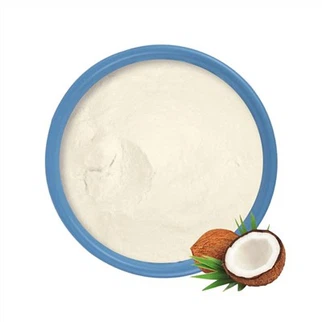
For agricultural manufacturers and formulators, standardized tea saponin powder can provide a useful starting material for developing plant-based crop-protection products and exploring new natural agricultural solutions.
References
Insecticidal Activity and Insecticidal Mechanism of Total Saponins from Camellia oleifera. PubMed.
Yu, X.-L. & He, Y. Tea saponins: effective natural surfactants beneficial for soil remediation, from preparation to application. RSC Advances.
Advances in Camellia oleifera seed meal Saponins: Extraction, analysis, bioactivity, and application. Food Chemistry, 2025.
Bioactive saponin from tea seed pomace with inhibitory effects against Rhizoctonia solani. Journal of Agricultural and Food Chemistry.
Tea saponin reduces the damage of Ectropis obliqua to tea crops... PubMed.
Molecular co-assembly engineering towards natural tea saponin-based nanopesticides for synergistic enhanced foliar affinity. Pest Management Science, 2026.
FAQ
Q1: What is Tea Saponin?
A1: Tea Saponin is a group of naturally occurring triterpenoid saponins primarily obtained from Camellia oleifera seeds and seed meal. Tea seed meal is a rich source of these bioactive compounds and is generated as a by-product of tea seed oil production. Tea Saponin also has natural non-ionic surfactant properties, making it useful in agricultural formulation development.
Q2: How does Tea Saponin help with agricultural pest control?
A2: Tea Saponin has been investigated for biological activity against certain insect pests through contact and ingestion. Research has reported effects on insect feeding, growth, development, and other physiological processes. Its activity varies according to the target pest, concentration, formulation, and application conditions.
Q3: Can Tea Saponin act as a natural insecticide?
A3: Tea Saponin can be used as a botanical ingredient for developing natural insect-control formulations. Studies have demonstrated insecticidal activity against specific pests, including tea geometrid and diamondback moth larvae. However, Tea Saponin should not be considered a universal pesticide, and efficacy needs to be evaluated for the intended pest and crop.
Q4: What agricultural pests can Tea Saponin target?
A4: Research has investigated Tea Saponin against several insect pests, including Ectropis obliqua, diamondback moth larvae, and Helicoverpa armigera. The reported effects include reduced feeding, growth, development, longevity, and reproductive parameters. Results can vary between pest species and experimental conditions, so application-specific testing is recommended.
Q5: Can Tea Saponin be used in Integrated Pest Management (IPM)?
A5: Yes. Tea Saponin has been investigated as a potential component of Integrated Pest Management programs. IPM combines approaches such as monitoring, biological control, cultural practices, mechanical control, and selected pesticides. Research has evaluated Tea Saponin treatments alongside considerations for effects on certain natural enemies under specific study conditions.
Q6: Does Tea Saponin have applications beyond insect control?
A6: Yes. Research has also investigated saponin-rich tea seed extracts against certain plant pathogens. One study reported inhibitory activity against Rhizoctonia solani. Tea Saponin's natural surfactant properties also create potential opportunities in soil-related and other agricultural formulation applications.
Q7: What are the main benefits of Tea Saponin for agricultural formulations?
A7: Tea Saponin offers several characteristics of interest to agricultural product manufacturers, including a plant-derived origin, natural non-ionic surfactant properties, biological pest-control potential, suitability for botanical formulation development, and utilization of Camellia oleifera seed meal generated during tea seed oil production.
Q8: What should buyers check when selecting Tea Saponin for pest-control products?
A8: Buyers should consider saponin content, purity, solubility or water dispersibility, batch consistency, and quality-control documentation. Application testing against the intended pest and crop is also important. Laboratory, greenhouse, or field testing can help determine whether a particular Tea Saponin product and formulation are suitable for the intended application.
Q: Q9: Is there a universal Tea Saponin dosage for agricultural pest control?
A: A9: No. A universal dosage should not be assumed because performance depends on the target pest, crop, Tea Saponin source and purity, formulation, concentration, application method, and environmental conditions. The appropriate application rate should be established through product-specific efficacy testing and according to applicable agricultural regulations.
Q: Q10: Can Tea Saponin be used in advanced botanical pesticide formulations?
A: A10: Yes. Beyond its use as a botanical active ingredient, Tea Saponin is being investigated as a component of advanced agricultural delivery systems. Research has explored Tea Saponin-based nanopesticide systems designed to improve foliar affinity, stability, sustained release, and biological activity. These applications remain formulation- and testing-dependent.