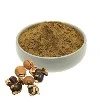
With soil erosion, global warming, and increased demand for chemical-free food, sustainable agriculture has never been more important. Farmers everywhere are forced to come up with greener ways to develop healthy soils, protect against pests, and boost yields without killing the planet. Among such naturally occurring materials so bountiful with promise is tea saponin, a plant-based compound in Camellia plant seeds. With its unique properties, tea saponin is now a profitable agricultural input, offering eco-friendly alternatives to conventional pesticides and fertilizers.
This article talks about the use of tea saponin in sustainable agriculture, as a soil fertility tool, insecticide, and crop yield booster, and the reason why it is currently also gaining huge popularity in organic and sustainable agriculture.

What is Tea Saponin
Tea saponin is a glycoside derived from tea seeds of Camellia sinensis and Camellia oleifera. Because of its potent surfactant and emulsifying properties, tea saponin has been applied for decades in traditional cleaning, cosmetics, and aquaculture. However, some of the more recent studies on tea saponin were aimed at the application of tea saponin in agriculture since tea saponin would make the soil more fertile, act as an organic pesticide, and enhance nutrient uptake in plants.
Unlike synthetic agrochemicals, tea saponin is non-toxic to human beings, biodegradable, and eco-friendly, thus making it suitable for sustainable agriculture.

Advantages of Tea Saponin for Sustainable Agriculture
1. Improves Soil Quality and Fertility
Good soil is the basis of ecological agriculture. Tea saponin improves the health of soil by:
- Sarkinoff soil microbes that support nutrient cycling.
- Improving organic matter degradation, which enhances the availability of nutrients.
- Preventing plant root-killer soil-borne diseases.
This leads to healthier and more resilient soils that are more resistant to chemical overuse-caused degradation.
2. Natural Pest Control
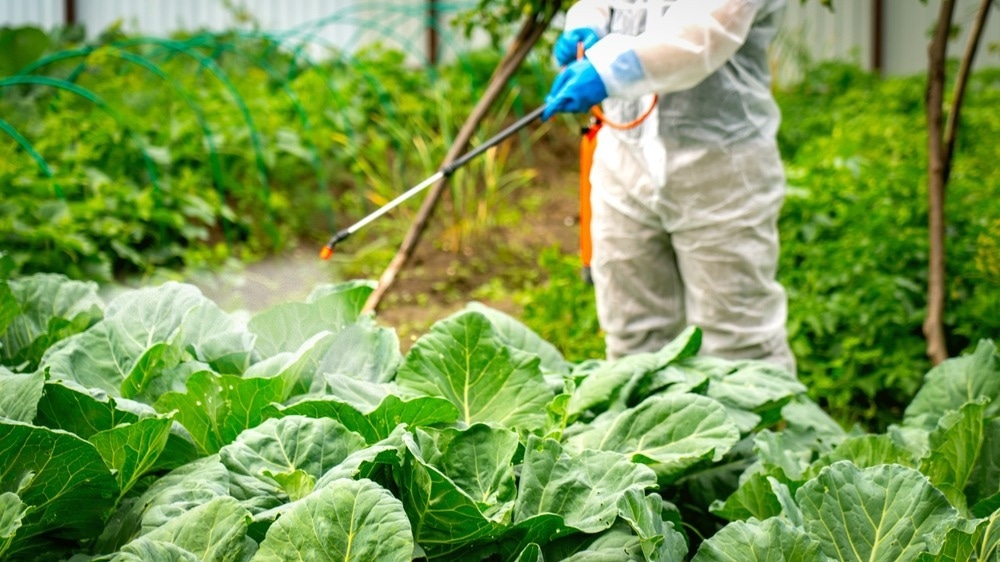
Chemical pesticides are among the most potent agri-pollutants. Tea saponin is a less harmful substitute since not only is it a nematicide, but it is also a natural insecticide.
Its toxic and antifeedant characteristics are utilized to repel harmful pests, nematodes, and mollusks.
Tea saponin is different from toxic chemicals since it is a biological product of breakdown and doesn't persist in the form of toxic residues.
Farming saves inputs without decreasing crop protection through the lowering of chemical insecticide use.
It forms part of integrated pest management (IPM) practices because the long-term aspiration is to ensure minimal use of chemicals.
3. Enhances Plant Nutrient Absorption
Tea saponin enhances water holding capacity and the soil's physical structure. This enhances plant roots' uptake of nutrients such as nitrogen, phosphorus, and potassium.
Enhanced absorption of nutrients is:
- Enhanced root growth.
- Enhanced health of plants.
- Enhanced production with fewer fertilizers.
Farming can thus optimize fertilizer efficiency and eliminate wasteful use of chemicals.
4. Economically Sustainable Weed Control
Weeds interfere with the crops for water, light, and nutrients. Tea saponin is also naturally weed-suppressing on some weeds, a crop protection value-add. Its herbicidal effect reduces man-made herbicide application, which otherwise still accounts for the major cause of soil and water pollution.
5. Enhances Organic and Eco-Certified Production
With clients still yearning for more organic goods, tea saponin is becoming a major crop in certified organic farming production. It's of plant origin, non-toxic, and multi-functional as a crop and soil condition agent, thereby a perfect choice for certified farmers.

Uses of Tea Saponin in Farming
- Soil Amendment – Applied directly on soil to enhance fertility and microbial diversity.
- Natural Pesticide – Used as a foliar spray or soil drench to control insects and nematodes.
- Fertilizer Booster – Mixed with chemical and organic fertilizers for increased nutrient uptake efficiency.
- Weed Control – Used in crop farms for weed control organically.
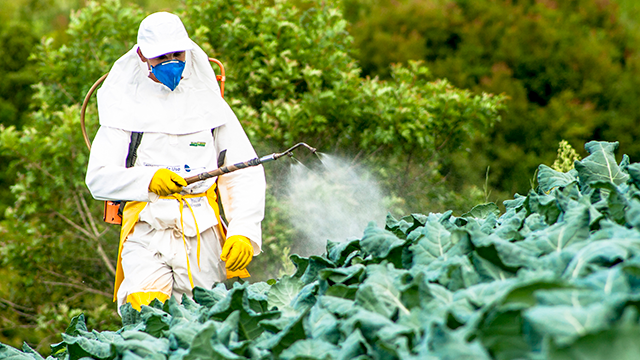
Advantage Over Synthetic Chemicals
- Biodegradability – Decomposes naturally, preventing environmental buildup.
- Non-toxicity – Non-polluting to animals, humans, and beneficial organisms.
- Sustainability – Prevents use of man-made agrochemicals.
- Cost-Effectiveness – Raises input efficiency, saving farm costs in the long run.
It is not like traditional fertilizers and pesticides, tea saponin offers a holistic approach to maintaining productivity without depleting natural resources.
Challenges and Future Prospect
While tea saponin also has numerous benefits, there are some challenges:
- Insufficient broad awareness among farmers.
- Susceptibility of crop and type of soil for its effectiveness.
- Higher initial investment compared to synthetics.
But as organic and sustainable agriculture comes more into focus globally, innovation and research drive more extensive application. Its future applications could include tea saponin as an active ingredient in formulated biofertilizers and biopesticides, and thus make it even more accessible and affordable to farmers worldwide.

Conclusion
Tea saponin is a bio-degradable and pesticide-free organic method of sustainable farming that offers various benefits such as soil fertility improvement, eco-friendly pest management, improvement in nutrient uptake, and weed management. As nature-friendly and bio-degradable, tea saponin is the best option for farmers because it offers productivity stability as well as ecologic sustainability.
With the evolving times of farming and agriculture, nature-derived products like tea saponin will be the moving force in developing robust, sustainable food systems. Farmers not only improve their yield using tea saponin but are also contributing to making the world healthy and the future green.
References
Chen, J., & Wong, M. H. (2004). "Saponins from tea seed: A natural surfactant for environmental remediation." Bioresource Technology, 95(1), 43-49.
Zhou, J., & Han, X. (2006). "Potential of tea saponin as a natural pesticide for agricultural use." Journal of Agricultural and Food Chemistry, 54(21), 7946–7952.
FAO (2020). "The State of the World's Biodiversity for Food and Agriculture." Food and Agriculture Organization of the United Nations.
Singh, B., & Sharma, R. A. (2015). "Plant-derived saponins: Applications in agriculture and environmental management." Ecological Engineering, 84, 218-225.
Xie, H., et al. (2019). "Use of tea seed saponin in sustainable agriculture: A review." Applied Soil Ecology, 138, 61–70.