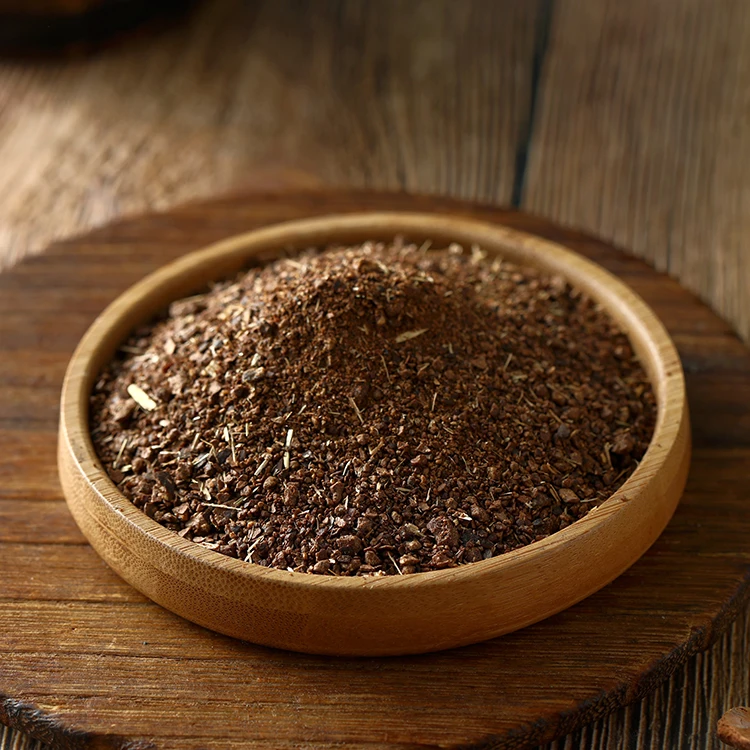
Tea seed meal is a plant-derived agricultural material obtained from the seeds of Camellia oleifera, commonly known as the oil tea plant. It is produced as a by-product after oil extraction and contains organic matter, nutrients, proteins, and naturally occurring tea saponins.
Because of its organic composition and bioactive components, tea seed meal for agriculture is increasingly used in soil management, organic fertilizer formulations, composting, and crop production. It can serve as a useful plant-based soil amendment and fertilizer material when properly processed and applied.
For fertilizer manufacturers, agricultural suppliers, growers, and organic farming operations, tea seed meal provides an opportunity to make use of a renewable plant-based resource while supporting soil management programs.
What Is Tea Seed Meal?
Tea seed meal, also called tea seed cake or Camellia oleifera seed meal, is the solid residue left after oil is extracted from Camellia oleifera seeds.
The material contains a combination of:
- Organic matter
- Plant-derived proteins
- Carbohydrates and other organic compounds
- Nitrogen and mineral nutrients
- Naturally occurring tea saponins
- Other minor bioactive compounds
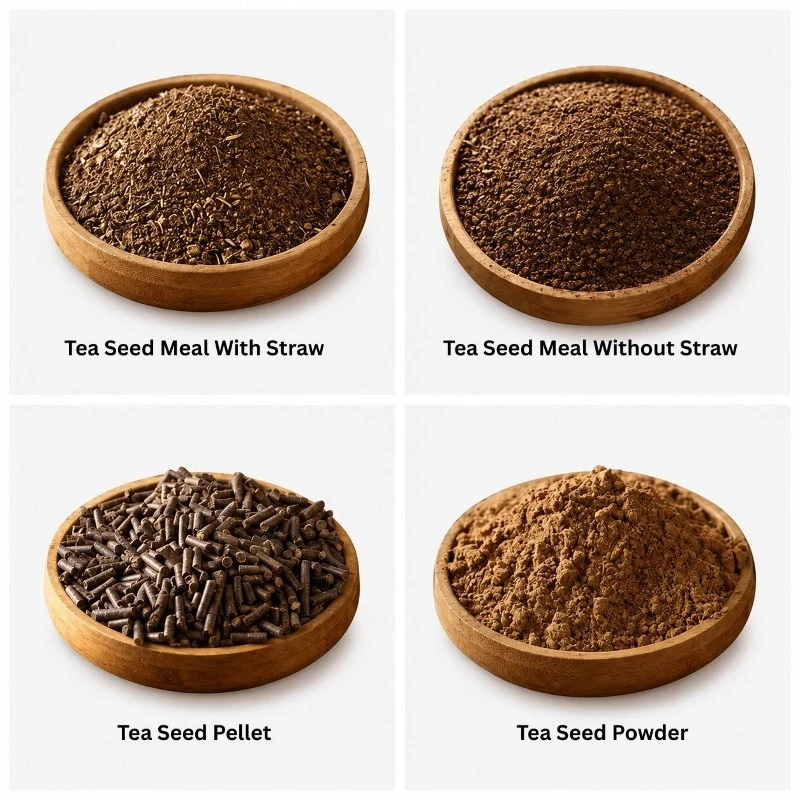
The exact composition can vary depending on the Camellia oleifera variety, oil-extraction method, processing conditions, and degree of saponin removal.
Recent research describes tea seed meal as an important source of tea saponins and highlights its potential for higher-value agricultural and environmental applications.
Why Use Tea Seed Meal in Agriculture?
Agricultural soils require more than mineral nutrients alone. Organic matter, microbial activity, physical structure, moisture management, and nutrient cycling can all influence soil productivity.
Tea seed meal can contribute organic material to soil and can also be incorporated into compost and organic fertilizer systems.
Its natural saponin content makes it different from conventional plant-based meals. Tea saponins are natural surfactants that have been studied for applications in soil remediation and environmental management.
However, tea seed meal should not automatically be considered a complete fertilizer. Its nutrient profile depends on the raw material and processing method, so it is generally more appropriate as a plant-based organic fertilizer material, soil amendment, or component of a blended fertilizer program.
Benefits of Tea Seed Meal for Soil
1. Adds Plant-Derived Organic Matter
One of the primary benefits of tea seed meal is its organic composition.
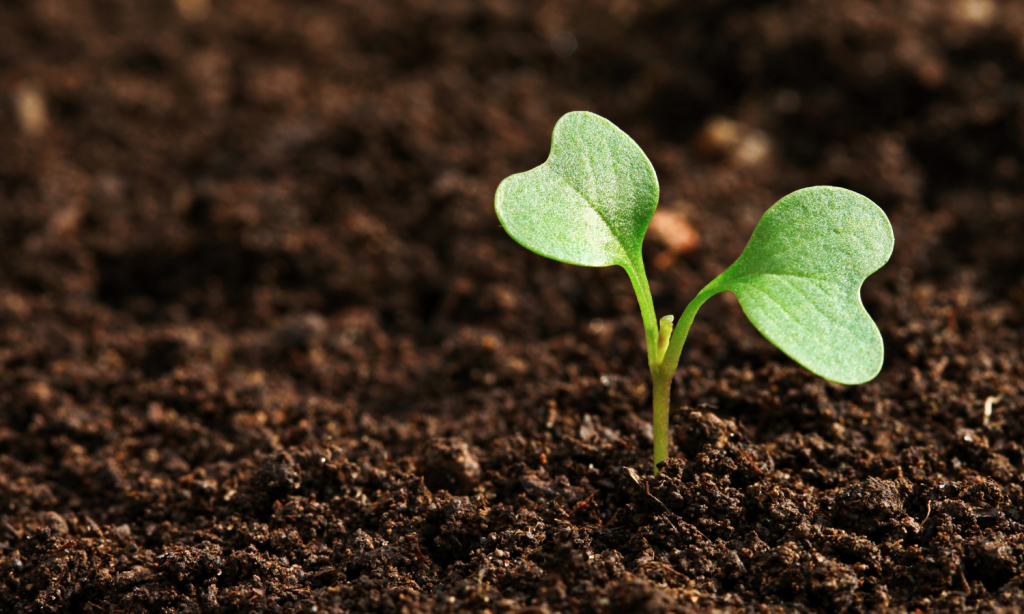
When incorporated into an appropriate soil or composting system, the organic material can contribute carbon-based compounds to the soil environment. Microorganisms can break down these compounds over time, supporting nutrient cycling and the formation of more stable organic materials.
This makes tea seed meal useful as a raw material in organic fertilizer and soil-improvement programs.
2. Provides Plant Nutrients
Tea seed meal naturally contains nitrogen and mineral nutrients, although concentrations vary between products.
Research on Camellia oleifera seed cake has demonstrated that the material can contribute organic matter and nutrients to composting systems. In one co-composting study, increasing the proportion of seed cake increased organic matter and total nutrient content in the resulting compost.
For commercial fertilizer production, the actual nutrient contribution should therefore be determined through laboratory analysis rather than assumed from the general product category.
3. Supports Soil Biological Activity
Organic materials provide substrates that can be utilized by soil microorganisms.
Research investigating Camellia seed cake application reported changes in soil microbial biomass and soil biological indicators following application. The study also observed changes in soil nematode communities, demonstrating that seed cake can influence the biological environment of soil.
These effects are influenced by application rate, soil conditions, crop type, moisture, temperature, and the characteristics of the seed cake.
4. Can Be Used in Soil Improvement Programs
Tea seed meal can be incorporated into broader soil-management programs where the objective is to increase the use of plant-derived organic materials.
Its combination of organic matter and naturally occurring bioactive compounds makes it suitable for applications such as:
- Soil amendment
- Organic fertilizer production
- Composting
- Crop soil preparation
- Plant-growth management programs
- Agricultural soil conditioning
Tea saponins from Camellia seed meal have also been studied as natural surfactants for soil remediation because they can interact with compounds in soil and influence their mobility and availability.
Tea Seed Meal and Plant Growth
The effect of tea seed meal on plant growth depends strongly on how it is processed and applied.
In a study examining Camellia seed cake application, a dose of 5 g/kg soil produced the strongest plant-growth response among the tested treatments and increased banana seedling height, stem diameter, and shoot and root fresh weight. The study also observed changes in soil potassium, microbial abundance, and nematode populations.
These results demonstrate the agricultural potential of Camellia seed cake, but they should not be interpreted as a universal application recommendation. Different crops, soils, climates, and seed-meal compositions can produce different results.
For commercial use, application rates should be established through crop-specific testing.
Tea Seed Meal for Organic Fertilizer
One of the most practical uses of tea seed meal is as a raw material for organic fertilizer production.
Tea seed meal can be blended with other organic materials to create fertilizer or soil-amendment products. Its organic matter and nutrient content make it suitable for formulations designed to return plant-derived materials to agricultural soils.
It can be combined with materials such as:
- Compost
- Plant residues
- Animal manure
- Other oilseed meals
- Agricultural by-products
- Mineral nutrient sources
The final nutrient profile should be tested to determine nitrogen, phosphorus, potassium, organic matter, moisture, and other relevant parameters.

Tea Seed Meal for Composting
Composting is another important application.
Raw Camellia oleifera seed cake contains saponins and tannins, which means direct application at excessive rates may not always be appropriate. Composting provides a controlled biological process that can reduce these compounds and stabilize the organic material.
Research has shown that co-composting Camellia oleifera shell and seed cake reduced saponin and tannin levels substantially while improving characteristics associated with compost maturity and fertilizer quality.
Another study found that adding Camellia oleifera seed cake during composting could help produce mature compost products with suitable physical and chemical characteristics.
This makes tea seed meal particularly interesting for manufacturers developing circular-economy fertilizer products from agricultural by-products.
Naturally Occurring Tea Saponins
Tea saponins are one of the characteristics that distinguish tea seed meal from many conventional organic fertilizer materials.
Tea saponins are naturally occurring surface-active compounds found in Camellia plants. Most commercially extracted tea saponins originate from Camellia oleifera seed meal.
Their surfactant properties have attracted research interest in soil remediation, where tea saponins may influence the movement and availability of certain compounds in soil.
However, tea saponins can also have biological activity, meaning application rate and processing are important. Raw tea seed meal should not simply be applied at high rates without considering crop tolerance and soil conditions.
For fertilizer production, composting or appropriate processing can be used to reduce potentially undesirable compounds and produce a more stable agricultural material.
Main Agricultural Applications of Tea Seed Meal
Organic Fertilizer
Tea seed meal can be used as a plant-derived organic material in fertilizer formulations. It can contribute organic matter and nutrients while providing an alternative use for a by-product of Camellia oil production.
Soil Amendment
Tea seed meal can be incorporated into soil-management programs where organic materials are needed to complement mineral fertilizers and other amendments.
Compost Production
Tea seed meal can serve as a carbon- and nutrient-containing material in composting mixtures. Proper composting can reduce saponins and tannins and improve the maturity of the final product.
Crop Production
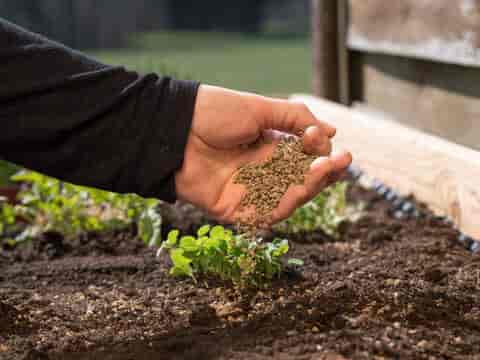
Tea seed meal can be evaluated for use around crops as part of an integrated soil fertility program. Application should be adapted to crop type, soil characteristics, product composition, and local agricultural requirements.
Fertilizer Blends
Manufacturers can combine tea seed meal with other organic or mineral ingredients to create customized fertilizer products according to nutrient targets and application requirements.
What to Consider When Buying Tea Seed Meal
For agricultural and fertilizer manufacturers, product quality is particularly important.
Saponin Content
Tea saponin concentration can vary considerably. Buyers should request a specification or COA indicating the measured content when relevant to the intended application.
Organic Matter
Organic matter is an important quality parameter when tea seed meal is being used as a soil amendment or fertilizer raw material.
Nutrient Profile
Nitrogen, phosphorus, potassium, and other mineral contents should be verified through laboratory testing.
Moisture
Excessive moisture can affect storage stability, handling, and product shelf life.
Particle Size
Particle size influences handling, mixing, spreading, and the speed at which organic material becomes available for decomposition.
Purity and Contaminants
Professional agricultural applications require appropriate testing for heavy metals, microbiological parameters, and other contaminants relevant to the intended market.
Batch Consistency
Consistent composition is especially important for fertilizer manufacturers because variation in organic matter, saponin, moisture, or nutrients can affect the final formulation.

How to Apply Tea Seed Meal
There is no universal application rate for tea seed meal.
The appropriate amount depends on:
- Crop species
- Soil type
- Soil organic matter
- Existing nutrient levels
- Tea saponin concentration
- Product processing
- Application method
- Climate and moisture conditions
Whether the product is raw, processed, or composted
A soil test and small-scale trial are recommended before large-scale application.
Tea seed meal should also be incorporated carefully into fertilizer programs rather than treated as a direct replacement for a complete NPK fertilizer unless its analyzed nutrient profile supports that use.
For products with significant residual saponin or other bioactive compounds, crop tolerance should be considered carefully.
Why Choose Tea Seed Meal for Agriculture?
Tea seed meal offers several advantages for modern agricultural applications:
Plant-derived raw material
It originates from Camellia oleifera seeds and provides a renewable agricultural by-product.
Organic matter source
It can contribute carbon-based organic material to soil and composting systems.
Nutrient-containing material
It naturally contains nitrogen and other nutrients, although actual concentrations depend on the product.
Suitable for fertilizer manufacturing
It can be incorporated into organic fertilizer and soil-amendment formulations.
Useful for composting
Research demonstrates that Camellia seed cake can be successfully incorporated into composting systems and that composting can reduce saponin and tannin content.
Contains natural tea saponins
Its saponin content provides additional functional characteristics that distinguish it from many other organic fertilizer materials.
Conclusion
Tea seed meal for agriculture is a versatile plant-derived material with applications in soil amendment, organic fertilizer production, composting, and crop soil management. Produced from Camellia oleifera seeds after oil extraction, it contains organic matter, nutrients, and naturally occurring tea saponins.
Research suggests that properly managed Camellia seed cake can contribute to soil biological activity and plant-growth systems, while composting can reduce saponins and tannins and improve the maturity and fertilizer characteristics of the resulting organic material.
For agricultural suppliers and fertilizer manufacturers, the key is to match the product's composition and processing level with the intended application. Quality parameters such as organic matter, nutrient content, saponin concentration, moisture, particle size, purity, and batch consistency should be evaluated before commercial use.
When properly processed and applied, tea seed meal can be a useful component of sustainable agricultural and organic fertilizer systems while providing a productive use for a valuable Camellia oil-processing by-product.
References
Zhang, J. et al. (2025). Advances in Camellia oleifera seed meal Saponins: Extraction, analysis, bioactivity, and application. Food Chemistry, 492, 145277.
Yu, X.-L. & He, Y. (2018). Tea saponins: effective natural surfactants beneficial for soil remediation, from preparation to application. RSC Advances, 8, 24312–24321.
Zhang, J. et al. (2020). Degradations of tannin and saponin and changes in nutrition during co-composting of shell and seed cake of Camellia oleifera Abel. BioResources.
Zhang, J. et al. (2020). Changes in tannin and saponin components during co-composting of Camellia oleifera Abel shell and seed cake. PLOS ONE.
Exploring patterns of Camellia seed cake application in relation to plant growth, soil nematodes and microbial biomass. Soil Science and Plant Nutrition.
Hu, H. et al. (2020). Optimization of aerobic composting process of Camellia oleifera Seed Cake and its fertilizer efficiency. Journal of Physics: Conference Series, 1549, 022102.
FAQ
Q1: What is Tea Seed Meal?
A1: Tea Seed Meal is a plant-derived agricultural material obtained from Camellia oleifera seeds after oil extraction. It contains organic matter, nutrients, proteins, and naturally occurring tea saponins.
Q2: Is Tea Seed Meal suitable for agriculture?
A2: Yes. Tea Seed Meal can be used in agriculture as a plant-based organic fertilizer material, soil amendment, composting ingredient, and component of fertilizer blends.
Q3: What are the main benefits of Tea Seed Meal for soil?
A3: Tea Seed Meal can add plant-derived organic matter, provide nitrogen and mineral nutrients, support soil biological activity, and serve as a raw material for organic fertilizer and soil-management programs.
Q4: Does Tea Seed Meal contain tea saponins?
A4: Yes. Tea saponins are naturally occurring compounds in Camellia oleifera seed meal. Their concentration can vary depending on the seed variety, oil-extraction method, and subsequent processing.
Q5: Can Tea Seed Meal be used as an organic fertilizer?
A5: Yes. Tea Seed Meal can be incorporated into organic fertilizer formulations and used as a plant-derived source of organic material and nutrients. It is generally considered a complementary fertilizer material rather than a complete replacement for NPK fertilizer.
Q6: Can Tea Seed Meal be used as a soil amendment?
A6: Yes. It can be incorporated into soil-management programs where plant-derived organic materials are required. The appropriate application should consider soil characteristics, crop requirements, product composition, and processing level.
Q7: Can Tea Seed Meal support plant growth?
A7: Tea Seed Meal has been studied for its potential effects on plant growth, soil nutrients, microbial activity, and soil biological conditions. Results can vary according to crop type, application rate, soil conditions, and product composition.
Q8: Can Tea Seed Meal be used for composting?
A8: Yes. Tea Seed Meal can be incorporated into composting mixtures with other organic materials. Proper composting can help reduce naturally occurring saponins and tannins while stabilizing the organic material.
Q9: What materials can be combined with Tea Seed Meal for fertilizer production?
A9: It can be blended with compost, plant residues, animal manure, other oilseed meals, agricultural by-products, and mineral nutrient sources to develop customized fertilizer formulations.