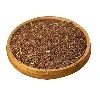
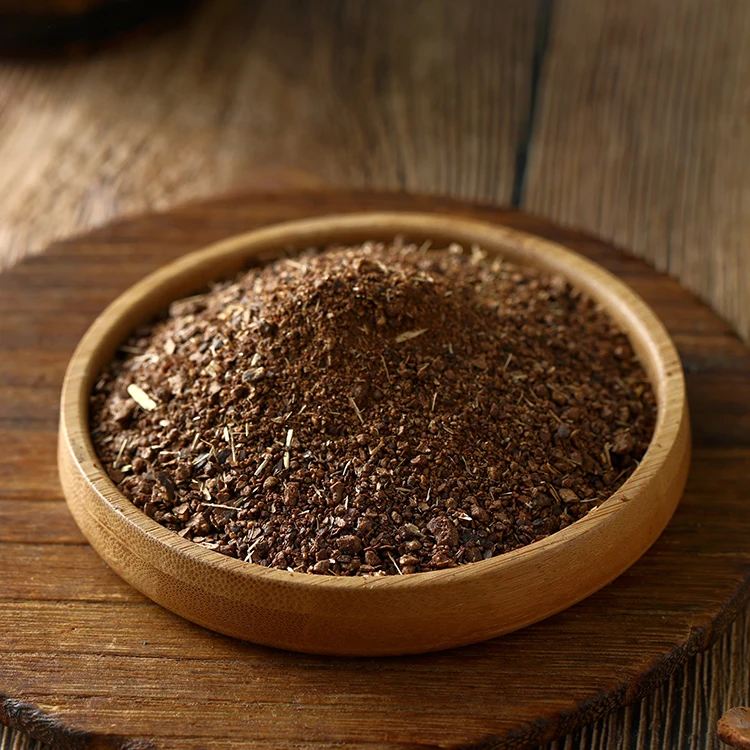
Tea Seed Meal Powder is a plant-derived agricultural material obtained from the seeds of Camellia oleifera, commonly known as the oil tea plant. It is mainly produced as a by-product after oil extraction from tea seeds and contains organic matter, plant-derived nutrients, proteins, fiber, and naturally occurring tea saponins.
Because of its organic composition and agricultural versatility, Tea Seed Meal Powder can be used as a natural fertilizer material, soil amendment, and ingredient in organic fertilizer formulations. It is particularly suitable for agricultural applications where growers want to incorporate plant-based organic materials into soil management programs.
Unlike conventional fertilizers that are formulated primarily around specific NPK ratios, tea seed meal is better considered a complementary organic fertilizer material. Its value comes from its combination of organic matter and naturally occurring compounds rather than from supplying all plant nutrients in a single product.
What Is Tea Seed Meal Powder?
Tea Seed Meal Powder is produced from the solid residue remaining after oil is extracted from Camellia oleifera seeds. Depending on the manufacturing process, the material may also be called tea seed cake, tea seed meal, or Camellia seed meal.
The powder can contain:
- Organic matter
- Plant-derived proteins
- Fiber and carbohydrates
- Minerals
- Naturally occurring tea saponins
Other compounds originating from tea seeds
Tea saponins are one of the characteristic components of Camellia oleifera seed materials. Research has examined their biological and surface-active properties, as well as their potential agricultural applications.
For fertilizer manufacturers and agricultural suppliers, the composition of Tea Seed Meal Powder makes it useful as a plant-based ingredient in soil and fertilizer products.
How Does Tea Seed Meal Powder Benefit Soil?
One of the main advantages of Tea Seed Meal Powder is its contribution of plant-derived organic material to soil.
When incorporated into soil, organic materials can contribute to soil organic matter and provide substrates that interact with soil microorganisms. The decomposition process depends on factors such as moisture, temperature, microbial activity, particle size, and the overall composition of the soil.
Tea Seed Meal Powder can therefore be incorporated into broader soil fertility and organic matter management programs.
It should not, however, be described as a complete replacement for balanced NPK fertilizer. Its nutrient contribution varies according to the raw material and processing method, so fertilizer programs should be formulated according to soil conditions and crop requirements.
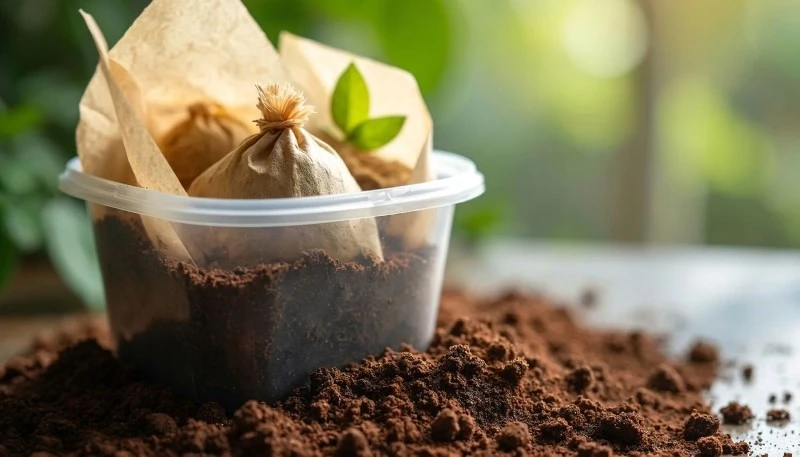
Tea Seed Meal Powder as an Organic Fertilizer Material
Tea Seed Meal Powder can be used directly as an organic fertilizer material or incorporated into formulated fertilizer products.
Its plant-based origin makes it attractive for manufacturers developing organic or naturally derived agricultural inputs. It can be blended with other organic materials or nutrient sources to create formulations designed for specific crops and soil conditions.
Common applications include:
1. Soil Amendment
Tea Seed Meal Powder can be incorporated into agricultural soil as a source of plant-derived organic material.
Soil amendment programs commonly combine organic materials with mineral fertilizers, compost, or other agricultural inputs. Tea seed meal can therefore serve as one component of an integrated soil management strategy.
2. Organic Fertilizer Formulations
Fertilizer manufacturers can use Tea Seed Meal Powder as an ingredient in organic fertilizer blends.
Depending on the target formulation, it may be combined with materials such as compost, plant residues, microbial preparations, mineral nutrients, or other organic fertilizer ingredients.
The final formulation should be evaluated for nutrient content, moisture, stability, and crop-specific performance.
3. Composting
Tea Seed Meal Powder can also be incorporated into composting systems.
Research on Camellia oleifera seed cake has investigated composting as a way to transform the agricultural by-product into a more mature organic fertilizer material. Composting can also alter naturally occurring compounds such as saponins and tannins during decomposition.
This makes tea seed meal relevant to circular agriculture, where agricultural by-products are recovered and converted into useful soil inputs.
4. Crop Production
Tea Seed Meal Powder can be used as part of soil fertility programs for various agricultural crops.
Potential applications include:
- Field crops
- Vegetable production
- Fruit crops
- Horticultural plants
- Orchards
- Garden plants
- Nursery production
- Organic farming systems
The appropriate application method and rate depend on the crop, soil properties, formulation, and local agricultural practices.

Tea Saponins in Tea Seed Meal
Tea saponins are naturally occurring compounds found in Camellia oleifera seeds and seed meal. They are surface-active substances that can interact with water and soil particles.
Scientific research has investigated tea saponins for applications involving soil remediation, agricultural formulations, and interactions between soil, nutrients, microorganisms, and contaminants.
However, the presence of tea saponins also means that Tea Seed Meal Powder should not simply be treated as an ordinary nutrient fertilizer.
The concentration of saponins, application rate, soil conditions, and target crop can influence the overall agricultural effect. High concentrations of certain saponin-containing materials may have biological effects on plants, including effects on seed germination or root development.
For this reason, there is no single universal application rate for Tea Seed Meal Powder. Agricultural use should be based on product specifications, field conditions, and crop requirements.

Tea Seed Meal Powder and Sustainable Agriculture
Tea Seed Meal Powder is also relevant to sustainable agriculture because it provides a potential use for a by-product of the tea seed oil industry.
Instead of treating the remaining seed meal only as waste, manufacturers can process and standardize it for agricultural applications.
This supports a more circular approach to agricultural production:
Tea seed cultivation → oil extraction → tea seed meal → processing → fertilizer or soil amendment → agricultural soil
Such utilization can help increase the value of agricultural by-products while providing fertilizer manufacturers with a plant-derived raw material.

How to Use Tea Seed Meal Powder for Plants
The appropriate method depends on whether the material is used as a raw organic fertilizer ingredient, soil amendment, composting material, or component of a formulated product.
For direct soil application, the powder can generally be incorporated into the soil rather than simply left concentrated around plant roots.
For fertilizer manufacturing, Tea Seed Meal Powder can be blended with other ingredients to achieve the desired nutrient profile and physical characteristics.
For composting, it can be combined with suitable carbon- and nitrogen-containing organic materials and managed under controlled moisture and aeration conditions.
Because the composition of tea seed meal varies between products, soil testing and product analysis are recommended before determining application rates.
What Should Buyers Check When Purchasing Tea Seed Meal Powder?
For agricultural distributors, fertilizer manufacturers, and bulk buyers, product quality is an important consideration.
Key specifications may include:
Tea Saponin Content
Saponin concentration can vary depending on the raw material and extraction or oil-processing method. Buyers should request a clear specification or COA.
Organic Matter
Organic matter is an important parameter when Tea Seed Meal Powder is intended for soil amendment or organic fertilizer applications.
Nutrient Profile
Nitrogen, phosphorus, potassium, calcium, and other mineral contents should be evaluated according to the intended fertilizer formulation.
Moisture
Moisture affects storage stability, handling, and powder quality.
Particle Size
A consistent particle size can improve blending, handling, and incorporation into fertilizer formulations.
Purity and Contaminant Control
Agricultural products should be evaluated for unwanted contaminants and should meet the applicable requirements of the destination market.
Batch Consistency
For commercial fertilizer manufacturing, consistent composition between batches is particularly important because formulation performance depends on predictable raw material specifications.
Is Tea Seed Meal Powder a Complete Fertilizer?
No. Tea Seed Meal Powder should generally be considered a plant-derived organic fertilizer material or soil amendment rather than a complete NPK fertilizer.
Its nutrient composition depends on the source material and processing conditions. It may contribute organic matter and nutrients, but it does not necessarily provide every nutrient required by a crop in the appropriate proportions.
For commercial agricultural use, Tea Seed Meal Powder can therefore be combined with other fertilizer materials to create a more balanced formulation.
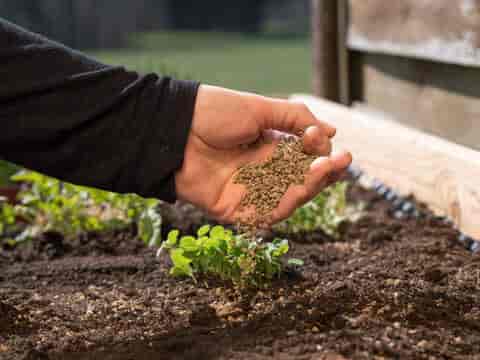
Tea Seed Meal Powder for Commercial Agriculture
For fertilizer manufacturers and agricultural ingredient distributors, Tea Seed Meal Powder offers several practical advantages.
It is plant-derived, suitable for organic fertilizer formulations, and can be supplied as a powder for convenient blending and processing.
Potential commercial applications include:
- Organic fertilizer manufacturing
- Soil amendment products
- Composting materials
- Plant nutrition formulations
- Horticultural products
- Agricultural soil-management products
- Customized fertilizer blends
The exact suitability of the material depends on its specification, intended crop, formulation, and regulatory requirements in the target market.
Conclusion
Tea Seed Meal Powder is a versatile plant-derived agricultural ingredient that can be used as a natural fertilizer material, soil amendment, and component of organic fertilizer formulations.
Produced from Camellia oleifera seed residues after oil extraction, it contains organic matter, plant-derived nutrients, proteins, fiber, minerals, and naturally occurring tea saponins.
Its main value in agriculture is not simply as an NPK source but as a multifunctional organic material that can be incorporated into soil management, fertilizer manufacturing, and composting systems.
For commercial buyers, important quality factors include organic matter, nutrient profile, tea saponin content, moisture, particle size, purity, and batch consistency. Because application requirements vary with crop and soil conditions, Tea Seed Meal Powder should be used as part of a properly designed fertilizer or soil-management program rather than according to a universal dosage.
References
Research literature on Camellia oleifera seed meal and tea saponins, including agricultural and soil-related applications.
Yu, X. & He, Y. Research on tea saponins and their potential applications in soil remediation. RSC Advances.
Research on composting and the conversion of Camellia oleifera seed cake into organic fertilizer materials.
Research on organic fertilizer materials and their effects on soil properties and microbial communities.
Reviews of Camellia oleifera seed meal composition and the utilization of tea seed processing by-products.
FAQ
Q1: What is Tea Seed Meal Powder?
A1: Tea Seed Meal Powder is a plant-derived agricultural material obtained from the seeds of Camellia oleifera, commonly known as the oil tea plant. It is produced mainly as a by-product after oil extraction and contains organic matter, plant-derived nutrients, proteins, fiber, minerals, and naturally occurring tea saponins.
Q2: How is Tea Seed Meal Powder produced?
A2: Tea Seed Meal Powder is produced from the solid residue remaining after oil is extracted from Camellia oleifera seeds. Depending on the production process, it may also be referred to as tea seed cake or Camellia seed meal.
Q3: Is Tea Seed Meal Powder a fertilizer?
A3: Tea Seed Meal Powder can be used as a natural fertilizer material, soil amendment, or ingredient in organic fertilizer formulations. It is generally considered a complementary organic fertilizer material rather than a complete NPK fertilizer.
Q4: What nutrients are found in Tea Seed Meal Powder?
A4: Tea Seed Meal Powder may contain organic matter, plant-derived proteins, fiber, carbohydrates, minerals, and other compounds originating from tea seeds. The actual nutrient profile can vary according to the raw material and processing method.
Q5: How does Tea Seed Meal Powder benefit soil?
A5: Tea Seed Meal Powder contributes plant-derived organic material to soil. When incorporated into soil, its organic components can contribute to soil organic matter and provide substrates that interact with soil microorganisms during decomposition.
Q6: Can Tea Seed Meal Powder replace NPK fertilizer?
A6: No. Tea Seed Meal Powder should generally be considered an organic fertilizer material or soil amendment rather than a complete NPK fertilizer. Its nutrient composition varies, so it may need to be combined with other fertilizer materials to provide a balanced nutrient profile.
Q7: How is Tea Seed Meal Powder used as a soil amendment?
A7: Tea Seed Meal Powder can be incorporated into agricultural soil as a source of plant-derived organic material. It can be used together with mineral fertilizers, compost, or other agricultural inputs as part of an integrated soil management program.
Q8: Can Tea Seed Meal Powder be used in organic fertilizer formulations?
A8: Yes. Fertilizer manufacturers can use Tea Seed Meal Powder as an ingredient in organic fertilizer blends. It may be combined with compost, plant residues, microbial preparations, mineral nutrients, or other organic fertilizer ingredients depending on the desired formulation
Q9: Can Tea Seed Meal Powder be used for composting?
A9: Yes. Tea Seed Meal Powder can be incorporated into composting systems. Composting can help transform the agricultural by-product into a more mature organic fertilizer material while altering naturally occurring compounds such as saponins and tannins during decomposition.
Q10: What crops can use Tea Seed Meal Powder?
A10: Tea Seed Meal Powder can be incorporated into soil fertility programs for field crops, vegetables, fruit crops, horticultural plants, orchards, garden plants, nursery production, and organic farming systems. The appropriate application method depends on the crop, soil conditions, formulation, and local agricultural practices.