Astaxanthin is one of the most important carotenoid ingredients used in salmon aquaculture. It is particularly valued for its role in supporting the characteristic pink-red color of salmon flesh, while research has also investigated its potential nutritional functions related to antioxidant defense, immunity, and stress response.
In commercial salmon farming, astaxanthin is supplied through formulated feed because salmon depend on dietary carotenoids for their astaxanthin supply. After ingestion and absorption, astaxanthin can be deposited in tissues, including muscle, where it contributes to salmon's characteristic flesh pigmentation.
For aquaculture feed manufacturers and bulk ingredient buyers, understanding how astaxanthin works, which sources are available, and which factors influence pigmentation can help with the development of consistent salmon feed formulations.
What Is Astaxanthin?
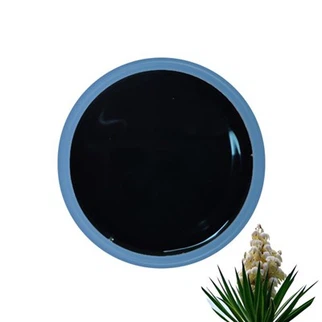
Astaxanthin is a red-orange xanthophyll carotenoid belonging to the carotenoid family. It occurs naturally in algae, yeast, bacteria, and aquatic organisms and is widely used as a feed pigment in aquaculture.
Important natural sources include:
- Haematococcus pluvialis
- Phaffia rhodozyma
- Paracoccus carotinifaciens
Astaxanthin can also be produced synthetically.
Among its various functions in aquaculture, pigmentation is the most clearly established commercial application. Reviews of aquaculture nutrition describe astaxanthin as one of the principal carotenoids used in formulated feeds for salmonids and other farmed aquatic species.
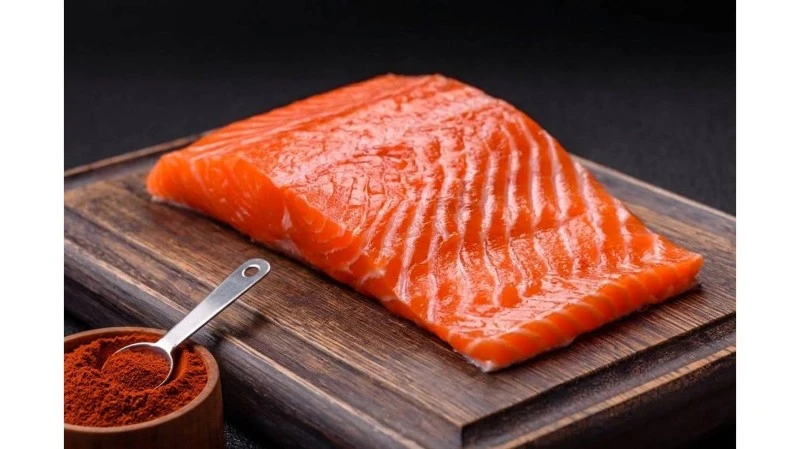
Why Is Astaxanthin Important for Salmon Nutrition?
Wild salmon obtain carotenoids through their natural food chain. Farmed salmon, in contrast, receive controlled formulated diets, making dietary carotenoid supplementation an important part of feed formulation.
Astaxanthin can contribute to salmon nutrition in several ways:
- Provides a dietary source of carotenoid
- Supports muscle pigmentation
- Contributes to the characteristic pink-red appearance of salmon
- Provides antioxidant activity
- May participate in physiological responses related to oxidative stress
- Has been investigated for immune and stress-related functions
The strongest and most commercially established application remains flesh pigmentation. Other nutritional effects have been studied, but their magnitude can vary with fish species, life stage, astaxanthin source, inclusion level, feed composition, and farming conditions.
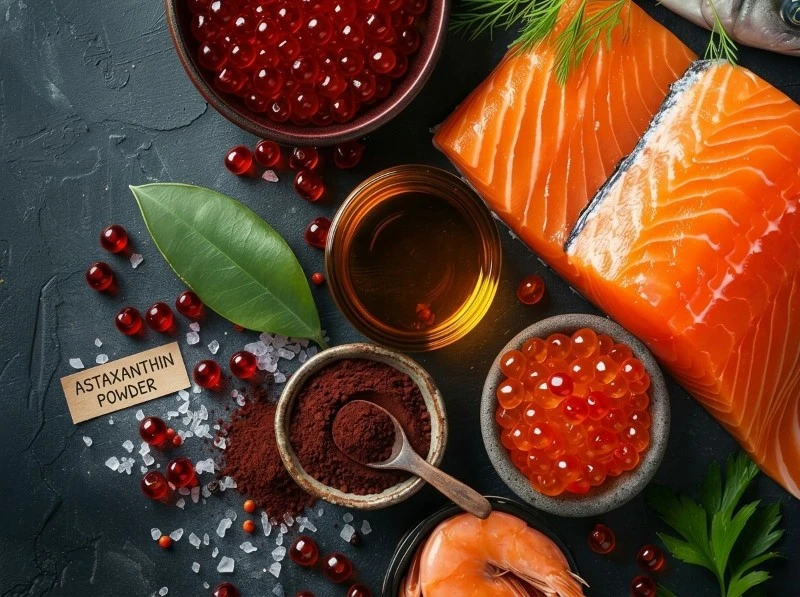
Astaxanthin and Natural Salmon Flesh Color
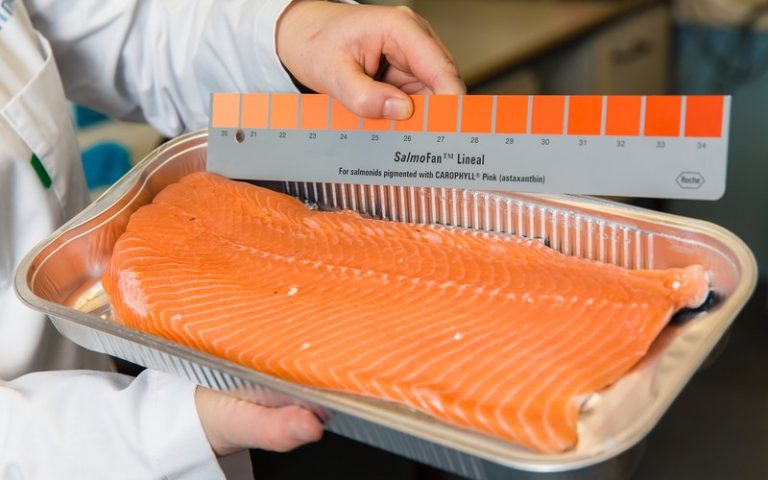
The pink-red color of salmon flesh is closely associated with the accumulation of carotenoids, particularly astaxanthin.
When dietary astaxanthin is absorbed, it can be transported and deposited in salmon muscle. The resulting pigmentation is one of the most visible effects of dietary carotenoid supplementation.
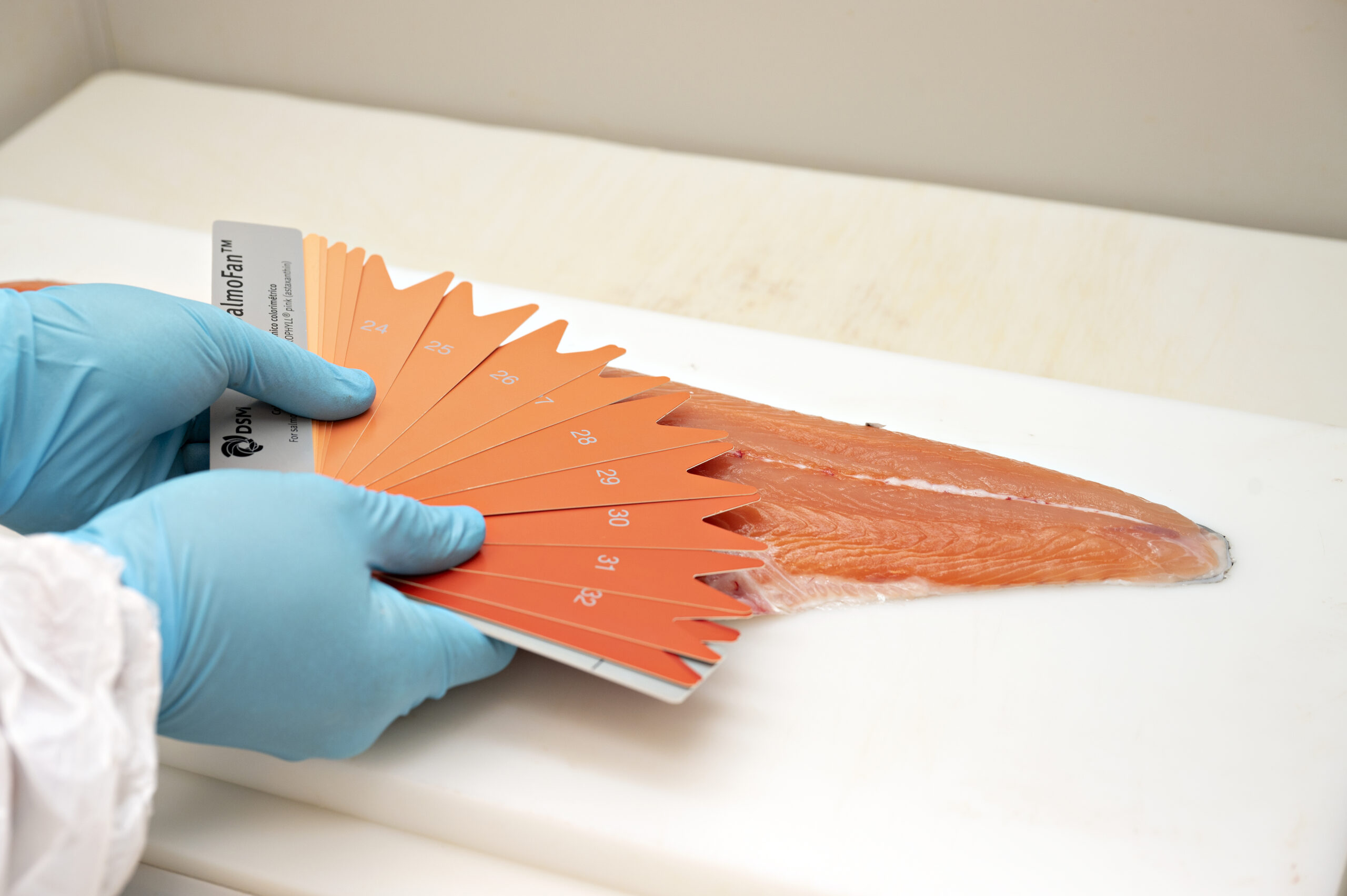
This is particularly important in commercial salmon production because flesh color is an important characteristic of salmon products. Research has established a relationship between dietary carotenoid supply and pigment deposition in salmonids.
However, flesh color should not be considered a simple direct measurement of astaxanthin concentration. Research in Atlantic salmon has shown that different muscle regions can contain different astaxanthin concentrations and color characteristics.
Therefore, feed formulation, fish biology, feeding duration, tissue distribution, and measurement method all need to be considered when evaluating pigmentation.
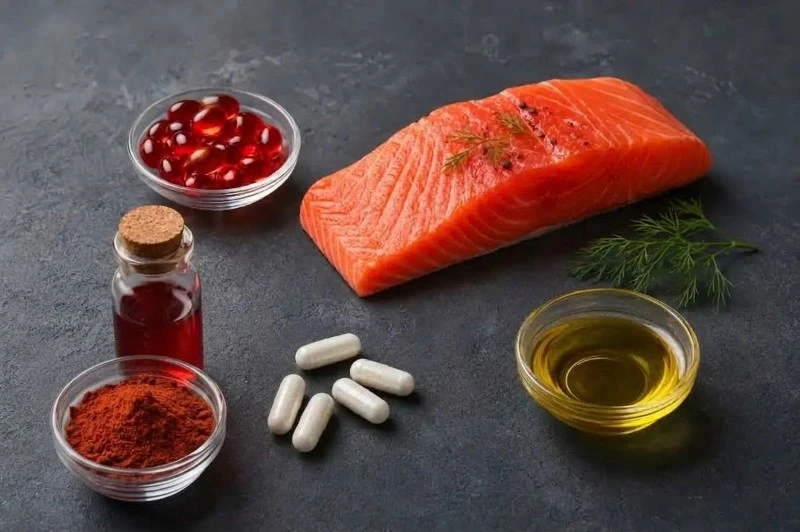
How Does Astaxanthin Support Salmon Pigmentation?
The process can be broadly described in several stages:
1. Dietary Intake
Astaxanthin is incorporated into formulated salmon feed and consumed by the fish.
2. Digestion and Absorption
The carotenoid passes through the digestive system and is incorporated into lipid-associated structures during digestion and absorption.
3. Transport
After absorption, astaxanthin is transported through the fish's tissues.
4. Tissue Deposition
A portion of the absorbed astaxanthin can accumulate in muscle and other tissues.
5. Flesh Color Development
Accumulated carotenoid contributes to the pink-red appearance of salmon flesh.
The efficiency of these processes depends on the astaxanthin source, molecular form, feed matrix, fish physiology, and feeding conditions. Recent reviews have highlighted bioavailability as an important factor affecting the performance of natural astaxanthin.
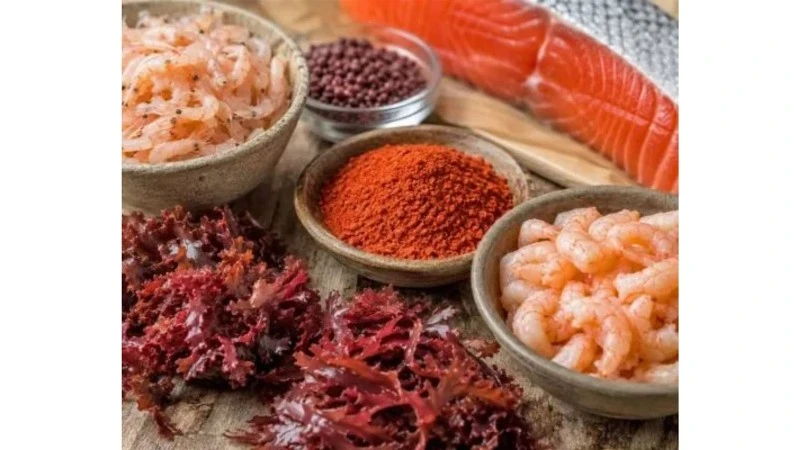
Natural Astaxanthin Sources for Salmon
Natural astaxanthin can be produced by several microorganisms. The most commonly discussed sources for aquaculture applications include microalgae, yeast, and bacteria.
Haematococcus pluvialis
Haematococcus pluvialis is a microalga widely recognized as a natural source of astaxanthin.
It is commonly processed into biomass, powder, extract, or other concentrated forms for use in feed and other applications.
The algal origin of this ingredient makes it particularly relevant to manufacturers looking for naturally sourced carotenoid ingredients.
Phaffia rhodozyma
Phaffia rhodozyma, also known as Xanthophyllomyces dendrorhous, is a yeast that naturally produces astaxanthin.
It has been investigated extensively as a biological astaxanthin source for animal and aquaculture nutrition.
Paracoccus carotinifaciens
Paracoccus carotinifaciens is a carotenoid-producing bacterium that can provide another source of natural astaxanthin.
Different natural sources can have different physical properties, astaxanthin forms, stability characteristics, and bioavailability.
For this reason, natural astaxanthin should be evaluated according to its actual specification rather than simply according to the word "natural."
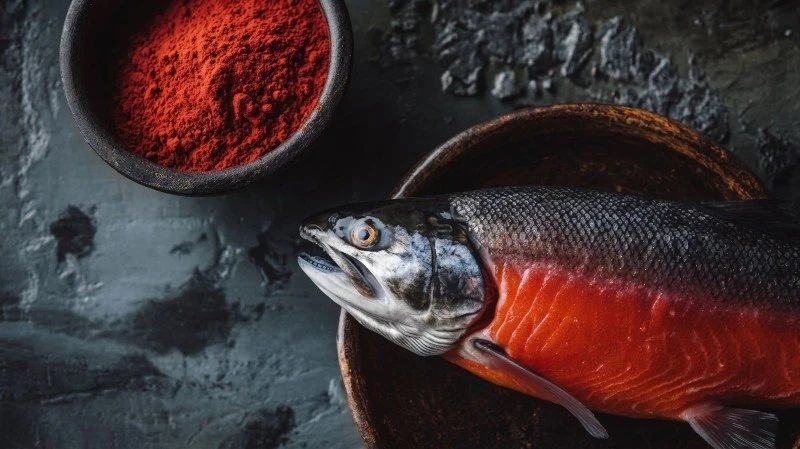
Natural vs. Synthetic Astaxanthin for Salmon
Both natural and synthetic astaxanthin are used as carotenoid sources in aquaculture.
Their characteristics can differ in areas such as:
- Production method
- Molecular and isomeric composition
- Esterification
- Physical form
- Stability
- Bioavailability
- Processing compatibility
- Cost
A 2025 Atlantic salmon study directly compared natural carotenoids from H. pluvialis, P. rhodozyma, and P. carotinifaciens with synthetic astaxanthin over an 88-day feeding period. The study found that natural sources were effective for pigmentation, while pigment source did not significantly affect fillet redness under the experimental conditions. P. rhodozyma produced results comparable to synthetic astaxanthin for several measures, while the synthetic group had higher total flesh astaxanthin than the H. pluvialis and P. carotinifaciens groups.
These findings show why astaxanthin source should be evaluated based on the specific feed formulation and production objective rather than assuming that one source is universally superior.
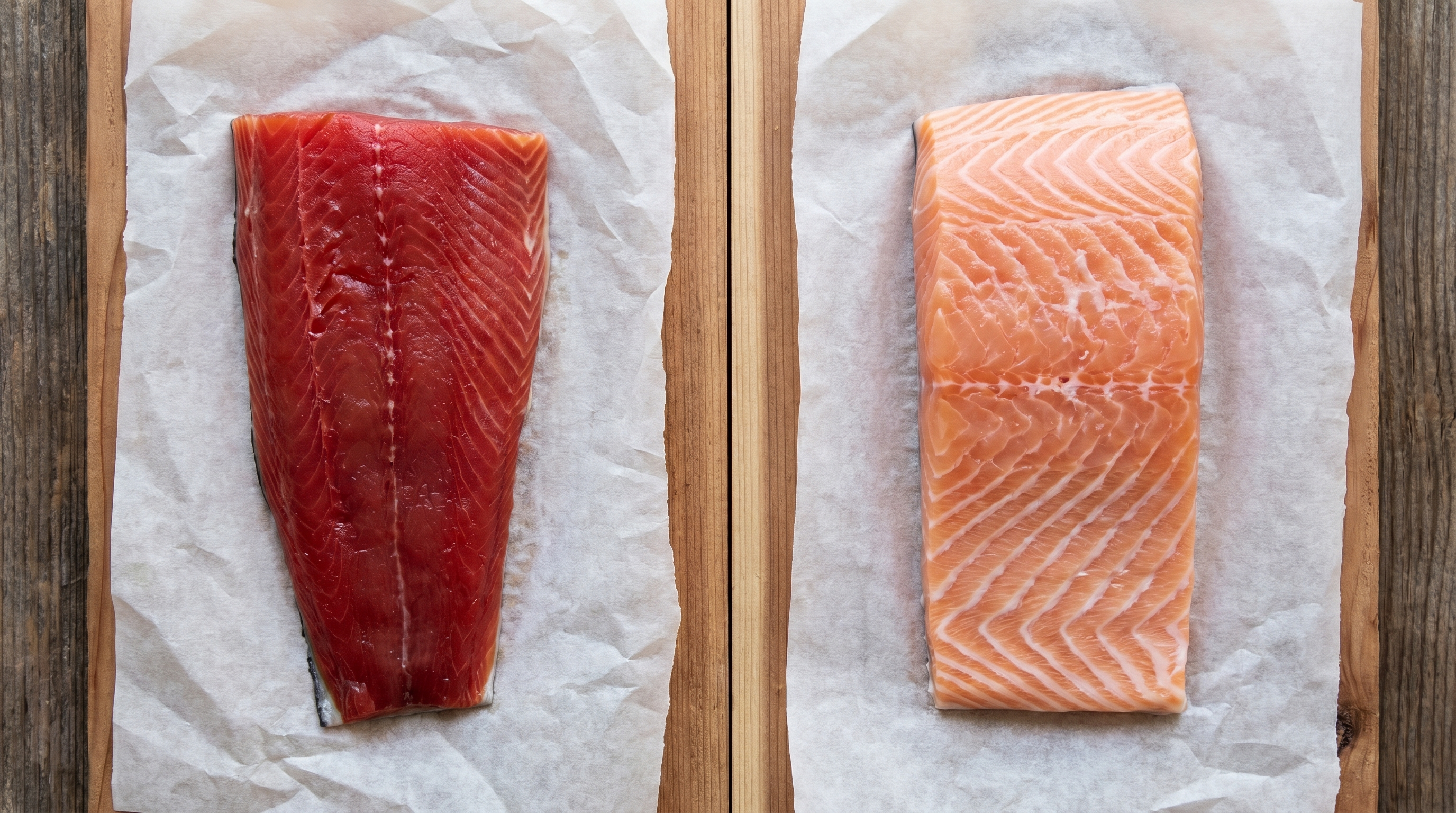
Antioxidant Potential of Astaxanthin
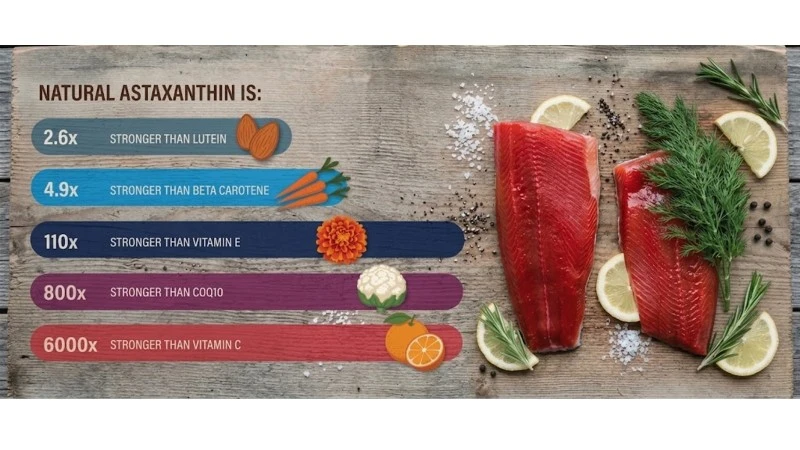
Astaxanthin is also widely studied for its antioxidant properties.
Its molecular structure allows it to interact with oxidative processes, and research has investigated its role in antioxidant defense in aquatic animals.
In salmon nutrition, this is potentially relevant because fish can experience oxidative challenges associated with metabolism, environmental conditions, handling, transportation, and other production factors.
However, antioxidant effects should be distinguished from the established pigmentation function. Evidence for physiological benefits varies according to species and experimental conditions. A recent Atlantic salmon study found no significant differences among the tested natural and synthetic pigment sources in several oxidative markers in flesh and liver.
Therefore, antioxidant activity is best considered a potential nutritional function rather than the primary commercial reason for adding astaxanthin to salmon feed.
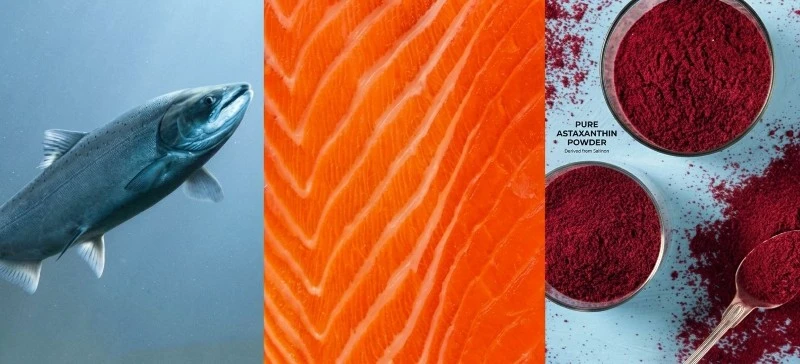
Astaxanthin and Salmon Immune Nutrition
Researchers have also investigated astaxanthin in relation to immune response and disease resistance in aquaculture species.
Reviews report associations between dietary astaxanthin and immune-related parameters in various farmed fish and crustaceans. However, results are not necessarily transferable between species.
This is particularly important for salmon feed manufacturers because evidence obtained from shrimp, tilapia, carp, or rainbow trout should not automatically be interpreted as evidence for Atlantic salmon.
Current research supports continued investigation of astaxanthin as a multifunctional aquaculture ingredient, but its most established role in salmon remains carotenoid pigmentation.

Astaxanthin Stability in Salmon Feed
Astaxanthin is sensitive to environmental and processing conditions.
Factors that can affect stability include:
- Oxygen
- Light
- Heat
- Moisture
- Storage time
- Processing conditions
- Feed matrix
Bioavailability and stability are therefore important considerations when selecting a commercial astaxanthin ingredient. Recent research has specifically identified the bioavailability of natural astaxanthin as a major area of investigation and highlighted the influence of formulation and delivery methods.
Proper packaging and storage can help protect the active carotenoid before it enters the feed manufacturing process.
Applications of Astaxanthin in Salmon Aquaculture
1. Salmon Feed Pigmentation
The primary application is the pigmentation of salmon flesh. Astaxanthin is incorporated into formulated feed to support the desired pink-red color.
2. Commercial Grow-Out Feed
Astaxanthin can be incorporated into grow-out diets according to the nutritional requirements and production stage of the salmon.
3. Premium Salmon Feed Formulations
Feed manufacturers can use standardized astaxanthin ingredients when consistent pigment delivery is an important formulation objective.
4. Natural Carotenoid Feed Products
Natural astaxanthin from microalgae, yeast, or bacterial sources can be incorporated into feed formulations designed around naturally sourced carotenoid ingredients.
5. Aquaculture Nutrition Research
Astaxanthin is also used in experimental diets to investigate pigment deposition, bioavailability, antioxidant responses, and other nutritional effects.
Is There a Universal Astaxanthin Dosage for Salmon?
There is no single universal inclusion rate suitable for every salmon feed.
Published studies have used different concentrations depending on fish size, production stage, feeding duration, feed composition, astaxanthin source, and research objective.
Commercial formulation should therefore consider:
- Target pigmentation
- Fish size
- Production stage
- Feed composition
- Astaxanthin assay
- Source and bioavailability
- Processing losses
- Storage stability
- Applicable regulations
Historical research has reported commercial salmon feed pigment levels in the approximate range of 50–70 mg/kg in particular production contexts, but this should not be treated as a universal recommendation for modern salmon farming.
How to Choose Astaxanthin for Salmon Feed
For bulk buyers and feed manufacturers, the following specifications are particularly useful.
1. Active Astaxanthin Content
Verify the actual astaxanthin concentration and analytical method.
2. Source
Determine whether the product comes from Haematococcus pluvialis, Phaffia rhodozyma, Paracoccus carotinifaciens, or another source.
3. Bioavailability
Consider the physical and chemical form of the ingredient and its compatibility with the feed matrix.
4. Stability
Evaluate stability during feed processing, transportation, and storage.
5. Physical Form
Powder, extract, oleoresin, beadlet, or other forms may have different handling and formulation characteristics.
6. Batch Consistency
Consistent assay and physical properties are important for predictable feed production.
7. Quality Documentation
Commercial buyers may request:
- COA
- Technical specification
- SDS/MSDS
- Microbiological testing
- Heavy-metal testing
- Stability information
- Origin and source documentation
Astaxanthin Powder for Salmon Feed
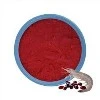
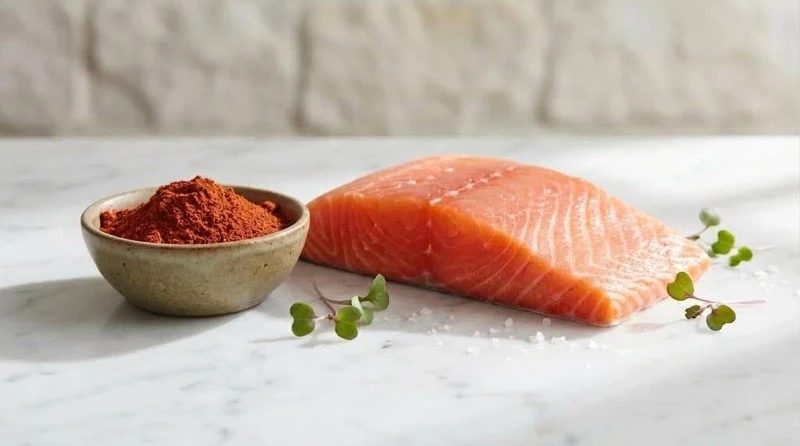
Astaxanthin Powder can be a convenient ingredient form for feed manufacturers because it can be weighed, blended, and incorporated into premixes or complete-feed formulations.
However, powder concentration and physical characteristics vary between products.
Important specifications can include:
- Astaxanthin percentage
- Carrier material
- Particle size
- Moisture
- Solubility or dispersibility
- Stability
- Storage requirements
- Shelf life
For feed manufacturers, the relevant comparison is not simply the price per kilogram of powder. The active astaxanthin concentration, stability, retention, and formulation performance should also be considered.
Conclusion
Astaxanthin is an important carotenoid for salmon nutrition, with its most established application being natural-looking pink-red flesh pigmentation.
Natural sources such as Haematococcus pluvialis, Phaffia rhodozyma, and Paracoccus carotinifaciens provide feed manufacturers with different options for supplying astaxanthin through formulated salmon diets. Research indicates that these natural sources can support salmon pigmentation, although performance can vary according to source, bioavailability, feeding conditions, and processing.
Astaxanthin has also been studied for antioxidant, immune-related, and stress-associated nutritional functions. These applications remain an active area of aquaculture research and should be considered separately from its well-established pigmentation role.
For commercial salmon feed, selecting an astaxanthin ingredient requires attention to active content, source, bioavailability, stability, processing compatibility, physical form, batch consistency, and quality documentation.
When these factors are properly evaluated, astaxanthin can serve as an important functional carotenoid ingredient in modern salmon aquaculture, supporting both nutritional formulation and the characteristic natural flesh color associated with salmon products.
References
Elbahnaswy, S., & Elshopakey, G. E. (2023). "Recent progress in practical applications of a potential carotenoid astaxanthin in aquaculture industry: a review." Fish Physiology and Biochemistry, 50, 97–126.
"Effect of natural carotenoids obtained from Haematococcus pluvialis, Paracoccus carotinifaciens, and Phaffia rhodozyma on flesh pigmentation and related biochemical mechanisms in Atlantic salmon (Salmo salar L.)." Aquaculture, 596, 741743, 2025.
"Biological function of astaxanthin and its application in aquatic animal feeding." Food Chemistry: X, 2025.
"Progress in the bioavailability of natural astaxanthin: Influencing factors, enhancement strategies, evaluation methods, and limitations of current research." Trends in Food Science & Technology, 160, 104998, 2025.
"Pigmenting efficacy of astaxanthin and canthaxanthin in fresh-water reared Atlantic salmon, Salmo salar." Aquaculture, 2002.
"Pigmentation of Atlantic salmon (Salmo salar) fed astaxanthin in all meals or in alternating meals." Aquaculture, 1998.
"The relationship between the surface color and astaxanthin concentration of different fillet parts of Atlantic salmon under mariculture and freshwater farming modes." 2023.
FAQ
Q1: What is astaxanthin?
A1: Astaxanthin is a red-orange xanthophyll carotenoid belonging to the carotenoid family. It occurs naturally in algae, yeast, bacteria, and aquatic organisms and is widely used as a feed pigment in aquaculture.
Q2: Why is astaxanthin used in salmon feed?
A2: Astaxanthin is primarily used in salmon feed to support the characteristic pink-red pigmentation of salmon flesh. It also provides a dietary carotenoid source and has been studied for potential antioxidant, immune-related, and stress-associated nutritional functions.
Q3: Why do farmed salmon need dietary astaxanthin?
A3: Wild salmon obtain carotenoids through their natural food chain, while farmed salmon receive controlled formulated diets. Dietary astaxanthin supplementation therefore provides an important source of carotenoids for farmed salmon.
Q4: Does astaxanthin make salmon flesh pink or red?
A4: Yes. Dietary astaxanthin can be absorbed and deposited in salmon muscle, where it contributes to the characteristic pink-red appearance of salmon flesh. Pigmentation is the most clearly established commercial application of astaxanthin in salmon aquaculture.
Q5: How does astaxanthin support salmon flesh pigmentation?
A5: The process involves dietary intake, digestion and absorption, transport through tissues, tissue deposition, and eventual contribution to flesh color. The efficiency of these processes depends on factors such as astaxanthin source, molecular form, feed matrix, fish physiology, and feeding conditions.
Q6: What are the main natural sources of astaxanthin?
A6: Important natural sources include Haematococcus pluvialis, Phaffia rhodozyma, and Paracoccus carotinifaciens. These sources may differ in physical properties, molecular form, stability, and bioavailability.
Q7: What is Haematococcus pluvialis astaxanthin?
A7: Haematococcus pluvialis is a microalga widely recognized as a natural source of astaxanthin. It can be processed into biomass, powder, extract, or other concentrated forms for feed and aquaculture applications.
Q8: What is Phaffia rhodozyma astaxanthin?
A8: Phaffia rhodozyma, also known as Xanthophyllomyces dendrorhous, is a yeast that naturally produces astaxanthin. It has been investigated as a biological astaxanthin source for animal and aquaculture nutrition.
Q9: What is Paracoccus carotinifaciens astaxanthin?
A9: Paracoccus carotinifaciens is a carotenoid-producing bacterium that can provide a natural source of astaxanthin for feed and aquaculture applications.
Q10: Is natural astaxanthin different from synthetic astaxanthin?
A10: Yes. Natural and synthetic astaxanthin can differ in production method, molecular and isomeric composition, esterification, physical form, stability, bioavailability, processing compatibility, and cost. The appropriate choice depends on the feed formulation and production objective