Astaxanthin is one of the most important carotenoids used in modern salmon aquaculture. It is responsible for the characteristic pink-to-red color associated with salmon flesh and is widely incorporated into salmon feeds to support consistent pigmentation.
Beyond its role as a natural pigment, astaxanthin has also attracted interest because of its antioxidant properties and potential roles in fish physiological function. Research in salmonids has investigated its absorption, deposition, bioavailability, pigmentation efficiency, and effects on growth and health-related parameters.
For feed manufacturers and aquaculture producers, Astaxanthin for Salmon Feed is therefore more than a color additive. It is a functional carotenoid whose source, concentration, stability, digestibility, and feeding strategy can influence its performance.
What Is Astaxanthin?
Astaxanthin is a red-orange xanthophyll carotenoid naturally found in certain microalgae, yeasts, bacteria, crustaceans, and aquatic organisms.
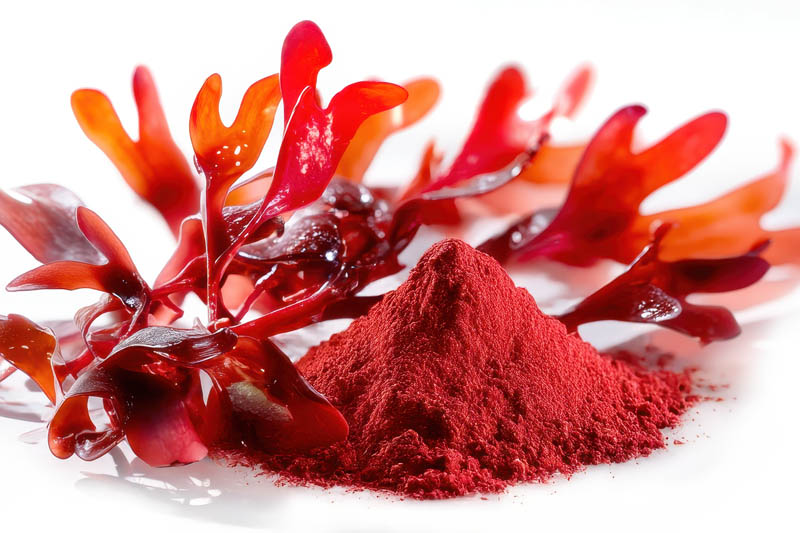
Commercial astaxanthin used in aquaculture can come from different sources, including synthetic production and natural sources such as Haematococcus pluvialis microalgae and Phaffia rhodozyma (also known as Xanthophyllomyces dendrorhous).
Astaxanthin is particularly important in salmonid nutrition because salmon cannot synthesize sufficient carotenoids on their own and therefore obtain them primarily through the diet.
Once consumed, dietary astaxanthin can be absorbed and transported through the fish's body before being deposited in tissues, including muscle. This deposition produces the characteristic coloration associated with salmon flesh.
Why Is Astaxanthin Used in Salmon Feed?
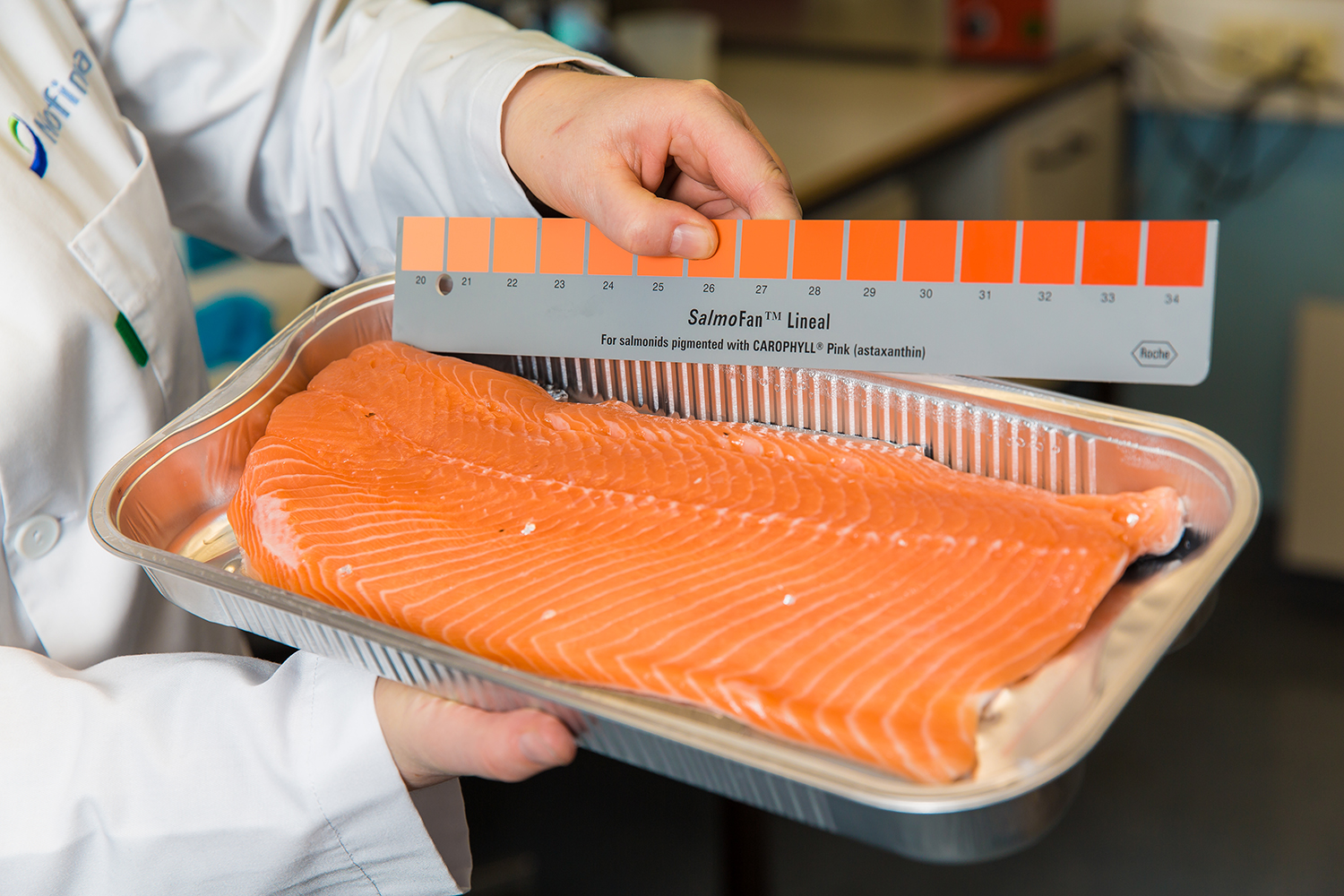
The primary reason for adding astaxanthin to salmon feed is flesh pigmentation.
Unlike many farmed fish, salmon are commercially associated with a naturally pink or reddish flesh color. Farmed salmon receive controlled diets, so carotenoid supplementation is commonly used to provide the pigment needed for flesh coloration.
Research has demonstrated a relationship between dietary carotenoid concentration and flesh pigmentation in Atlantic salmon. Earlier feeding studies found that increasing dietary carotenoid concentration increased flesh pigmentation.
A 2022 review of astaxanthin use in aquaculture also describes astaxanthin as a major carotenoid for pigmentation in salmonids and other aquaculture species.
Astaxanthin for Salmon Flesh Color
1. Supports Pink-Red Flesh Pigmentation
The most established application of astaxanthin in salmon feed is pigmentation.
After absorption, astaxanthin is transported through the fish and deposited in tissues. In salmon, accumulation in muscle contributes to the pink-red appearance expected by consumers.
Studies in Atlantic salmon have demonstrated that flesh pigmentation increases in response to dietary carotenoid supplementation.
This makes astaxanthin an important ingredient in commercial salmon feed formulations.
2. Helps Maintain Consistent Product Color
Color consistency is an important consideration for farmed salmon.
Without sufficient dietary carotenoid intake, salmon flesh may have lower carotenoid deposition and therefore less intense coloration. A controlled astaxanthin program allows feed manufacturers and producers to manage pigment supply throughout the production cycle.
The final color response depends on more than simply the amount of astaxanthin added. Factors such as fish size, growth rate, feeding duration, feed composition, pigment source, bioavailability, and feeding frequency can influence deposition.
3. Supports Carotenoid Deposition in Muscle
Astaxanthin is absorbed through the digestive system and subsequently transported in the bloodstream.
Research in Atlantic salmon has shown that dietary astaxanthin is deposited in flesh, although utilization efficiency is relatively limited and varies according to feeding conditions. One long-term study reported that more frequent feeding of astaxanthin-containing diets supported pigment deposition compared with less frequent administration patterns.
This highlights why feed formulation and feeding strategy should be considered together.

Astaxanthin and Fish Nutrition
Although pigmentation is the primary commercial reason for using astaxanthin, research has also examined its nutritional and physiological functions.
Antioxidant Properties
Astaxanthin is a carotenoid with antioxidant activity. Its molecular structure allows it to interact with reactive oxygen species and participate in antioxidant defense systems.
Aquaculture research has investigated astaxanthin in relation to oxidative stress, antioxidant enzymes, and physiological responses in fish and other aquatic animals. A recent 2025 review describes antioxidant activity as one of the biological functions being studied for dietary astaxanthin in aquaculture.
However, antioxidant effects should be considered supportive rather than a substitute for good water quality, balanced nutrition, disease management, and appropriate farm practices.
Potential Support for Growth and Feed Utilization
Astaxanthin has also been studied in relation to growth and feed utilization.
Research in rainbow trout found that astaxanthin-supplemented diets affected pigmentation and were associated with improvements in certain growth and physiological measurements under the experimental conditions.
However, results can vary between species, life stages, feed formulations, astaxanthin sources, and experimental conditions. Therefore, astaxanthin should not be described as a universal growth promoter.
Potential Immune and Stress-Related Functions
The biological effects of astaxanthin have also been investigated in relation to immune response and stress resistance in aquatic animals.
The recent literature describes potential immune-modulating and antioxidant functions, but these effects depend on species, dosage, environmental conditions, and the form of astaxanthin used.
For salmon production, the strongest and most established commercial function remains flesh pigmentation.

Natural Astaxanthin Sources for Salmon Feed
Natural astaxanthin is available from several biological sources.
Haematococcus pluvialis
Haematococcus pluvialis is a microalga known for accumulating high levels of astaxanthin under stress conditions.
It is one of the best-known natural sources for commercial astaxanthin production and is frequently positioned for applications requiring a naturally derived carotenoid.
Phaffia rhodozyma
The yeast Phaffia rhodozyma is another natural source of astaxanthin that has been investigated for aquaculture feed applications.
Marine Microorganisms
Certain marine bacteria can also produce astaxanthin. Research comparing different natural and synthetic sources indicates that source and processing can influence carotenoid retention, digestibility, pigmentation, and physiological effects.
For feed manufacturers, source selection should therefore consider both the declared astaxanthin concentration and its actual bioavailability.
Natural vs. Synthetic Astaxanthin
Both natural and synthetic astaxanthin are used in aquaculture.
The two categories can differ in chemical form, isomer composition, esterification, processing, stability, and bioavailability. These differences may affect how efficiently the pigment is absorbed and deposited.
A study comparing different astaxanthin sources in rainbow trout found differences in retention and physiological responses between sources.
Therefore, comparing products solely by their percentage of astaxanthin may not provide a complete picture of formulation performance.
For commercial feed development, manufacturers may evaluate:
- Astaxanthin assay
- Source and production method
- Isomer profile
- Esterified or non-esterified form
- Digestibility and bioavailability
- Stability during feed processing
- Storage stability
- Particle size and dispersion
- Batch-to-batch consistency

Astaxanthin Stability in Salmon Feed
Stability is an important consideration when formulating carotenoid-containing feeds.
Astaxanthin can be affected by oxygen, light, heat, moisture, and processing conditions. Feed manufacturing processes and storage conditions can therefore influence the amount of active pigment that ultimately reaches the fish.
A product with high initial astaxanthin content does not necessarily deliver the same amount of available pigment after processing and extended storage.
For this reason, feed manufacturers should evaluate astaxanthin stability throughout the entire production chain.
Protective technologies such as beadlet formulations, encapsulation, antioxidants, and appropriate packaging can be used depending on the product design.
Factors Affecting Astaxanthin Deposition
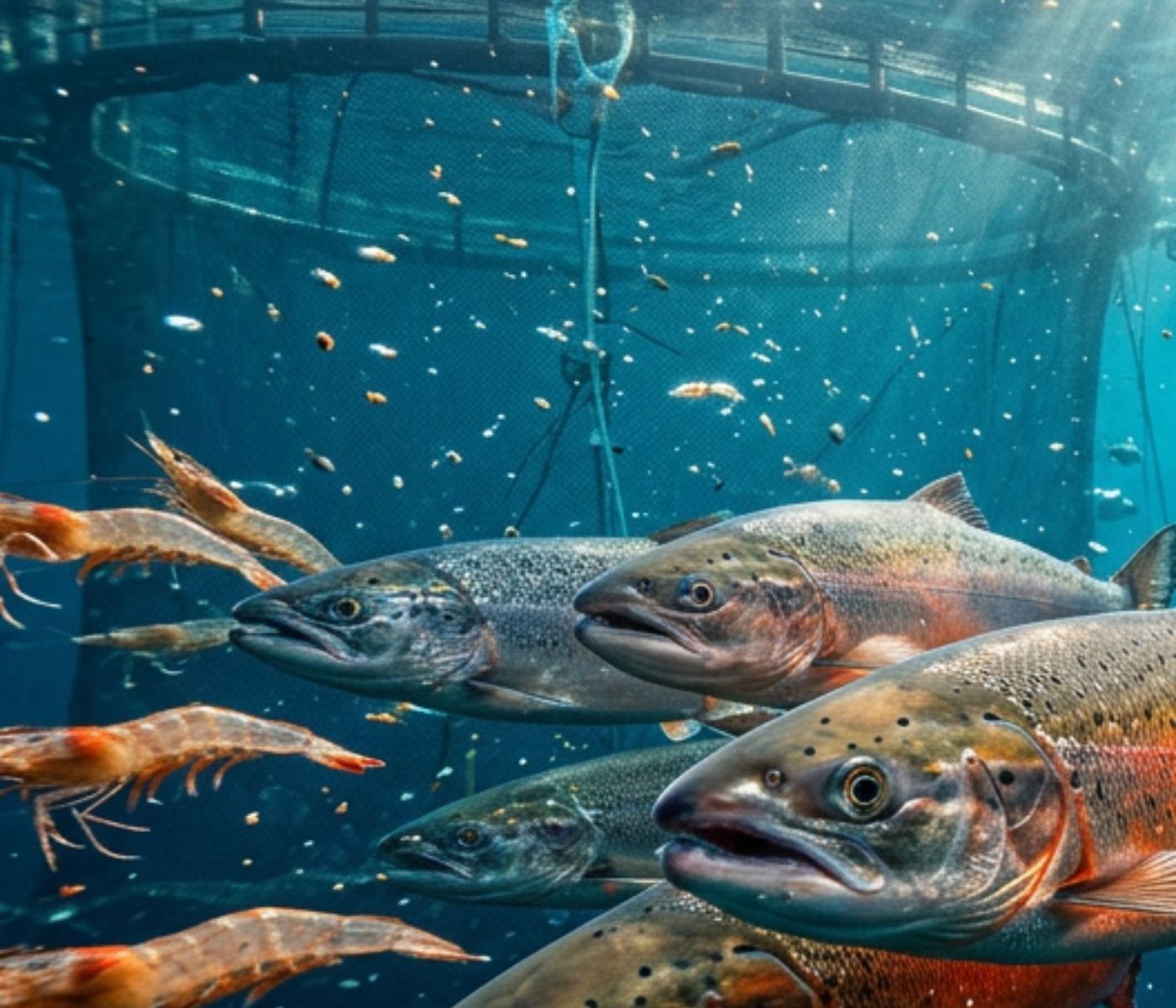
Several factors determine how much dietary astaxanthin ultimately becomes deposited in salmon flesh.
Fish Size and Growth Rate
Growing fish use nutrients for tissue formation, and rapid growth can influence the distribution and retention of carotenoids.
Dietary Concentration
The concentration of astaxanthin in the feed influences the amount available for absorption and deposition. Historical salmon studies have demonstrated increased pigmentation with increasing dietary carotenoid levels, although the response can eventually become less pronounced.
Feeding Duration
Pigmentation is not an immediate process. Salmon generally require sustained dietary exposure for significant muscle deposition.
Feeding Frequency
Feeding strategy can influence pigment utilization. Research in Atlantic salmon found that frequent feeding of astaxanthin-containing diets supported pigment deposition.
Feed Composition
Fat level, lipid source, antioxidants, and other feed components can influence carotenoid absorption and utilization.
Astaxanthin Source
Natural and synthetic sources may differ in their bioavailability and retention characteristics.

Astaxanthin Dosage in Salmon Feed
There is no single universal astaxanthin inclusion rate suitable for every salmon production system.
Published studies have tested a wide range of concentrations. For example, older Atlantic salmon research evaluated diets containing 30, 60, and 90 mg/kg carotenoid equivalents, while another study used approximately 41 mg/kg astaxanthin in a treatment diet.
These research values should not automatically be treated as commercial feeding recommendations.
The appropriate inclusion level depends on:
- Salmon species and strain
- Fish size
- Production stage
- Desired flesh color
- Feed composition
- Astaxanthin source
- Product bioavailability
- Feeding duration
- Regulatory requirements
- Production economics
Commercial formulations should be established using the specific product specification and the requirements of the target market.
How to Choose Astaxanthin for Salmon Feed
Feed manufacturers purchasing bulk astaxanthin should pay attention to both chemical specifications and practical formulation performance.
High and Consistent Assay
The declared astaxanthin content should be verified through appropriate analytical testing.
Good Bioavailability
Two products with similar assay values may not necessarily produce identical pigmentation because source, formulation, particle size, and chemical form can affect absorption.
Processing Stability
The product should maintain acceptable stability during feed manufacturing, transportation, and storage.
Good Dispersion
Uniform dispersion in premixes and finished feed helps ensure consistent pigment intake among fish.
Quality Documentation
A professional ingredient supplier should be able to provide documentation such as:
- COA
- Specification sheet
- SDS/MSDS
- Microbiological testing
- Heavy-metal testing
- Stability information
- Source information
- Batch traceability
These documents help feed manufacturers evaluate an ingredient before incorporating it into commercial formulations.

Applications of Astaxanthin in Salmon Aquaculture
Astaxanthin can be used in several salmonid feed applications, including:
Atlantic salmon feed:
Used primarily to support muscle pigmentation and carotenoid deposition.
Salmon grow-out diets:
Incorporated into formulated feeds during growth stages when flesh pigmentation is commercially important.
Finishing feeds:
Used as part of pigmentation programs before harvest.
Specialized aquaculture feed:
Can be combined with other carotenoids and nutritional ingredients according to species and production objectives.
Natural pigment formulations:
Natural astaxanthin from microalgae or yeast can be used where feed manufacturers prefer naturally sourced carotenoid ingredients.

Astaxanthin and Commercial Salmon Quality
For farmed salmon, flesh color is an important product characteristic.
Research and industry literature consistently identify astaxanthin as the dominant carotenoid used to produce the characteristic pigmentation of salmonids.
However, color should not be considered independently from overall fish quality. A successful salmon feed program also requires balanced protein and lipid nutrition, essential fatty acids, vitamins, minerals, appropriate feeding management, and good environmental conditions.
Astaxanthin is therefore best viewed as one component of a complete aquaculture nutrition strategy.
Conclusion
Astaxanthin for Salmon Feed plays a central role in modern salmon aquaculture, particularly for producing the characteristic pink-red color of salmon flesh.
Its primary commercial benefit is its ability to be absorbed and deposited in muscle tissue, with dietary carotenoid concentration, feeding duration, feeding frequency, source, and bioavailability all influencing pigmentation performance.
Astaxanthin is also being studied for broader nutritional functions, including antioxidant activity and potential effects on growth, immune response, and stress-related physiology. However, these effects are more dependent on species and feeding conditions than its established pigmentation function.
For feed manufacturers, selecting a high-quality astaxanthin ingredient means looking beyond the headline assay. Source, stability, bioavailability, dispersion, consistency, testing, and regulatory compliance are all important when developing a reliable salmon feed formulation.
References
Astaxanthin use as carotenoid source and its benefits in feeds. Feed and Feeding Practices in Aquaculture, 2nd Edition, 2022.
Bjerkeng, B., et al. Pigmentation of Atlantic salmon (Salmo salar) fed astaxanthin in all meals or in alternating meals. Aquaculture, 1998.
Carotenoids in diets for salmonids: IV. Pigmentation of Atlantic salmon with astaxanthin, astaxanthin dipalmitate and canthaxanthin. Aquaculture, 1987.
Baker, R.T.M., Pfeiffer, A.-M., Schöner, F.-J., & Smith-Lemmon, L. Pigmenting efficacy of astaxanthin and canthaxanthin in fresh-water reared Atlantic salmon. Animal Feed Science and Technology, 2002.
Comparison of the Retention Rates of Synthetic and Natural Astaxanthin in Feeds and Their Effects on Pigmentation, Growth, and Health in Rainbow Trout (Oncorhynchus mykiss). 2022.
Biological function of astaxanthin and its application in aquatic animal feeding. Food Chemistry: X, 2025.
Feed additives for influencing the color of fish and crustaceans. Handbook on Natural Pigments in Food and Beverages, 2024.
FAQ
Q1: What is Astaxanthin for Salmon Feed?
A1: Astaxanthin is a red-orange xanthophyll carotenoid used extensively in salmon aquaculture. It is incorporated into salmon feed primarily to support the characteristic pink-red pigmentation of salmon flesh.
Q2: Why is Astaxanthin used in salmon feed?
A2: The primary purpose of adding astaxanthin to salmon feed is flesh pigmentation. Dietary astaxanthin is absorbed and deposited in salmon tissues, including muscle, where it contributes to the characteristic pink-red color associated with salmon.
Q3: How does Astaxanthin affect salmon flesh color?
A3: After ingestion, astaxanthin is absorbed and transported through the fish before being deposited in tissues. Accumulation in muscle contributes to the pink-red appearance of salmon flesh, with dietary carotenoid levels influencing pigmentation.
Q4: Can Astaxanthin help maintain consistent salmon flesh color?
A4: Yes. A controlled astaxanthin feeding program can help manage the dietary pigment supply needed for salmon flesh pigmentation. The final color response is influenced by factors including fish size, growth rate, feeding duration, feed composition, pigment source, bioavailability, and feeding frequency.
Q5: Does Astaxanthin accumulate in salmon muscle?
A5: Yes. Dietary astaxanthin can be absorbed through the digestive system, transported through the bloodstream, and deposited in salmon flesh. The efficiency of deposition can vary depending on feeding conditions and other factors.
Q6: Does Astaxanthin provide nutritional benefits to salmon?
A6: In addition to pigmentation, astaxanthin has been studied for antioxidant and other physiological functions in fish. Research has investigated its potential relationships with oxidative stress, growth, immune response, and stress resistance. These effects can vary according to species, life stage, source, dosage, and environmental conditions.
Q7: Is Astaxanthin an antioxidant for salmon?
A7: Astaxanthin has antioxidant activity and has been investigated in aquaculture nutrition for its potential role in antioxidant defense and responses to oxidative stress. However, it should be considered part of a broader nutrition and farm-management strategy rather than a replacement for good water quality or disease management.
Q8: What are the natural sources of Astaxanthin for salmon feed?
A8: Natural astaxanthin can be obtained from sources including Haematococcus pluvialis microalgae and Phaffia rhodozyma yeast. Certain marine microorganisms can also produce astaxanthin. Source selection should consider concentration, bioavailability, retention, and processing characteristics.
Q9: What is Haematococcus pluvialis Astaxanthin?
A9: Haematococcus pluvialis is a microalga known for accumulating high levels of astaxanthin under stress conditions. It is one of the best-known natural sources used for commercial astaxanthin production and can be used where a naturally derived carotenoid is desired.
Q: Q10: What is the difference between natural and synthetic Astaxanthin?
A: A10: Natural and synthetic astaxanthin can differ in chemical form, isomer composition, esterification, processing, stability, and bioavailability. These differences can affect absorption, retention, and pigmentation performance, so feed manufacturers should evaluate more than the stated astaxanthin percentage.