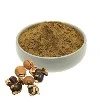
Tea Saponin is a natural plant-derived compound widely obtained from the seeds of Camellia oleifera , the oil tea plant. It is particularly concentrated in the seed meal left after oil extraction, making Camellia oleifera seed meal an important commercial source of tea saponins .
Unlike conventional nitrogen, phosphorus, or potassium fertilizers, Tea Saponin is primarily valued for its surface-active properties and potential role in soil and agricultural management. As a natural non-ionic surfactant, it can influence the interaction between water, soil particles, nutrients, microorganisms, and certain soil contaminants.
Research has investigated Tea Saponin in soil remediation, phytoremediation, microbial remediation, and other agricultural applications. This makes Tea Saponin Powder an interesting ingredient for fertilizer manufacturers and agricultural-input producers developing plant-based and multifunctional formulations.
What is Tea Saponin?
Tea Saponin is a mixture of naturally occurring triterpenoid saponins found in several Camellia plant tissues. Commercial Tea Saponin is commonly extracted from Camellia oleifera seed meal, which is a by-product of tea seed oil production.
The material contains saponin molecules consisting of sapogenins linked with sugar groups and organic acids. These structures contribute to the characteristic surface-active behavior of tea saponins.
Tea Saponin is generally supplied as a concentrated powder or extract for applications requiring a natural surfactant.
Important characteristics can include:
- Natural plant origin
- Non-ionic surfactant properties
- Good surface activity
- Foam-forming characteristics
- Water-dispersibility or solubility depending on specification
- Naturally occurring biological activity
Compatibility with various agricultural formulations
The exact composition can vary according to the Camellia species, raw material, extraction process, purification level, and manufacturing conditions.

Is Tea Saponin a Fertilizer?
Tea Saponin is not a conventional NPK fertilizer.
Instead, it is better described as a natural agricultural additive, surfactant, soil-management ingredient, or functional component that can be incorporated into certain fertilizer and agricultural formulations.
Traditional fertilizers primarily supply nutrients such as nitrogen, phosphorus, and potassium. Tea Saponin has a different function: its surface-active properties can modify interactions between agricultural materials and the soil environment.
This distinction is important for fertilizer manufacturers. Tea Saponin may complement a fertilizer formulation, but it should not automatically be marketed as a complete replacement for a nutrient fertilizer.

Why Use Tea Saponin for Fertilizer?
Tea Saponin is attracting interest in agricultural formulations because its natural surfactant properties can provide functions beyond simple nutrient supply.
Potential advantages include:
1. Natural Surfactant Properties
One of the most important characteristics of Tea Saponin is its ability to reduce surface tension.
This surface activity can improve interactions between water and soil particles and can influence the movement and availability of certain substances in soil.
Because of this property, Tea Saponin has been studied as a natural alternative to some synthetic surfactants in agricultural and environmental applications.
2. Support for Soil Management
Tea Saponin has been investigated in soil-remediation systems where improving the mobility or bioavailability of certain contaminants is necessary.
Research has demonstrated applications involving heavy metals and organic pollutants, including systems based on leaching remediation, phytoremediation, and microbial remediation.
This does not mean Tea Saponin should be applied indiscriminately to agricultural soils. Instead, it highlights its potential as a functional ingredient in carefully designed soil-management programs.
3. Plant-Based Agricultural Ingredient
Tea Saponin is derived from Camellia plant material, with Camellia oleifera seed meal being a major commercial source.
Using this agricultural by-product as a source of functional ingredients supports greater utilization of oil-processing residues and provides an additional pathway for developing plant-derived agricultural products.
4. Potential to Improve Soil Contaminant Availability
In contaminated-soil research, Tea Saponin has been shown to increase the bioavailability of certain pollutants.
For example, studies summarized in the RSC review found that tea saponins can promote the desorption of heavy metals from soil and improve their availability to plants or microorganisms involved in remediation.
This application is more closely related to soil remediation than ordinary crop fertilization, so it should be positioned appropriately when developing agricultural products.

Tea Saponin for Soil Remediation
One of the best-documented agricultural/environmental applications of Tea Saponin is soil remediation.
Soil contaminants can become strongly bound to soil particles, limiting their availability for removal or biological degradation. Tea Saponin can act as a natural surfactant and influence these interactions.
Research has investigated Tea Saponin in three major remediation approaches:
- Leaching remediation
- Phytoremediation
- Microbial remediation
Studies have examined its use with contaminants including cadmium, lead, zinc, copper, chromium, manganese, nickel, polycyclic aromatic hydrocarbons, PCBs, and organotin compounds.
The results indicate that Tea Saponin can improve the availability of certain contaminants under specific experimental conditions. However, performance depends on the soil, contaminant, concentration, environmental conditions, and treatment method.

Tea Saponin for Phytoremediation
Phytoremediation uses plants to help remove, stabilize, or manage contaminants in soil.
Tea Saponin has been investigated as an auxiliary material for phytoremediation because its surfactant properties can increase the mobility and availability of certain contaminants.
For example, research summarized in the RSC review reported increased uptake or accumulation of certain contaminants by plants when Tea Saponin was included under experimental conditions.
This makes Tea Saponin a potential component of specialized soil-remediation formulations.
However, phytoremediation applications require careful control because increasing contaminant availability can also increase the potential for plant uptake. Such applications should therefore be designed around the specific contaminant and soil-management objective.

Tea Saponin for Microbial Soil Remediation
Tea Saponin has also been investigated in microbial remediation.
Certain microorganisms can degrade organic pollutants, but the effectiveness of microbial degradation may be limited when pollutants have low bioavailability.
The surfactant properties of Tea Saponin can potentially improve the accessibility of certain compounds to microorganisms.
Research summarized in the 2018 review reported improved biodegradation of several organic pollutants under specific laboratory conditions involving tea saponin and microorganisms.
This suggests potential applications in specialized microbial soil-management systems.

Tea Saponin as a Fertilizer Additive
Although Tea Saponin does not provide the primary nutrient function of an NPK fertilizer, it can be considered as a functional additive in certain agricultural formulations.
Potential formulation applications include:
-
Organic Fertilizer Products
- Tea Saponin can be incorporated into selected plant-based or organic fertilizer formulations where a natural surfactant component is desired.
-
Soil Conditioner Formulations
- Its surface activity can make it relevant to soil-conditioning products designed around water distribution, material dispersion, or soil-management functions.
-
Fertilizer Solutions and Suspensions
- Depending on its solubility and compatibility, Tea Saponin Powder can be considered for formulations where improved dispersion or wetting is required.
-
Soil Remediation Products
Tea Saponin has a stronger research basis in specialized soil-remediation applications than as a direct plant nutrient. It can therefore be considered in products designed for contaminated-soil management.
Tea Saponin for Agricultural Soil Management
Modern agriculture increasingly uses multifunctional inputs that combine nutrient supply with physical, biological, or chemical functions.
Tea Saponin may fit into this approach because its role is not limited to supplying nutrients.
Potential agricultural applications include:
- Soil-management formulations
- Organic fertilizer additives
- Soil-remediation products
- Phytoremediation systems
- Microbial remediation
- Agricultural surfactant formulations
- Plant-based soil conditioners
- Specialized fertilizer blends
The exact application should be determined by the formulation objective and supported by appropriate testing.

Important Consideration: Concentration Matters
Tea Saponin is biologically active, so more is not necessarily better.
Its effects can change according to concentration. A level that is useful for one agricultural application may not be appropriate for another.
This is particularly important when Tea Saponin is used around seeds, roots, or sensitive crops. Excessive concentrations of biologically active saponins may produce undesirable effects depending on the plant species and experimental conditions.
Therefore, fertilizer manufacturers should establish application rates through product-specific testing rather than applying a universal dosage.

Tea Saponin vs. Tea Seed Meal
Tea Seed Meal and Tea Saponin are related but different agricultural ingredients.
Tea Seed Meal is the solid residue remaining after Camellia oleifera seed oil extraction. It contains organic matter, residual nutrients, proteins, fiber, and naturally occurring saponins.
Tea Saponin is a concentrated functional fraction extracted from Camellia materials, particularly tea seed meal.
Therefore:
| Feature | Tea Seed Meal | Tea Saponin |
|---|---|---|
| Form | Meal or powder | Concentrated powder/extract |
| Main source | Camellia oleifera seed | Mainly Camellia oleifera seed meal |
| Organic matter | High | Concentrated functional fraction |
| Nutrient contribution | Contains residual nutrients | Not primarily a nutrient source |
| Saponin content | Naturally occurring | Concentrated |
| Main agricultural role | Organic fertilizer material/soil amendment | Natural surfactant/functional agricultural additive |
| Soil remediation research | Possible supporting material | More extensively studied |
| Fertilizer use | Organic fertilizer formulations | Fertilizer additive/formulation component |
Choosing between the two depends on the desired application.

How to Choose Tea Saponin Powder for Fertilizer
For fertilizer manufacturers and agricultural distributors, product quality is an important consideration.
Tea Saponin Content
The saponin assay should be clearly specified and supported by appropriate analytical testing.
Source
Confirm whether the material is derived from Camellia oleifera seed meal or another Camellia source.
Solubility and Dispersion
The physical characteristics of the powder should match the intended formulation, especially for liquid fertilizers, suspension concentrates, or other water-based agricultural products.
Moisture
Low and controlled moisture can help maintain powder stability during storage.
Particle Size
Particle size can influence dispersion, dissolution, handling, and formulation performance.
Purity
Manufacturers should evaluate impurities, ash, heavy metals, microbiological specifications, and other parameters appropriate to the final application.
Batch Consistency
Consistent saponin content and physical characteristics are particularly important for commercial agricultural formulations.
No Universal Application Rate
Tea Saponin application rates cannot be standardized across every agricultural use.
The appropriate concentration can depend on:
- Crop species
- Soil type
- Soil pH
- Target application
- Saponin concentration
- Formulation type
- Environmental conditions
- Application method
Whether the purpose is fertilizer support or soil remediation
For this reason, manufacturers should establish technical recommendations through formulation and field testing.
Research on soil remediation also emphasizes that application conditions, including tea saponin concentration, need to be adjusted according to soil and environmental conditions.

Storage and Handling of Tea Saponin Powder
Tea Saponin Powder should be stored according to the supplier's specification.
General considerations include:
- Keep the product dry
- Protect from excessive moisture
- Use sealed packaging
- Avoid prolonged exposure to heat
- Protect from contamination
Follow the recommended shelf-life conditions
Bulk packaging should also be selected according to transportation distance, humidity, storage conditions, and the customer's manufacturing process.

Why Tea Saponin Has Potential in Modern Agriculture
The agricultural industry is increasingly interested in natural surfactants and multifunctional plant-derived ingredients.
Tea Saponin is particularly interesting because it combines:
- Plant origin
- Natural surfactant activity
- Agricultural by-product utilization
- Soil-remediation potential
- Compatibility with specialized soil-management systems
- Potential use in fertilizer formulations
Its strongest documented role is not as a direct nutrient fertilizer but as a functional agricultural ingredient, particularly in soil-remediation and soil-management applications.
As research continues, Tea Saponin may become increasingly useful in specialized agricultural formulations designed to combine natural surfactant properties with soil and crop-management objectives.
Conclusion
Tea Saponin is a natural plant-derived saponin obtained primarily from Camellia oleifera seed meal. Although it is not a conventional NPK fertilizer, its natural non-ionic surfactant properties make it a valuable functional ingredient for selected agricultural applications.
Its potential uses include fertilizer additives, soil conditioners, soil-remediation formulations, phytoremediation, microbial remediation, and other agricultural products. Research has particularly demonstrated its ability to influence the availability of certain soil contaminants and support remediation processes under specific conditions.
For fertilizer manufacturers and agricultural-input suppliers, the most important factors when selecting Tea Saponin Powder include saponin content, source, purity, solubility, moisture, particle size, stability, and batch consistency.
Tea Saponin should be formulated according to its intended function rather than treated as a universal fertilizer. With appropriate quality control and application testing, it can serve as a useful plant-derived functional ingredient in modern agricultural and soil-management products.
References
Yu, X.-L., & He, Y. (2018). "Tea saponins: effective natural surfactants beneficial for soil remediation, from preparation to application." RSC Advances, 8, 24312–24321. DOI: 10.1039/C8RA02859A.
Yu, X.-L., & He, Y. (2018). Full-text review on the preparation, properties, and applications of tea saponins in soil remediation. RSC Advances, 8, 24312–24321.
FAQ
Q1: What is Tea Saponin for fertilizer?
A1: Tea Saponin is a natural plant-derived saponin obtained mainly from Camellia oleifera seed meal. It is not a conventional fertilizer nutrient but is used as a functional agricultural ingredient because of its natural surface-active and surfactant properties.
Q2: Is Tea Saponin a fertilizer?
A2: Tea Saponin is not a conventional NPK fertilizer because it does not primarily supply nitrogen, phosphorus, or potassium. Instead, it can be used as a natural surfactant, fertilizer additive, soil-management ingredient, or component of specialized agricultural formulations.
Q3: Why is Tea Saponin used in fertilizer formulations?
A3: Tea Saponin can provide natural surface-active properties that influence interactions between water, soil particles, nutrients, microorganisms, and other agricultural materials. This makes it useful for selected fertilizer, soil-conditioner, and soil-management formulations.
Q4: What is the main agricultural application of Tea Saponin?
A4: Tea Saponin has applications in soil management, fertilizer additives, soil remediation, phytoremediation, microbial remediation, and agricultural surfactant formulations. Its strongest research interest is associated with specialized soil-remediation and soil-management applications.
Q5: Can Tea Saponin be used as a fertilizer additive?
A5: Yes. Tea Saponin Powder can be incorporated into selected fertilizer formulations as a functional additive. Depending on the formulation, it may be used where natural wetting, dispersion, or surfactant properties are desired.
Q6: What are the main benefits of Tea Saponin for agriculture?
A6: Potential benefits include natural surfactant activity, surface-tension reduction, support for soil-management formulations, potential improvement of the availability of certain soil contaminants during remediation, and use as a plant-derived functional ingredient.
Q7: What is the main source of commercial Tea Saponin?
A7: Commercial Tea Saponin is commonly obtained from Camellia oleifera seed meal, the solid material remaining after tea seed oil extraction. This makes tea seed meal an important raw material for producing concentrated Tea Saponin.
Q8: What is the difference between Tea Saponin and Tea Seed Meal?
A8: Tea Seed Meal is the solid by-product of Camellia oleifera seed oil extraction and contains organic matter, proteins, fiber, residual nutrients, and naturally occurring saponins. Tea Saponin is a more concentrated functional fraction extracted from Camellia materials and is primarily valued for its surfactant properties.
Q9: Can Tea Saponin be used for soil remediation?
A9: Yes. Tea Saponin has been investigated as a natural surfactant in soil-remediation systems. Research has examined its use in leaching remediation, phytoremediation, and microbial remediation involving various heavy metals and organic pollutants.
Q10: How does Tea Saponin support soil remediation?
A10: Its surface-active properties can influence the interaction between contaminants and soil particles and may increase the availability or mobility of certain contaminants under specific conditions. The effectiveness depends on the soil type, contaminant, concentration, and remediation method.