Astaxanthin powder is an important carotenoid ingredient used in salmon aquaculture. It is particularly well known for supporting the characteristic pink-red coloration of salmon flesh, but research has also investigated its antioxidant, immune-supporting, stress-related, and growth-related functions in aquatic animals.
For salmon feed manufacturers, aquaculture companies, and bulk ingredient buyers, astaxanthin powder can provide a concentrated and practical source of carotenoid nutrition. Its effectiveness depends on factors such as concentration, source, stability, feed formulation, fish size, feeding duration, and production conditions.
What Is Astaxanthin Powder?
Astaxanthin is a red-orange xanthophyll carotenoid that occurs naturally in several microorganisms and aquatic organisms. Important commercial sources include the microalga Haematococcus pluvialis and red yeast Phaffia rhodozyma. Astaxanthin is also available in synthetic forms for use in aquaculture feed.
Astaxanthin powder is generally supplied as a concentrated ingredient that can be incorporated into formulated fish feed. Depending on the product, it may contain carriers or stabilizing components designed to improve dispersion, handling, and storage stability.
Salmon obtain carotenoids through their diet. Therefore, formulated feeds can provide astaxanthin to help support carotenoid deposition in tissues, particularly muscle.
Why Is Astaxanthin Used in Salmon Feed?
The most established application of astaxanthin in aquaculture is pigmentation. Astaxanthin can be absorbed from feed and deposited in fish tissues, contributing to the characteristic coloration of salmon and other salmonids. Reviews of aquaculture nutrition identify pigmentation and improved product appearance as major commercial reasons for using astaxanthin.
Research specifically conducted with Atlantic salmon has demonstrated that dietary astaxanthin is absorbed and deposited in salmon tissues. Feeding strategies and dietary concentration can influence the amount of pigment retained by the fish.
This makes astaxanthin an important ingredient when salmon producers want to achieve consistent flesh pigmentation throughout commercial production.
Benefits of Astaxanthin Powder for Salmon Feed
1. Supports Salmon Flesh Pigmentation
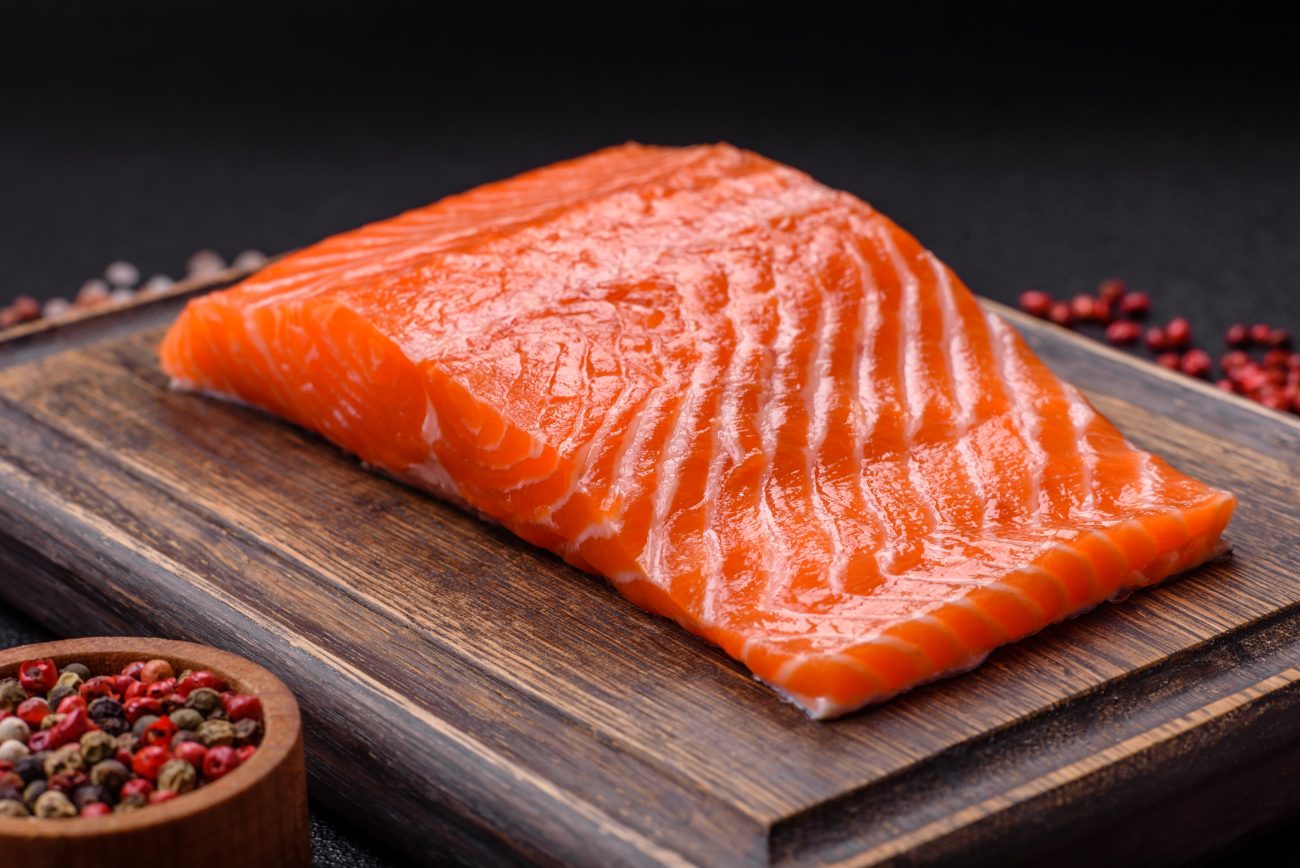
The primary commercial benefit of astaxanthin powder is its ability to support salmon flesh coloration.
Astaxanthin is absorbed after ingestion and can accumulate in salmon tissues, including muscle. The resulting pink-to-red pigmentation is an important quality characteristic of farmed salmon.
Research involving Atlantic salmon has directly evaluated astaxanthin absorption and deposition and demonstrated the relationship between dietary supplementation and tissue pigmentation.
For salmon producers, consistent pigmentation can improve the visual quality and market presentation of the final product.
2. Provides Antioxidant Activity
Astaxanthin is recognized for its antioxidant properties. Its molecular structure allows it to interact with reactive oxygen species and participate in protection against oxidative damage.
This property is relevant to aquaculture because fish may encounter oxidative challenges associated with intensive production, handling, environmental fluctuations, and metabolic activity.
A comprehensive review of astaxanthin in aquaculture reports antioxidant activity as one of its important biological functions.
However, astaxanthin should be considered part of a complete nutritional strategy rather than a substitute for proper farm management, water quality, biosecurity, or balanced feed.
3. May Support Immune Function
Research has also investigated the relationship between dietary astaxanthin and immune responses in aquatic animals.
Studies reviewed in the aquaculture literature suggest that astaxanthin may influence immune-related parameters and disease resistance. However, results can vary depending on species, dose, developmental stage, environmental conditions, and feed formulation.
For salmon feed manufacturers, this makes astaxanthin a potentially useful functional ingredient alongside other nutritional components.
4. May Help Support Stress Resistance
Farmed salmon can experience physiological stress during transportation, handling, environmental changes, stocking, and other stages of production.
Because oxidative stress can accompany physiological stress, the antioxidant properties of astaxanthin have attracted considerable interest in aquaculture research.
Reviews have reported potential relationships between dietary astaxanthin and stress tolerance in aquatic animals.
The actual response, however, depends on the fish, feed, dosage, and farming environment.
5. May Support Growth and Feed Utilization
Astaxanthin has been investigated not only as a pigment but also as a functional feed additive.
A 2025 meta-analysis covering 64 studies and 33 aquatic species found overall improvements in several growth and feed-utilization indicators, including final body weight, weight gain, specific growth rate, survival, protein efficiency, and feed conversion ratio. The researchers also emphasized substantial differences among species, dosage levels, and environmental conditions.
These results support the potential multifunctional role of astaxanthin in aquaculture, but they should not be interpreted as a guaranteed growth effect specifically for every salmon production system.
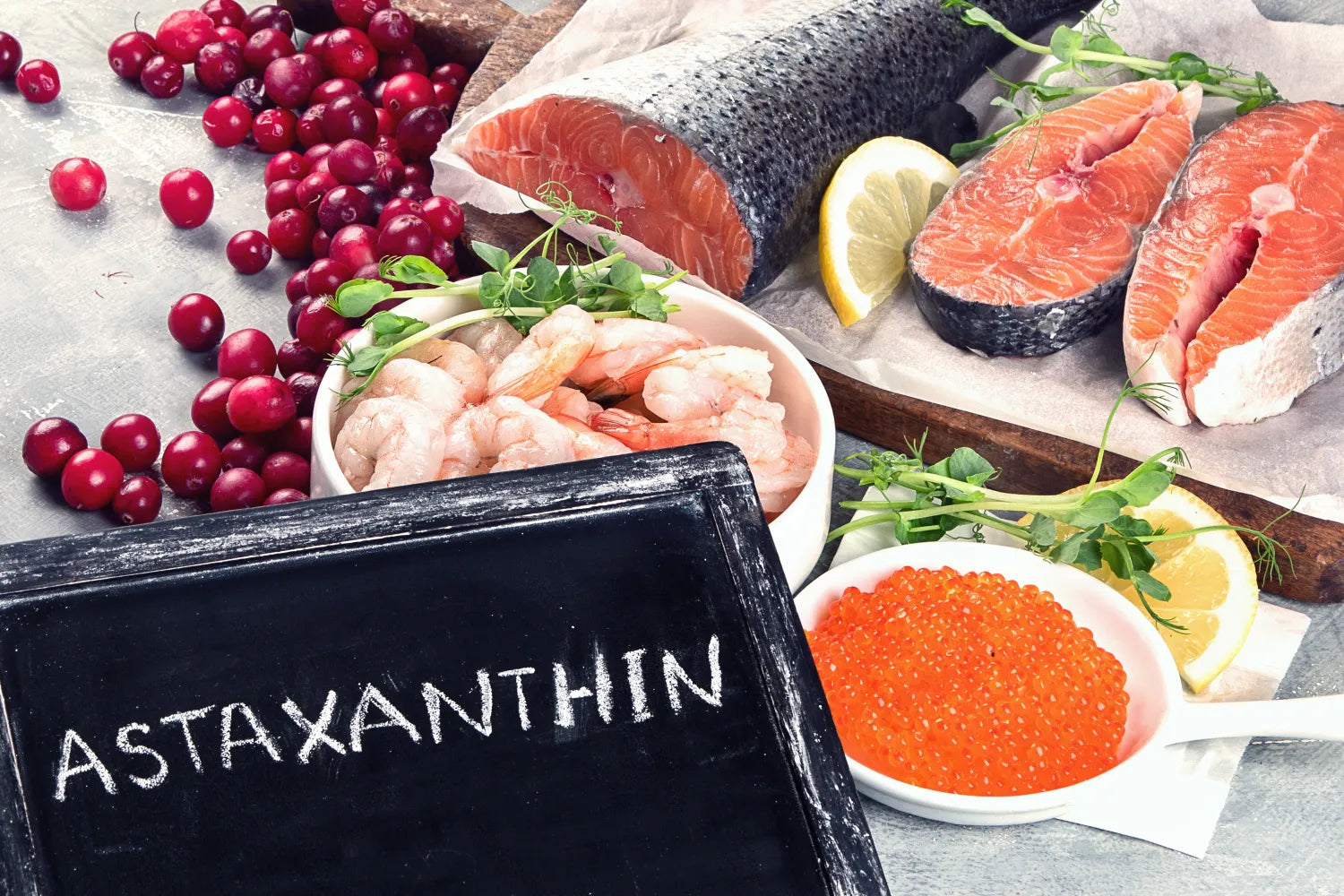
Applications of Astaxanthin Powder for Salmon Feed
Atlantic Salmon Feed
Atlantic salmon (Salmo salar) is one of the most important commercial species associated with astaxanthin supplementation.
Astaxanthin is incorporated into formulated diets to provide dietary carotenoids and promote deposition in salmon tissues. Research has evaluated different dietary pigment concentrations and feeding strategies to understand their effects on absorption and pigmentation.
Salmon Grow-Out Feed
Astaxanthin powder is particularly relevant to grow-out feed programs, where producers are managing fish development, feed efficiency, and final flesh coloration.
The inclusion level can be adjusted according to fish size, production stage, feed formulation, feeding period, and target pigmentation.
Premium Salmon Aquafeed
Astaxanthin can be incorporated into premium aquafeed formulations together with proteins, fish oils, algae ingredients, vitamins, minerals, and other functional additives.
This allows manufacturers to formulate feeds that address both basic nutritional requirements and additional quality objectives such as pigmentation and antioxidant support.
Functional Aquaculture Feed
Beyond pigmentation, astaxanthin is increasingly investigated as a multifunctional feed ingredient.
Scientific reviews have reported potential roles in antioxidant defense, immune response, stress tolerance, growth, reproduction, and disease resistance across different aquatic species.
The strength of evidence varies between species and applications, so formulations should be supported by appropriate feeding trials.
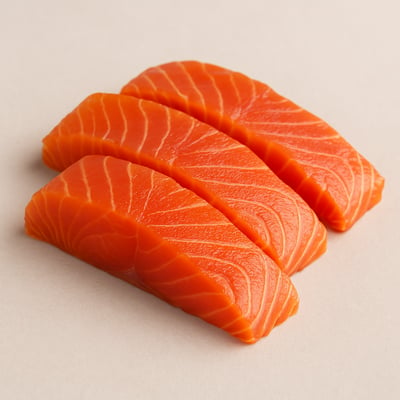
Natural Astaxanthin Powder for Salmon
Natural astaxanthin is available from sources such as Haematococcus pluvialis microalgae and Phaffia rhodozyma. These sources are particularly attractive for manufacturers looking for naturally sourced carotenoid ingredients.
When purchasing natural astaxanthin powder, buyers should verify:
- Natural source
- Astaxanthin concentration
- Carrier composition
- Purity
- Stability
- Microbiological specifications
- Heavy-metal specifications
- Production method
- Batch consistency
- Applicable certifications
Natural origin alone does not determine product performance. Active concentration, stability, bioavailability, and compatibility with the complete feed formulation are also important.

Astaxanthin Powder Dosage for Salmon Feed
There is no single universal dosage that applies to every salmon feed.
The appropriate inclusion level depends on:
- Salmon species and strain
- Fish size and developmental stage
- Feed composition
- Astaxanthin source
- Desired pigmentation
- Feeding duration
- Production environment
- Local feed regulations
Published Atlantic salmon studies have used different dietary astaxanthin concentrations depending on their experimental objectives. For example, one long-term feeding study compared diets containing approximately 41.4 mg/kg astaxanthin with diets containing approximately 2.1 mg/kg.
Another feeding trial evaluated graded astaxanthin and canthaxanthin levels in Atlantic salmon, including a diet containing 45 mg/kg astaxanthin.
These research levels should not be treated as universal commercial dosage recommendations. Feed manufacturers should determine the appropriate inclusion rate based on the specific product specification, regulatory requirements, target pigmentation, and feeding trials.

Factors to Consider When Choosing Astaxanthin Powder
Astaxanthin Concentration
A standardized astaxanthin concentration allows manufacturers to calculate inclusion rates accurately and maintain consistency between batches.
Stability
Astaxanthin can be sensitive to environmental and processing conditions. Exposure to oxygen, light, heat, and unsuitable storage conditions can affect carotenoid stability.
Proper packaging and storage are therefore important for maintaining product quality.
Bioavailability
The quantity of astaxanthin added to feed does not necessarily equal the quantity ultimately deposited in salmon muscle.
Absorption, metabolism, feed composition, lipid levels, fish size, and the chemical form of astaxanthin can influence utilization and tissue deposition. Recent research also indicates species-specific differences in astaxanthin absorption and metabolism.
Purity and Quality
For commercial aquafeed production, buyers should request a complete product specification and certificate of analysis.
Important parameters may include:
- Astaxanthin assay
- Moisture
- Carrier composition
- Heavy metals
- Microbiological quality
- Residual solvents where applicable
- Stability data
- Physical characteristics
- Shelf life
- Batch-to-batch consistency
Astaxanthin Powder and Salmon Product Quality
Salmon pigmentation is one of the most commercially important applications of astaxanthin.
The color of salmon flesh can influence consumer perception and product presentation. Because dietary astaxanthin is deposited in muscle, controlling the dietary supply can help producers achieve more predictable pigmentation.
Research in Atlantic salmon has demonstrated that dietary astaxanthin supplementation can result in measurable accumulation of the pigment in fish tissues.
Therefore, astaxanthin management should be considered an important component of salmon feed formulation, particularly during production stages where flesh pigmentation is a major objective.
Conclusion
Astaxanthin powder is a valuable ingredient for salmon feed because of its established role in flesh pigmentation and its potential functional benefits.
Its antioxidant properties, together with research into immune function, stress tolerance, growth, and feed utilization, make astaxanthin an important component of modern aquaculture nutrition.
For salmon feed manufacturers, selecting the right astaxanthin powder requires consideration of concentration, source, purity, stability, bioavailability, regulatory compliance, and feed-processing compatibility.
When properly formulated and supplied at an appropriate level, astaxanthin powder can help salmon producers achieve consistent pigmentation while contributing to the broader nutritional objectives of aquaculture feed.
References
Lim, K. C., Yusoff, F. M., Shariff, M., & Kamarudin, M. S. (2018). Astaxanthin as feed supplement in aquatic animals. Reviews in Aquaculture, 10, 738–773.
Elbahnaswy, S., & Elshopakey, G. E. (2023). Recent progress in practical applications of a potential carotenoid astaxanthin in aquaculture industry: a review. Fish Physiology and Biochemistry.
Li, B., Chen, C., et al. (2025). Effectiveness of Astaxanthin as a Feed Supplement to Improve Growth Performance and Feed Utilization in Aquaculture Animals: A Meta-Analysis. Antioxidants, 14(5), 609.
Bjerkeng, B., et al. (1998). Pigmentation of Atlantic salmon (Salmo salar) fed astaxanthin in all meals or in alternating meals. Aquaculture, 159, 217–231.
Baker, R. T. M., Pfeiffer, A.-M., Schöner, F.-J., & Smith-Lemmon, L. (2002). Pigmenting efficacy of astaxanthin and canthaxanthin in freshwater-reared Atlantic salmon, Salmo salar. Animal Feed Science and Technology, 99, 97–106.
Application of Natural Antioxidants as Feed Additives in Aquaculture: A Review. Recent review of natural antioxidant ingredients and astaxanthin applications in aquaculture.
Biological function of astaxanthin and its application in aquatic animal feeding. Recent review covering pigmentation, antioxidant activity, growth, immunity, and practical aquaculture applications.
FAQ
A1: Astaxanthin Powder is a concentrated carotenoid ingredient used in aquaculture feed. It is a red-orange xanthophyll carotenoid that can be incorporated into formulated salmon feed to provide dietary carotenoid nutrition and support tissue pigmentation.
A2: The primary application of Astaxanthin Powder in salmon feed is to support the characteristic pink-red coloration of salmon flesh . Salmon absorb astaxanthin from their diet and can deposit it in tissues, particularly muscle.
Q3: What are the benefits of Astaxanthin Powder for salmon?
A3: Astaxanthin Powder is primarily valued for supporting salmon flesh pigmentation . Research has also investigated its antioxidant activity and potential roles in immune function, stress resistance, growth, and feed utilization in aquatic animals.
Q4: Can Astaxanthin Powder be used for Atlantic salmon?
A4: Yes. Astaxanthin is widely used in formulated diets for Atlantic salmon ( Salmo salar ) . Dietary supplementation can provide carotenoids and promote their deposition in salmon tissues.
Q5: Can Astaxanthin Powder support salmon antioxidant function?
A5: Yes. Astaxanthin is recognized for its antioxidant properties and has been investigated for its ability to help protect cells and biological membranes against oxidative damage. Its effectiveness depends on factors such as dosage, feed composition, fish stage, and production conditions.
Q6: Can Astaxanthin Powder support salmon immune function?
A6: Research has investigated the potential relationship between dietary astaxanthin and immune responses in aquatic animals. However, results may vary depending on species, dosage, developmental stage, environmental conditions, and overall feed formulation.
Q7: Why is Manganese Sulfate used in animal feed?
A7: Manganese is an essential trace mineral involved in bone development, connective-tissue formation, reproductive functions, enzyme activity, and nutrient metabolism . Manganese Sulfate can help provide a controlled manganese supply in nutritionally balanced animal diets.
Q8: What factors affect astaxanthin pigmentation in salmon?
A8: Pigmentation can be influenced by astaxanthin concentration, feeding duration, fish size, feed composition, source and form of astaxanthin, absorption, metabolism, and production conditions . The amount added to feed does not necessarily equal the amount ultimately deposited in salmon muscle.
Q9: What are the commercial sources of Astaxanthin?
A9: Commercial astaxanthin can come from natural sources such as Haematococcus pluvialis microalgae and Phaffia rhodozyma , as well as synthetic sources. The appropriate source depends on formulation requirements, concentration, stability, bioavailability, cost, sourcing strategy, and applicable regulations.
Q10: What should I check when buying Natural Astaxanthin Powder?
A10: Buyers should evaluate the natural source, astaxanthin concentration, carrier composition, purity, stability, microbiological specifications, heavy-metal specifications, production method, batch consistency, and applicable certifications .