Natural Tea Seed Meal is an agricultural by-product obtained after extracting oil from the seeds of Camellia oleifera . Also known as tea seed cake or tea seed meal, it contains organic matter and naturally occurring compounds such as tea saponins, proteins, and polysaccharides.
Because of its plant-based origin and useful chemical properties, Tea Seed Meal has attracted attention for agricultural applications, including fertilizer materials, soil amendments, composting, and other soil-management uses. Research reviews identify defatted Camellia oleifera seed cake as a material that can be utilized in fertilizer and other agricultural applications.
For farmers, fertilizer manufacturers, agricultural input companies, and bulk ingredient buyers, Natural Tea Seed Meal can be an interesting option for developing plant-based soil inputs while also supporting the recycling of agricultural by-products.
What Is Natural Tea Seed Meal?
Tea Seed Meal is the solid residue remaining after oil is extracted from Camellia oleifera seeds.
Camellia oleifera , commonly called oil tea or tea oil camellia, is cultivated primarily for its oil-rich seeds. After oil extraction, the remaining seed material contains a variety of components, including organic matter and tea saponins.
Tea saponins are natural non-ionic surfactants and are particularly abundant in Camellia oleifera seed meal. A review published in RSC Advances identifies Camellia oleifera seed meal as the main source of tea saponins.
A recent 2025 review in Food Chemistry also describes Tea Seed Meal as a major by-product of Camellia oleifera oil production and notes that it contains bioactive compounds including tea saponins, polysaccharides, and polyphenols.

Is Tea Seed Meal a Fertilizer?
Tea Seed Meal can be used as a fertilizer material or soil amendment, but it should not automatically be considered a complete replacement for a balanced NPK fertilizer.
Its value comes from its organic material and naturally occurring compounds rather than from providing a standardized NPK profile equivalent to a conventional compound fertilizer.
The exact agricultural value depends on the processing method, residual oil content, moisture, organic matter, saponin concentration, and other chemical characteristics of the particular Tea Seed Meal product.
Therefore, fertilizer manufacturers should evaluate the product's certificate of analysis and nutrient profile before determining its application.
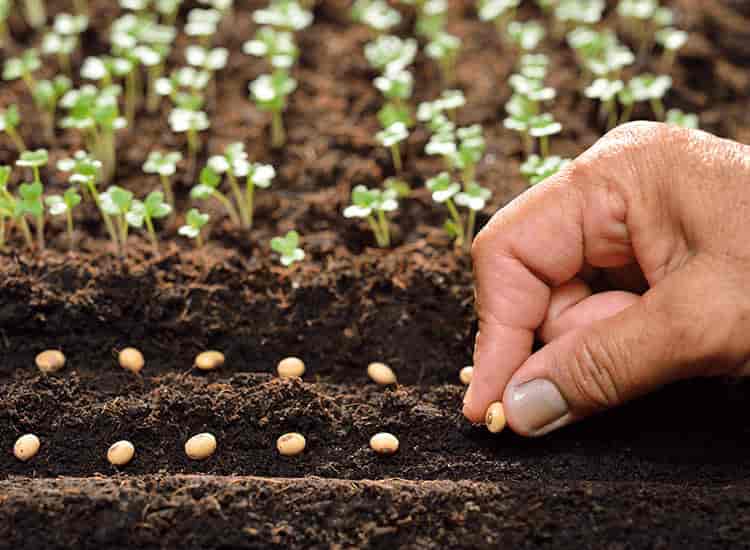
Benefits of Natural Tea Seed Meal for Fertilizer
1. Provides Plant-Based Organic Matter
One of the main advantages of Tea Seed Meal is its plant-based organic material.
Organic materials added to agricultural soils can contribute carbon-containing material that participates in soil biological and physical processes. Tea Seed Meal therefore has potential as one component of an organic fertilizer or soil-amendment formulation.
However, the actual effect on soil organic matter depends on application rate, soil characteristics, decomposition conditions, and the composition of the Tea Seed Meal.
2. Supports Agricultural Resource Recycling
Tea Seed Meal is produced as a by-product of tea seed oil extraction. Using it in agriculture can provide a way to recover value from material that might otherwise require disposal or lower-value utilization.
A 2025 review highlights the importance of utilizing Camellia oleifera seed meal because it is generated in substantial quantities during tea oil production and contains valuable bioactive compounds.
Using Tea Seed Meal as an agricultural input can therefore contribute to a circular approach in which plant-derived processing residues are returned to productive applications.
3. Contains Natural Tea Saponins
Tea Seed Meal naturally contains tea saponins, which are among its most distinctive components.
Tea saponins have surfactant properties because their molecular structure contains both hydrophilic and hydrophobic portions. Research has investigated their ability to interact with soil contaminants and influence the availability of certain compounds in soil.
This makes Tea Seed Meal potentially useful in specialized agricultural formulations where the properties of tea saponins are desirable.
4. Can Be Used in Organic Fertilizer Formulations
Natural Tea Seed Meal can be incorporated into formulations containing other organic materials.
For example, fertilizer manufacturers may combine Tea Seed Meal with composted plant materials, other agricultural by-products, mineral nutrients, or additional organic fertilizer components.
The advantage of this approach is that Tea Seed Meal does not have to function as the sole nutrient source. Instead, it can be used as one component of a broader fertilizer formulation designed to provide organic matter and nutrients from multiple sources.
5. Potential Soil-Management Applications
Tea Seed Meal and its naturally occurring saponins have potential applications beyond conventional fertilizer use.
Research on tea saponins has their role in soil remediation, including leaching remediation, phytoremediation, and microbial remediation. Tea saponins have been reported to increase the bioavailability of certain contaminants under controlled remediation conditions.
These applications are specialized and should not be confused with routine fertilizer use. Soil type, contaminant, crop, application rate, and environmental conditions all influence the outcome.
6. Can Support Sustainable By-Product Utilization
Using Tea Seed Meal in agriculture provides an additional pathway for utilizing the residue generated during Camellia oleifera oil production.
Instead of treating the seed meal solely as a processing waste, manufacturers can develop it into agricultural inputs, soil amendments, compost ingredients, or other value-added products.
This approach is consistent with the broader goal of improving resource efficiency and increasing the value obtained from agricultural processing by-products.
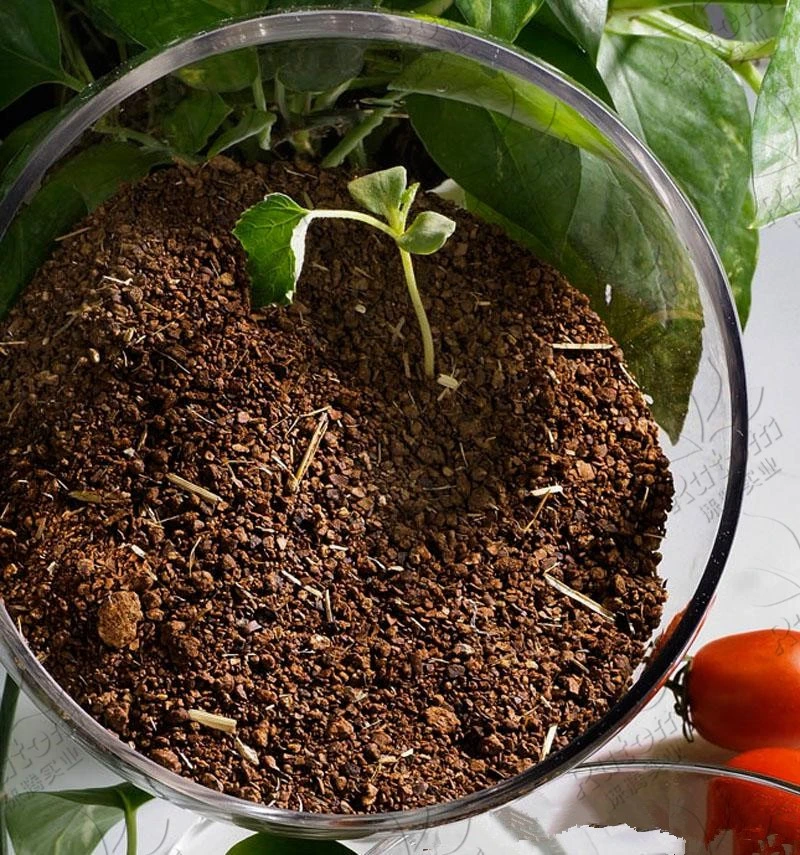
Applications of Natural Tea Seed Meal for Fertilizer
Organic Fertilizer
Tea Seed Meal can be used as an ingredient in organic fertilizer formulations.
Because its nutrient profile is not necessarily sufficient to meet all crop requirements, it is often more appropriate to combine it with other nutrient sources.
A properly formulated organic fertilizer may use Tea Seed Meal alongside compost, plant residues, mineral nutrients, or other approved fertilizer materials.
Soil Amendment
Tea Seed Meal may also be used as a soil amendment where its organic material and other natural components are desired.
Application should be based on soil testing, product specifications, crop requirements, and local agricultural recommendations.
Composting
Tea Seed Meal can be incorporated into composting systems together with other organic materials.
Its plant-derived composition makes it suitable for consideration as a feedstock or supplementary material, although the appropriate proportion should be determined according to the overall composting mixture and process conditions.
Agricultural Soil Management
Tea Seed Meal can be considered for specialized soil-management products where the properties of its naturally occurring saponins are useful.
Tea saponins have been studied as natural surfactants for soil remediation. Research has reported their use in experimental approaches involving contaminated soils, including enhanced leaching and phytoremediation.
Such applications require controlled evaluation and should not be presented as a universal treatment for agricultural soils.
Tea Seed Meal vs. Tea Saponin Powder
Tea Seed Meal and Tea Saponin Powder are related but different products.
Tea Seed Meal is the relatively less-processed seed residue remaining after oil extraction. It contains a mixture of organic matter and naturally occurring compounds.
Tea Saponin Powder is a more concentrated product obtained by extracting and processing tea saponins from materials such as Camellia oleifera seed meal.
The RSC review describes Camellia oleifera seed meal as the principal source of tea saponins and discusses extraction and purification processes used to produce tea saponin products.
Therefore, Tea Seed Meal may be more suitable when a bulk plant-based agricultural material is desired, while Tea Saponin Powder may be preferable when a standardized saponin concentration is required.

Important Quality Factors
Before purchasing Natural Tea Seed Meal for fertilizer production, buyers should evaluate several quality parameters.
Saponin Content
Saponin concentration can vary according to seed source, cultivation conditions, processing method, and oil-extraction process.
A consistent specification helps fertilizer manufacturers develop more predictable formulations.
Organic Matter
Organic matter is an important characteristic when Tea Seed Meal is intended for soil-amendment or organic fertilizer applications.
Moisture
Moisture can influence storage stability, handling, microbial growth, and product shelf life.
Nutrient Profile
Manufacturers should test nitrogen, phosphorus, potassium, and other relevant nutrients rather than assuming a fixed nutrient composition.
Heavy Metals and Contaminants
Agricultural products should be evaluated for relevant contaminants according to the regulations and requirements of the intended market.
Particle Size
Particle size can affect blending, transportation, application, and decomposition. A consistent particle size can be especially useful for commercial fertilizer manufacturing.

How to Use Tea Seed Meal in Fertilizer
There is no single application rate that is appropriate for every crop or soil.
The appropriate amount depends on:
- Soil condition
- Crop species
- Product composition
- Saponin concentration
- Organic matter content
- Nutrient requirements
- Application method
- Climate and moisture
- Other fertilizer inputs
Because Tea Seed Meal contains biologically active saponins, excessive application may not always produce better results. Tea saponin research has shown that biological effects can depend strongly on concentration and environmental conditions.
For this reason, small-scale crop trials are recommended before large-scale application.

Precautions When Using Tea Seed Meal
Natural does not automatically mean that an agricultural material can be applied at unlimited rates.
Tea Seed Meal contains tea saponins, which have biological activity. In addition to their potential agricultural applications, saponins can affect organisms under certain concentrations and conditions.
Recent research on Camellia oleifera meal has also emphasized that its saponin content needs to be considered when determining appropriate utilization pathways.
For agricultural use, manufacturers and growers should therefore:
- Follow the product specification.
- Test the product before large-scale use.
- Consider crop sensitivity.
- Avoid excessive use.
- Evaluate soil conditions.
- Follow local fertilizer regulations.
- Conduct field trials where appropriate.

Why Choose Natural Tea Seed Meal for Fertilizer?
Natural Tea Seed Meal offers several advantages for fertilizer and agricultural input manufacturers.
It is:
- Plant-derived
- A by-product of tea seed oil production
- A source of organic material
- Naturally rich in tea saponins
- Suitable for certain organic fertilizer formulations
- Useful for soil-management applications
- Available as a bulk agricultural raw material
- Relevant to circular agricultural production
Its greatest value is not necessarily as a standalone fertilizer but as a versatile plant-based raw material that can be incorporated into appropriately designed agricultural products.
Conclusion
Natural Tea Seed Meal is a useful agricultural by-product with potential applications in fertilizer, soil amendments, composting, and specialized soil-management products.
Its organic material and naturally occurring tea saponins make it particularly interesting for manufacturers developing plant-based agricultural inputs. Scientific literature confirms that Camellia oleifera seed meal is an important source of tea saponins and that tea saponins have been investigated for their surfactant and soil-remediation properties.
However, Tea Seed Meal should not automatically be treated as a complete NPK fertilizer. Its performance depends on its chemical composition, application rate, soil conditions, crop species, and overall fertilizer program.
For fertilizer manufacturers and bulk agricultural buyers, selecting a consistent Tea Seed Meal supplier and obtaining detailed specifications can help ensure better formulation and application results.
References
Yu, X.-L., & He, Y. (2018). Tea saponins: effective natural surfactants beneficial for soil remediation, from preparation to application. RSC Advances, 8 , 24312–24321. DOI: 10.1039/C8RA02859A.
Zhang, J., Liu, J., Wang, J., et al. (2025). Advances in Camellia oleifera seed meal Saponins: Extraction, analysis, bioactivity, and application. Food Chemistry, 492 , 145277. DOI: 10.1016/j.foodchem.2025.145277.
Tea (Camellia oleifera) Seeds: Use of Tea Seeds in Human Health. Nuts and Seeds in Health and Disease Prevention , 2nd Edition. The review discusses the use of defatted tea seed cake in fertilizer and other agricultural applications.
Cui, Y., et al. (2026). Transforming Camellia oleifera meal into feedstuff: Enhancing value through detoxification and fermentation. Bioresource Technology, 441 , 133578. DOI: 10.1016/j.biortech.2025.133578.
Substituting Chemical by Organic Fertilizer Improves Soil Quality, Regulates the Soil Microbiota and Increases Yields in Camellia oleifera. Microorganisms , 2025, 13(11), 2509.
FAQ
A1: Natural Tea Seed Meal is the solid residue left after oil is extracted from Camellia oleifera seeds. Also known as tea seed cake or tea seed meal, it contains plant-based organic matter and naturally occurring compounds such as tea saponins, proteins, and polysaccharides .
A2: Tea Seed Meal can be used as a fertilizer material, organic fertilizer ingredient, or soil amendment , but it should not automatically be considered a complete replacement for balanced NPK fertilizer. Its agricultural value depends on its nutrient profile, organic matter, saponin concentration, moisture, and processing characteristics.
Q3: What are the benefits of Tea Seed Meal for fertilizer?
A3: Natural Tea Seed Meal can provide plant-based organic material , support agricultural by-product recycling, contribute tea saponins to formulations, and serve as an ingredient in organic fertilizer, soil-amendment, composting, and specialized soil-management products.
Q4: What is tea saponin in Tea Seed Meal?
A4: Tea saponins are naturally occurring compounds found in Camellia oleifera seed meal. They have surfactant properties and have been studied for various agricultural and soil-management applications, including experimental soil-remediation approaches.
Q5: Can Tea Seed Meal be used in organic fertilizer formulations?
A5: Yes. Tea Seed Meal can be incorporated into organic fertilizer formulations together with compost, plant-derived materials, mineral nutrients, and other approved fertilizer ingredients . Its role should be determined according to the overall formulation and nutrient requirements.
Q6: Can Tea Seed Meal be used as a soil amendment?
A6: Yes. Tea Seed Meal may be used as a soil amendment when its organic material and naturally occurring compounds are appropriate for the intended application. The application rate should be determined based on soil conditions, crop requirements, product specifications, and local agricultural recommendations .
Q7: Can Tea Seed Meal be used for composting?
A7: Yes. Tea Seed Meal can be considered as a plant-derived material for composting and may be combined with other organic materials. The appropriate proportion should depend on the overall compost mixture, moisture, decomposition conditions, and composting process.
Q8: Can Tea Seed Meal help with soil management?
A8: Tea Seed Meal has potential for specialized soil-management applications because it naturally contains tea saponins. Tea saponins have been researched for their surfactant properties and use in experimental soil-remediation methods. Results depend on soil type, application rate, target compounds, crop, and environmental conditions.
Q9: Is Tea Seed Meal a complete NPK fertilizer?
A9: No. Tea Seed Meal should not automatically be treated as a complete NPK fertilizer. Its nitrogen, phosphorus, potassium, organic matter, and other components can vary according to the raw material and processing method. Fertilizer manufacturers should evaluate the certificate of analysis and nutrient profile before formulation.
Q10: What is the difference between Tea Seed Meal and Tea Saponin Powder?
A10: Tea Seed Meal is the relatively less-processed residue remaining after oil extraction and contains a mixture of organic matter and naturally occurring compounds. Tea Saponin Powder is a more concentrated product obtained through extraction and processing of tea saponins. is required.