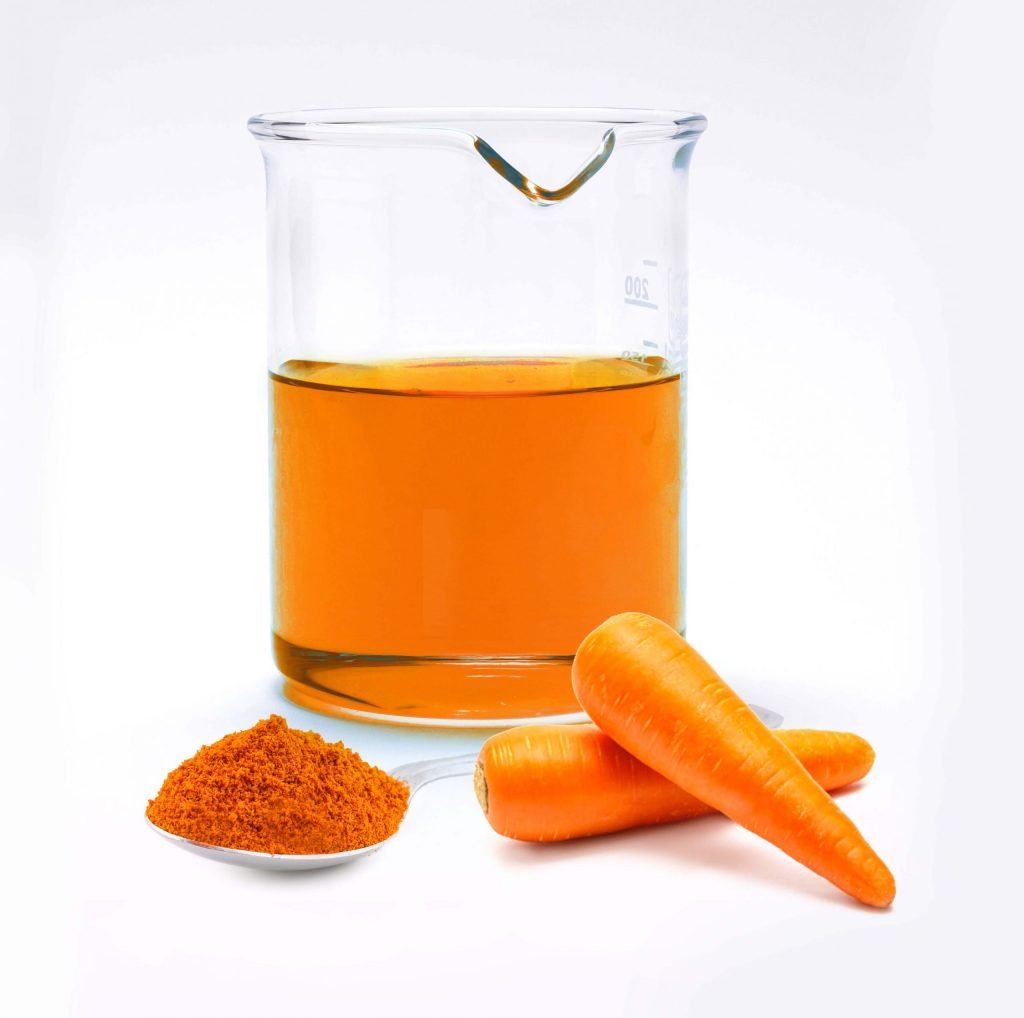
The pet food industry continues to develop new functional ingredients that can support complete nutrition and meet growing consumer interest in natural and plant-derived ingredients. Natural Carotene Powder for Cat Food is one ingredient being considered for use in functional cat food, treats, and nutritional formulations.
Carotene belongs to the carotenoid family of naturally occurring pigments found in plants and other biological materials. Beta-carotene is one of the best-known carotenoids and is widely studied for its antioxidant properties.
However, cats have unique nutritional requirements that make carotene formulation different from dog nutrition. In particular, cats require preformed vitamin A because their ability to convert beta-carotene into vitamin A is extremely limited and insufficient to meet their vitamin A requirement.
Therefore, Natural Carotene Powder should be considered a functional carotenoid ingredient, not a replacement for the preformed vitamin A required in a complete cat food.
What Is Natural Carotene Powder?
Natural Carotene Powder is a powdered ingredient containing naturally derived carotenoids, depending on the raw material and manufacturing process. Beta-carotene may be one of the principal carotenoids in products marketed as carotene powder.
Carotenoids are responsible for many of the yellow, orange, and red colors naturally found in plants. They are also studied for their biological activities, particularly their antioxidant properties.
For pet food manufacturers, carotene ingredients may be incorporated into:
- Dry cat food
- Wet cat food
- Cat treats
- Functional cat snacks
- Pet supplements
- Antioxidant blends
- Premium cat food formulations
The specific nutritional function depends on the carotenoid composition, concentration, stability, and overall formulation.
Why Use Carotene Powder in Cat Food?
One of the main reasons manufacturers consider carotenoids for cat food is their potential contribution to antioxidant nutrition.
Cats naturally have antioxidant defense systems, but dietary antioxidant ingredients can be incorporated into formulations as part of a broader nutritional strategy.
A controlled study in dogs and cats evaluated diets containing vitamin E, vitamin C, and beta-carotene. The antioxidant-enriched diets improved antioxidant status and measures of cellular protection compared with the control diet in the study.
This research suggests that beta-carotene can be considered as part of a broader antioxidant formulation for companion animals.

Natural Carotene Powder and Antioxidant Support
Oxidation is a normal biological process that produces reactive molecules. The body uses multiple antioxidant mechanisms to maintain balance.
Carotenoids such as beta-carotene have been investigated because of their ability to interact with reactive oxygen species and participate in antioxidant systems.
Research specifically involving cats has also explored dietary beta-carotene. A study of cats with renal insufficiency found that supplementation with a combination of vitamins E and C and beta-carotene reduced certain measures of oxidative damage.
These findings do not mean that carotene is a treatment for kidney disease. Rather, they demonstrate why carotenoids are being investigated as components of antioxidant nutrition.
For commercial cat food, carotene is best considered as one part of a balanced antioxidant system rather than a standalone solution.
Can Cats Convert Beta-Carotene Into Vitamin A?
This is one of the most important considerations when using Carotene Powder in cat food.
Traditional veterinary nutrition guidance has generally stated that cats cannot rely on beta-carotene to satisfy their vitamin A requirement because of limited conversion capacity. Merck Veterinary Manual therefore emphasizes that cats require a preformed dietary source of vitamin A.
Interestingly, controlled research has detected conversion of labeled beta-carotene into retinol in domestic cats, but the conversion was very limited. The researchers concluded that this pathway is unlikely to provide enough vitamin A to meet the cat's requirement without preformed vitamin A in the diet.
Therefore, manufacturers should not formulate cat food on the assumption that beta-carotene can replace vitamin A.
Natural Carotene Powder vs. Vitamin A in Cat Food
Carotene and vitamin A have different nutritional roles in cats.
| Ingredient | Primary consideration in cats |
|---|---|
| Natural carotene | Carotenoid ingredient that may contribute to antioxidant nutrition |
| Beta-carotene | Limited conversion to retinol; should not be relied upon as the primary vitamin A source |
| Preformed vitamin A | Essential dietary nutrient for cats |
| Vitamin E | Important antioxidant nutrient commonly used in complete diets |
| Vitamin C | Can be included as part of antioxidant formulations |
A complete and balanced cat food must provide the nutrients required by cats at appropriate levels. Merck Veterinary Manual notes that cats have specific nutritional requirements that differ from dogs, including dietary vitamin A, taurine, and arachidonic acid.
Potential Benefits of Natural Carotene Powder for Cats
1. Antioxidant Function
The primary potential benefit of beta-carotene in cat food is its role as a carotenoid with antioxidant properties.
When included as part of a carefully formulated antioxidant system, beta-carotene may contribute to the overall antioxidant capacity of the diet.
A study involving cats and dogs found that an antioxidant blend containing beta-carotene, vitamin C, and vitamin E improved antioxidant status and measures of cellular protection.
2. Supports Functional Cat Food Formulation
Natural carotene can be incorporated into functional cat food products designed around nutritional support beyond basic macronutrient requirements.
Potential applications include:
- Premium cat food
- Senior cat formulas
- Functional dry food
- Wet food
- Cat treats
- Nutritional supplements
- Antioxidant formulations
The intended nutritional function should always be supported by appropriate formulation and testing.
3. Provides a Natural Carotenoid Ingredient
For manufacturers developing products positioned around naturally sourced ingredients, Natural Carotene Powder can provide a plant-derived carotenoid option.
Its natural origin may be attractive for brands developing clean-label or naturally positioned pet food products, although the exact regulatory and labeling requirements depend on the market and ingredient specification.
4. Can Be Used in Antioxidant Blends
Carotene does not need to be used alone.
It can be formulated alongside other nutritional antioxidants, such as vitamin E and vitamin C, depending on the product design.
Research in companion animals has specifically evaluated antioxidant combinations containing beta-carotene, vitamin C, and vitamin E.

Natural Carotene Powder for Kitten Food
Kittens have particularly demanding nutritional requirements because they are growing rapidly.
A kitten food formulation must provide adequate energy, protein, amino acids, vitamins, minerals, and other essential nutrients.
Carotene can be considered as part of a functional formulation, but it should not replace essential nutrients required for growth.
Research in kittens has investigated diets containing beta-carotene together with vitamin E and other functional ingredients. In one 28-week study, the test diet containing beta-carotene, vitamin E, nucleotides, and prebiotic ingredients was associated with differences in vaccine antibody responses, while the kittens remained healthy and showed no measured adverse health effects.
Because the study used a combination of ingredients, the results should not be attributed to beta-carotene alone.

Natural Carotene Powder for Senior Cat Food
Senior cats are another potential target for functional nutritional products.
As cats age, manufacturers may develop diets containing combinations of highly digestible nutrients, antioxidants, fatty acids, vitamins, minerals, and other functional ingredients.
Natural Carotene Powder may be included as part of an antioxidant formulation designed for senior pet food.
However, manufacturers should avoid making disease-treatment claims unless the finished product has appropriate evidence and regulatory authorization.

Applications of Carotene Powder in Cat Food
Natural Carotene Powder can potentially be used in several product categories.
Dry Cat Food
Carotene Powder can be incorporated into dry kibble formulations through appropriate premix or coating processes.
Manufacturers should evaluate:
- Heat exposure
- Oxygen exposure
- Moisture
- Processing conditions
- Mixing uniformity
- Storage stability
Because carotenoids can be sensitive to oxidation and processing conditions, stability testing is important.
Wet Cat Food
Carotene can also be evaluated for use in canned or pouch-based cat food.
The formulation should be tested for stability during processing and throughout the intended shelf life.
Cat Treats
Functional cat treats are another potential application.
Carotene can be combined with other nutritional ingredients in treats positioned around antioxidant or general wellness nutrition.
Cat Supplements
Powdered carotene ingredients may also be used in supplement formulations.
The amount supplied by the supplement must be considered alongside the cat's complete daily diet.

Natural Carotene Powder and Cat Immune Nutrition
The immune system depends on adequate nutrition, including sufficient vitamins, minerals, amino acids, and other nutrients.
Antioxidants can contribute to nutritional strategies designed to support normal cellular protection.
Some research has investigated beta-carotene in combination with other nutrients in cats. For example, a kitten study evaluating a combination of beta-carotene, vitamin E, nucleotides, and prebiotics reported differences in antibody responses following vaccination.
However, because multiple ingredients were used together, the results should not be interpreted as evidence that beta-carotene alone improves immunity.
For commercial products, it is better to describe carotene as part of a balanced nutritional and antioxidant formulation.
How to Use Carotene Powder in Cat Food
There is no universal inclusion rate for every Natural Carotene Powder product.
The appropriate level depends on:
- Carotene concentration
- Specific carotenoid composition
- Product type
- Cat life stage
- Complete diet formulation
- Other antioxidant ingredients
- Processing conditions
- Applicable regulations
Manufacturers should calculate the contribution of the carotene ingredient to the complete diet rather than selecting a dosage independently.
For example, a powder containing a high concentration of beta-carotene will require a different inclusion rate from a low-concentration carotenoid premix.

Quality Considerations for Natural Carotene Powder
When purchasing carotene for commercial cat food production, manufacturers should evaluate several quality parameters.
Carotenoid Concentration
The active carotenoid content should be clearly specified.
Purity
The supplier should provide information about the purity and composition of the ingredient.
Stability
Carotenoids can be affected by:
- Oxygen
- Light
- Heat
- Moisture
- Processing
Appropriate packaging and antioxidant protection may help maintain quality during storage.
Solubility and Dispersion
The physical form of the powder should be compatible with the intended cat food manufacturing process.
Certificate of Analysis
A COA should ideally provide information such as:
- Active ingredient content
- Moisture
- Heavy metals
- Microbiological parameters
- Physical characteristics
- Batch number
Regulatory Compliance
Pet food ingredients must meet the regulatory requirements of the intended market. Manufacturers should verify whether a particular carotene ingredient is approved or permitted for the intended use and species.
Natural Carotene Powder vs. Synthetic Carotene
Both natural and synthetic carotenoids are available commercially.
Natural carotene ingredients may be obtained from plant or other biological sources, while synthetic carotenoids are produced through controlled manufacturing processes.
The two types can differ in:
- Source
- Isomer profile
- Purity
- Stability
- Color characteristics
- Bioavailability
- Cost
- Regulatory status
For manufacturers targeting natural or plant-derived pet food products, Natural Carotene Powder may provide an attractive ingredient option.
However, "natural" should not be treated as a substitute for quality testing. The final ingredient should still be evaluated for purity, stability, consistency, and regulatory compliance.

Important Formulation Considerations for Cats
Cat food formulation requires particular attention because cats have several species-specific nutritional requirements.
Cats require dietary sources of nutrients such as:
- Preformed vitamin A
- Taurine
- Arachidonic acid
- Essential amino acids
Appropriate levels of protein and other nutrients
Merck Veterinary Manual emphasizes that cats should receive a complete and balanced diet formulated specifically for their nutritional requirements.
Therefore, adding Natural Carotene Powder to a cat food formulation should complement-not replace-the essential nutrients required by cats.
Safety and Dosage Considerations
The safety of an ingredient depends on its identity, purity, concentration, intended use, and total dietary exposure.
Manufacturers should avoid treating carotene as a direct substitute for vitamin A.
While beta-carotene itself has not been associated with the same toxicity concerns as excessive preformed vitamin A, the overall formulation still needs to be evaluated carefully. Merck Veterinary Manual notes that indiscriminate supplementation of nutrients to an already complete and balanced pet food should be approached carefully.
Before commercial production, manufacturers should conduct appropriate:
- Stability testing
- Homogeneity testing
- Palatability evaluation
- Nutritional analysis
- Shelf-life testing
Species-specific formulation review
Why Choose Natural Carotene Powder for Cat Food?
For pet food manufacturers, Natural Carotene Powder can offer several potential formulation advantages:
- Plant-derived carotenoid ingredient
- Suitable for functional pet food development
- Antioxidant-related nutritional applications
- Compatible with dry and wet food concepts
- Potential use in treats and supplements
- Suitable for customized formulations
- Can complement broader antioxidant systems
Its strongest application is as a functional carotenoid ingredient, rather than as a replacement for essential vitamin A.
Conclusion
Natural Carotene Powder can be a useful ingredient for modern cat food formulations, particularly when used as part of an antioxidant and functional nutrition strategy.
Beta-carotene and other carotenoids are widely studied for their antioxidant properties, and research in cats has investigated carotenoids both individually and as part of broader antioxidant combinations.
However, an important nutritional distinction must be maintained: cats should receive preformed vitamin A in their diet because beta-carotene conversion is too limited to meet their vitamin A requirement.
For manufacturers developing premium cat food, kitten food, senior cat formulas, treats, or supplements, Natural Carotene Powder can therefore be considered a complementary functional ingredient.
The best results come from using a standardized carotene ingredient with reliable purity, appropriate stability, consistent batch quality, and a formulation designed specifically for feline nutritional requirements.
References
Merck Veterinary Manual. Nutritional Requirements of Small Animals.
Green, A. S., et al. Domestic cats convert [2H8]-β-carotene to [2H4]-retinol following a single oral dose. Journal of Animal Physiology and Animal Nutrition.
Yu, S., & Paetau-Robinson, I. Dietary supplements of vitamins E and C and beta-carotene reduce oxidative stress in cats with renal insufficiency. Veterinary Research Communications.
Effect of dietary antioxidants on free radical damage in dogs and cats. Journal of Animal Science.
Dietary Supplementation with Nucleotides, Short-Chain Fructooligosaccharides, Xylooligosaccharides, Beta-Carotene and Vitamin E Influences Immune Function in Kittens. Journal of Animal Science.
FAQ
A1: Natural Carotene Powder is a powdered ingredient containing naturally derived carotenoids. Depending on the raw material and manufacturing process, beta-carotene may be one of the principal carotenoids. It can be used in cat food, treats, supplements, and functional pet food formulations.
Q2: What are the benefits of Natural Carotene Powder for cats?
A2: Natural Carotene Powder may provide antioxidant-related nutritional benefits and can be used as part of a broader functional nutrition strategy. Its potential function depends on the carotenoid composition, concentration, stability, and overall formulation.
Q3: Can cats convert beta-carotene into vitamin A?
A3: Cats have extremely limited ability to convert beta-carotene into vitamin A. Although research has detected limited conversion into retinol, this pathway is not sufficient to meet the cat's vitamin A requirement. Therefore, cats require a preformed dietary source of vitamin A.
Q4: Can Natural Carotene Powder replace vitamin A in cat food?
A4: No. Natural Carotene Powder should be considered a functional carotenoid ingredient rather than a replacement for preformed vitamin A. Complete cat food must provide an appropriate dietary source of preformed vitamin A.
Q5: Does Natural Carotene Powder provide antioxidant support for cats?
A5: Carotenoids such as beta-carotene are studied for their antioxidant properties. Natural Carotene Powder can be included as part of a broader antioxidant system, potentially alongside nutrients such as vitamin E and vitamin C.
Q6: Can Natural Carotene Powder be used in dry cat food?
A6: Yes. Natural Carotene Powder can potentially be incorporated into dry cat food through suitable premix or coating processes. Manufacturers should evaluate heat, oxygen, moisture, processing conditions, mixing uniformity, and storage stability.
Q7: Can Natural Carotene Powder be used in wet cat food?
A7: Yes. It can be evaluated for use in canned or pouch-based cat food. Stability should be tested during processing and throughout the intended shelf life to help ensure consistent ingredient quality.
Q8: Can Natural Carotene Powder be used in cat treats?
A8: Yes. Carotene can be incorporated into functional cat treats and combined with other nutritional ingredients as part of antioxidant or general wellness formulations.
Q9: Can Natural Carotene Powder be used in cat supplements?
A9: Yes. Powdered carotene ingredients may be used in supplement formulations. The amount supplied by the supplement should be considered together with the cat's complete daily diet.
Q10: Can Natural Carotene Powder be used for kitten food?
A10: Yes, carotene can be considered as part of a functional kitten food formulation. However, kittens have demanding nutritional requirements for growth, so carotene should complement rather than replace essential nutrients.