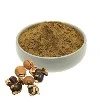
New agriculture must meet the twin challenge of increasing productivity for the sake of housing more people as well as minimizing environmental degradation caused by the use of chemical inputs. Chemical inputs, pesticides, and herbicides are efficient but have high environmental costs like soil erosion, water pollution, and loss of biological diversity. Agriculturists and researchers have thus turned their focus towards the use of natural plant-based options that appear to be promising for sustainable means. Of these, tea saponin, a natural extract of tea seed (Camellia sinensis) or Camellia oleifera), is being used as a multi-purpose bio-based farm input.
Tea saponin is a biodegradable, pest-resistant, soil-conditioning, and surface-active substance that is found naturally, which can be employed as an environmentally friendly agent in integrated agroecosystems. Such blog entries discuss how tea saponin facilitates greener agriculture by enhancing the health of soils, pests control, and eco-friendly crop yields.

What is Tea Saponin?
Tea saponin is a glycoside that occurs naturally in tea seeds. It possesses excellent foaming, emulsifying, and biodegradability properties. Its traditional application in detergents, aquaculture, and cosmetics, it is now increasingly targeting to occupy a niche in agriculture by virtue of its insecticide, soil ameliorating, and plant-protective properties.
In contrast to agrochemicals, which are chemical-based, tea saponin will readily biodegrade in the environment, reducing the problem of water, plant, or soil residues lasting. Its biodegradable character also qualifies it as a good option for greener agriculture.

Benefits of Tea Saponin in Greener Agriculture
1. Organic Pest and Disease Control
Tea saponin is also insecticidal, molluscicidal, and antifungal. Tea saponin has been utilized to control nematodes, fungal diseases, and insect pests without harming other beneficial organisms. Therefore, it can be a good alternative to chemical pesticides.
Prevents soil-borne diseases like Fusarium and Rhizoctonia.
Repels and breaks the life cycle of plant-parasitic nematodes.
Reduces reliance on chemical pesticides and reduces environmental risks.
2. Improvement of Soil Health
Soil erosion is a significant problem with conventional farming. Tea saponin helps to create healthier soils in a number of ways:
- Increases microbial action in the soil, activating useful microbes.
- Increases decomposition of organic material and nutrient cycling.
- Decreases soil compaction, enabling easier root penetration and aeration.
All these factors make tea saponin a valuable soil remedy for poisoned or chemically stressed land.
3. Eco-Friendly Fertilizer Enhancer
Tea saponin is blended with organic manures to improve the nutrient and uptake efficiency. Tea saponin is also employed as a surfactant for enhanced solubilization and accessibility of nutrients to plants and their uptake.
- Enhances nitrogen use efficiency.
- Enhances crop yield and plant growth.
- Reduces leaching of nutrients and fertilizer loss.
4. Biodegradability and Environmental Safety
One of the most compelling arguments for tea saponin being used in sustainable agriculture is that it is fully biodegradable. Unlike synthetic pesticides chemicals, which persist in the environment, tea saponin breaks down into harmless components. This translates to safer soils, cleaner waterways, and reduced environmental effect.
5. Sustainable Crop Production
Tea saponin's dual benefit to soil health and pest suppression directly contributes to sustainable farm production. Improved soil and reduced pests mean healthier, more resilient plants with less external input needed. This is in line with global organic agriculture and integrated pest management (IPM) practices.

Uses of Tea Saponin in Agriculture
- Seed Treatment – Applied to seal seeds against fungal and bacterial infection during germination.
- Soil Conditioner – Applied directly in farms to improve microbial activity and soil stability.
- Natural Pesticide – Added into pest control systems to avoid insect and nematode infestation.
- Fertilizer Additive – Blended with organic or biofertilizers for addition of nutrient value and plant growth.
- Eco-Friendly Herbicide Adjunct – Used in some applications to inhibit weed growth without preventing biota in soil.

Why Tea Saponin is Important to Sustainable Farming
The transition to sustainable agriculture calls for efficient, effective, and environmentally friendly alternatives to chemical inputs. Tea saponin is one such transition in its triple whammy package: soil improvement, insect pest control, and fertilizer boost-of a renewable and biodegradable source.
Tea saponin users are part of the smaller pesticide residues, healthier soils, and more sustainable environments. As the planet greenifies, agriculture, tea saponin can be the foundation of natural agroecosystems.
Conclusion
Capitalizing on tea saponin's agricultural potential is not so much a new trend-it's a step towards ecological balance in agricultural ecosystems. By inducing soil biota, natural pest control, and minimizing chemical application, tea saponin opens up the path to sustainable agriculture that conforms to the demands of modern sustainability objectives. Its environmental friendly image makes it a valuable addition to farmers wanting to be productive and still environmentally conscious.
References
Huang, J., Ding, W., & Li, G. (2012). Biological activity of tea saponins and their application in agriculture. African Journal of Biotechnology, 11(87), 15348–15356.
Zhou, J., Chen, Y., & Xu, Y. (2018). Tea seed saponin: A natural surfactant with potential applications in agriculture. Journal of Cleaner Production, 195, 418–425.
Chen, L., Li, J., & Wu, Z. (2016). Effects of tea saponin on soil microbial community and enzyme activities. Applied Soil Ecology, 108, 1–8.
Zhang, Y., Sun, H., & Zhao, J. (2020). The role of plant-derived saponins in sustainable agriculture. Frontiers in Plant Science, 11, 566.
FAO. (2021). Sustainable Agriculture for Biodiversity and Food Security. Food and Agriculture Organization of the United Nations.