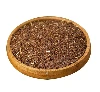
Modern agriculture is increasingly focused on improving soil quality, using natural resources efficiently, and developing fertilizer products with more sustainable ingredients. Tea Saponin is a plant-derived compound that has attracted interest for agricultural and soil-management applications because of its natural surface-active properties.
Tea saponins are naturally occurring compounds found in Camellia plants, with Camellia oleifera seed meal being one of the main commercial sources. Research describes tea saponins as natural non-ionic surfactants that have been investigated for soil remediation, nutrient-related applications, and other agricultural uses.
Although Tea Saponin is not a conventional NPK fertilizer, it can be used as a functional agricultural ingredient alongside fertilizers, soil amendments, and other crop-management products.
What Is Tea Saponin?
Tea Saponin is a group of naturally occurring triterpenoid saponins obtained from Camellia plants. Commercial tea saponin is commonly produced from Camellia oleifera seed meal, which is a by-product of tea oil extraction.
One of its most important characteristics is its surface activity. Tea saponins contain hydrophilic and hydrophobic portions, allowing them to interact with water and other substances at interfaces.
Because of this characteristic, Tea Saponin can be considered for agricultural products where wetting, dispersion, or interaction between an agricultural formulation and soil is important.
Potential applications include:
- Soil-management products
- Fertilizer additives
- Organic fertilizer formulations
- Soil conditioners
- Agricultural surfactants
- Soil remediation
- Crop production systems
- Customized agricultural formulations

Why Is Tea Saponin Important for Soil Management?
Soil is a complex environment containing minerals, organic matter, microorganisms, water, air, and plant roots. The interaction between these components can affect nutrient availability and the performance of agricultural inputs.
Tea Saponin is particularly interesting because its natural surfactant properties can influence interactions between substances in soil.
Research published in RSC Advances has investigated tea saponins in soil remediation and found that they can influence the availability and mobility of certain contaminants. The review specifically discusses applications involving leaching remediation, phytoremediation, and microbial remediation.
These findings do not mean that Tea Saponin automatically improves every agricultural soil. Instead, they demonstrate its potential as a natural functional ingredient for specialized soil-management applications.
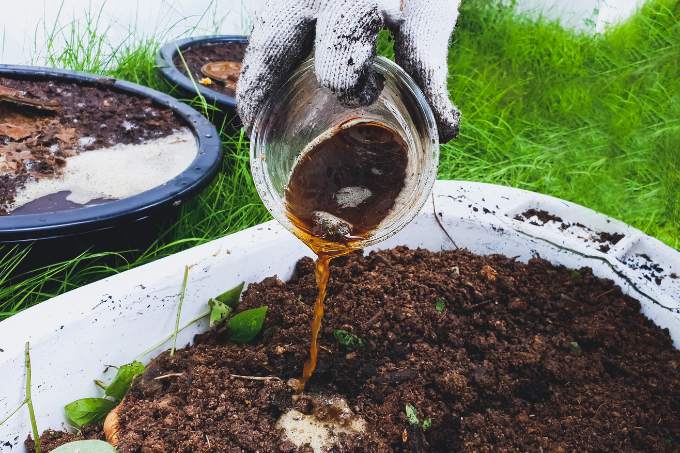
Benefits of Tea Saponin for Soil Management
1. Natural Surface-Active Properties
The most important characteristic of Tea Saponin is its natural surface activity.
Tea saponins can act as natural non-ionic surfactants. This property allows them to influence interactions between water, soil particles, organic substances, and other materials.
For agricultural formulations, this can make Tea Saponin useful where improved wetting or dispersion is desirable.
2. Supports Soil Remediation Research
Tea Saponin has been extensively studied in the context of contaminated-soil remediation.
Research indicates that tea saponins can help desorb certain heavy metals from soil and increase their bioavailability under specific experimental conditions. They have also been investigated in systems involving organic pollutants and microbial degradation.
This makes Tea Saponin particularly interesting for environmental agriculture and soil-restoration projects.
However, remediation applications are different from ordinary fertilizer applications and require controlled evaluation of soil type, contaminant, concentration, and environmental conditions.
3. Plant-Derived Agricultural Ingredient
Tea Saponin is derived from Camellia plant materials, making it attractive to manufacturers looking for plant-derived agricultural ingredients.
The use of Camellia oleifera seed meal as a source also creates an opportunity to add value to a by-product of tea oil production. Recent research highlights tea seed meal as a rich source of bioactive compounds, particularly tea saponins.
4. Can Complement Fertilizer Formulations
Tea Saponin can be incorporated into fertilizer products as a functional additive rather than being used as the primary nutrient source.
It may be evaluated alongside:
- NPK fertilizers
- Organic fertilizers
- Humic substances
- Compost
- Micronutrients
- Mineral fertilizers
- Plant extracts
- Soil conditioners
The objective is to combine the nutritional function of the fertilizer with the surface-active properties of Tea Saponin.
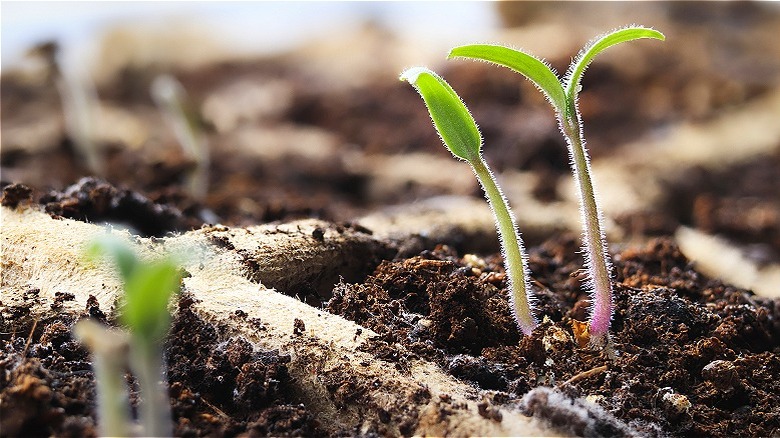
Tea Saponin in Fertilizer Applications
Tea Saponin can be considered for different types of fertilizer formulations.
Tea Saponin in NPK Fertilizer
NPK fertilizers supply nitrogen, phosphorus, and potassium. Tea Saponin does not replace these nutrients but can potentially serve as a supporting ingredient.
In fertilizer formulations, manufacturers may investigate Tea Saponin where improved wetting, dispersion, or interaction with soil is desired.
The actual performance will depend on:
- Fertilizer composition
- Soil type
- Moisture
- Tea saponin concentration
- Application method
- Crop species
Therefore, formulation trials are recommended before determining a commercial application rate.
Tea Saponin in Organic Fertilizer
Tea Saponin can also be considered in plant-based and organic fertilizer formulations.
It may be combined with materials such as:
- Compost
- Plant residues
- Humic substances
- Organic matter
- Mineral nutrients
- Botanical ingredients
Its use can help manufacturers develop multifunctional agricultural products that combine nutrient supply with additional functional properties.
Tea Saponin in Liquid Fertilizer
Because Tea Saponin has surface-active properties, it may be evaluated in liquid agricultural formulations.
For liquid products, manufacturers should pay particular attention to:
- Solubility
- Dispersion
- pH
- Foam formation
- Compatibility
- Storage stability
A laboratory compatibility test is recommended before commercial-scale production.
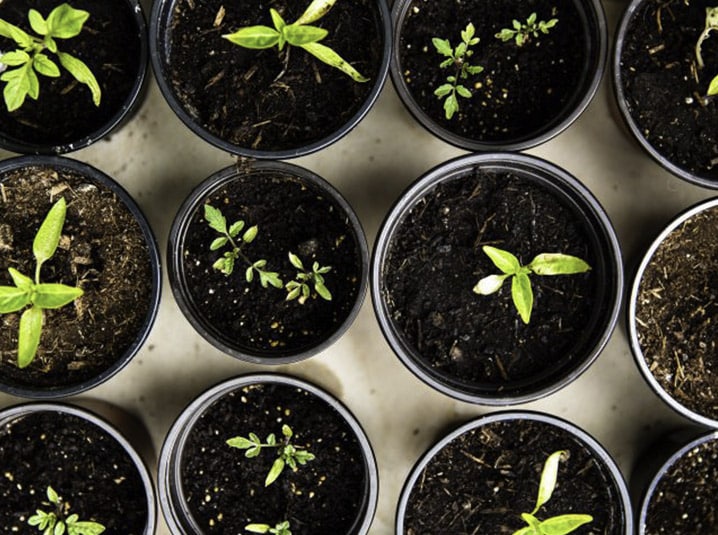
Tea Saponin for Soil Conditioning
Soil conditioning involves managing the physical, chemical, and biological characteristics of soil to create a more favorable environment for crops.
Tea Saponin is not a conventional soil conditioner in the same way as compost or humic substances. However, its surface-active properties make it interesting as a functional component in soil-management formulations.
It can potentially influence how water and other substances interact with soil particles.
When combined with other soil-management materials, Tea Saponin may therefore be considered for customized agricultural products.

Tea Saponin and Soil Microorganisms
Soil microorganisms play an important role in nutrient cycling, organic matter decomposition, and soil ecosystem processes.
Research involving tea-derived agricultural organic fertilizers has demonstrated that organic fertilizer treatments can influence soil physicochemical characteristics and microbial community structure.
Tea Saponin itself is biologically active, so its influence on microorganisms can depend on concentration and environmental conditions.
This is important because an agricultural formulation should not assume that increasing the concentration will always improve soil performance.
Crop-specific and soil-specific testing remains important.
Tea Saponin for Soil Remediation
One of the best-documented research areas for Tea Saponin is soil remediation.
Tea saponins have been investigated for three major remediation approaches:
1. Leaching Remediation
Tea Saponin can interact with soil contaminants and influence their mobility, making it a potential component of certain soil-washing or leaching strategies.
2. Phytoremediation
Tea Saponin has been investigated for its ability to increase the bioavailability of certain contaminants, potentially helping plants known as hyperaccumulators take up pollutants under controlled remediation conditions.
3. Microbial Remediation
Tea Saponin may also influence pollutant availability and microbial activity, which has been studied in connection with the degradation of certain organic pollutants.
These applications are promising research areas but should not be confused with routine crop fertilization.
Tea Saponin for Fertilizer Efficiency
Fertilizer efficiency depends on many factors, including nutrient form, soil chemistry, rainfall, irrigation, microbial activity, crop species, and application method.
Tea Saponin may be investigated as a formulation aid where improved contact between agricultural materials and soil is desired.
However, it would be inaccurate to claim that Tea Saponin universally increases fertilizer efficiency. Results can vary significantly depending on the fertilizer formulation and field conditions.
For commercial fertilizer manufacturers, controlled greenhouse and field trials are the best way to establish whether Tea Saponin provides a measurable benefit in a specific formulation.

Tea Saponin Applications in Agriculture
Tea Saponin has potential applications across several agricultural categories.
Soil Management
Tea Saponin can be used in research and product development involving soil conditioning, wetting, dispersion, and soil remediation.
Fertilizer Additives
It can be incorporated into selected fertilizer formulations as a natural functional additive.
Organic Agriculture Products
Tea Saponin can be considered for plant-derived fertilizer and soil-management products, subject to local regulatory requirements.
Soil Remediation Products
Its use in remediation research makes it relevant for specialized environmental-agriculture formulations.
Agricultural Surfactants
Tea Saponin's natural surface activity makes it suitable for investigation as a botanical or plant-derived surfactant.
Tea Saponin vs. Tea Seed Meal
Tea Saponin and Tea Seed Meal originate from related Camellia materials but are different products.
| Feature | Tea Saponin | Tea Seed Meal |
|---|---|---|
| Source | Extracted from Camellia materials | Residue from Camellia oleifera oil extraction |
| Saponin content | More concentrated and standardized | Naturally occurring and variable |
| Main function | Functional saponin ingredient | Plant-based organic material |
| Processing | Extracted and concentrated | Primarily processed seed residue |
| Fertilizer application | Additive/formulation ingredient | Organic fertilizer or soil input |
| Soil applications | Surfactant and remediation research | Organic soil management and agricultural use |
For manufacturers requiring a standardized saponin concentration, Tea Saponin Powder may be more suitable than raw Tea Seed Meal.

How to Choose Tea Saponin for Fertilizer
Quality and consistency are important when using Tea Saponin in commercial agricultural products.
Manufacturers should consider:
Saponin Content
The saponin percentage should be clearly specified and supported by testing.
Purity
A defined purity specification helps manufacturers achieve better batch-to-batch consistency.
Solubility
For liquid fertilizers and water-based products, solubility or dispersibility should be evaluated.
Moisture
Controlled moisture helps maintain powder quality during storage.
Particle Size
Particle size can affect mixing and dispersion in dry fertilizer formulations.
Heavy Metals and Microbiology
Agricultural products should meet appropriate specifications for contaminants and microbiological quality.
Certificate of Analysis
A reliable supplier should provide a Certificate of Analysis showing important quality parameters for each batch.

Application Rate and Formulation Considerations
There is no universal Tea Saponin dosage that applies to every fertilizer or soil.
The appropriate concentration depends on:
- Tea Saponin purity
- Target crop
- Soil characteristics
- Fertilizer composition
- Application method
- Climate
- Irrigation
- Intended function
Tea Saponin is biologically active, and research has shown that its effects can change with concentration. Therefore, higher concentrations should not automatically be assumed to provide better results.
Before commercial use, manufacturers should conduct:
- Compatibility testing
- Germination testing
- Root-growth testing
- Phytotoxicity testing
- Greenhouse trials
- Field trials
These tests can help establish a practical application range.

Is Tea Saponin Suitable for All Crops?
Not necessarily.
Crop species can respond differently to bioactive compounds, and soil conditions can substantially influence results.
Research on tea saponins has demonstrated useful soil-remediation effects but also emphasizes that application conditions, concentration, and soil characteristics need to be considered.
Therefore, manufacturers should avoid using a single application recommendation for all crops.
A better approach is to develop application guidelines based on the specific fertilizer formulation and target crop.
Advantages of Tea Saponin for Agricultural Product Manufacturers
Tea Saponin offers several characteristics that make it attractive for agricultural product development:
- Plant-derived ingredient
- Natural surfactant
- Derived from Camellia resources
- Suitable for customized formulations
- Potential soil-management applications
- Research interest in soil remediation
- Compatible with various agricultural formulation concepts
- Can add value to Camellia oleifera processing by-products
Its versatility makes it particularly interesting for manufacturers developing natural or multifunctional agricultural products.
Conclusion
Tea Saponin is a promising natural ingredient for soil management and fertilizer applications. Derived primarily from Camellia plants and especially Camellia oleifera seed meal, it has natural surface-active properties that have been extensively investigated in soil-related applications.
In fertilizer products, Tea Saponin can be explored as a functional additive rather than a replacement for essential nutrients such as nitrogen, phosphorus, and potassium. It may be incorporated into NPK fertilizers, organic fertilizer products, liquid formulations, soil conditioners, and specialized agricultural products.
Its strongest research foundation is currently in soil remediation, including leaching, phytoremediation, and microbial remediation.
For fertilizer manufacturers, the key to successful application is selecting a consistent Tea Saponin product and determining the appropriate concentration through laboratory, greenhouse, and field testing.
As demand for plant-derived and sustainable agricultural ingredients continues to grow, Tea Saponin offers an interesting option for developing natural fertilizer additives and advanced soil-management formulations.
References
Yu, X.-L., & He, Y. (2018). Tea saponins: effective natural surfactants beneficial for soil remediation, from preparation to application. RSC Advances, 8, 24312–24321.
Zhang et al. (2025). Advances in Camellia oleifera seed meal Saponins: Extraction, analysis, bioactivity, and application. Food Chemistry, 492, 145277.
Huang et al. (2023). Effects of tea oil camellia (Camellia oleifera Abel.) shell-based organic fertilizers on the physicochemical property and microbial community structure of the rhizosphere soil. Frontiers in Microbiology.
Cui et al. (2018). Triterpenoid saponins from the genus Camellia: structures, biological activities, and molecular simulation for structure–activity relationship. Food & Function.
FAQ
A1: Carotene Powder is a powdered ingredient containing carotenoid compounds, commonly including beta-carotene depending on the product specification and source. It can be used in pet food, treats, supplements, and other nutritional formulations as a carotenoid source, antioxidant-support ingredient, or natural color ingredient.
A2: Carotene Powder containing beta-carotene may support antioxidant nutrition and contribute to vitamin A nutrition in dogs. Beta-carotene can be converted into vitamin A in dogs, while carotenoids are also studied for their antioxidant properties. Its nutritional contribution depends on the specific carotenoid, concentration, and overall diet formulation.
Q3: Can dogs convert beta-carotene into vitamin A?
A3: Yes. Dogs can convert beta-carotene into vitamin A. However, the efficiency of conversion can vary depending on physiological and dietary factors. Therefore, Carotene Powder should be considered as part of a balanced nutritional formulation rather than automatically replacing all dietary vitamin A sources.
Q4: Can Carotene Powder be used in cat food?
A4: Yes, carotenoid ingredients may be incorporated into cat food, treats, and supplements. However, an important nutritional distinction must be considered: cats cannot convert beta-carotene into vitamin A. Therefore, beta-carotene should not be used as a replacement for preformed vitamin A in cat diets.
Q5: Why is beta-carotene different for cats and dogs?
A5: Dogs can utilize beta-carotene as a provitamin A source, whereas cats lack the intestinal enzyme needed to convert beta-carotene into vitamin A. Cats therefore require preformed vitamin A from their diet. This difference should be considered when developing products for dogs and cats.
Q6: Does Carotene Powder provide antioxidant support for pets?
A6: Carotenoids such as beta-carotene are widely studied for their antioxidant properties. Carotene Powder may therefore be included as part of a broader antioxidant formulation. Other nutrients, such as vitamin E and vitamin C, may also be used in combination depending on the nutritional objectives of the product.
Q7: Can Carotene Powder be used in pet food manufacturing?
A7: Yes. Carotene Powder can be considered for dry pet food, wet food formulations, treats, nutritional supplements, functional pet food, and other companion-animal products. Manufacturers should evaluate its concentration, stability, dispersion, compatibility, and intended nutritional function before use.
Q8: Can Carotene Powder be used in dog and cat treats?
A8: Yes. Carotenoid-containing ingredients can be incorporated into dog and cat treats as part of functional or nutritional formulations. The appropriate inclusion level depends on the carotenoid concentration, target species, total diet, product formulation, and applicable regulations.
A9: Yes. Carotene Powder may be used in powdered or formulated pet supplements. The appropriate amount depends on the specific carotenoid, product specification, target animal, life stage, and other vitamin and antioxidant sources in the complete diet.
Q10: Is Carotene Powder a source of vitamin A for cats?
A10: No. Beta-carotene cannot be converted into vitamin A by cats. Cat food formulations containing beta-carotene must still provide an appropriate source of preformed vitamin A to meet feline nutritional requirements.