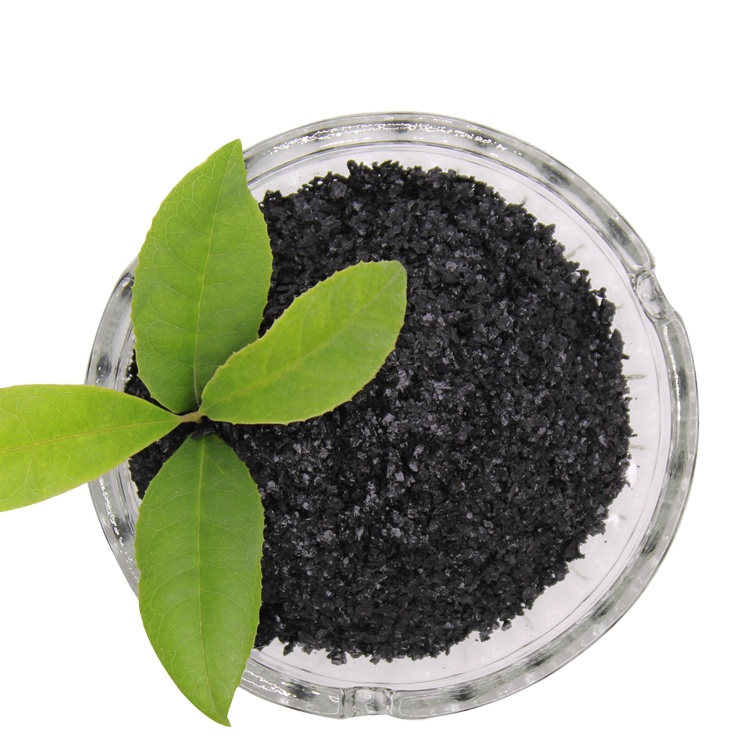
As global farming trends towards ever more sustainable and productive practices of cultivation, naturally occurring soil conditioners such as Potassium Humate flakes are gaining acceptance with rapid speed. Made from leonardite, a concentrate of humic substances, Potassium Humate is globally acclaimed to improve soil structure, increase nutrient uptake, and render crops more resilient.
In this post, we will discuss how Potassium Humate flakes enhance soil fertility and crop growth, why farmers prefer them today, and how you can successfully apply them in different agro systems.

What Is Potassium Humate Flakes?
Potassium Humate is potassium humate of humic acid, which is obtained from naturally occurring mineral leonardite of high humic content. It is typically produced as soluble flakes or granules for convenience.
High content of these flakes comprises:
- Humic acids (humus-forming compounds)
- Fulvic acids (low molecular weight compounds that enter the plant cells)
- Organic potassium
Potassium Humate is less water-soluble than natural humic acid, but sufficiently resistant to be of value in water for decades. Its good solubility makes it ideal for:
- Soil drenching
- Fertigation systems
- Foliar sprays

Major Benefits of Potassium Humate Flakes to Soil and Crop Well-being
1. Improves Soil Structure and Aeration
Potassium Humate helps retain soil particles in stable aggregates, which enhances:
- Soil porosity
- Water infiltration and retention
- Oxygen exchange
This is particularly useful in compacted, poor, or clay-rich soils, enabling roots to be more freely developed and enhancing microbial life.
2. Increases Nutrient Availability and Plant Absorption
Humic content of Potassium Humate:
- Chelates key nutrients such as calcium, iron, magnesium, and zinc
- Prevents leaching of nitrogen and phosphorus
- Enable quicker root uptake of nutrients
- This results in:
- Increased fertilizer efficiency
- Lower input cost
- Healthier, greener growth of plants
3. Stimulates Root Development
Fulvic and humic acids stimulate quicker root initiation and elongation, particularly in stressed or young plants. Strong root systems enable plants to:
- Reach deeper soil nutrients
- Be more drought- and salinity-resistant
- Establish sooner after transplanting
This is very useful in high-value crops such as vegetables, fruits, and ornamentals.
4. Stimulates Microbial Activity
Potassium Humate provides nutrition for beneficial soil microbes such as:
- Nitrogen-fixing bacteria (e.g., Rhizobium)
- Phosphate-solubilizing fungi
- Mycorrhizae
These microbes enhance nutrient cycling, produce growth-stimulating hormones, and inhibit soilborne diseases, leading to healthier and robust crops.
5. Enhances Plant Immunity and Stress Tolerance
Humic compounds facilitate plants to adapt to stress due to:
- Drought
- Salinity
- Extreme temperatures
- Toxicity due to pesticides
They induce synthesis of antioxidant enzymes, e.g., peroxidase and catalase, that enhance the ability of the plant to recover from environmental stress factors.
6. Enhances Seed Germination and Crop Yield
Experiments indicate that seed or young plant treatment with Potassium Humate:
- Grows germination
- Enhances uniformity of emergence
- Delivers increases to the market
All of which render it a worthwhile input for conventional as well as organic farmers who desire yield maximization in a sustainable way.

Scientific Evidence Supporting Potassium Humate in Agriculture
A certain amount of peer-reviewed science confirms the effectiveness of Potassium Humate:
- Chen et al. (2004) observed that humate-treated plants uptook 30% more phosphorus and 20% more nitrogen compared to controls.
- Muscolo et al. (2007) observed increased root biomass along with chlorophyll concentration in Potassium Humate-treated maize.
- Quilty & Cattle (2011) emphasized its function in replenishing organic matter in degraded soils to ensure long-term productivity.

Potassium Humate Compared to Other Soil Conditioners
| Property | Potassium Humate | Compost | Synthetic Chelates (e.g., EDTA) |
|---|---|---|---|
| Nutrient retention | Excellent | Moderate | Low |
| Water solubility | High | Low | High |
| Microbial support | Strong | Strong | None |
| Environmental safety | Very high | High | Low (synthetic origin) |
| Cost-effectiveness | High (per yield gain) | Moderate | Low (used in micro quantities) |
Potassium Humate provides a winning combination of solubility, nutrient delivery, and biological activity-making it a versatile tool for sustainable agriculture.

How to Use Potassium Humate Flakes in Agriculture
1. Application to Soil
Rate: 5–10 kg/hectare
Timing: Pre-planting or at early crop development
Method: Mix with water or mix with base fertilizers
2. Fertigation
- Rate: 2–4 kg/hectare
- Compatibility: Can be mixed with NPK fertilizers or micronutrients
Frequency: Every 2–3 weeks during growth cycles
3. Foliar Spray
- Rate: 1–2 grams/liter water
- Effect: Quicker correction of deficiency, enhanced leaf color and photosynthesis
4. Seed Treatment
- Rate: 0.5% solution for 4–6 hours
- Benefit: Stimulates early root development and even sprouting

Crops Suitable for Potassium Humate Application
Potassium Humate flakes are safe and useful on a variety of crops, including:
- Field Crops: Corn, wheat, rice, barley
- Horticulture: Tomatoes, cucumbers, leafy greens
- Orchards: Citrus, apples, grapes, olives
- Cash Crops: Sugarcane, cotton, tea
Greenhouse Crops and nursery stock
Market Trends and Adoption
As a global trend toward sustainable agriculture and lower chemical use, Potassium Humate is increasingly being taken up for:
- Organic certification standards
- Carbon farming practices
- Regenerative agricultural programs
Numerous countries initiated subsidizing or incentivizing humic substance application to restore soil health and lower synthetic inputs.

Final Thoughts: Is Potassium Humate Worth It?
Indeed. Potassium Humate flakes provide an affordable, safe, and multi-functional solution to enhance crop and soil health. From stimulating root growth to enhancing fertilizer efficiency and stress resistance, this organic soil conditioner can assist farmers in enhancing productivity without sacrificing ecological sustainability.
Whether you manage large commercial or smallholder farms, Potassium Humate is a wise, science-informed investment in healthier soils and increased yields.
References
Chen, Y., Clapp, C. E., & Magen, H. (2004). Mechanisms of plant growth stimulation by humic substances: The role of organo-iron complexes. Soil Science and Plant Nutrition, 50(7), 1089–1095.
Muscolo, A., et al. (2007). Humic substances as biostimulant agents in maize. Plant and Soil, 295(1-2), 57–73.
Quilty, J., & Cattle, S. R. (2011). Use and understanding of humates in agriculture. Agronomy Journal, 103(3), 736–744.