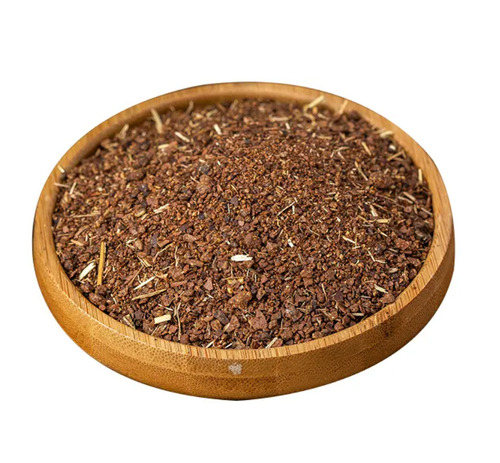
Tea Seed Meal is a plant-based by-product obtained after oil extraction from the seeds of Camellia oleifera. Also known as tea seed cake or camellia seed meal, it contains organic matter and naturally occurring bioactive compounds, particularly tea saponins. Because of its composition and agricultural properties, Tea Seed Meal has attracted attention as a material for fertilizer, soil amendment, composting, and other agricultural applications.
The growing interest in sustainable agriculture has increased the demand for plant-derived fertilizer materials and agricultural by-products that can be reused instead of discarded. Research reviews have identified Camellia oleifera seed cake and meal as materials with potential uses in fertilizer and other agricultural applications.
What Is Tea Seed Meal?
Tea Seed Meal is the solid residue remaining after oil is extracted from Camellia oleifera seeds. The seeds are processed to produce camellia oil, while the remaining meal or cake contains various naturally occurring components, including proteins, polysaccharides, polyphenols, organic matter, and saponins.
One of its most notable components is tea saponin, a naturally occurring triterpenoid saponin. Camellia oleifera seed meal is considered one of the major sources of tea saponins used commercially.
Because Tea Seed Meal contains both organic material and biologically active compounds, it can be considered more than simply a conventional nutrient fertilizer. Its value depends on its composition, processing method, saponin concentration, and intended agricultural use.
Why Use Tea Seed Meal as Fertilizer?
Tea Seed Meal can be used as an organic fertilizer material or soil amendment because it provides plant-derived organic matter while also making productive use of a by-product from the camellia oil industry.
Rather than treating seed meal as agricultural waste, it can be incorporated into agricultural production systems where its properties are appropriate.
1. Provides Plant-Derived Organic Matter
Tea Seed Meal contributes organic material to soil. Organic materials are important components of soil-management programs because they can contribute carbon to the soil and provide substrates for soil microorganisms as they decompose.
However, Tea Seed Meal should not automatically be considered a complete fertilizer. Its nutrient contribution depends on the specific product analysis, and it may need to be combined with other fertilizer materials to meet crop requirements.
2. Contains Natural Tea Saponins
A major characteristic of Tea Seed Meal is its naturally occurring saponin content.
Tea saponins are natural non-ionic surfactants with biological activity. Research has examined their applications in agriculture, soil remediation, pest management, and environmental applications.
This makes Tea Seed Meal particularly interesting for agricultural formulations where both organic material and naturally occurring saponins are desired.
3. Supports Agricultural By-Product Utilization
Using Tea Seed Meal as an agricultural input contributes to the utilization of Camellia oleifera processing residues.
Recent reviews emphasize the importance of improving the value of camellia seed cake and meal instead of allowing these materials to become underutilized waste. Potential uses include fertilizer, agricultural materials, and extraction of valuable bioactive compounds.
This creates an opportunity to connect the camellia oil industry with sustainable agricultural production.
4. Potential Role in Soil Management
Tea saponins have been studied extensively for their surfactant properties and interactions with soil.
Research has investigated tea saponins in soil-remediation applications, including their ability to influence the mobility and bioavailability of certain contaminants.
This does not mean Tea Seed Meal should be used as a universal soil-remediation product. Instead, it demonstrates why the naturally occurring saponins in camellia-derived materials are of interest in soil science.
5. Can Be Incorporated into Organic Fertilizer Formulations
Tea Seed Meal can potentially be combined with other organic fertilizer ingredients to develop customized fertilizer products.
Depending on its specification, it may be incorporated into:
- Organic fertilizer blends
- Soil amendments
- Compost formulations
- Granulated fertilizer products
- Plant-based agricultural formulations
- Specialty soil-management products
Formulation should be based on nutrient analysis, moisture content, saponin concentration, crop requirements, and local regulations.
Agricultural Applications of Tea Seed Meal
Tea Seed Meal for Organic Fertilizer
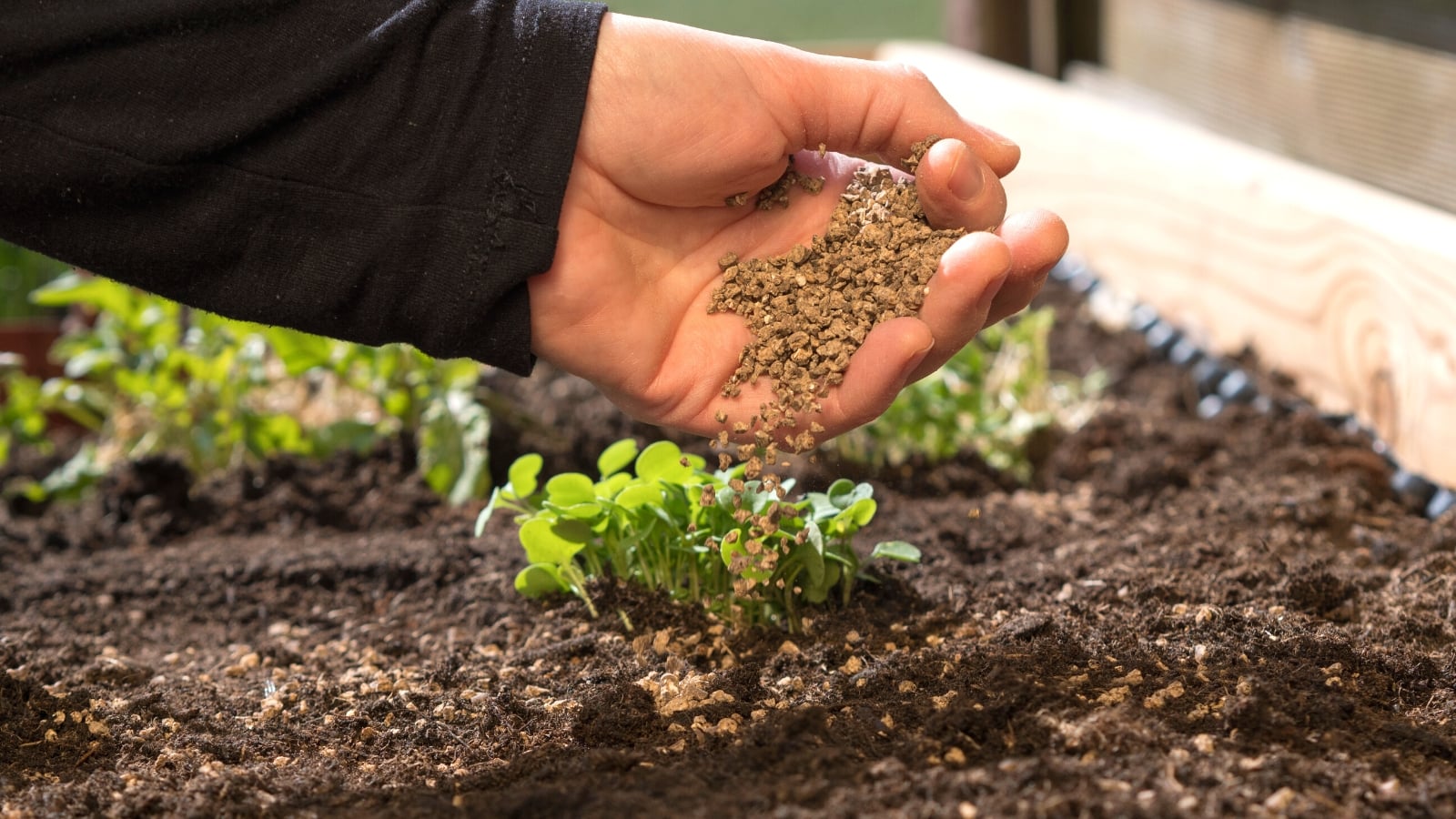
Tea Seed Meal can be used as an ingredient in organic fertilizer formulations.
Its organic material and plant-derived origin make it suitable for manufacturers looking to formulate agricultural products using renewable or agricultural by-product materials.
However, the actual fertilizer value should be determined through laboratory analysis rather than assumed from its botanical origin.
Tea Seed Meal as a Soil Amendment
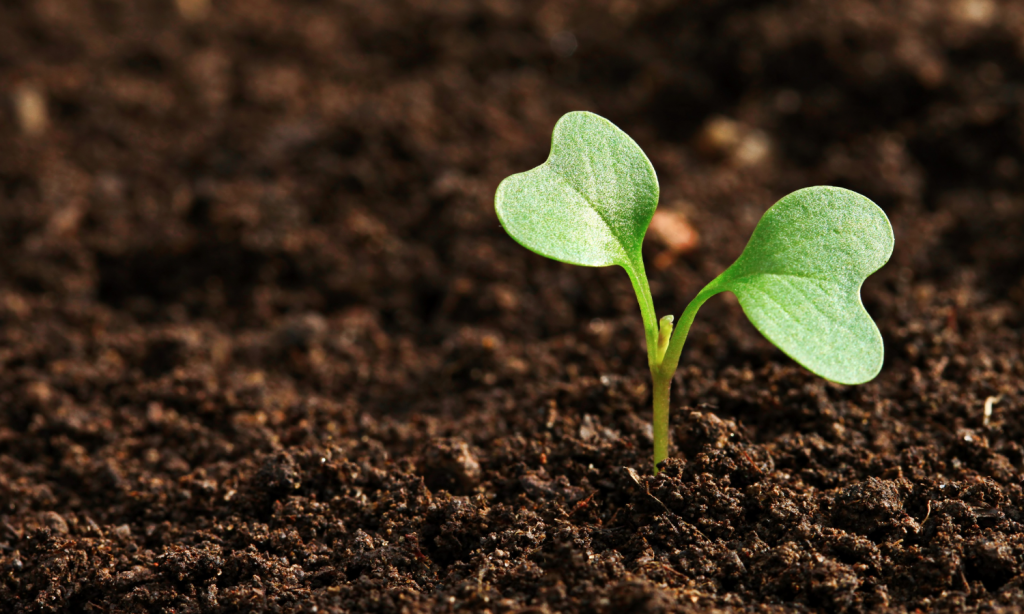
Tea Seed Meal can be incorporated into soil-management programs as a plant-derived organic material.
As the material decomposes, its organic components interact with the soil environment. The resulting effects depend on application rate, soil type, moisture, temperature, microbial activity, and other management conditions.
For this reason, field trials are recommended before applying large quantities to valuable crops.
Tea Seed Meal for Composting
Tea Seed Meal can also be considered as a component of composting systems.
Combining it with other organic materials can help create a more balanced composting feedstock. The appropriate proportion depends on the characteristics of the other materials, particularly their carbon-to-nitrogen ratio, moisture, and decomposition rate.
Proper composting conditions are important to ensure stable and mature material before application to crops.
Tea Seed Meal for Agricultural Soil Management
The tea saponins naturally present in Tea Seed Meal have surface-active properties that have been studied in soil-related applications.
Research on purified tea saponins has demonstrated their potential to influence the behavior of certain contaminants in soil, including through enhanced desorption and bioavailability.
Such applications are specialized and should not be confused with the general use of Tea Seed Meal as fertilizer.
Tea Seed Meal for Botanical Agricultural Products
Because Tea Seed Meal contains tea saponins, it can also serve as a raw material for extracting saponins for agricultural products.
Tea saponins have been studied for agricultural and pesticide-related applications, while Camellia oleifera by-products have broader industrial uses.
This provides manufacturers with two potential utilization routes: using the meal directly as an agricultural material or processing it to recover higher-value compounds.
Tea Seed Meal and Tea Saponin
Tea saponin is one of the most important reasons Tea Seed Meal attracts interest from agricultural manufacturers.
Tea saponins have natural surfactant properties, meaning they can interact with both water and hydrophobic substances. Their amphiphilic characteristics contribute to their ability to interact with biological membranes and other surfaces.
The concentration and composition of saponins can vary according to Camellia species, seed maturity, processing conditions, and extraction methods. Therefore, buyers should request a product specification and certificate of analysis when purchasing commercial Tea Seed Meal.

Tea Seed Meal vs. Conventional Fertilizers
Tea Seed Meal serves a different purpose from highly concentrated mineral fertilizers.
Conventional fertilizers are generally formulated to deliver specific amounts of nutrients such as nitrogen, phosphorus, and potassium. Tea Seed Meal, by comparison, is a plant-derived material that provides organic matter and naturally occurring compounds.
Tea Seed Meal may be preferred when:
- A plant-derived agricultural material is desired
- Organic matter is an important consideration
- Agricultural by-products are being incorporated into fertilizer formulations
- A fertilizer manufacturer wants to develop organic fertilizer blends
- Tea saponin-containing material is useful for a specific application
- A circular-economy approach to agricultural production is desired
Tea Seed Meal can therefore complement other fertilizer ingredients rather than necessarily replacing mineral fertilizers.

Important Quality Factors When Buying Tea Seed Meal
For commercial agricultural applications, consistent quality is important.
Saponin Content
Saponin concentration can be an important specification, particularly when the product is intended for applications where saponin activity is relevant.
Organic Matter
Organic matter content helps characterize the material's potential value as a soil amendment or fertilizer ingredient.
Moisture
Excessive moisture can affect storage stability, handling, transportation, and product consistency.
Nutrient Profile
Nitrogen, phosphorus, potassium, and other nutrients should be determined through laboratory testing. The nutrient profile can vary depending on the raw material and oil-extraction process.
Particle Size
Particle size affects handling, mixing, dissolution, decomposition, and fertilizer manufacturing processes.
Contaminant Testing
Agricultural products should be tested for relevant contaminants, depending on the intended market and regulatory requirements.
Consistency Between Batches
For fertilizer manufacturers, consistent raw-material specifications are important for maintaining predictable formulation and field performance.

How to Apply Tea Seed Meal as Fertilizer
There is no single universal application rate for Tea Seed Meal.
The appropriate rate depends on:
- Crop species
- Soil type
- Existing soil fertility
- Product composition
- Organic matter content
- Saponin concentration
- Application method
- Weather and moisture conditions
- Intended agricultural objective
Tea Seed Meal should therefore be applied according to product specifications and agronomic recommendations rather than using a fixed rate for every crop.
For new applications, a small-scale trial is recommended before broad field application. This is particularly important because concentrated tea saponins have biological activity and excessive application may adversely affect soil organisms, plants, or aquatic organisms under certain conditions.

Precautions When Using Tea Seed Meal
Tea Seed Meal is a natural agricultural material, but natural does not automatically mean risk-free.
Its saponins are biologically active. Research has shown that saponins can affect biological membranes and aquatic organisms, and recent work on Camellia oleifera meal has emphasized the importance of properly managing and utilizing the material rather than allowing concentrated residues to accumulate or leach into the environment.
Therefore:
- Avoid excessive application.
- Prevent concentrated runoff into ponds, rivers, and other aquatic environments.
- Conduct crop-safety trials before large-scale use.
- Store the material in a dry, well-ventilated location.
- Follow local fertilizer and agricultural regulations.
Use a certificate of analysis to verify product specifications.

Sustainable Potential of Tea Seed Meal
One of the strongest advantages of Tea Seed Meal is its connection to resource recovery.
The camellia oil industry generates large quantities of seed residues. Instead of treating these residues only as waste, they can be processed into useful materials for agriculture, feed, industrial applications, or extraction of valuable compounds.
Recent scientific reviews describe Camellia oleifera seed cake as a valuable by-product containing proteins, polysaccharides, polyphenols, and saponins, with opportunities for broader utilization.
This supports a circular approach in which agricultural processing residues are converted into useful inputs for another part of the agricultural system.
Conclusion
Tea Seed Meal is a promising plant-derived material for fertilizer, soil amendment, composting, and other agricultural applications. Produced from Camellia oleifera seeds after oil extraction, it contains organic matter and naturally occurring compounds such as tea saponins.
Its potential benefits include contributing plant-derived organic material, providing a source of naturally occurring saponins, supporting agricultural by-product utilization, and serving as a raw material for organic fertilizer and specialty agricultural formulations. Scientific research also demonstrates the importance of tea saponins in soil-related and agricultural applications.
However, Tea Seed Meal should not be treated as a universal replacement for conventional fertilizers. Its effectiveness depends on its nutrient composition, saponin concentration, soil conditions, crop requirements, application rate, and formulation.
For agricultural manufacturers, fertilizer producers, distributors, and bulk buyers looking for Tea Seed Meal for fertilizer and agricultural applications, HJHERB BIOTECH can provide plant-derived raw materials, product specifications, samples, and formulation support.
Contact HJHERB BIOTECH: info@hjagrifeed.com
References
Zhang, J., et al. (2025). Advances in Camellia oleifera seed meal Saponins: Extraction, analysis, bioactivity, and application. Food Chemistry, 492, 145277. DOI: 10.1016/j.foodchem.2025.145277.
Yu, X.-L., & He, Y. (2018). Tea saponins: effective natural surfactants beneficial for soil remediation, from preparation to application. RSC Advances, 8, 24312–24321. DOI: 10.1039/C8RA02859A.
Guo, N., Tong, T., Ren, N., Tu, Y., & Li, B. (2018). Saponins from seeds of Genus Camellia: Phytochemistry and bioactivity. Phytochemistry, 149, 42–55. DOI: 10.1016/j.phytochem.2018.02.002.
Advances in valorization of Camellia oleifera Abel. Seed cake: A review on the bioactive components, health benefits, extraction methods, and potential food applications. (2025).
Quan, W., Wang, G., Gao, Y., & Li, X. (2022). Applications of Chinese Camellia oleifera and its By-Products: A Review.
Cui, Y., et al. (2026). Transforming Camellia oleifera meal into feedstuff: Enhancing value through detoxification and fermentation. Bioresource Technology, 441, 133578. DOI: 10.1016/j.biortech.2025.133578.
FAQ
A1: Tea Seed Meal is a plant-based by-product obtained after oil extraction from the seeds of Camellia oleifera. Also known as tea seed cake or camellia seed meal, it contains organic matter and naturally occurring compounds such as tea saponins. It can be used as a material for fertilizer, soil amendment, composting, and other agricultural applications.
A2: Tea Seed Meal provides plant-derived organic matter and naturally occurring bioactive compounds. It can be used as an ingredient in organic fertilizer formulations, soil amendments, and composting systems. Its use also supports the recycling of agricultural by-products from the camellia oil industry.
Q3: Why is Tea Seed Meal important for sustainable agriculture?
A3: Tea Seed Meal helps utilize the solid residue generated during Camellia oleifera oil production. Instead of treating the material as agricultural waste, it can be reused as an agricultural input, supporting resource recovery and circular approaches to agricultural production.
Q4: Can Tea Seed Meal be used in organic fertilizer?
A4: Yes. Tea Seed Meal can be incorporated into organic fertilizer blends and other plant-based agricultural formulations. Its organic matter and natural composition make it suitable for manufacturers developing fertilizer products using renewable or agricultural by-product materials.
Q5: Can Tea Seed Meal be used as a soil amendment?
A5: Yes. Tea Seed Meal can be applied as a plant-derived organic material in soil-management programs. As it decomposes, its organic components interact with the soil environment. The results depend on factors such as soil type, application rate, moisture, temperature, and microbial activity.
Q6: Can Tea Seed Meal be used for composting?
A6: Yes. Tea Seed Meal can be used as a component of composting systems and combined with other organic materials. The appropriate amount depends on the characteristics of the composting materials, including their moisture content, carbon-to-nitrogen ratio, and decomposition properties.
Q7: Does Tea Seed Meal contain tea saponin?
A7: Yes. Tea Seed Meal naturally contains tea saponins, which are triterpenoid compounds with surface-active and biological properties. The concentration of tea saponin can vary depending on the Camellia species, seed quality, processing method, and oil-extraction conditions.
Q8: Can Tea Seed Meal be used in fertilizer formulations with other ingredients?
A8: Yes. Tea Seed Meal can be combined with other organic and mineral fertilizer ingredients to develop customized agricultural formulations. The formulation should consider the product's organic matter, nutrient profile, moisture content, saponin concentration, particle size, and the nutritional requirements of the target crop.
Q9: What is the typical application rate of Tea Seed Meal as fertilizer?
A9: There is no single application rate suitable for every agricultural application. The appropriate rate depends on the crop, soil condition, product composition, organic matter content, saponin concentration, application method, and intended agricultural objective. Small-scale trials and agronomic recommendations are recommended before large-scale application.
Q10: What should buyers consider when purchasing Tea Seed Meal?
A10: Buyers should consider important specifications such as saponin content, organic matter, moisture, nutrient profile, particle size, contaminant levels, and batch-to-batch consistency. A Certificate of Analysis (COA) and product specification should be requested to confirm that the Tea Seed Meal meets the requirements of the intended fertilizer or agricultural application.