Tea Seed Meal for Livestock: Benefits, Uses, and Applications
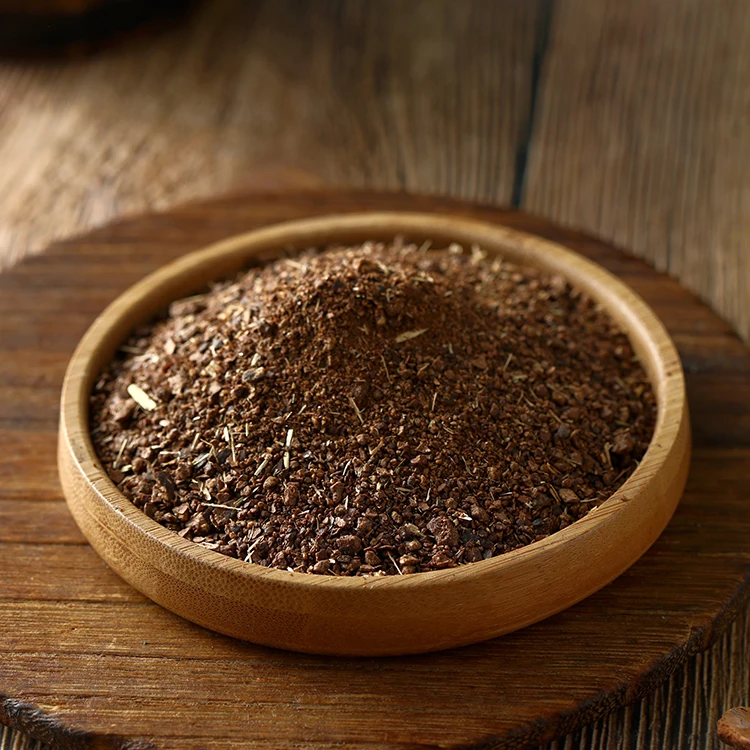
Tea Seed Meal is a plant-based material obtained from the seeds of Camellia oleifera after oil extraction. Also known as tea seed cake or Camellia seed cake, it contains naturally occurring saponins, protein, carbohydrates, polyphenols, minerals, and residual oil. Because of its composition, Tea Seed Meal has attracted interest as an agricultural by-product with potential applications in animal nutrition and livestock production.
However, Tea Seed Meal should not be treated as an ordinary feed ingredient without considering its saponin concentration and processing method. Recent research shows that the relatively high saponin content can limit direct use as feed, while detoxification and fermentation may improve its suitability for animal diets.
What is Tea Seed Meal?
Tea Seed Meal is the solid residue left after oil is extracted from Camellia oleifera seeds. Camellia oil is commercially valuable, and the remaining seed cake represents a substantial by-product of the oil-processing industry.
Research reviews report that Camellia seed cake can contain carbohydrates, crude protein, saponins, crude fat, ash, and polyphenols. The exact composition varies according to the Camellia variety, cultivation conditions, and oil-extraction process.
Among these components, saponins are particularly important because they are responsible for many of the biological and surface-active characteristics associated with tea seed products.
Tea Seed Meal and Natural Saponins
Tea Seed Meal is naturally rich in tea saponins. These compounds are triterpenoid saponins that occur in Camellia plants and have been extensively studied for their biological and functional properties.
A 2025 review specifically examining Camellia oleifera seed-meal saponins reported that tea seed meal is a rich source of saponins and discussed their antioxidant, antibacterial, surface-active, and other biological properties.
For livestock nutrition, this is important because saponins can interact with microorganisms and biological membranes. In ruminants, researchers have therefore investigated tea seed saponins for their effects on rumen fermentation and microbial populations.

Potential Support for Rumen Fermentation
Cattle, sheep, and goats rely on microorganisms in the rumen to break down forage and other feed components. Modifying rumen microbial activity can influence fermentation, nutrient utilization, and the production of fermentation gases.
Tea seed saponins have been studied for their ability to influence rumen microorganisms, including protozoa. A review on tea seed and tea seed saponins in ruminant and poultry nutrition reported potential effects on feed digestibility, rumen fermentation, and methane production.
The response is not necessarily the same in every animal or diet. Factors such as saponin concentration, feed composition, animal species, and feeding duration can influence the outcome.
Potential Feed Digestibility Benefits
One area of interest is the potential effect of tea saponins on nutrient utilization.
Research on plant saponins suggests that they can modify rumen microbial communities and fermentation patterns. These changes may influence the breakdown and utilization of nutrients in the digestive tract.
Tea seed products have therefore been investigated as botanical feed ingredients for ruminants. However, additional product-specific feeding trials are needed before making broad claims about improved growth or feed conversion.
Potential Methane-Mitigation Applications
Methane is naturally produced during rumen fermentation, particularly by microorganisms involved in the conversion of fermentation products into methane.
Because saponins can influence rumen protozoa and other microbial populations, tea seed saponins have been investigated as potential natural ingredients for reducing methane production.
The available research suggests potential, but the magnitude of methane reduction can vary between experiments. Therefore, Tea Seed Meal should not be promoted as a guaranteed methane-reduction solution without evidence for the specific product, dosage, animal, and feeding system.
Potential Application in Cattle Feed
Cattle are one of the most relevant livestock species for research involving tea seed saponins.
Tea Seed Meal or processed Camellia-derived ingredients may be considered for cattle nutrition where the product has been appropriately processed and standardized.
Potential areas of interest include:
- Rumen microbial management
- Feed utilization
- Nutrient digestibility
- Methane-reduction research
- Botanical feed-additive formulations
- Sustainable utilization of agricultural by-products
For dairy cattle, the complete diet must also be formulated according to milk production, lactation stage, forage quality, energy requirements, protein supply, and mineral requirements.
Applications for Sheep and Goats
Sheep and goats are also ruminants, so the interaction between saponins and rumen microorganisms is relevant to these species.
Tea Seed Meal may be considered as a source of plant-derived compounds in specialized feed formulations, provided that the product has appropriate specifications and has been processed for the intended nutritional application.
Because tolerance to saponins can differ among species, inclusion rates should be established using appropriate feeding data rather than applying one dosage across all livestock.
Potential Use in Poultry Feed
Although the main focus of Tea Seed Meal applications can be ruminant nutrition, Camellia seed meal has also been investigated as a potential feed material for poultry.
The major challenge is its relatively high saponin content. A 2026 study published in Bioresource Technology identified saponins as a limiting factor in using Camellia oleifera meal as a feedstuff. The researchers found that detoxification followed by fermentation reduced saponin levels and improved the nutritional characteristics of the material. In their chicken feeding trial, fermented material did not negatively affect growth or carcass performance compared with the control group, whereas untreated meal negatively affected growth performance.
This finding highlights an important point: processed or detoxified Tea Seed Meal should not automatically be considered equivalent to untreated Tea Seed Meal.
Sustainable Use of an Agricultural By-Product
One of the strongest advantages of Tea Seed Meal is its connection to sustainable resource utilization.
Camellia oil production generates substantial amounts of seed cake. Rather than treating this material solely as waste, researchers are investigating ways to recover valuable compounds and develop higher-value applications.
Recent reviews describe Camellia seed cake as a source of proteins, polysaccharides, polyphenols, and saponins, with potential applications across food, agriculture, environmental management, and other industries.
Using Tea Seed Meal in appropriate applications can therefore contribute to better utilization of agricultural resources.
Tea Seed Meal vs. Tea Saponin Powder
Tea Seed Meal and Tea Saponin Powder are related but different products.
Tea Seed Meal is a relatively broad raw material containing saponins together with proteins, carbohydrates, minerals, and other components.
Tea Saponin Powder is a more concentrated ingredient produced by extracting and processing the saponins from Camellia-derived raw materials.
This distinction is particularly important for livestock feed. A standardized Tea Saponin ingredient may provide more precise control over saponin intake than an unstandardized meal.
Important Considerations Before Using Tea Seed Meal in Livestock Feed
Tea Seed Meal should be evaluated carefully before incorporation into animal diets.
Saponin Content
Saponins are an important functional component, but excessive levels can also limit the suitability of untreated Camellia meal as a feed ingredient. Recent research specifically identifies saponins as a limiting factor for Camellia oleifera meal utilization in feed.
Processing Method
Detoxification, fermentation, and other processing techniques can change the composition and nutritional characteristics of Tea Seed Meal.
Animal Species
The appropriate application can differ between cattle, dairy cows, beef cattle, sheep, goats, poultry, and other animals.
Product Specifications
Bulk buyers should request a Certificate of Analysis covering relevant parameters such as saponin content, moisture, protein, ash, residual oil, microbiological quality, and other specifications relevant to the intended application.
Inclusion Rate
There is no universal inclusion rate for all Tea Seed Meal products. The appropriate level depends on the product's composition, processing, animal species, basal diet, and intended purpose.

Safety and Regulatory Considerations
Tea Seed Meal and Camellia-derived extracts should be evaluated according to the regulations applicable to the target market and animal species.
Importantly, an EFSA assessment of a specific Camellia oleifera seed extract intended as a feed additive found that the available data were insufficient for the panel to conclude on target-animal safety for that particular additive. The assessment also noted uncertainty when extrapolating results between animal species.
This does not mean that every Tea Seed Meal product is unsafe. Rather, it demonstrates why product-specific safety data, processing information, composition, and regulatory status are important when developing livestock feed products.
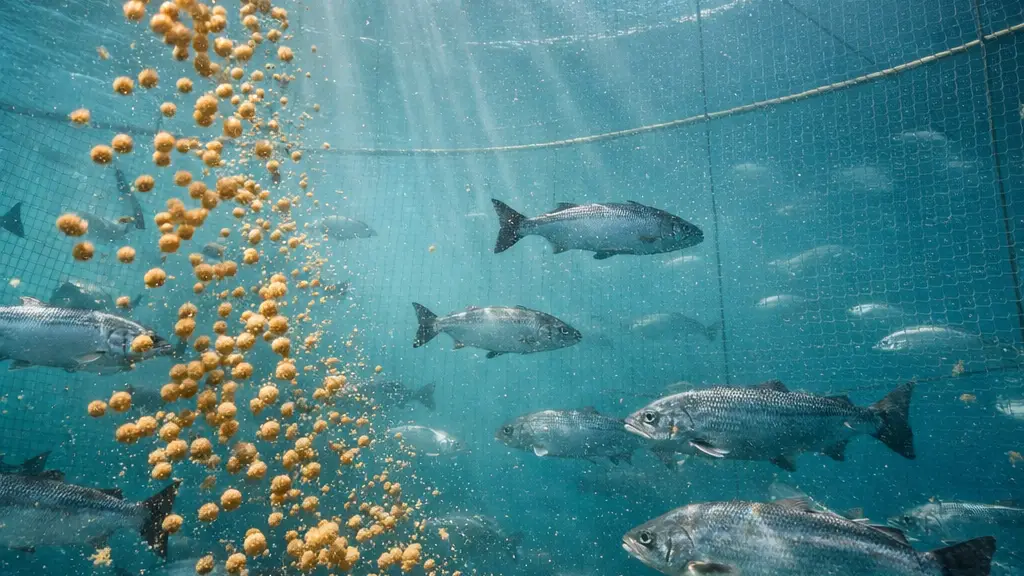
Applications of Tea Seed Meal
Depending on processing and specifications, Tea Seed Meal may be considered for:
- Cattle feed research and formulations
- Dairy cattle nutrition
- Beef cattle feed
- Sheep and goat feed
- Processed poultry feed ingredients
- Botanical feed-additive development
- Rumen fermentation research
- Agricultural and fertilizer applications
- Tea saponin extraction
- Industrial utilization of Camellia oil-processing by-products
Conclusion
Tea Seed Meal is a promising plant-based material produced as a by-product of Camellia oleifera oil extraction. Its naturally occurring saponins, protein, carbohydrates, polyphenols, and other compounds make it an interesting raw material for livestock nutrition and other agricultural applications.
For ruminants such as cattle, sheep, and goats, tea seed saponins have been investigated for their potential effects on rumen fermentation, nutrient utilization, and methane production. However, the nutritional response depends strongly on the product, inclusion level, animal species, and diet.
For commercial feed applications, quality control and processing are essential. In particular, the naturally high saponin content of untreated Camellia meal can limit its direct use as a feed ingredient. Research into detoxification and fermentation suggests that appropriate processing may improve its suitability for animal feed.
For livestock feed manufacturers and bulk ingredient buyers, Tea Seed Meal can therefore be an interesting sustainable botanical raw material when its composition, processing, safety, and intended application are carefully evaluated.
References
Jiang, N., Xu, Z., Lu, S., et al. Advances in valorization of Camellia oleifera Abel. seed cake: A review on the bioactive components, health benefits, extraction methods, and potential food applications. Food Research International, 208, 116134, 2025. DOI: 10.1016/j.foodres.2025.116134.
Zhang, J., Liu, J., Wang, J., et al. Advances in Camellia oleifera seed meal Saponins: Extraction, analysis, bioactivity, and application. Food Chemistry, 492, 145277, 2025. DOI: 10.1016/j.foodchem.2025.145277.
Cui, Y., Lei, Y., Li, Z., et al. Transforming Camellia oleifera meal into feedstuff: Enhancing value through detoxification and fermentation. Bioresource Technology, 441, 133578, 2026. DOI: 10.1016/j.biortech.2025.133578.
Kumar, M. The potential use of tea seed and tea seed saponins in ruminants and poultry nutrition – A review. Himachal Journal of Agricultural Research, 49(2), 141–154, 2023.
EFSA Panel on Additives and Products or Substances used in Animal Feed (FEEDAP). Safety and efficacy of a feed additive consisting of a Camellia oleifera C. Abel seed extract for use in all animal species except fin fish. EFSA Journal , 22(10), e9022, 2024. DOI: 10.2903/j.efsa.2024.9022.