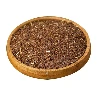
Tea Seed Meal is a natural plant-based material produced primarily from Camellia oleifera seeds after oil extraction. It contains organic matter, protein, fiber, minerals, and naturally occurring saponins, making it a useful agricultural by-product with potential applications in soil management and crop production.
Tea Seed Meal is not a complete fertilizer and should not be considered a direct replacement for NPK products. Instead, it can be used as a complementary soil-management material, particularly in agricultural systems interested in plant-derived inputs and the recycling of agricultural by-products.
Its naturally occurring saponins are especially important because they give tea seed meal surface-active and biological properties that have been studied for soil remediation and other agricultural applications.
What Is Tea Seed Meal?
Tea Seed Meal is the solid residue left after oil is extracted from tea seeds. Camellia oleifera, commonly called oil-tea camellia, is widely cultivated for its seed oil.
After oil extraction, the remaining seed material can be processed into tea seed meal.
Depending on the source and processing method, tea seed meal may contain:
- Natural saponins
- Organic matter
- Protein
- Fiber
- Minerals
- Residual oil
- Other botanical compounds
The concentration of these components can vary from one product to another. Therefore, agricultural users should check the product specification before application.

Why Use Tea Seed Meal for Soil Improvement?
Healthy soil provides the physical, chemical, and biological environment needed for plant growth.
Soil improvement may involve managing:
- Organic matter
- Water movement
- Nutrient availability
- Soil structure
- Microbial activity
- Soil pH
- Contaminants
- Root-zone conditions
Tea seed meal may contribute to some of these areas, depending on its composition and application method.
Its value comes from a combination of its organic components and naturally occurring saponins rather than from a single nutrient.

Adds Plant-Derived Organic Material
Tea seed meal contains organic material originating from tea seeds.
When suitable organic materials are incorporated into soil, they can contribute carbon and other compounds to the soil environment.
Microorganisms can break down organic residues over time, depending on temperature, moisture, aeration, and the composition of the material.
Tea seed meal can therefore be considered as one potential source of plant-derived organic material in agricultural soil-management programs.
However, the amount of organic matter supplied should be determined from the actual product composition.

Provides Naturally Occurring Saponins
One of the most distinctive characteristics of tea seed meal is its saponin content.
Tea saponins are naturally occurring compounds with surface-active properties. They contain both hydrophilic and hydrophobic portions, allowing them to interact with water and other substances.
This property has attracted scientific interest in soil management.
Research has described tea saponins as natural surfactants with potential applications in soil remediation, particularly in processes involving contaminants associated with soil particles.

May Improve Soil-Wetting Properties
Water distribution is an important part of soil management.
Some soils can develop hydrophobic characteristics, making it difficult for water to spread uniformly through the soil profile.
Because saponins have surface-active properties, tea seed-derived saponins may influence interactions between water and soil surfaces.
This makes tea seed meal interesting for research into natural soil-wetting and agricultural formulations.
However, the effect depends on soil type, organic matter, moisture, application rate, and the concentration of active saponins.

Potential Role in Soil Remediation
One of the better-researched applications of tea saponins is soil remediation.
Certain contaminants can bind strongly to soil particles, making them difficult to remove.
Natural surfactants such as tea saponins can interact with soil and contaminants and may increase the mobility or availability of certain compounds.
Research has investigated tea saponins for the remediation of contaminated soils containing heavy metals and organic pollutants.
A review published in RSC Advances reported that tea saponins can promote the desorption of certain heavy metals and have potential applications in soil remediation.
This is a specialized application and should not be interpreted as meaning that ordinary tea seed meal will automatically clean contaminated agricultural land.

Supports Phytoremediation Research
Phytoremediation is a process in which plants are used to remove, stabilize, or manage contaminants in soil.
Tea saponins have been investigated for their ability to increase the availability of certain contaminants to plants.
Under specific conditions, this may improve the uptake of contaminants by suitable plant species, particularly hyperaccumulator plants.
Published research has investigated tea saponins in combination with phytoremediation approaches for contaminated soils.
For agricultural users, this is more relevant to environmental soil management than routine crop production.
Potential Support for Microbial Remediation
Soil microorganisms play a major role in nutrient cycling and the transformation of organic compounds.
Tea saponins have been studied in microbial-remediation systems where microorganisms are used to break down or transform certain contaminants.
Their surface-active properties may influence the accessibility of hydrophobic compounds to microorganisms.
However, the response depends on the microbial community, soil conditions, contaminant type, and saponin concentration.
More research is needed to determine how these effects translate into different field conditions.

Tea Seed Meal and Soil Structure
Organic amendments can influence soil physical properties, although the effect varies considerably depending on the material and soil.
Tea seed meal contains organic components that can become part of the soil organic-matter pool as decomposition occurs.
Organic matter is associated with important soil properties such as aggregation, water retention, and aeration.
However, tea seed meal should not be expected to immediately restructure every soil. Long-term soil-management practices involving appropriate organic amendments, crop residues, compost, and other inputs are generally more important for sustained soil-quality improvement.

May Support Nutrient-Management Programs
Tea seed meal contains nutrients, but its nutrient profile is not equivalent to that of a formulated NPK fertilizer.
Its contribution to crop nutrition depends on:
- Nitrogen content
- Phosphorus content
- Potassium content
- Mineral composition
- Decomposition
- Soil conditions
For this reason, tea seed meal should generally be considered a complementary input rather than a complete fertilizer.
A soil test can help determine whether additional nutrient inputs are required.

Tea Seed Meal for Horticultural Soil
Tea seed meal may be considered for selected horticultural applications.
Potential areas include:
- Vegetable production
- Fruit cultivation
- Nursery operations
- Landscaping
- Garden soil management
- Agricultural research
Before applying it extensively, growers should conduct small-scale trials.
This is particularly important because tea seed meal can contain relatively high levels of saponins, which may have biological effects on plants and soil organisms.

Tea Seed Meal and Crop Growth
The relationship between tea seed meal and plant growth depends strongly on application rate.
At an appropriate level, its organic components and other properties may contribute to a suitable soil-management program.
At excessive rates, however, saponins and other compounds may negatively affect germinating seeds, roots, or soil organisms.
Therefore, the goal should not be simply to apply more tea seed meal.
Instead, farmers should identify an application rate appropriate for:
- The target crop.
- Soil characteristics.
- Tea seed meal composition.
- Saponin concentration.
- Application method.
- Environmental conditions.

Tea Seed Meal as a Sustainable Agricultural By-Product
Tea seed meal provides an opportunity to increase the value of a material generated during tea-seed oil production.
Instead of treating the residue as waste, it can be processed into useful agricultural products or further refined to recover valuable saponins.
This supports a more circular approach to agricultural-resource utilization.
Potential uses include:
- Soil-management materials
- Agricultural amendments
- Saponin extraction
- Aquaculture pond preparation
- Botanical formulations
- Industrial raw materials
Using agricultural residues in productive applications can improve resource efficiency and reduce waste.
Tea Seed Meal vs. Tea Saponin Powder for Soil
Although both products are derived from tea-seed materials, they have different characteristics.
| Feature | Tea Seed Meal | Tea Saponin Powder |
|---|---|---|
| Main composition | Organic matter, saponins, protein, fiber, minerals | Concentrated saponins |
| Standardization | Variable | Usually standardized |
| Form | Meal or powder | Fine powder |
| Organic material | Higher | Lower |
| Saponin concentration | Variable | Higher and more controlled |
| Soil application | Broad agricultural material | Functional saponin ingredient |
| Precise formulation | Less suitable | More suitable |
If the primary goal is adding plant-derived organic material, tea seed meal may be considered.
If the goal is delivering a controlled concentration of saponins, purified tea saponin powder is generally more appropriate.

Does Tea Seed Meal Replace NPK Fertilizer?
No.
Plants require essential nutrients in appropriate amounts, including nitrogen, phosphorus, potassium, calcium, magnesium, sulfur, and micronutrients.
Tea seed meal may provide some nutrients, but its composition is not designed to guarantee a balanced supply of all essential plant nutrients.
Therefore, it should be incorporated into an integrated soil-fertility program rather than used as a universal replacement for fertilizer.
Depending on soil-test results, farmers may combine tea seed meal with:
NPK fertilizer
- Compost
- Manure
- Micronutrients
- Humic substances
- Other soil amendments
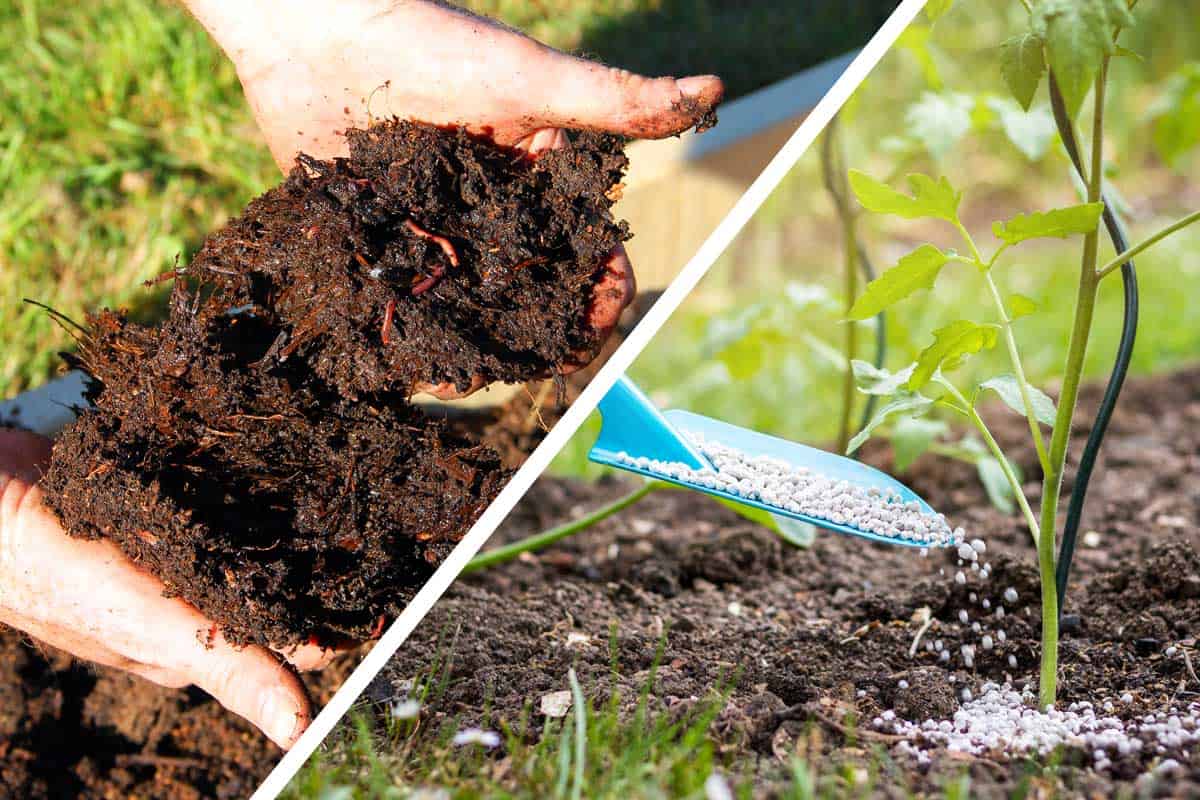
How to Apply Tea Seed Meal to Soil
There is no single application rate that works for every crop and soil.
Before application, farmers should evaluate:
- Soil type
- Soil pH
- Existing organic matter
- Crop species
- Crop growth stage
- Saponin concentration
- Moisture
- Application method
Tea seed meal can potentially be incorporated into soil rather than concentrated in one small area.
For new applications, a small test area is recommended before treating an entire field.

Important Considerations for Plant Safety
Tea seed meal contains biologically active saponins.
While these compounds are valuable for some agricultural applications, excessive concentrations may negatively affect plants.
Extra caution is appropriate when applying tea seed meal:
- Directly around seeds
- Near young seedlings
- At high rates
- In poorly drained soil
- In sensitive crops
Farmers should monitor plant emergence, root development, leaf condition, and overall crop response during initial trials.

Choosing High-Quality Tea Seed Meal
For agricultural applications, product quality is important.
Saponin Content
A clearly defined saponin concentration helps determine the appropriate application strategy.
Organic Matter
Organic-matter content provides information about the material's potential contribution to soil.
Moisture
Controlled moisture improves storage stability and reduces the risk of deterioration.
Particle Size
A consistent particle size can improve handling, mixing, and soil incorporation.
Purity
The product should be free from inappropriate foreign materials and contaminants.
Certificate of Analysis
A reliable supplier should provide relevant information such as:
- Saponin content
- Moisture
- Ash
- Organic matter
- Particle size
- Heavy metals
Microbiological parameters where applicable
Key Benefits of Tea Seed Meal for Soil Improvement
Tea seed meal may offer several potential advantages when appropriately used:
Plant-derived organic material:
Provides organic components from tea-seed processing.
Natural saponin source:
Contains naturally occurring saponins with surface-active properties.
Potential soil-wetting applications:
Tea-derived saponins can influence interactions between water and soil surfaces.
Soil-remediation potential:
Tea saponins have been studied for heavy-metal desorption and other remediation approaches.
Potential support for phytoremediation:
Research has investigated tea saponins as aids in increasing the availability of certain soil contaminants to plants.
Sustainable by-product utilization:
Provides a productive use for tea-seed oil-processing residues.
Conclusion
Tea Seed Meal is a plant-derived agricultural material with potential value in soil improvement and crop-production systems. Produced mainly from Camellia oleifera seeds after oil extraction, it contains organic matter, protein, fiber, minerals, and naturally occurring saponins.
Its agricultural value extends beyond simply supplying nutrients. The saponins naturally present in tea seed meal have surface-active properties and have been researched for applications involving soil wetting and environmental remediation. Scientific literature has particularly investigated tea saponins for heavy-metal desorption, phytoremediation, and microbial-remediation systems.
For routine agriculture, tea seed meal should be viewed as a complementary soil-management material rather than a replacement for balanced fertilizers. Application rates should be based on the product's actual composition, soil conditions, target crop, and intended purpose.
By selecting a well-characterized product, conducting small-scale crop trials, and integrating tea seed meal with appropriate soil-fertility practices, growers can explore its potential as part of a more resource-efficient agricultural system.
References
Yu, X.-L., & He, Y. (2018). Tea saponins: effective natural surfactants beneficial for soil remediation, from preparation to application. RSC Advances, 8, 24312–24321.
Zhang, J., et al. (2025). Advances in Camellia oleifera seed meal saponins: Extraction, analysis, bioactivity, and application. Food Chemistry, 492, 145277.
Chen, et al. (2017). Recent advances in the environmental applications of biosurfactant saponins: A review. Journal of Environmental Chemical Engineering, 5, 6030–6038.