Among the strides in sustainable and green farming techniques, natural pesticides have increased significance. Among such natural pesticides, pyrethrins are one of the strongest plant-based management agents for most types of insect pests. In this article, an exploration into why farmers prefer using pyrethrins, by the origin of pyrethrins, efficiency, advantages, and aspects of use in relation to pyrethrins, is made.

Knowing Pyrethrins
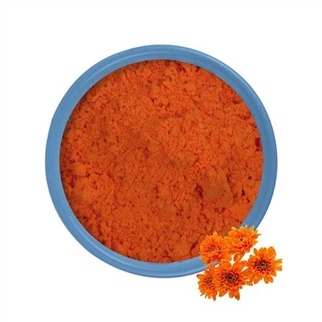
Pyrethrins are a group of six plant-based natural compounds derived from Dalmatian chrysanthemum flowers (Chrysanthemum cinerariifolium). The chemical compounds-pyrethrin I and II, cinerin I and II, and jasmolin I and II-are known for their high insecticidal potency. These compounds have the potential to act on the nervous systems of insects, paralyzing and killing them. Pyrethrins are most often used in organic farming because of their natural source and rapid biodegradability.
National Pesticide Information Center

Effectiveness Against a Wide Range of Pests
One of the main reasons pyrethrins are used so heavily in agriculture is that they are broad-spectrum insecticides. They are used to kill mosquitoes, fleas, flies, moths, ants, and numerous other pests. Their quick "knockdown" effect makes them very useful in eliminating infestations quickly. Yet, their effectiveness can be subject to environmental influences because they break down readily in sunlight and heat.
National Pesticide Information Center
Benefits of Farm Use of Pyrethrins
1. Organic Certification and Plant Origin
Since pyrethrins are a plant-derived natural product, they are ideal for organic farming and leave fewer toxic residues. Pyrethrins are registered for use on organic farms in New Zealand, the EU, and the USA.
2. Easy Degradation and Environmentally Safe
Pyrethrins exhibit rapid degradation in the environment, reducing long-term ecological effect. Pyrethrins are non-persistent because they are biodegradable and break down further when light is applied to them.
3. Low Mammalian Toxicity
Pyrethrins are harmless when applied as per instructions to human beings and animals but may trigger allergic reactions on some sensitive people. They are much less toxic to mammals and birds compared to most synthetic insecticides.
4. Broad-Spectrum Activity
Effective against a broad spectrum of insect pests, minimizing the need for application of multiple pesticides. They are broad-spectrum pesticides, with action on a variety of pests, such as aphids, mosquitoes, moths, flies, and fleas.

Considerations and Limitations
Although pyrethrins are preceded by many advantages, there are considerations:
- Photodegradation: Their quick degradation in sunlight requires repeated applications. particularly in sunny locations.
- Non-Selective Action: Pyrethrins may kill beneficial insects, such as pollinators, if used irresponsibly.
- Resistance Development: Overuse may develop resistance, diminishing long-term effectiveness.
- Cost: Natural extraction procedures may render pyrethrins more costly than synthetic equivalents.

Integration into Integrated Pest Management (IPM)
Integrating pyrethrins into an Integrated Pest Management approach can maximize their efficiency without curtailing disadvantages. By integrating pyrethrin treatments with other methods of control-crop rotation, biological controls, and resistant crop types-farmers can control pests in a sustainable manner and cut back on chemical pesticide dependence.
Conclusion
Pyrethrins offer a viable natural alternative for crop pest management, with immediate action and ecologically benign behavior. Although there are disadvantages in their application, their integration in integrated pest control approaches can help generate sustainable agriculture and lowered chemical pesticide usage.
References:
National Pesticide Information Center. (n.d.). Pyrethrins General Fact Sheet. Retrieved from https://npic.orst.edu/factsheets/pyrethrins.html
Rovensa Next. (n.d.). Protecting crops and the environment with natural pyrethrins. Retrieved from https://www.rovensanext.com/en/news/articles/protecting-crops-and-the-environment-with-natural-pyrethrins/
Safer Brand. (n.d.). Advantages of the Use of Pyrethrin in Organic Farming. Retrieved from https://www.saferbrand.com/articles/what-is-pyrethrin-is-it-safe
EPA. (n.d.). Pyrethrins and Pyrethroids. Retrieved from https://www.epa.gov/ingredients-used-pesticide-products/pyrethrins-and-pyrethroids
EPA
+1
CDC
+1
Clean Water Salinas. (n.d.). Integrated Pest Management (IPM). Retrieved from https://www.cleanwatersalinas.com/pages/integrated-pest-management-ipm